The joy of plastic
Carrie Moyer
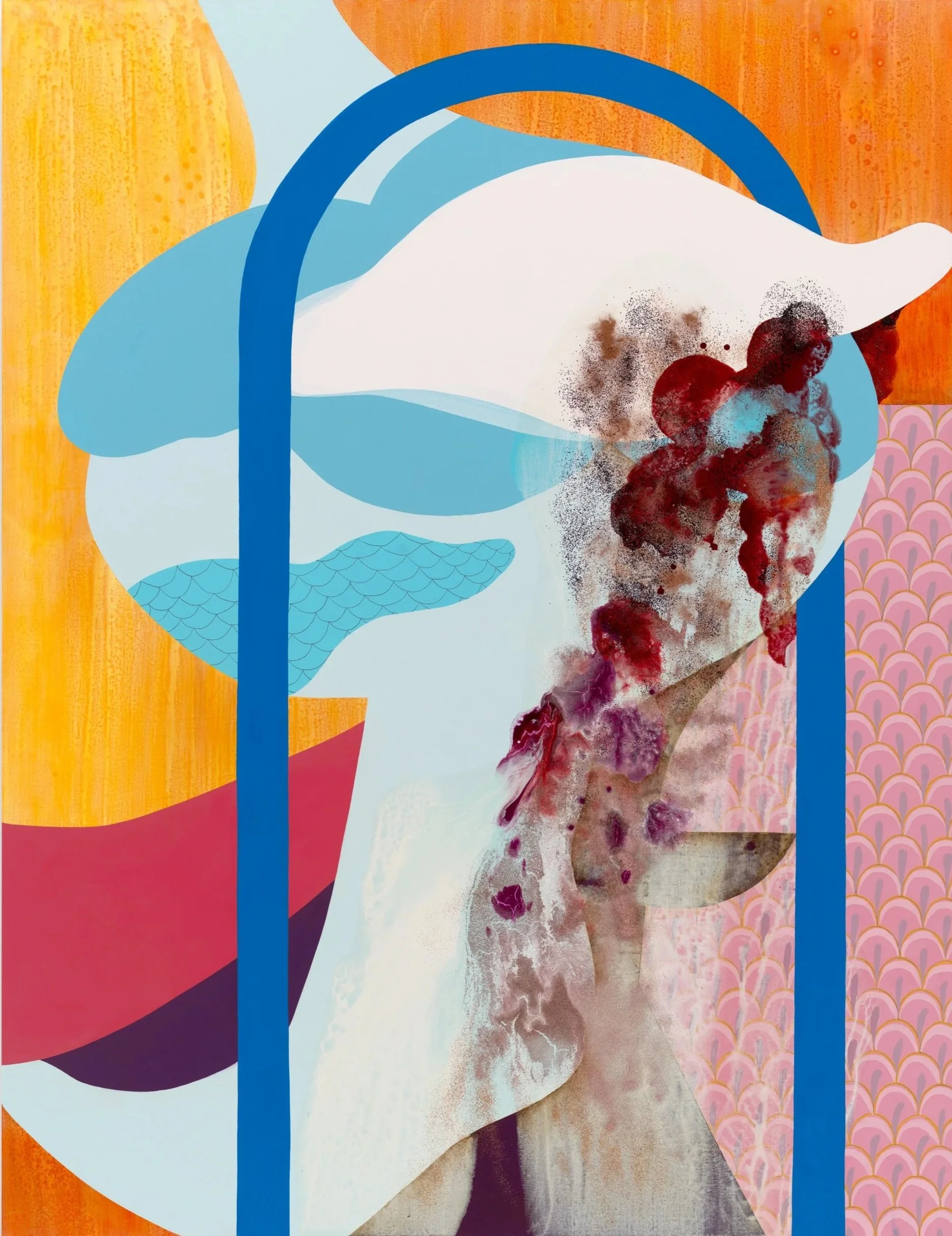
Carrie Moyer, Rosewater and Brimstone, 2020. Acrylic and glitter on canvas. 78 x 60 in (198.1 x 152.4 cm). Private Collection. Courtesy the artist and Alexander Gray Associates, New York. © 2025 Carrie Moyer
Shortly after I graduated from art school in 1985, I stopped painting for five years. I had a day job and couldn’t get to the studio consistently. When I did, the space felt more like an abyss than an incubator. My little cubicle in the shared loft echoed with self-doubt. I couldn’t find the motivation to paint, and worse, I didn’t have the time or mental space to figure it out. Mastering the material nuances of oil paint—the medium I had been trained to revere—required a long apprenticeship, and I was only partway through. The smells, the rituals, the history: it all seemed locked in place, like a museum I’d accidentally wandered into. Eventually, fear overcame the desire to follow the path of my favorite painters. I just couldn’t picture it.
When I did start painting again, it wasn’t a triumphant return. It was hesitant, weirdly quiet. I reached for acrylic paint instead of oil—not because I thought it was better, but because it felt entirely alien. Acrylic, a paint made out of plastic, had none of the romance or pedigree of oil. It dried quickly, behaved strangely, and came loaded with all the wrong cultural associations. But that was exactly its appeal. Choosing acrylic felt like a complete re-do, a chance to unlearn what I’d absorbed in school. It was a way to thumb my nose at the hierarchy of materials—noble and eternal oil on top; commercial, synthetic, disposable acrylic down below.
I grew up on the West Coast with hippie parents, and our family was deeply committed to ecology and recycling. Plastic was the enemy, a symbol of corporate greed, environmental collapse, petrochemical overreach. It was what we were supposed to avoid. And yet plastic was also everywhere. It wrapped our food, shaped our clothes, propped up our homes. It was, and remains, the invisible architecture of contemporary life. So what does it mean to build a painting—a thing we still like to think of as timeless—out of this throwaway substance?
For me, plastic offered not just a different material experience, but also a conceptual shift. Acrylic paint is both vehicle and body. It carries pigment, but also forms the skin of the painting itself, which can be opaque or transparent, matte or shiny. It dries into a skin, a shell, a crust. When I add glitter or crushed minerals into acrylic, they become suspended in the medium, which refuses to disappear. The surface captures light in strange ways. Sometimes the painting glows. Sometimes it sulks. Light doesn’t just bounce—it sinks in, catches on the grit, gets caught in the weave.
The writer and artist David Batchelor has written about how color has often been treated as the “other” in Western aesthetics—excessive, deviant, feminine, foreign. Acrylic, with its industrial brightness and artificial saturation, is a kind of weaponized color. It refuses subtlety. It calls attention to itself. It performs. In this form, plastic is more than a material; it’s a stance.
Although the first paint technologies utilizing acrylic resins were invented only 85 years ago, we now know that plastic is forever. That’s part of the problem, ecologically speaking—this stuff never goes away. When exposed to the elements, it just breaks down into smaller and smaller pieces. My paintings, on the other hand, are seamlessly integrated. The acrylic merges completely with the canvas to create malleable expanses of color, embedded with grit, glitter, pigment, and the traces of my hand. They become like the top layer of skin, or a sheet of sediment with crystals glinting inside. Something geologic and synthetic at once. A fossil of the Anthropocene.
As a true child of the 1960s and ’70s, I know that plastic is verboten, wrong, toxic, cheap. But that’s exactly what draws me to it. Painting with acrylic is not a compromise. It’s a confrontation. It allows me to make work that is both seductive and skeptical, both physical and illusionistic. It lets me build surfaces that are alive with contradiction. That’s the joy of plastic—it’s never just one thing.
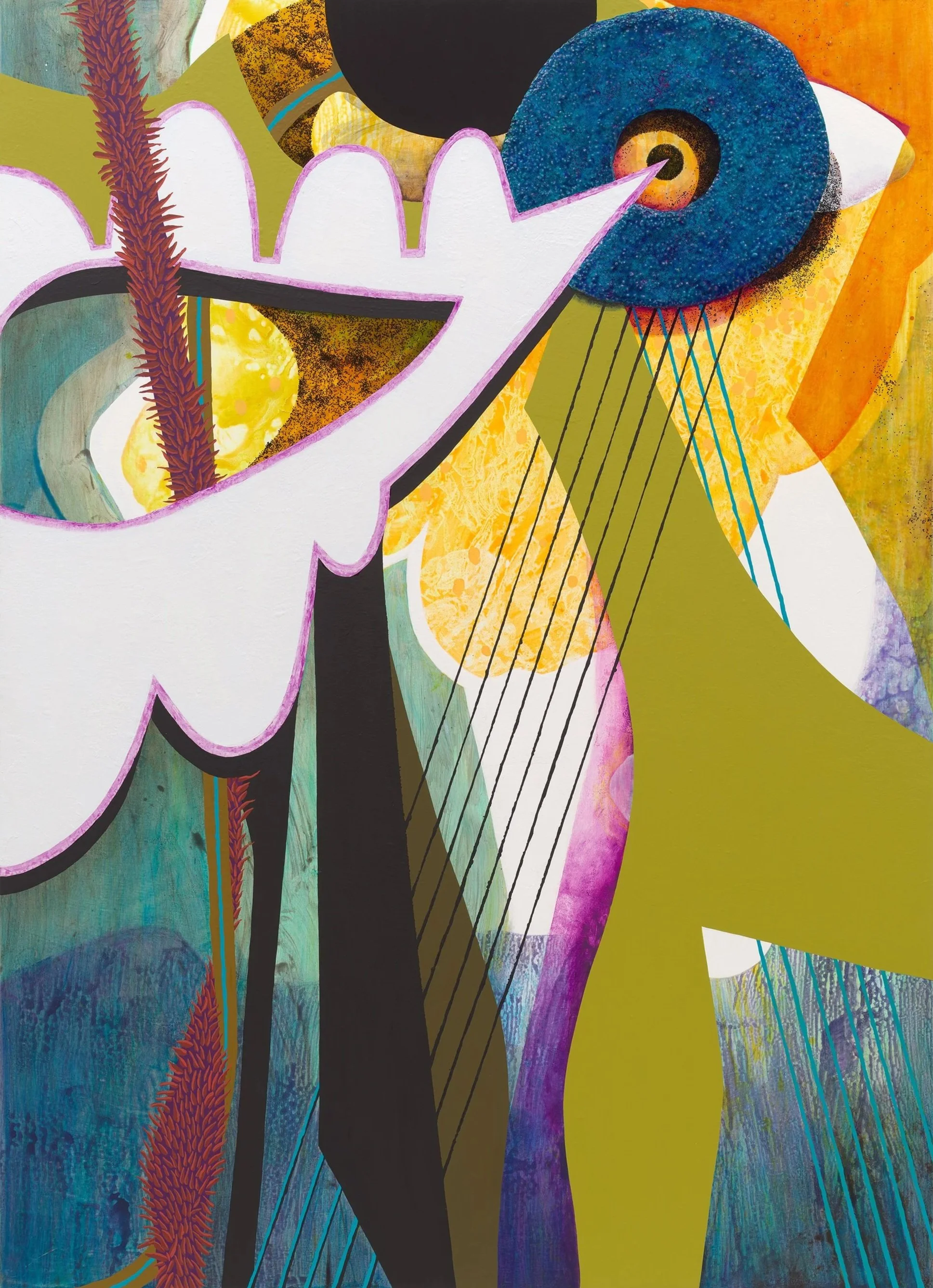
Carrie Moyer, Grassroots Harmonic, 2023. Acrylic, glitter, and pumice on canvas. 72 x 52 in (182.9 x 132.1 cm). Private Collection. Courtesy the artist and Alexander Gray Associates, New York. © 2025 Carrie Moyer.
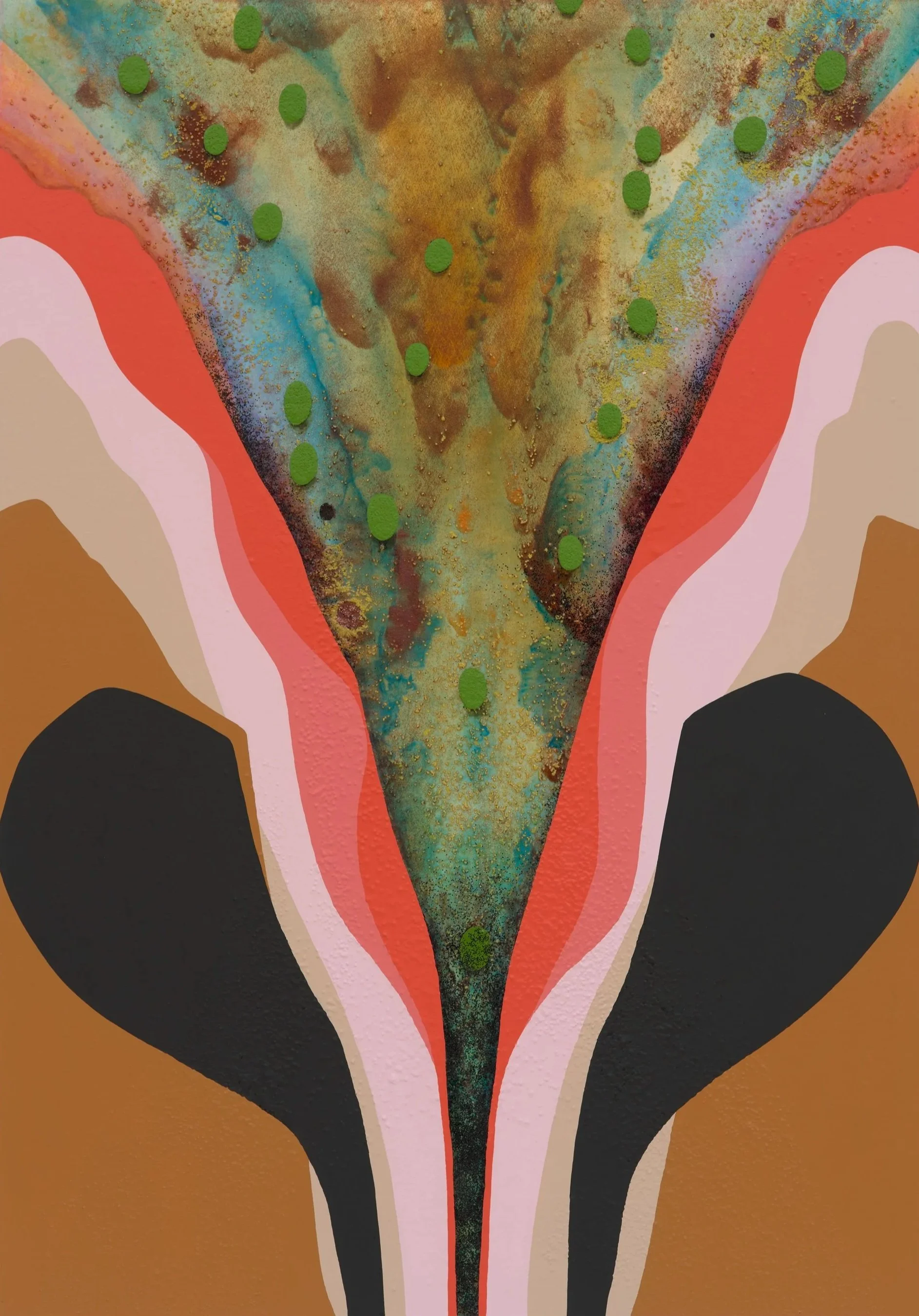
Carrie Moyer, Etna’s Folly, 2024. Acrylic, pumice, glitter, ground garnet, and fiber paste on canvas. 72 x 50 in (182.9 x 127 cm). Courtesy the artist and Alexander Gray Associates, New York. © 2025 Carrie Moyer.