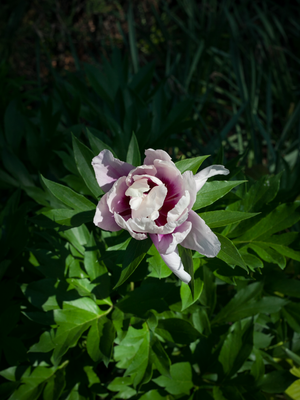
A new oasis
Noura Al Sayeh

Scenes from the Gabes Oasis, date unknown. Image courtesy Noura Al Sayeh.
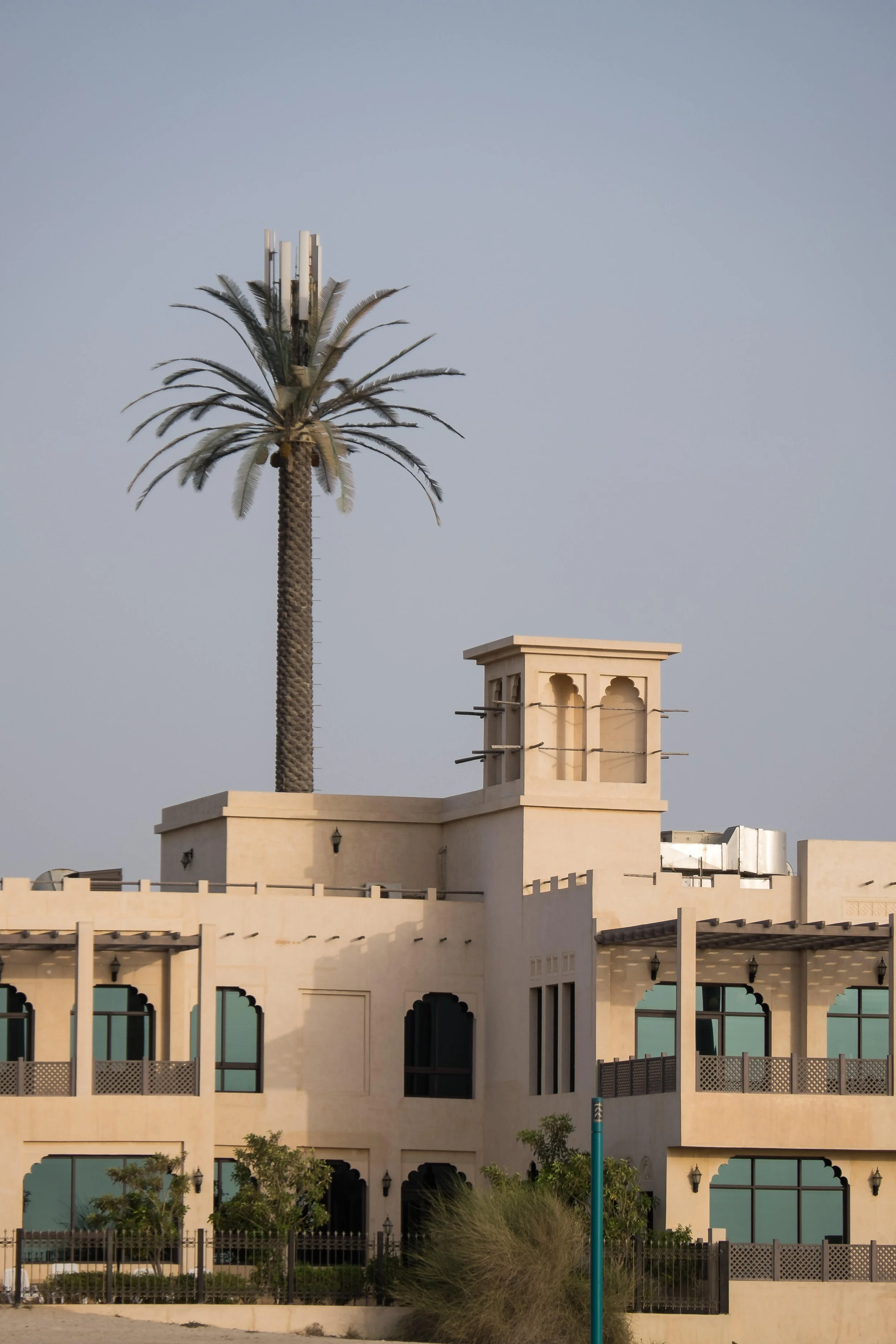
Mobile/Cell Tower disguised as a palm tree, Jumeirah, Dubai, 2015. ba8389 / Alamy.
The palm has long had a ubiquitous presence in the Arab world. From Egypt to Morocco, Syria to Palestine, the tree has played a vital role in sustaining life in arid and desert regions. Thriving in oases, the palm provides nourishment through its dates, as well as shade, fuel, and building materials through its trunk and fronds. Dates are among the fruits repeatedly referenced in the Holy Quran, where they appear as symbols of divine blessing, sustenance, righteousness, and resilience.
Bahrain, a small island nation at the heart of the Gulf, was historically known as “the land of a million palm trees.” Across the sea in eastern Saudi Arabia, the oasis of Al-Ahsa—today recognized as the largest palm oasis in the world, and included on the UNESCO World Heritage List—is home to more than two million date palms. The importance of the tree across Arab and Islamic cultures is both material and symbolic, so central that it has increasingly slipped into the realm of cliché.
In recent decades, the palm’s symbolic overuse as a signifier of “Arab culture” has contributed to its vulgarization, hollowing it of its original function as a source of sustenance and ecological balance. Palm trees are now deployed primarily as ornamental landscaping—lining highways, ceremonial boulevards, airport arrivals, artificial beaches, and roundabouts—basically everywhere apart from their native environments, which are themselves under increasing threat from rapid urbanization and climate change.
The palm’s omnipresence within the contemporary built environment and the “non-places” of modernity has turned it into a convenient placeholder for the local and the traditional. Electricity and telecommunications masts disguised as palm trees have proliferated across urban landscapes: steel poles are clad with RF-transparent fiberglass fronds and bark to conceal antennas for cellular and 5G networks. And yet, just as the palm appears to have fallen into symbolic exhaustion, artists and designers across the Arab world are reengaging with its deeper history, reclaiming its sanctity and reestablishing its connection to land, labor, and memory.
Take, for example, Mohamed Amine Hamouda, who has pursued a sculptural practice deeply engaged with the oasis of Gabès in Tunisia, critically addressing the accelerated ecological degradation of this historically significant landscape. In this rare Mediterranean coastal oasis known for its cultural and environmental complexity, Hamouda seeks to reactivate traditional, site-specific modes of visual production. By mobilizing undervalued local materials, artisanal knowledge, and vernacular processes, he proposes alternative material vocabularies that challenge dominant regimes of representation.
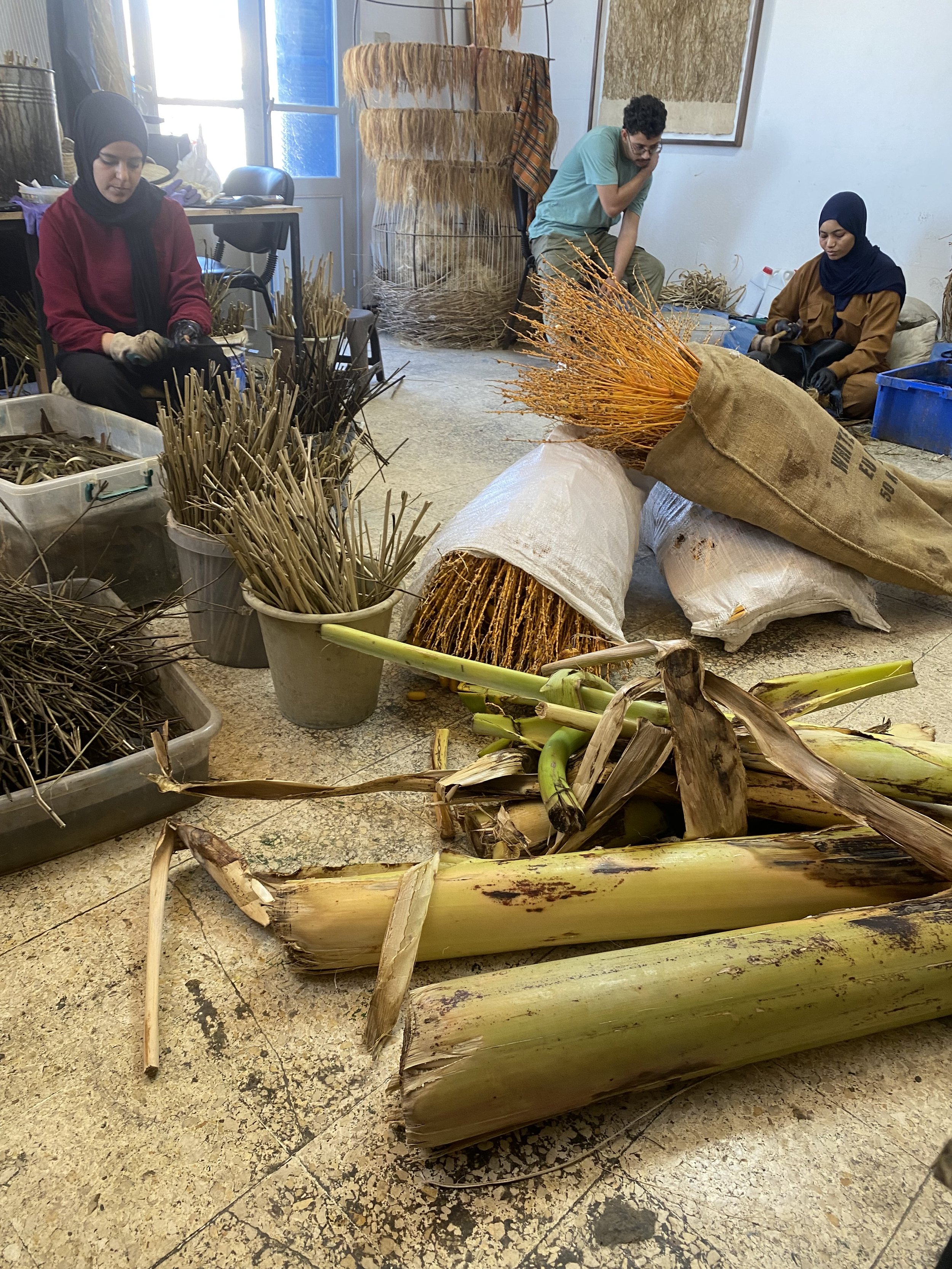
Some of the techniques used in the workshop of Mohamed Amine Hamouda to prepare their fibers according to their type and specific, 2025. Courtesy of the artist.
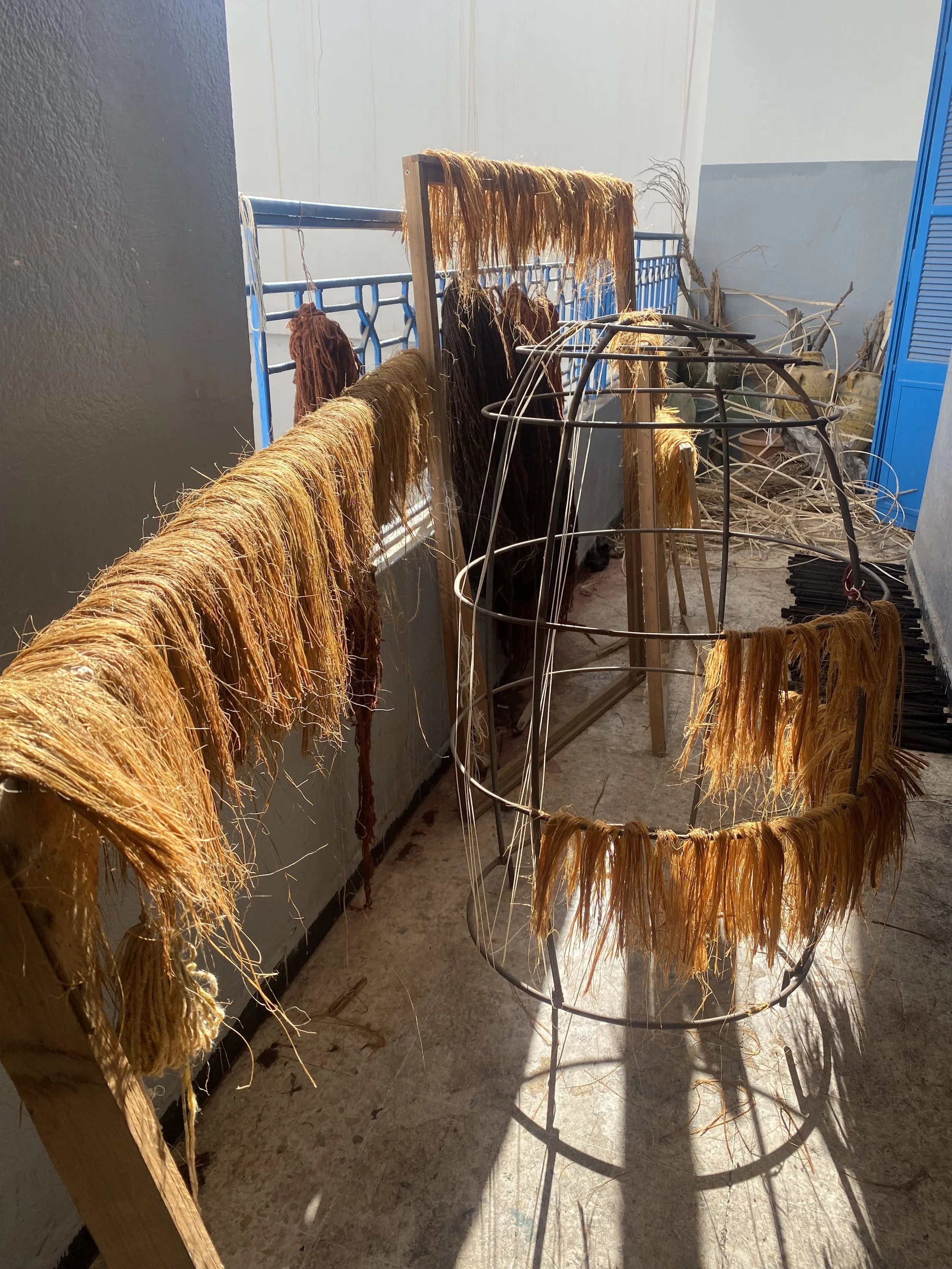
Some of the techniques used in the workshop of Mohamed Amine Hamouda to prepare their fibers according to their type and specific, 2025. Courtesy of the artist.
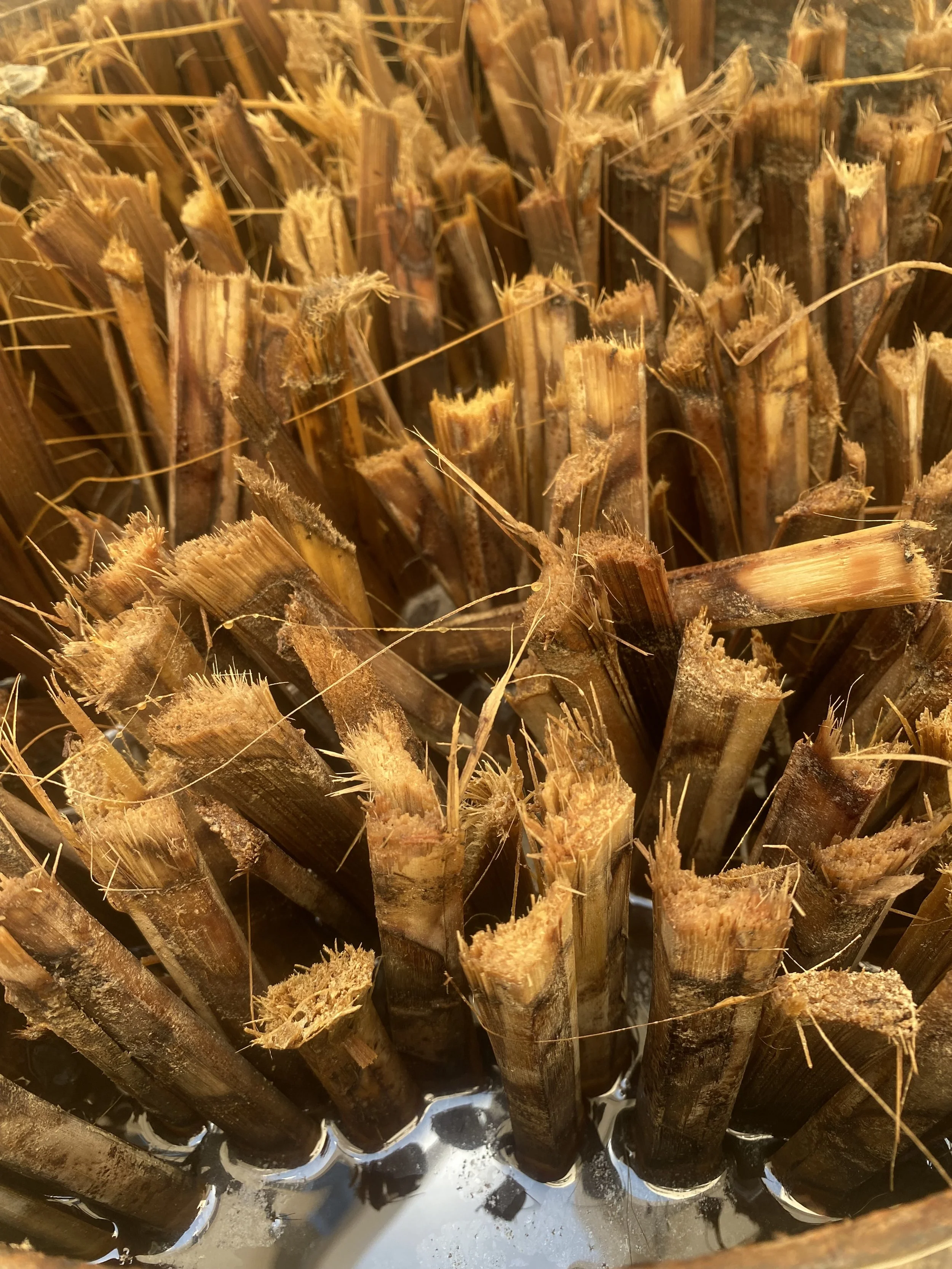
Some of the techniques used in the workshop of Mohamed Amine Hamouda to prepare their fibers according to their type and specific, 2025. Courtesy of the artist.
Today, the Gabès oasis exists in a state of precarity, increasingly compromised by the expansion of a nearby chemical-industrial complex—an enduring legacy of colonial extraction that threatens both its ecological integrity and cultural heritage. Hamouda’s totem-like sculptural installations consist of reconstructed palm trees, comprised of metal armatures woven with plant-based and oasis fibers. These works function as acts of remembrance, excavating layers of ancestral memory—labor, craft, and oral histories—embedded in the soil, but translated into a contemporary visual language.
Lobna Sana is a Bedouin architect and artist from the Naqab desert in southern Palestine, where present-day settlement conditions reveal a profound crisis in the built environment. Traditional Bedouin tent architecture—defined by its environmental adaptability, mobility, and cultural specificity—has been largely displaced by informal concrete townships and villages, composed of provisional structures. More than 150,000 residents inhabit spaces that neither respond to their cultural practices nor their basic environmental needs.
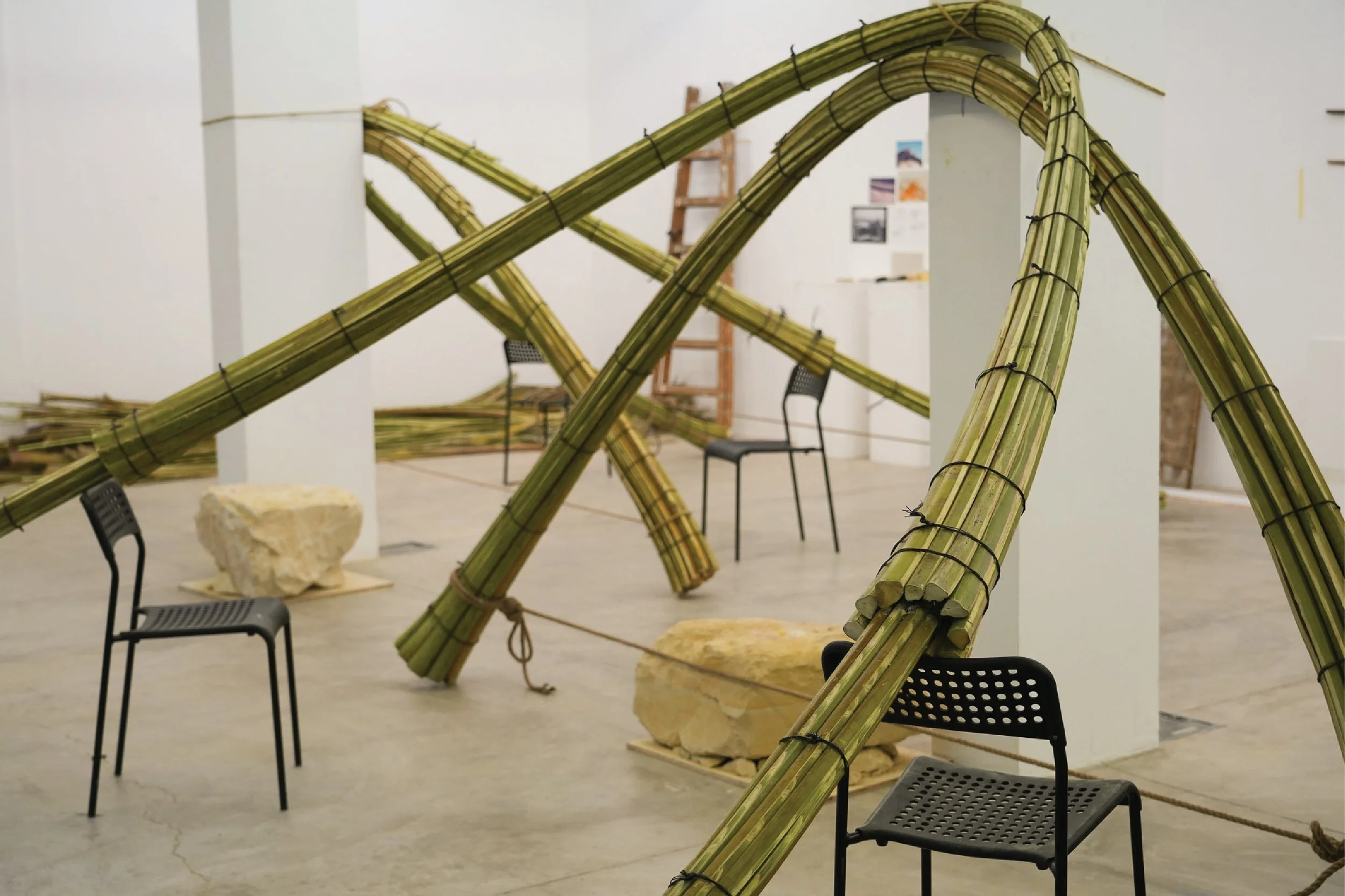
Field of Palms and Chairs, building process and methodology with palm trees in the laboratory of Darat al-Funun, Amman. Photo by Lobna Sana, 2025.
One of the few architects working in this context, Sana integrates contemporary architectural methodologies with locally sourced, often discarded materials to develop low-cost, ecologically responsive forms of shelter. Her project Beware the Green and the Mire, which is grounded in two years of field research and material experimentation on Palestinian agricultural sites, incorporates palm fronds into sustainable housing. The project serves the Bedouin communities in the Naqab while proposing adaptable models relevant to marginalized and environmentally vulnerable populations worldwide.
Based in the oasis city of Al-Ahsa in Saudi Arabia, Mohammad Alfaraj is a multidisciplinary artist working across sculpture, writing, filmmaking, and photography. His works engage multispecies coexistence, ecological transformation, and infrastructural change–serious topics, but often articulated through a subtle and understated sense of humor. Storytelling, both written and oral, forms a central axis in Alfaraj’s practice, informing his poetry, photography, video, and sculptural works. Recurring motifs such as hands, palm trees, and birds function as connective symbols, mediating between material reality and speculative imagination.
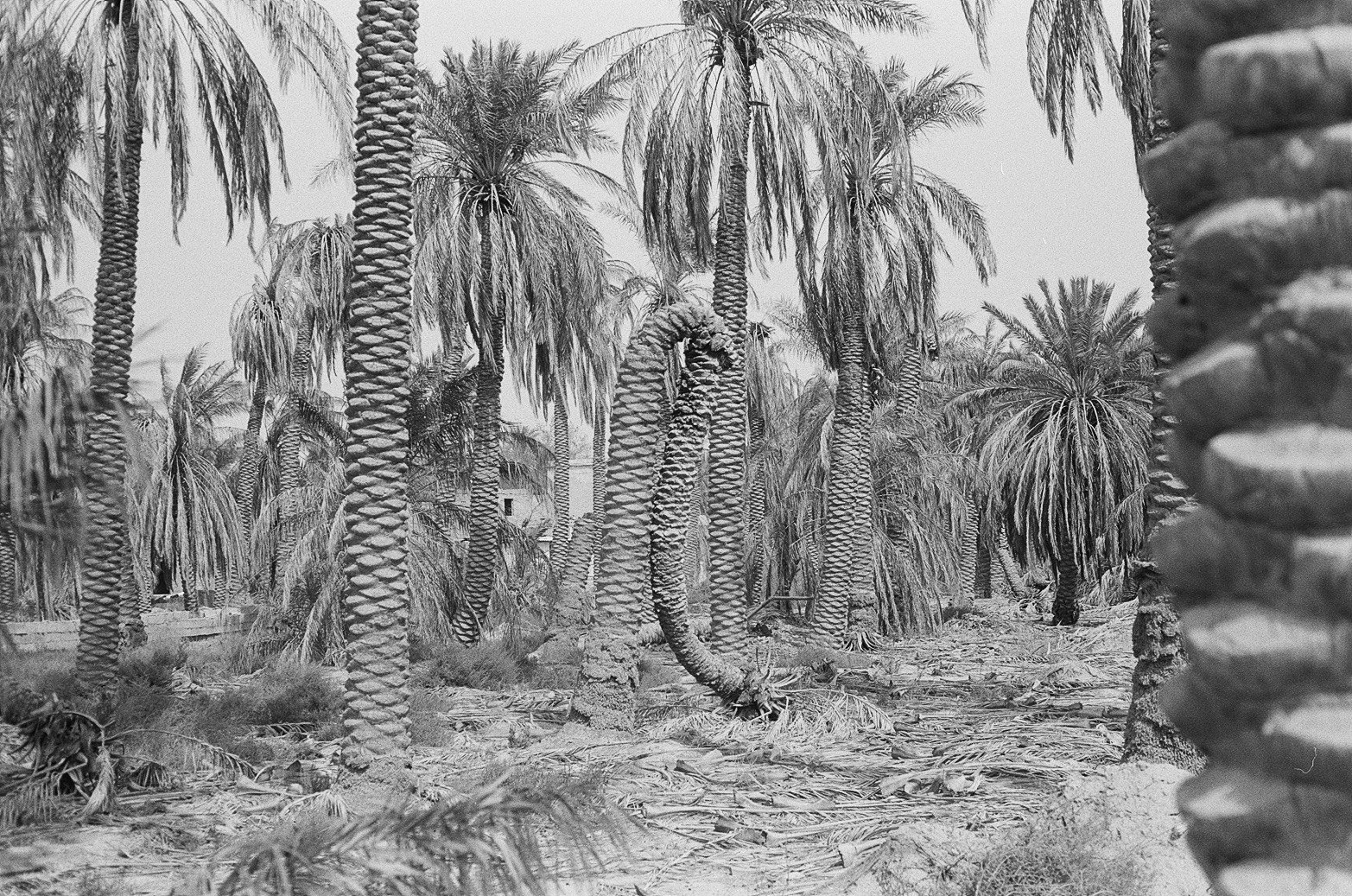
Mohammad Alfaraj, A Palm tree doesn’t die, but bows to life forever, 2018. Film photograph, inkjet print on rice paper. Part of “Seas are sweet, Fish tears are salty” solo exhibition at Art Jameel center in Dubai, curated by Rotana Shaker. Represented by Mennour and Athr galleries. Courtesy of the artist.
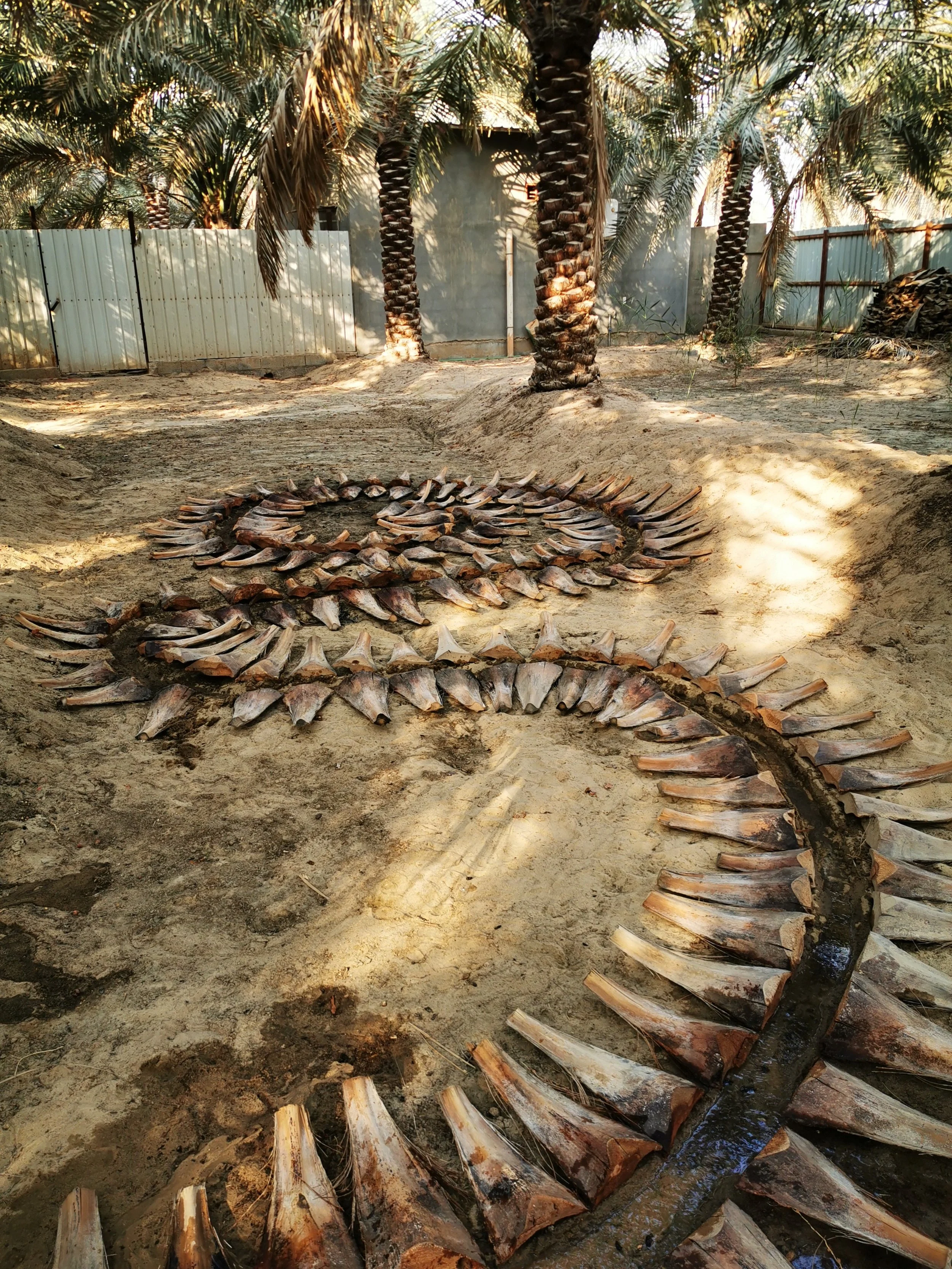
Mohammad Alfaraj, Fossils of knowledge, installation in the artists farm in Al Hasa, Saudi Arabia. 2019. Courtesy of the artist.
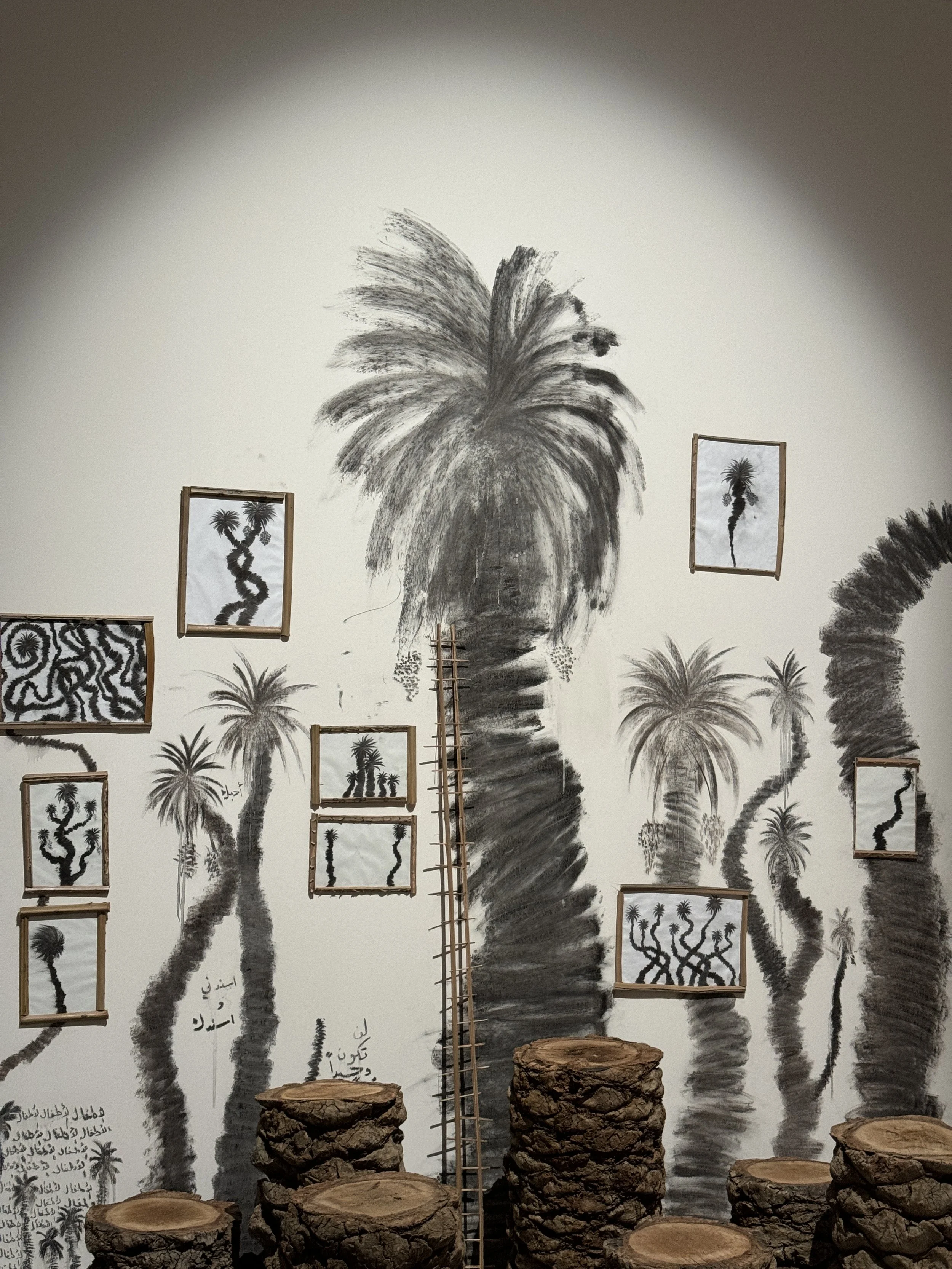
Mohammad Alfaraj, Crawling sands and charcoal dreams, installation as part of Riyadh Art week, 2025. Palm wood and trunks, ladder, drawings with palm charcoal and palm frames. Courtesy of the artist, athr gallery and Mennour.