The Ecuadorian hat
Carolyn E. Herrera
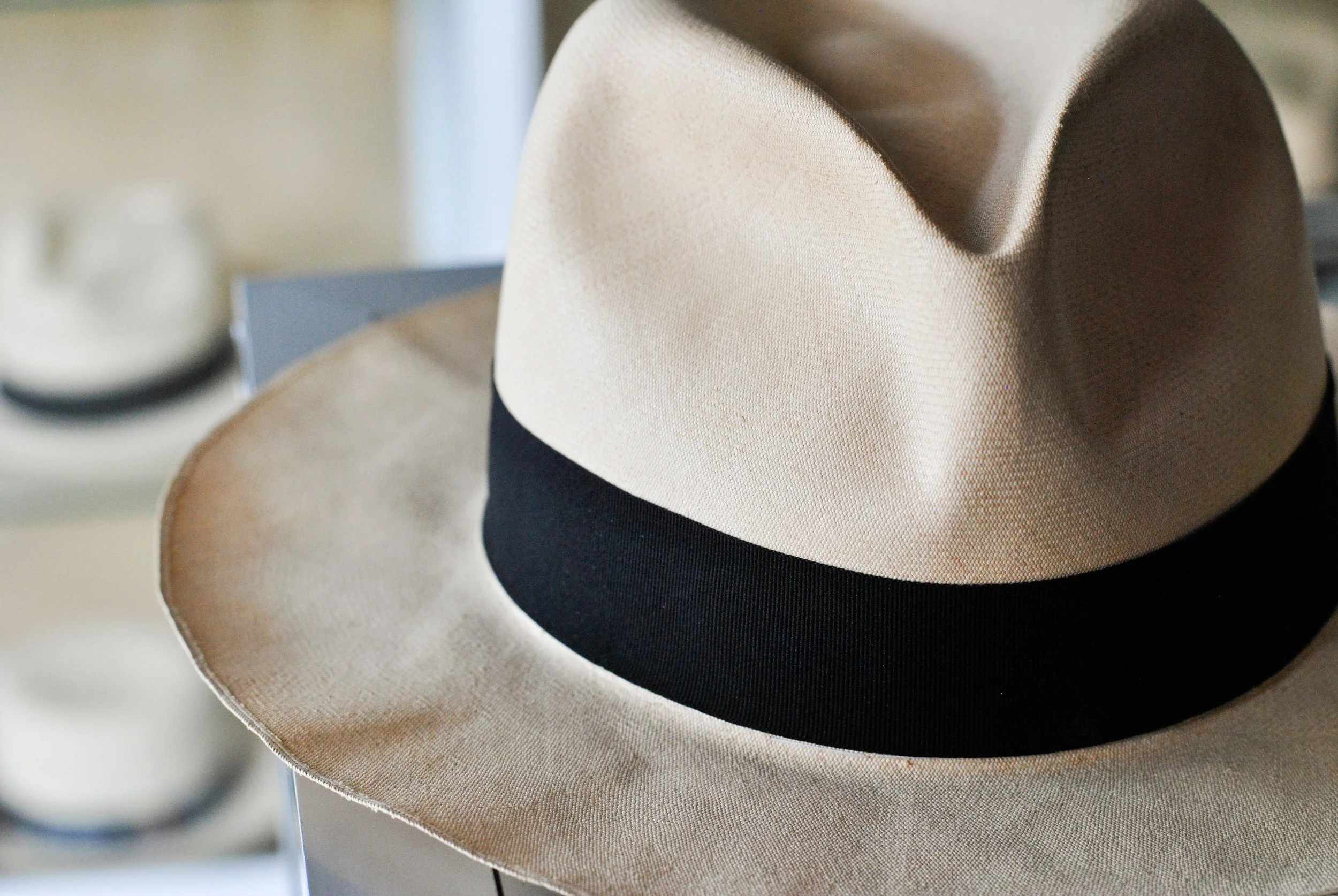
Un sombrero de paja toquilla superfino. A superfine paja toquilla hat, 2017. Martha Barreno / VWPics / Alamy.
The “Panama hat” is an unfortunate misnomer for a quintessentially Ecuadorian craft: el sombrero de paja toquilla, a type of headgear that has shaded the faces of kings, emperors, presidents, and most importantly, countless generations of those who have toiled in the sun.
The earliest written records of such hats come from the era of Spanish colonization. In the sixteenth century, when the first European ships reached the coast of what would become Manabí Province, in the west of Ecuador, they encountered locals wearing impressive headdresses made from the straw of a local plant known as paja toquilla (Carludovica palmata). This tropical perennial is a distant relative to the palm tree; it grows without a woody trunk. Its fan-shaped leaves flourish in subtropical climates across the Americas; in Mexico it is called palma jipi; in Honduras, junco; in Colombia, iraca.
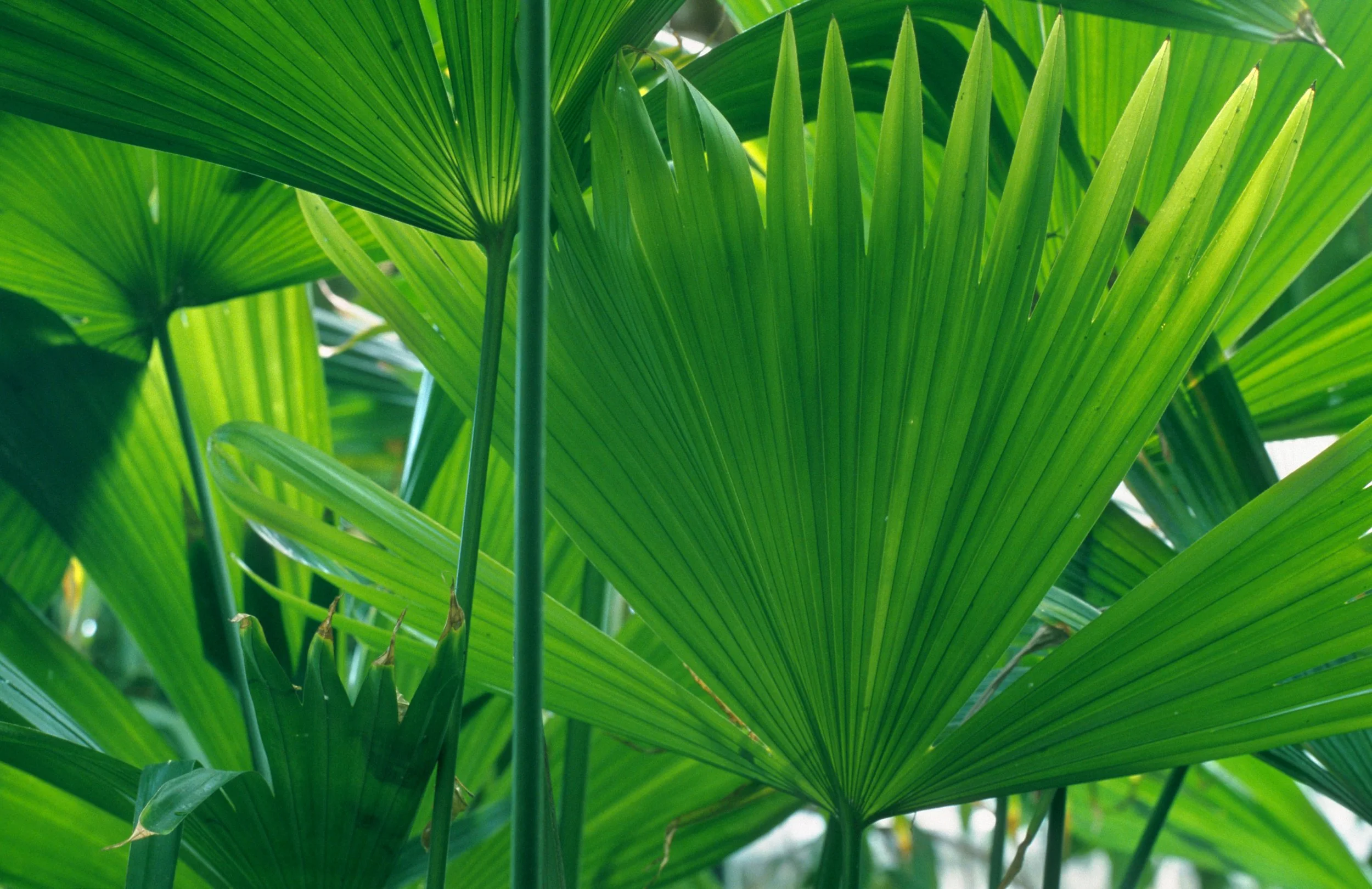
Paja toquilla or “toquilla straw.”, blickwinkel / Koenig / Alamy.
In Ecuador, paja toquilla grows naturally on both sides of the Andes, and has historically served as a material for buildings, medicine, and food. The original toquilla hats were eminently practical. Though lightweight, they were impressive in scale, and so tightly woven that they effectively blocked the Equatorial sun and were also watertight. In a pinch, they could even be used as drinking vessels.
Before long, the craft became an esteemed commodity within the Spanish Empire. Following Ecuador’s declaration of independence in 1822, and its separation from Gran Colombia in 1830, the young republic developed the tradition into an industry. What was once a coastal craft became a self-conscious marker of national identity. King Charles IV of Spain gifted a sombrero de paja toquilla to Napoleon Bonaparte as a diplomatic gesture, and Napoleon III tried one on at the 1855 Exposition Universelle in Paris, one of many world’s fairs in which the hats made appearances.
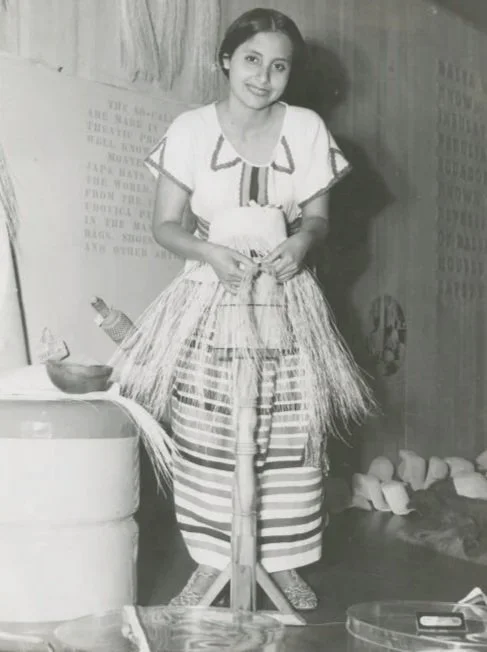
Carmen Columbia Delgado, hatmaker, at the Pavilion of Ecuador, New York World's Fair, 1939–1940, ca. 1940. Photograph. Manuscripts and Archives Division, The New York Public Library Digital Collections.
Attendees of the inauguration of the Panama Canal in 1909 – prominently including Theodore Roosevelt, surrounded by manual laborers also wearing them– moored the hat’s erroneous name in the global imagination. Subsequently, as the so-called “Panama Hat” became ubiquitous, its Andean origins became increasingly obscured. Presidents and celebrities – Franklin Delano Roosevelt, Fred Astaire, Clark Gable, and the dapper couple Lauren Bacall and Humphrey Bogart – transformed the sombrero de paja toquilla into a symbol of summertime leisure, elegance, and adventure. In time, its Ecuadorian origin seemed altogether forgotten.
Yet the sombrero de paja toquilla was never primarily for the elite. Durable, flexible, and protective, it was a predecessor to outdoor performance gear. During the California Gold Rush of 1849, thousands of forty-niners wore the Ecuadorian straw hats to shield themselves from the heat; that same year, the United States imported 220,000 straw hats from Ecuador.
The finest examples—known as superfino hats—are closely associated with the coastal province of Manabí. There, pajales (family-run plantations) of paja toquilla are carefully cultivated by men, while women have refined the techniques of processing and weaving the fiber for generations. Each sombrero de paja toquilla is unique—a quality owed not only to hand weaving process, but to the preparation of the fiber itself.
Only the plant’s youngest leaves are suitable for use. Once harvested, they undergo a meticulous series of transformations. First, their central veins are removed. The fibers are then cooked, carefully dried to preserve their pale color, and bleached using sulfur vapors. Finally, the fibers are sorted by hand into quality grades according to their length, thickness, and consistency.
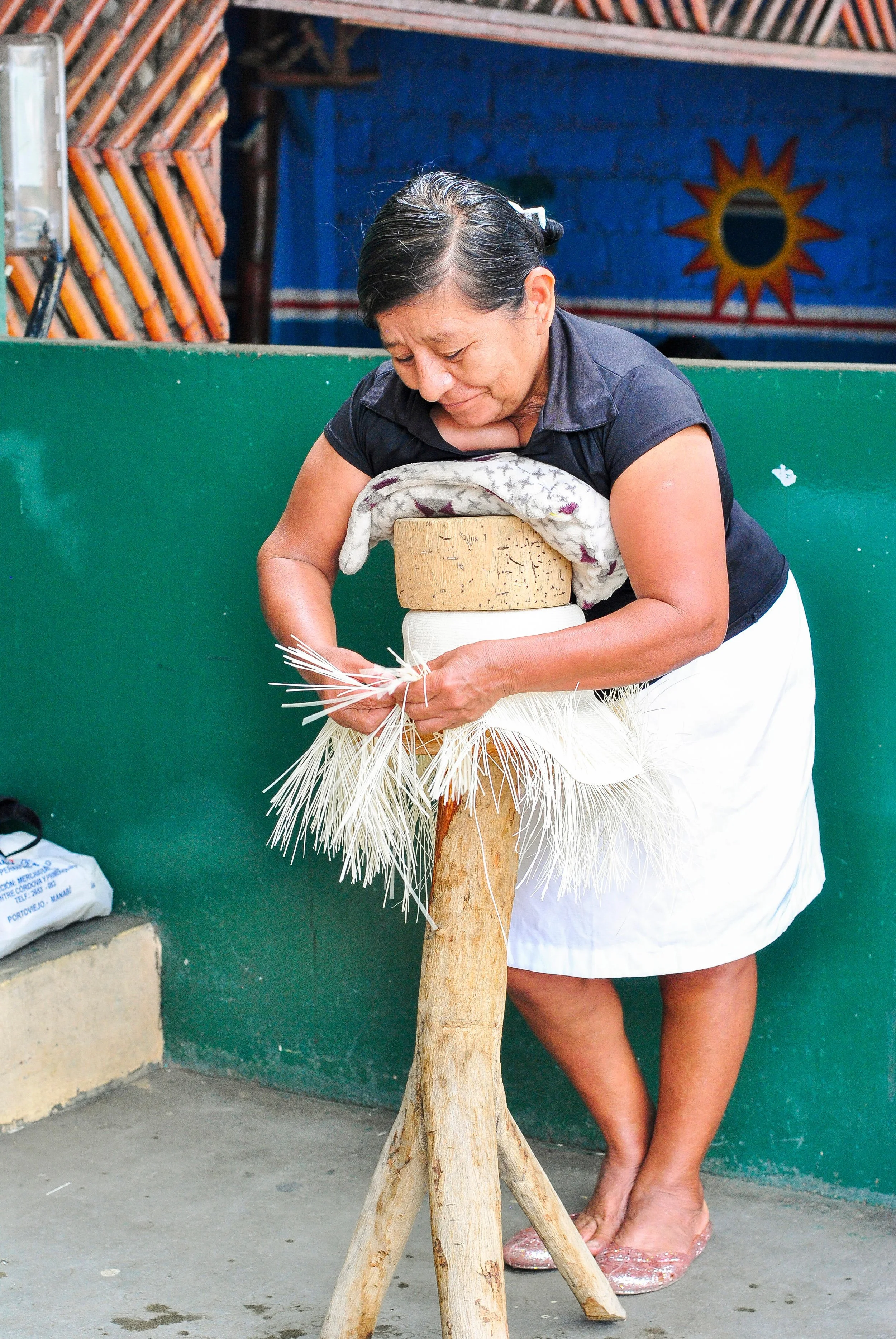
A woman weaves a sombrero de paja toquilla in Montecristi, Manabí, Ecuador, 2017. Martha Barreno / VWPics / Alamy.
While each artisan develops her own method, certain conditions are common all along the coast. The straw responds dramatically to atmospheric moisture, making humidity an essential factor. The best hours for weaving are early morning and late afternoon or evening, when the coastal air is at its most damp. Hats are woven from the center of the crown, outward to the brim, often around a wooden form to shape the silhouette. A low-quality hat may be completed in a single day, while a finely woven example can take as long as a month to finish.
The crafting of one of these hats is a real spectacle. A woman’s hands dexterously criss-cross strips of paja toquilla. Weaving in the round, she slides the straw into place and pulls it taut. As she constructs the repetitive pattern, loose fibers rustle and quiver beneath her hands. What looks like an explosion of fiber is gradually tamed. Carrera por carrera, round by round, the hat is made.
Perhaps the real problem with the “Panama hat” is not that it bears the wrong name, but that we tend to look everywhere except where it is made. The sombrero de paja toquilla has traveled the world under a borrowed identity, yet it has never left Ecuador. Are kings, emperors, and presidents easier to remember than place-based craftspeople? Like the plant from which it comes, the Ecuadorian hat remains rooted in place; within the hands of women and men who continue to shape fiber into form.
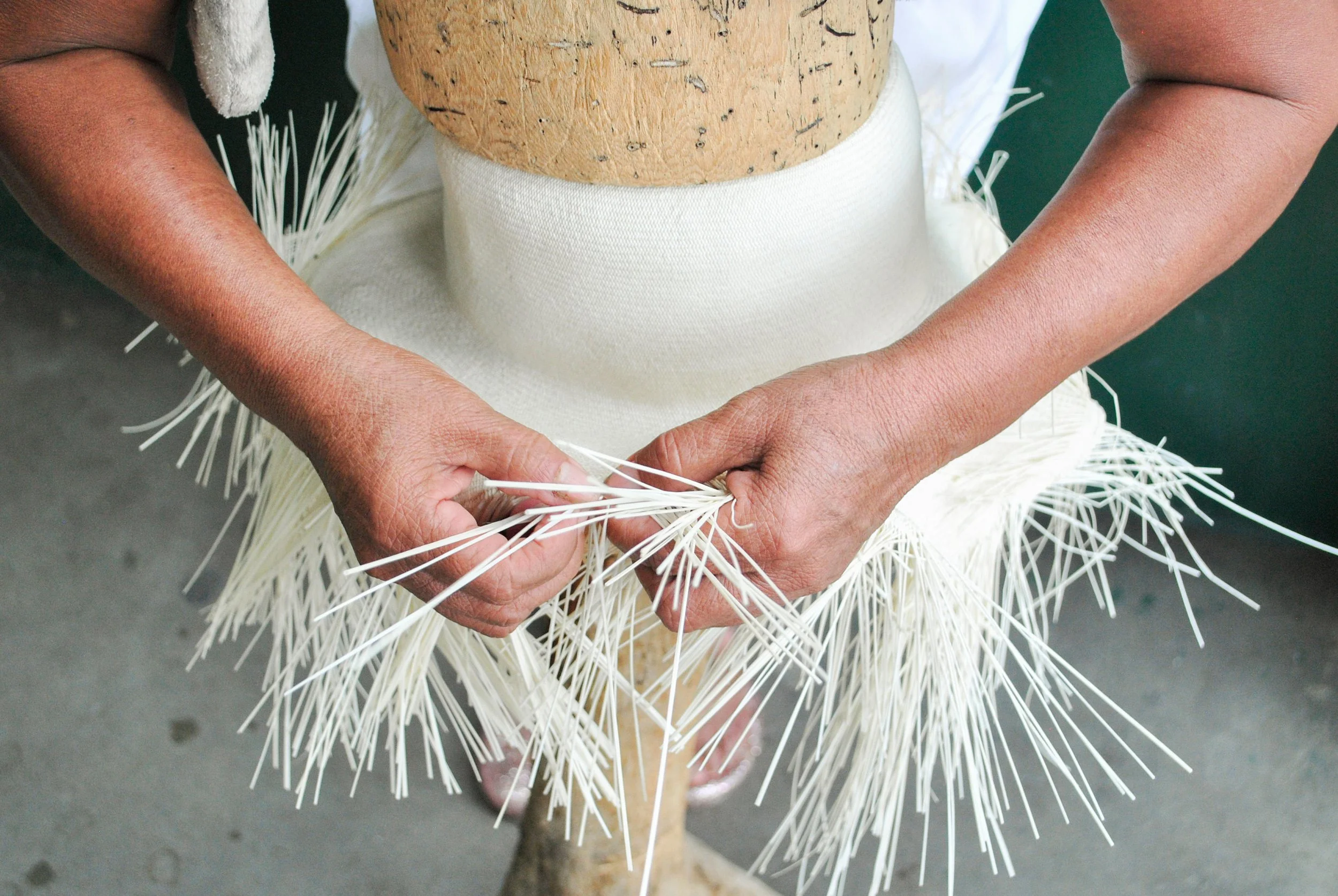
A woman weaves a sombrero de paja toquilla in Montecristi, Manabí, Ecuador, 2017. Martha Barreno / VWPics / Alamy.
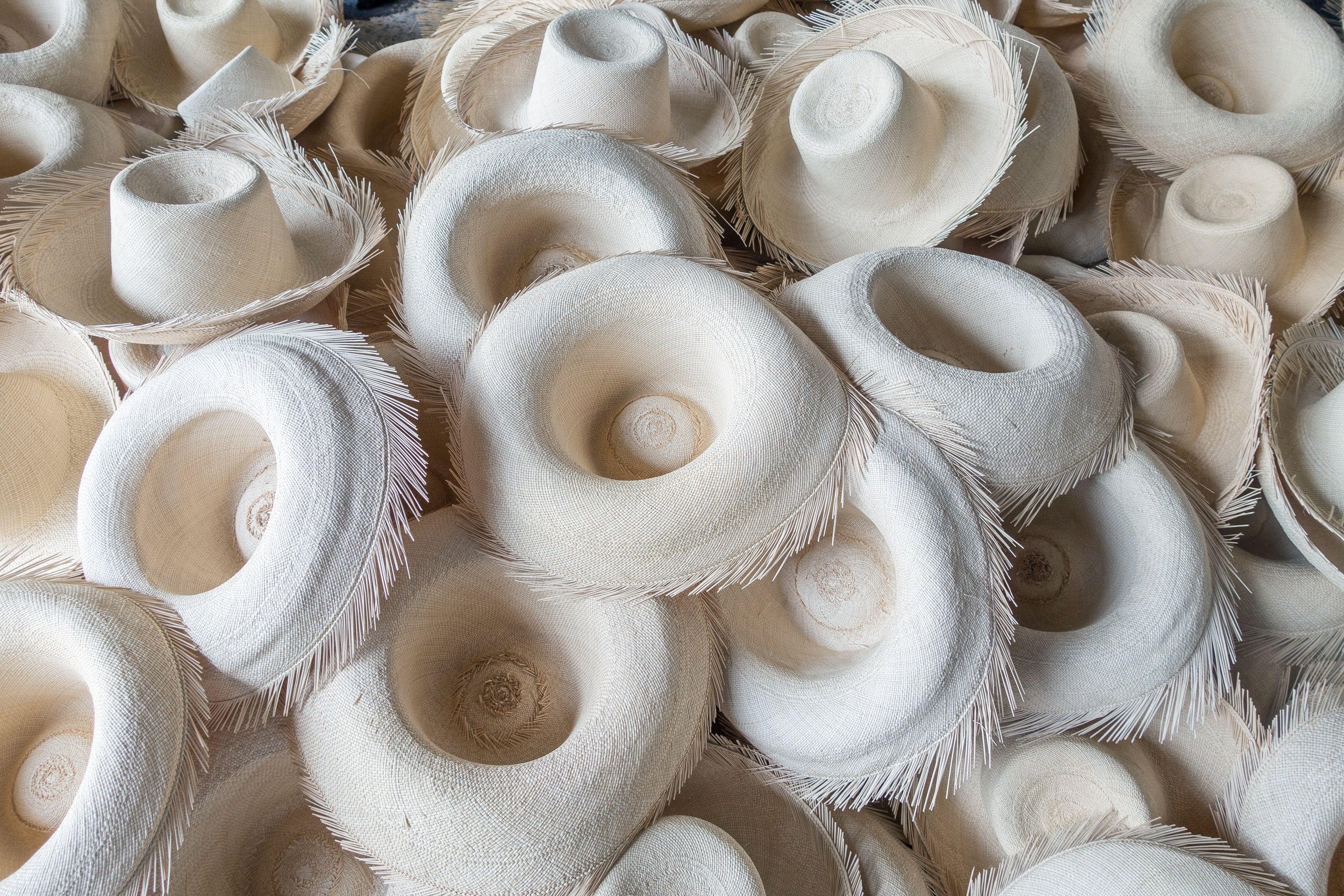
Semi-finished sombreros de paja toquilla, 2017. Darya Ufimtseva / Alamy