Introduction
Glenn Adamson

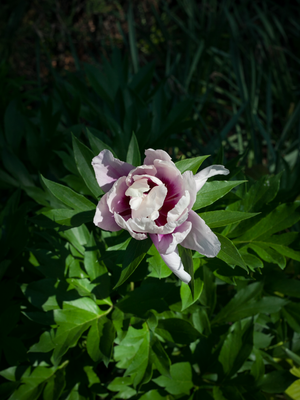
A Talipot Palm Corypha umbraculifera with large gold blossoms in Rio De Janeiro Brazil, 2006. South america / Alamy.
Was the palm tree given to humankind by the Hand of God? Many people have thought so, seeing fingers in its distinctive fronds, and an arm in its long, strong trunk; it’s not a coincidence that the same name, palm, is given to the fleshy interior of our hands. Across much of the world and over the course of centuries, the palm in all its many incarnations – over 2,500 species, within the family Arecaceae – has been revered above all others. In ancient Egypt, the palm was a symbol of longevity, an association reinforced by hieroglyphs in which a notched frond stood for a single year. Gods and goddesses were portrayed wearing a palm rib in their hair, symbolizing their eternal life. The dried leaves of the talipot palm – which puts on the largest display of flowers of any plant, but only once, just before it dies – were used to inscribe Buddhist sutras prior to the invention of paper.
For the ancient Romans, the palm was above all a symbol of victory; specially embroidered garments called tunica palmata were sometimes worn in triumphal procession. The Christians adopted the association. The Bible tells of Christ’s followers welcoming him into Jerusalem with palm branches held aloft – the event commemorated by Palm Sunday – and subsequently the plant became associated with martyrdom, conceived as a victory over death itself. Spiritual reverence for the palm is perhaps greatest of all in Islam, which originated in the Arabian Peninsula. In an otherwise inhospitable desert landscape, is it any wonder that people should have seen the life-giving palm as a sign of divine favor? According to one hadith (saying) of the Prophet Muhammed, “there is a tree among the trees which is similar to a Muslim in goodness, and that is the date palm tree.” The Persian naturalist and philosopher Avicenna held to this tradition, placing it at apex of the botanical hierarchy in view of its many useful products: timber for construction and fuel, oil for cooking, dates for eating, leaves for thatch and basketry.
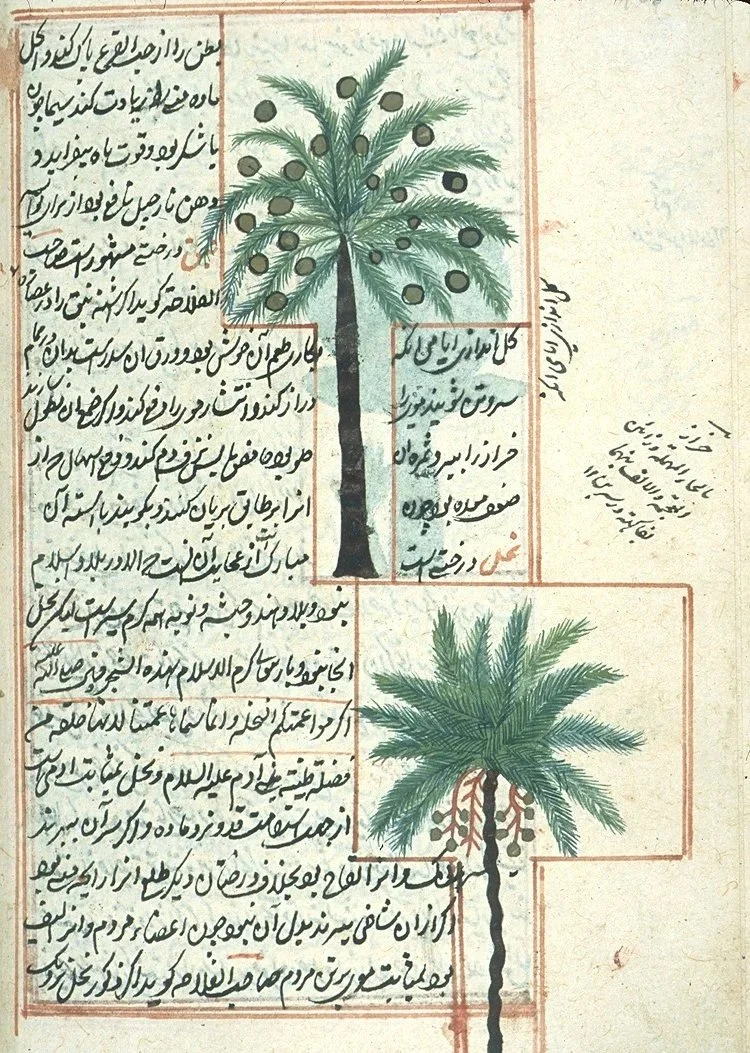
by Zakarīyā’ ibn Muḥammad al-Qazwīnī, ‘Ajā’ib al-makhlūqāt wa-gharā’ib al-mawjūdāt (Marvels of Things Created and Miraculous Aspects of Things Existing), [Two types of palm trees], 1283/682; copy was made in 1537/944. MS P 1, fol. 168b. Islamic Medical Medical Manuscripts at the National Library of Medicine, Courtesy of the National Library of Medicine, Bethesda, MD.
In the millennium since Avicenna’s lifetime, the exploitation of palm as a natural resource has only grown, and dramatically so. These days, oil squeezed from the fruit of Elaeis guineensis (native to west Sub-Saharan Africa, but now grown across the Global South) is by far the most economically important of its commodities. In comparison to other plants, such as corn, olive, rapeseed, and sunflower, the tree yields a much higher quantity of oil by acre, with the result that it is much cheaper (about half of what olive oil costs, for example). Partly for this reason, palm oil is by far the most common cooking oil worldwide. It is also used in a staggering variety of other products, from pizza to chocolate, shampoo to toothpaste, lipstick to biofuel; it’s what gives Nutella its luxuriant mouthfeel.
Palm stearin – the solid, high-fat, fraction of the oil – also has many industrial applications, including candlemaking, machine lubricant, and animal feed. It’s also the ingredient that provides stability for many soaps, including Palmolive, first manufactured in Milwaukee in 1898, and long advertised as a product worthy of the Pharaohs: “a beauty secret 3,000 years old.” (One ad of the 1910s speculated, a little improbably, that Cleopatra herself might have imagined palm and olive oils being combined eventually by modern science, “for universal toilet use.”)
As this example begins to suggest, despite palm’s historic centrality to the world economy, it has also long had strong associations with exoticism. In fact, it has had one of the more curious cultural itineraries of any material: an ancient emblem of grandeur has become a widespread symbol of trivial escapism, encountered in cruise ship commercials, tiki bars, and computer screensavers. All along the way – whether in depictions of the Flight into Egypt, with Joseph and Mary shown resting under a palm tree, in allegorical depictions of the Four Continents, or the television show Gilligan’s Island – the palm has been regularly associated with the idea of elsewhere.
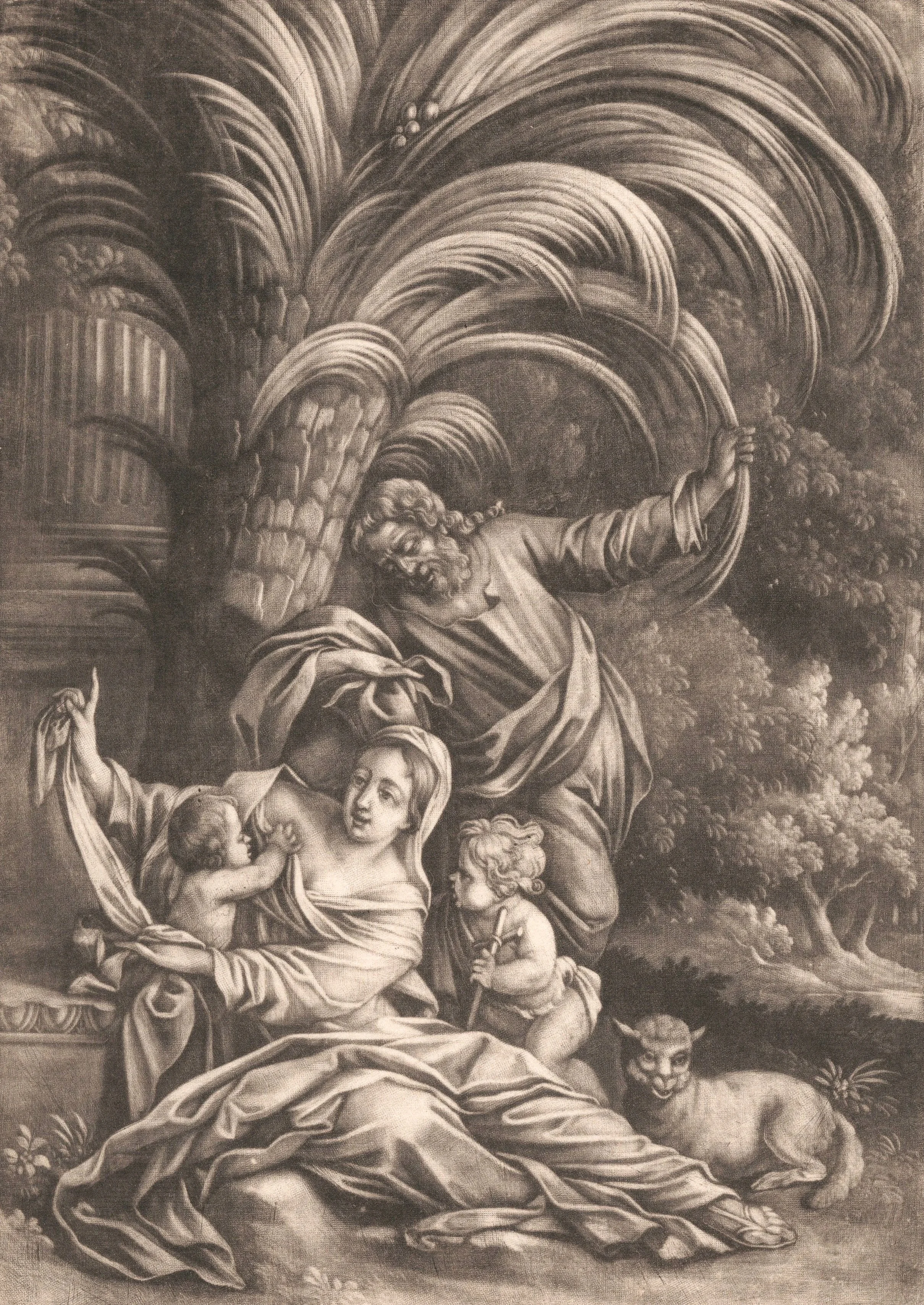
Bernard Lens II, 1659–1725, The Holy Family, undated, Mezzotint on medium, moderately textured, cream laid paper, Yale Center for British Art, Paul Mellon Fund, B1970.3.1002.

Gilligan’s Island, 1964. TV show. Jim Backus, Nathalie Schaffer, Dawn Wells, Tina Louise, Bob Denver, Alan Hale, Jr., and Russell Johnson. RGR Collection / Alamy.
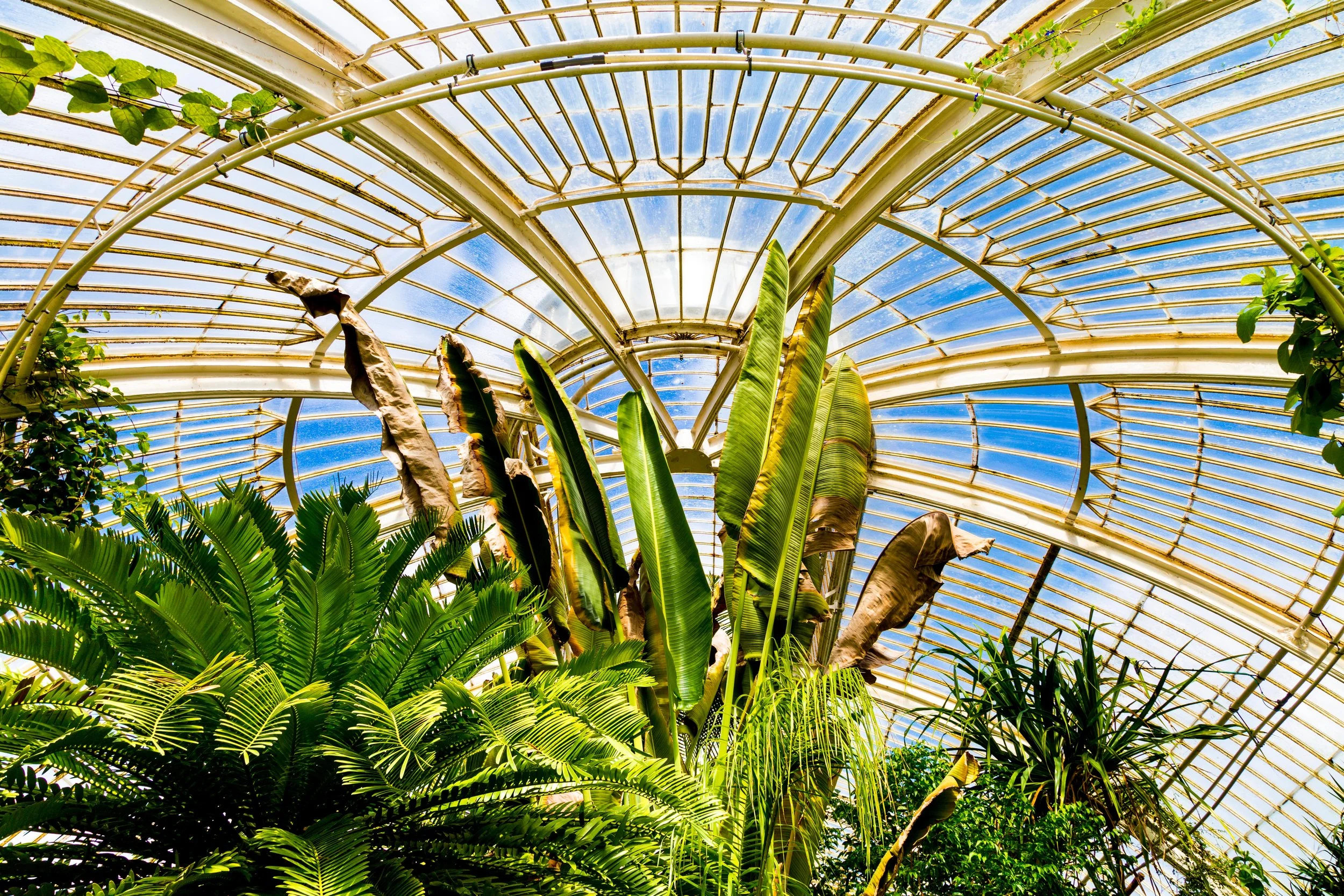
Interior roof of the Palm House, Kew Gardens, London, UK, 2019. Nathaniel Noir / Alamy.
Perhaps it is not difficult to explain why: the primary seats of imperialism and industrialism, Britain and Northern Europe, are not places where palm can grow – at least, not without technological assistance. The Palm House at Kew Gardens (completed in 1848, and an immediate precursor to the famed Crystal Palace) is one of several greenhouses constructed in the nineteenth century, in the interest of furthering “economic botany.” The tropical zones where the plant is propagated most intensively, meanwhile – Africa, Central and South America, and the Pacific – are precisely the geographies in which the twin procedures of colonialism and extraction have been applied with greatest ferocity.
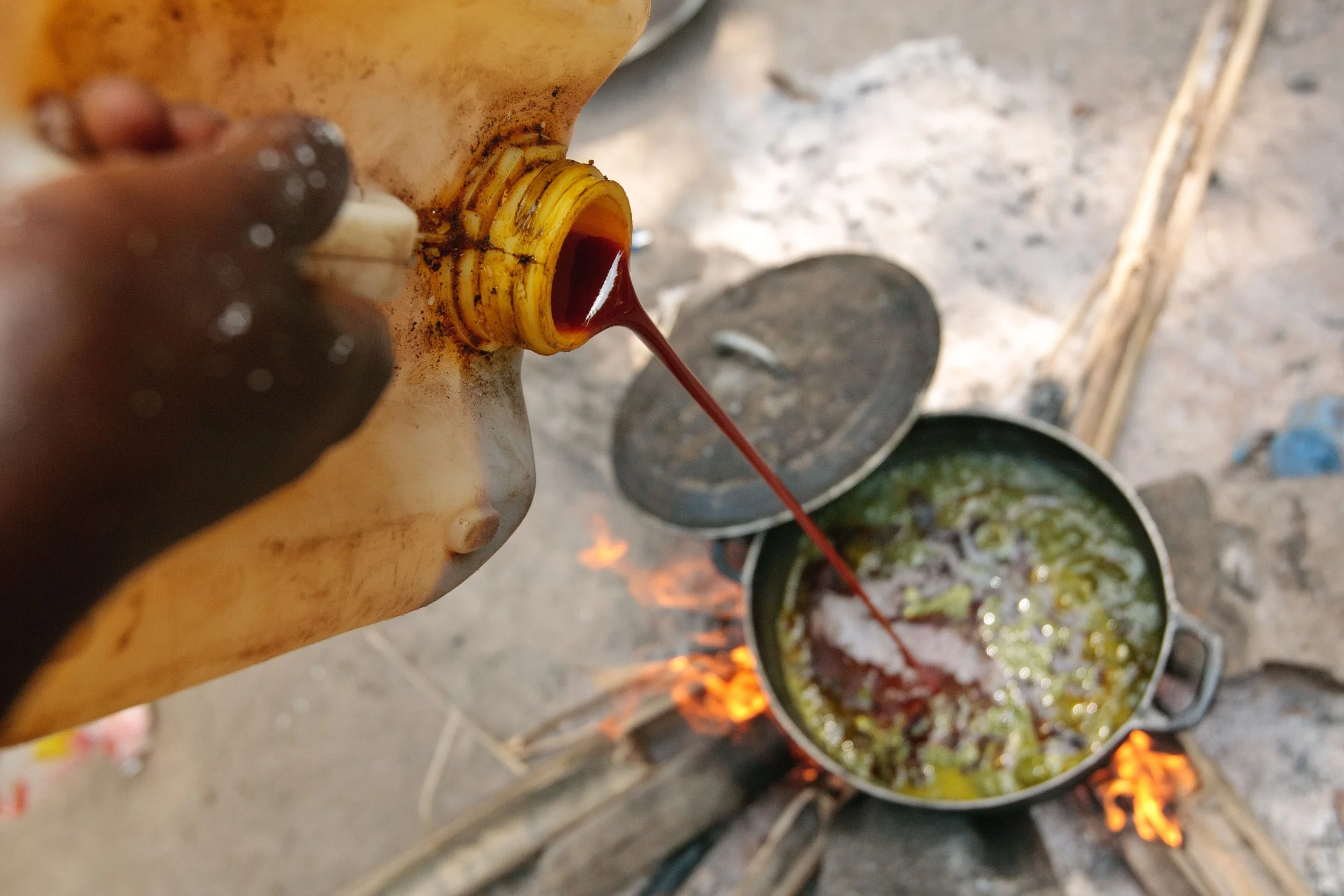
Edith Saysay, 35, pours palm oil into a pot as she cooks in the village of Jenneh, Bomi county, Liberia, 2012. Olivier Asselin / Alamy.
Given this geopolitical context, it comes as no surprise that the trade in palm products has often been brutally exploitative. This is a much less well-known story than that of cotton or rubber (which has a similar geographical footprint), but one that has touched the lives of countless millions. In Indonesia and Malaysia, where the great majority of palm oil is produced today, labor conditions are often terrible. Efforts to crack down on human rights violations like trafficking, child labor and enslavement are made difficult by extended supply chains and the remoteness of rainforest plantations. Deforestation is also a major concern, as biodiverse land is converted into monocrop agriculture.
One especially striking (and dangerous) type of palm work is “toddy tapping,” widely practiced in India and Sri Lanka. Workers ascend to the top of palmyra palm trees, which may stand fully 30 meters high, to obtain sweet sap from the flowerheads – the primary ingredient in palm wine – collecting it in clay pots tied to their waists. Despite efforts to improve the conditions and pay, it remains an occupation of last resort; as one tapper from Kerala puts it, “most men turn to tapping reluctantly, knowing that once they start, they’ll be bound to those palms until the day they die.”
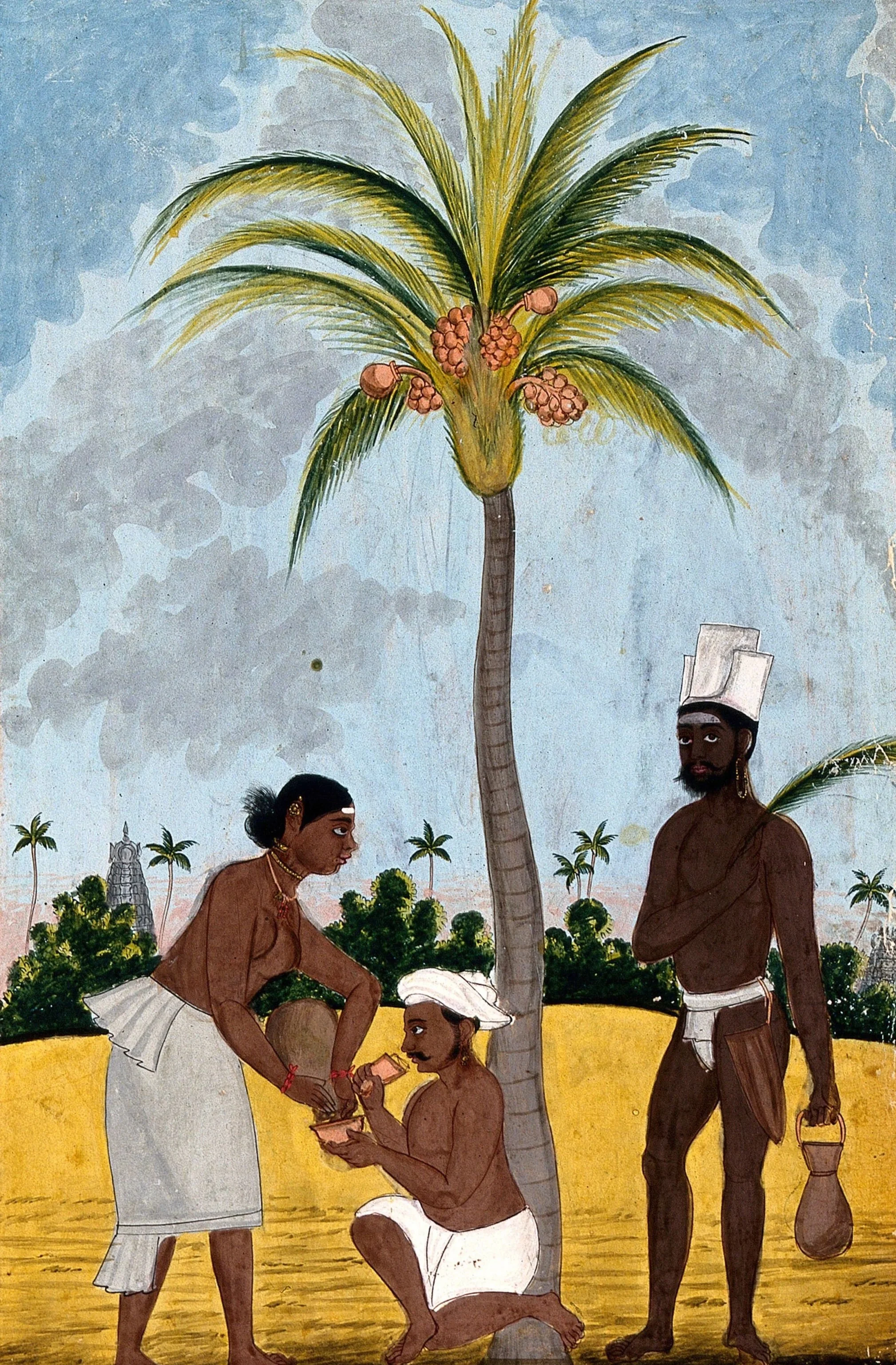
Attributed to a painter from Tanjore (Thanjavur), Toddy tappers at work: two men and a woman by a palm tree, 18--. Gouache drawing. Wellcome Collection. Source: Wellcome Collection.
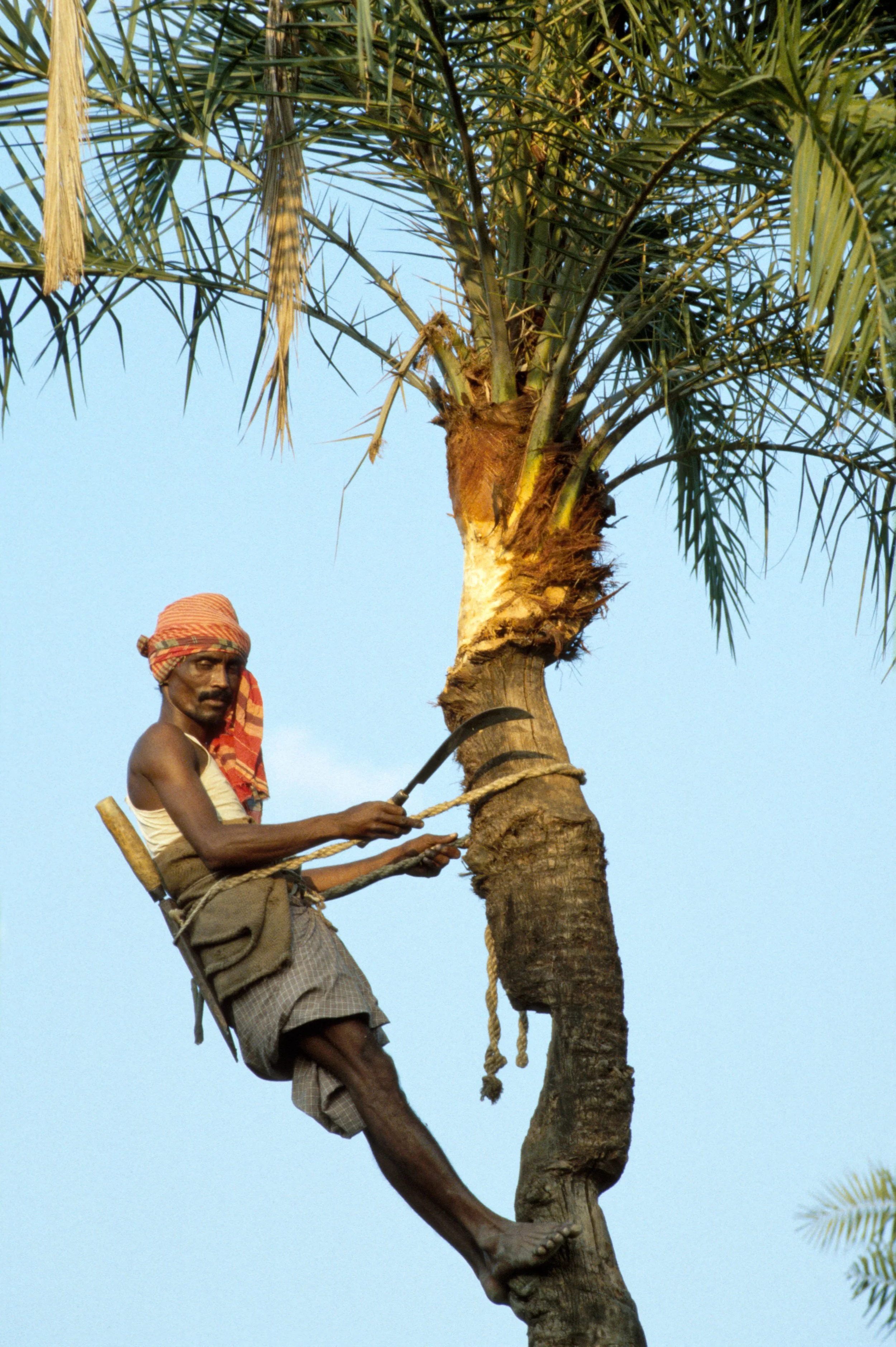
Toddy tapper in Kerala, S. India, 1994. Neil Cooper / Alamy.
Elsewhere, artisans have found enterprising ways to take advantage of the touristic economy in which palm trees occupy such a prominent place. The anthropologist Kristina Dziedzic Wright tells the story of Murage Ngani Ngatho, a worker in the jua kali (literally “hot sun”) sector on Lamu, off the coast of Kenya. The island has little in the way of resources, with the exception of coconut palms. The people there had long made use of the wood from the trees’ trunks, but it wasn’t until the 1970s that Ngatho invented handmade tools for carving the shells – previously a waste product – into jewelry and bowls. He began selling his wares on the beach, and within a short time Lamu was home to a thriving cottage industry of coconut carvers, who honored their teacher with the sobriquet “cleverest of the clever.” European tourists happily brought their objects home as souvenirs, believing that they were helping sustain a centuries-old craft tradition – and unwittingly extending the long history of collecting coconuts as exotic curiosities.
As with any material, the greatest fascination of palm – which is not a single substance, but a whole botanical complex – lies in the multifarious creative uses to which its derivatives have been put. The coconut is a perfect example. The Edo people of historic Kingdom of Benin – renowned for the sophistication of their cast bronzes and ivory masks – also fashioned lidded ceremonial vessels from intricately carved coconut husks, while sailors of the Marshall Islands tie the midribs of the palm’s fronds into “rebbilibs,” navigational charts widely admired for their ingenuity and seemingly abstract beauty. The coconut’s flesh, milk, and edible soft core (“heart of palm,” also found in the açaí, palmetto and other species), meanwhile, are put to delicious purpose in cuisines from the Indian Subcontinent to the Caribbean Sea.

Marshall Islanders, Navigation chart ('rebbelib'), Palm leaf, bast, and shell. The British Museum, Donated by: Irene Marguerite Beasley, Oc1944,02.931. © The Trustees of the British Museum. Shared under a Creative Commons Attribution-NonCommercial-ShareAlike 4.0 International (CC BY-NC-SA 4.0) licence.
The coconut has also been prized for its sonic capabilities. Half-shells can be used as the resonators for the mbira (the African thumb piano, also known as a kalimba), and as anyone who has seen Monty Python and the Holy Grail will remember, they are ideal for simulating horse hoofs. Foley artists in the film industry really do use them for that purpose, as well as the simulation of other sounds. To create the impression of a head being lopped off in the 2005 Ridley Scott movie Kingdom of Heaven, effects supervisor Alex Joseph used a green coconut. “The outside is fibrous so it cuts like skin,” he explains, “And the hard shell sounds like bone. Inside is the jelly, which sounds like blood. When you slice into it, it sounds just like a human head… I imagine.”
Two other palm products that have received extensive creative use are rattan and raffia, easily confused, but sourced from different plants. Rattans are a family of climbing and creeping palms – lacking a woody trunk – that yield strong but flexible shoots. These can be split into canes, widely used in wickerwork, basketry, and furniture. The distinctive octagonal weaving pattern seen on Thonet-style café chairs, like the material itself, originates from Southeast Asia; both were first brought to Europe by Dutch merchants establishing trading networks in the Pacific. From the Netherlands caned furniture made its way to England, where it underwent a massive surge of popularity following the Great Fire of London in 1666. The whole city suddenly needed something to sit on, and caned “bottoms” and backs were an expedient solution.

English, Cane great chair, about 1700–10. Walnut and cane. 53 x 23 x 17 3/8 in. The Museum of Fine Arts, Boston, Museum purchase with funds donated anonymously.

Loewe lion tote bag beach bag raffia shopping bag Düsseldorf North Rhine Westphalia Germany, 2024. IMAGO / Michael Gstettenbauer / Alamy.
Raffia, meanwhile, is a term taken from the Malagasy language of Madagascar, meaning “to squeeze juice.” This refers to the use of the sap to make an alcoholic beverage, but the raffia palm (Raphia regalis) is better known internationally for its remarkably long leaves – the longest of any plant, in fact, measuring up to an astonishing 20 meters. Its soft but resilient fibers are an ideal material for weaving, and have been used for textiles (most famously by the Kuba people of Central Africa), baskets, hats, and other products. Raffia, along with similar palms such as the South American iraca, is a comparatively sustainable fiber, and also biodegradable, and has recently found favor among couture houses; it seems a little strange that you can buy a bag for over $5000 when the material costs a few cents, but hey, that’s fashion for you.
As this international survey suggests, one reason for palm’s huge imprint is its sheer variety. Within the vast panoply of this botanical family are towering trees and trunkless creepers, dwellers of deserts, grasslands and rainforests all across the midsection of the Earth. That’s the hottest part of the globe, of course, and as it gets still hotter, palms are moving north and south (itself a negative climate impact, as the deciduous and coniferous trees they are displacing usually absorb more carbon). For all their profusion, somewhat counterintuitively, palms are themselves increasingly endangered, as less economically significant species – as many as half of the total known number – are threatened by temperature change, habitat destruction, and increasing pests.
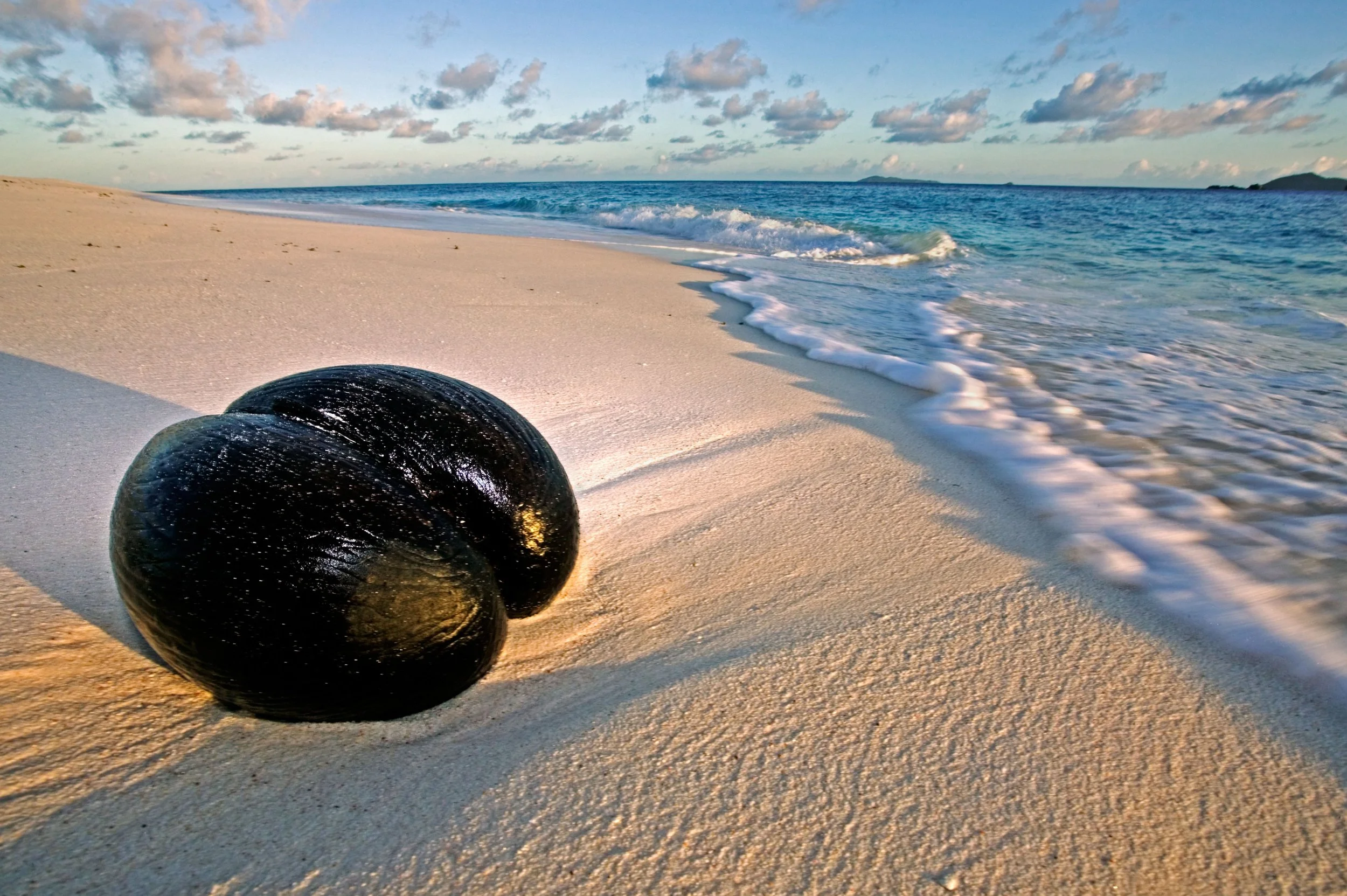
Coco de mer palm seed Lodoicea maldivica Seed washed up on beach Worlds heaviest seed Vulnerable Seychelles, 2004. Martin Harvey / Alamy.