A tropical toolkit
Vu Horwitz
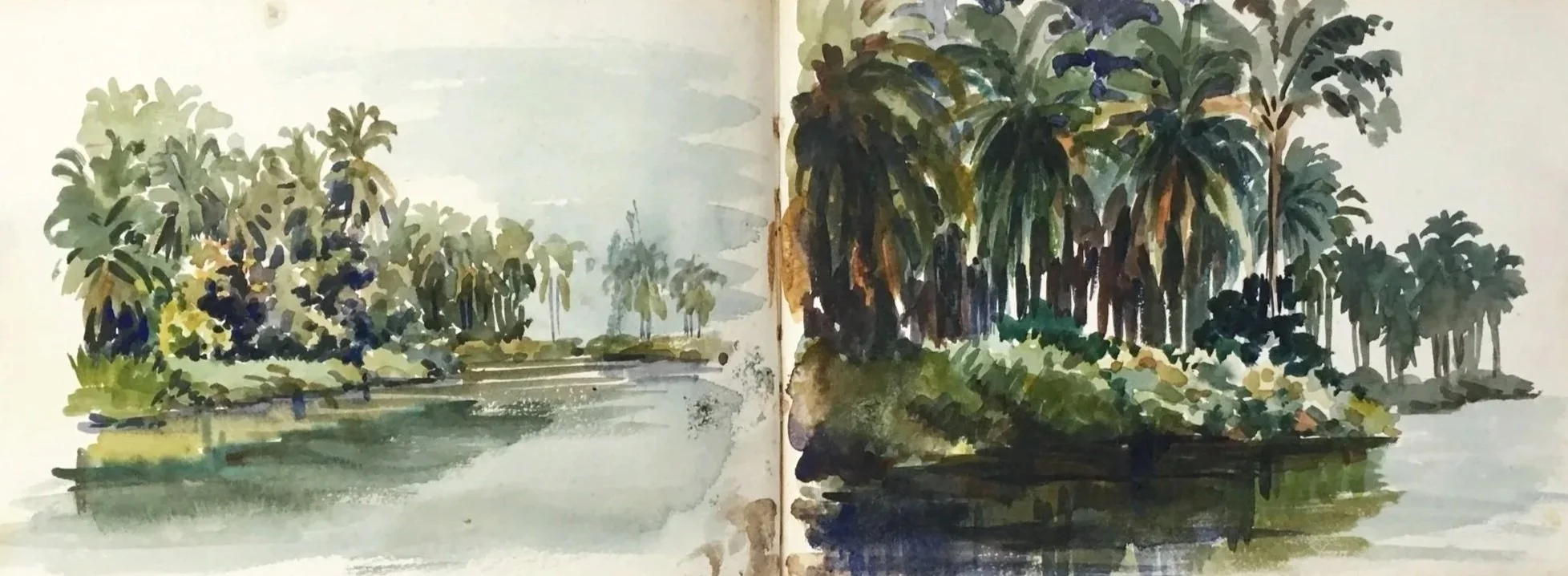
W.F.P. Burton. Untitled. N.d. From Sketchbook 2. Wits Art Museum. Photographed by the author.
Close your eyes and think of a tropical paradise. Not a beach, in this case, but a stretch of lush Central African forest, or the banks of the Congo River. Palms, with their elongated bare trunks and crowns of splaying leaves, will almost certainly be central to the scene. For many of us, they are the icons of tropicality: a kind of visual shorthand for heat, humidity, and the fantasy of a slower, more relaxed way of life.
In Central Africa, however, palms are far more than a scenic backdrop. They are working plants, woven into the production and maintenance of everyday life. They help feed, clothe, shelter, and heal, and support a web of animals from birds to monkeys and humans. Ecologists describe African palms as “keystone” species, which provide essential ecosystem services but are now under pressure from climate change and habitat loss.
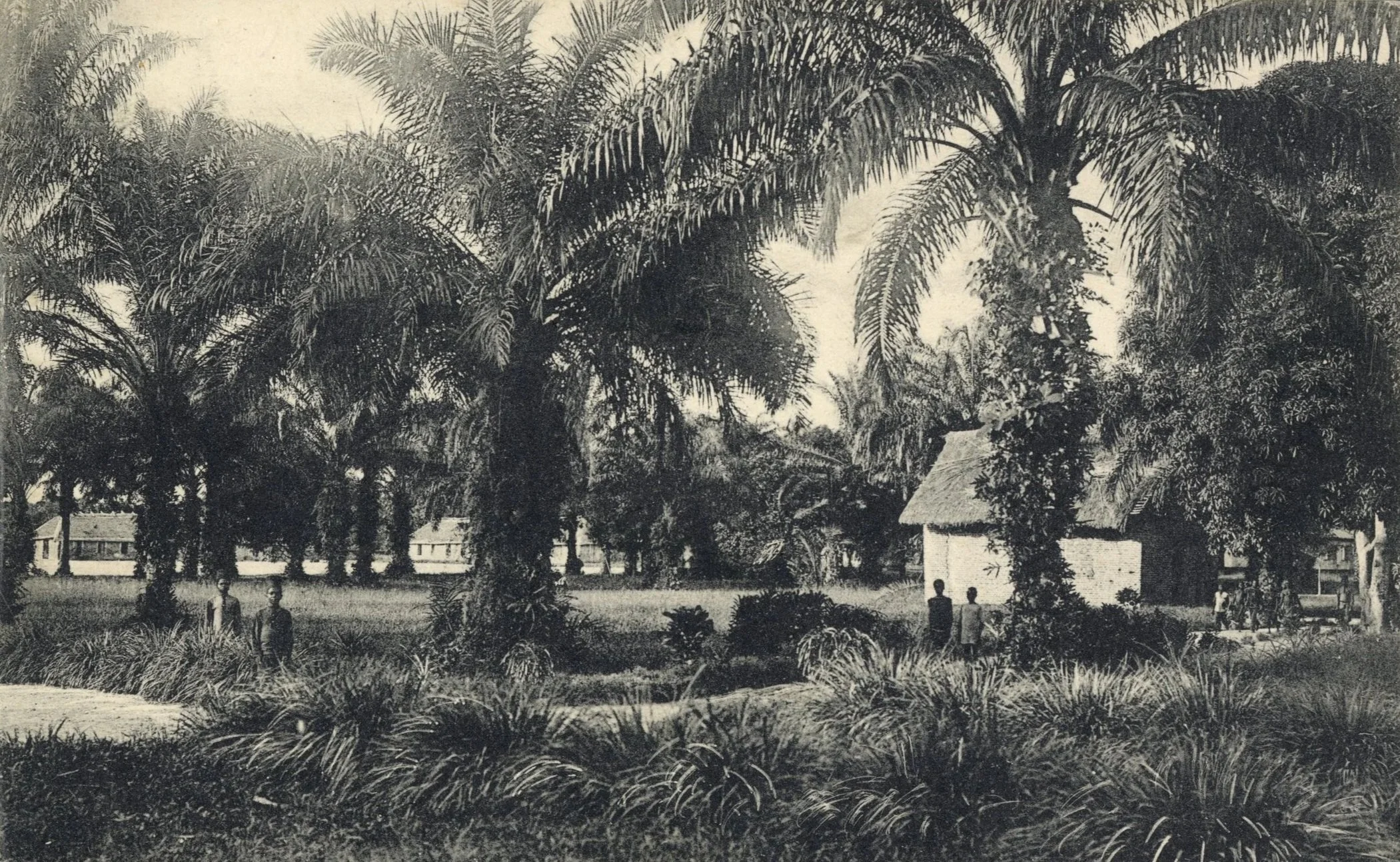
Buildings screened by palm trees, Congo, ca. 1920-1940. Photographic postcard. Yale Divinity Library Special Collections. Divinity School. Day Missions Library, OID 11455645.
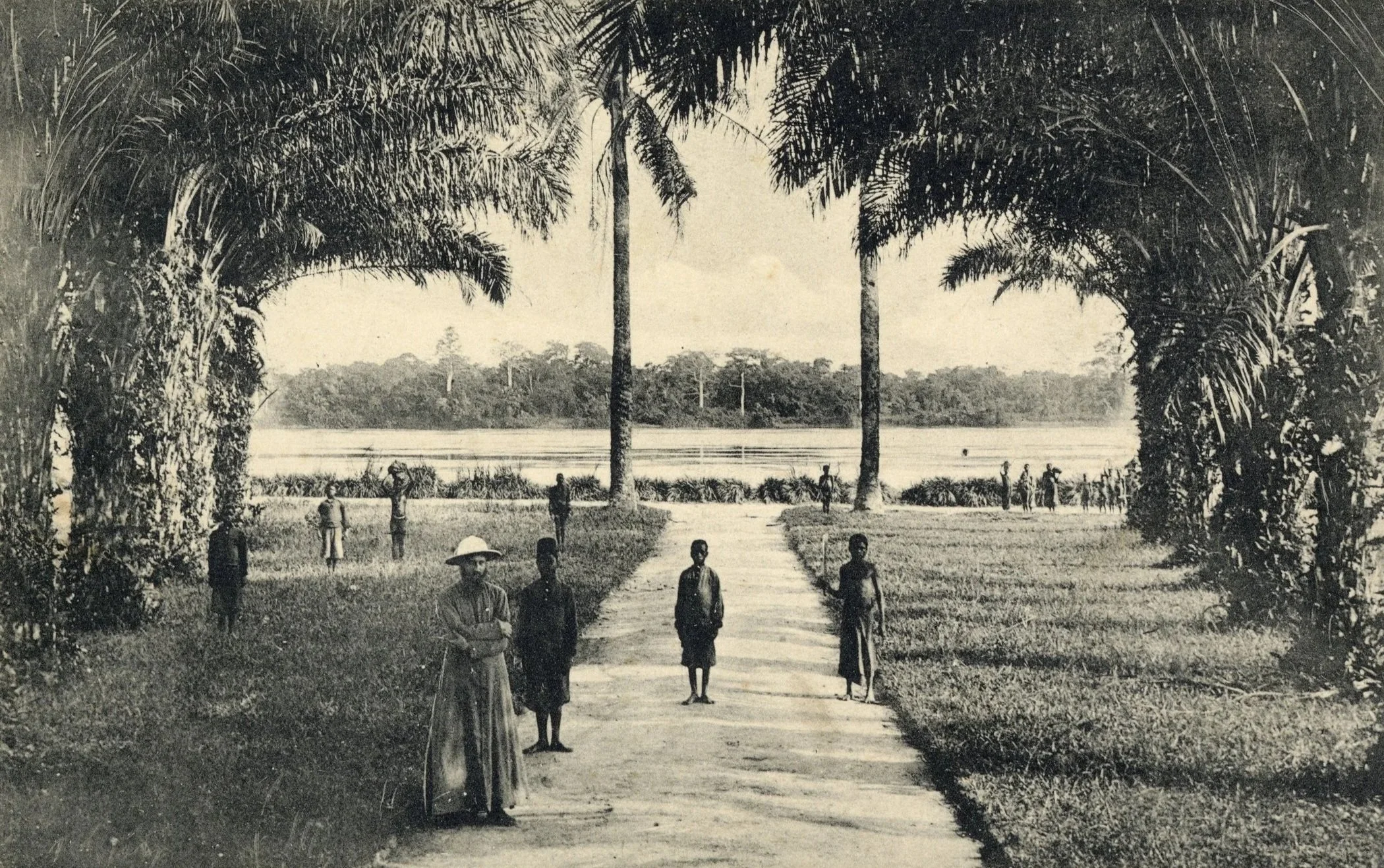
People standing on a walk between palm trees, Congo, ca. 1920-1940. Photographic postcard. Yale Divinity Library Special Collections. Divinity School. Day Missions Library, OID 11455633.
As plant scientists note, strictly speaking, palm trees are actually not trees at all, in the botanical sense. They are monocotyledonous plants, more closely related to grasses and bamboo than to oaks or maples. They are at once crop and canopy, household resource and landscape marker.
Across Central Africa several species are prominent, both in the landscape and the human economy. The African oil palm, Elaeis guineensis, thrives in humid forests and village groves; its dense clusters of red fruits are a familiar sight. Raffia palms (Raphia species) form towering stands in swamps and along rivers, their fronds among the longest leaves in the plant kingdom, with Raphia regalis measured at up to 25 meters long. In drier or more open areas, the fan-shaped Borassus aethiopum and clumping wild date palm Phoenix reclinata occupy floodplains and riverbanks. Along the Atlantic coast and in some estuarine zones, the coconut palm (Cocos nucifera), historically introduced, has also become part of this landscape. Together, these palms form what we might call a living toolkit: a small group of species that collectively supply many of the materials needed for daily life.
Collectively, these palms also make up a living architecture for biodiversity; they are both larders and apartment blocks. Their fruits feed chimpanzees, baboons, duikers, birds, and bats, which in turn disperse palm seeds and help regenerate groves. Raffia swamps stabilize wet soils, buffer floods and help maintain peat-rich wetlands in the Congo Basin. Farmers, well aware of these benefits, often spare young Elaeis or Raphia when clearing fields, and tappers learn to cut flower stalks for sap without killing the plant.
The best-known Central African palm is perhaps Elaeis guineensis, the African oil palm. Its fruits yield two kinds of oil: a deep red oil from the fleshy mesocarp, often referred to in francophone Central Africa simply as huile de palme rouge; and a paler oil from the kernel, known as huile de palmiste. These have long been staples in local cooking, used to fry and smoke fish, enrich stews, and preserve foods such as dried cassava, as well as to make soap and other household products. The oil palm is now a global industrial crop, but in village kitchens it remains first and foremost a source of calories – and flavor.
Other palms contribute to nutrition and subsistence as well. The fan palm Borassus aethiopum provides starchy, sweet fruits and edible seedlings; its pulp can be eaten fresh or processed, and in some areas the inner pith is turned into a coarse flour used in porridges and local breads. People sometimes harvest the tender palm hearts of Raphia species and Phoenix reclinata as vegetables, though this usually kills the plant and is therefore done selectively.
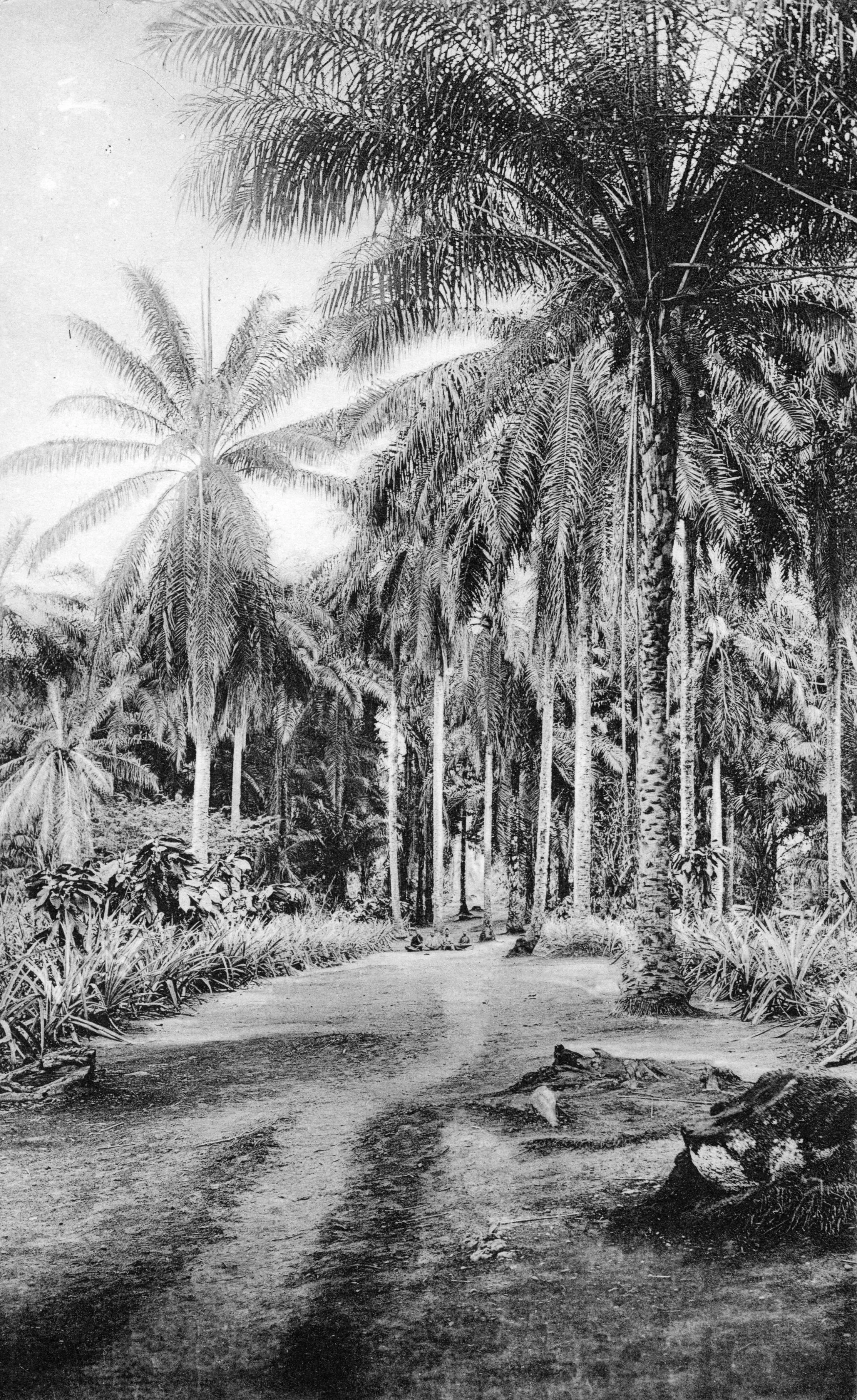
Palm trees, Kangu, Congo, ca. 1920-1940. Photographic postcard. Yale Divinity Library Special Collections. Divinity School. Day Missions Library, OID 11454962.

Large palm trees, Congo, ca. 1920-1940. Photographic postcard. Yale Divinity Library Special Collections. Divinity School. Day Missions Library, OID 11455901.
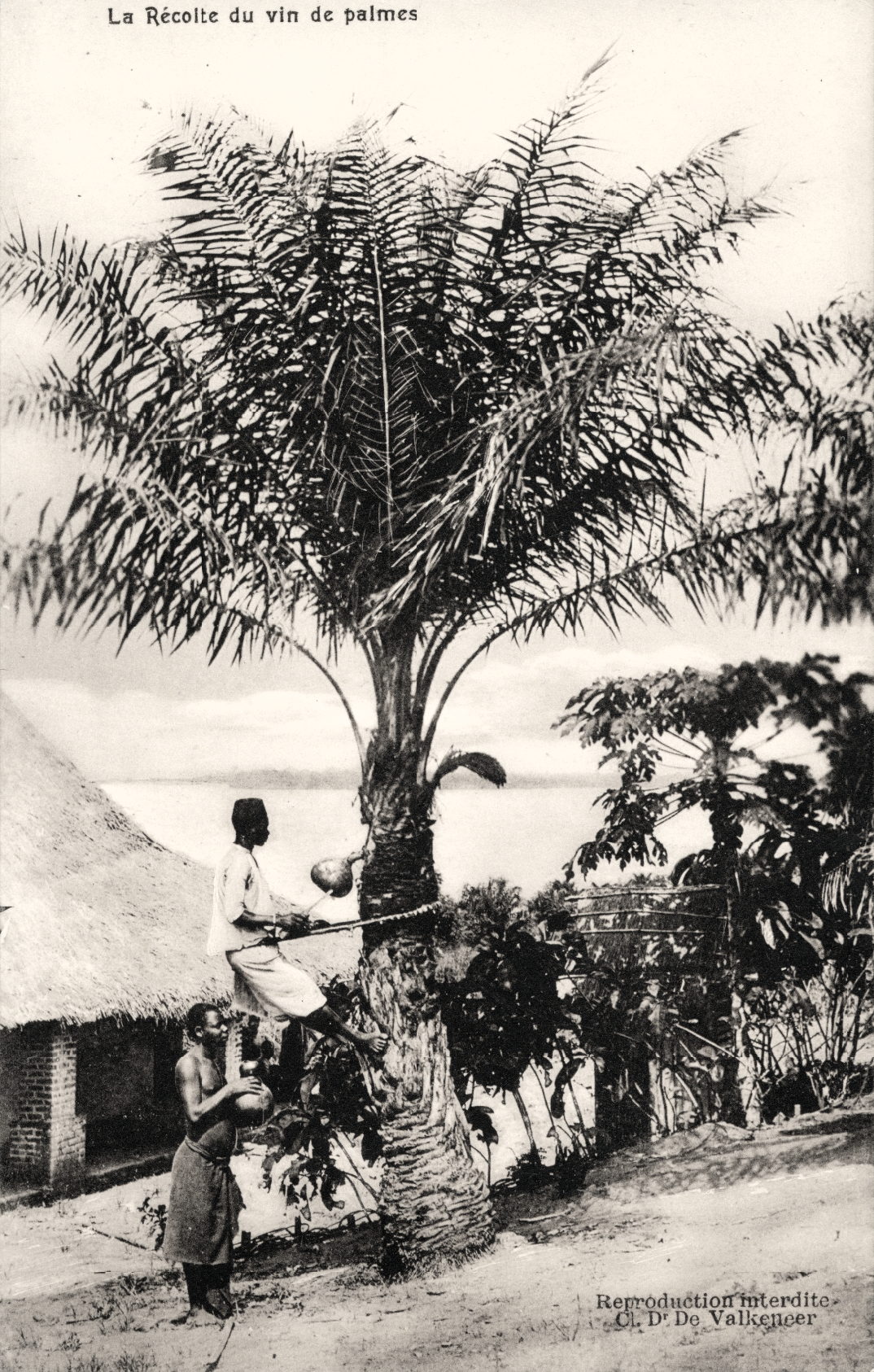
Man tapping a palm tree for palm wine, Congo, ca. 1920-1940. Photographic postcard. Yale Divinity Library Special Collections. Divinity School. Day Missions Library, OID 11478505.
Palms are also tapped for their sap, which is sweet and nutritious when fresh. It rapidly ferments into palm wine – a milky alcoholic drink that serves both as everyday refreshment and ceremonial beverage. In parts of Central Africa, tappers climb Raphia hookeri or cut its flowering stalks to collect sap, while in other West and Central African regions, Phoenix reclinata and Borassus aethiopum are tapped. Within minutes, natural yeasts and bacteria colonize the fresh sap, transforming it into a wine that becomes quite potent over time, souring into vinegar within a day or two. Sometimes, this wine is distilled to a spirit beverage often described as “local gin.”
Palm wine is the choice libation for weddings, funerals, and, importantly, ritual initiations. It is poured as an offering to ancestors and it forms an integral part of the symbolic and social life of Central Africans. Further, it is a recurring symbol in the myths and fables that animate these dimensions of life – a reminder that these plants nourish both metaphysical and physical life.
Many palm parts also double as medicine. Ethnobotanical and ethnopharmacological studies describe Elaeis guineensis as a “multi-purpose tree” whose oils and other parts treat skin problems, wounds, fevers, and even cardiovascular problems. The raffia palm Raphia hookeri likewise features in traditional remedies: its roots, sap, fruits, and leaves are used for ailments ranging from digestive issues to infections, alongside its better-known role in wine production. Healers may also use palm leaves and fibers symbolically, for cleansing, protection, or marking out ritual space. In practice, it is difficult — indeed impractical — to draw a hard line between the medicinal and the spiritual.
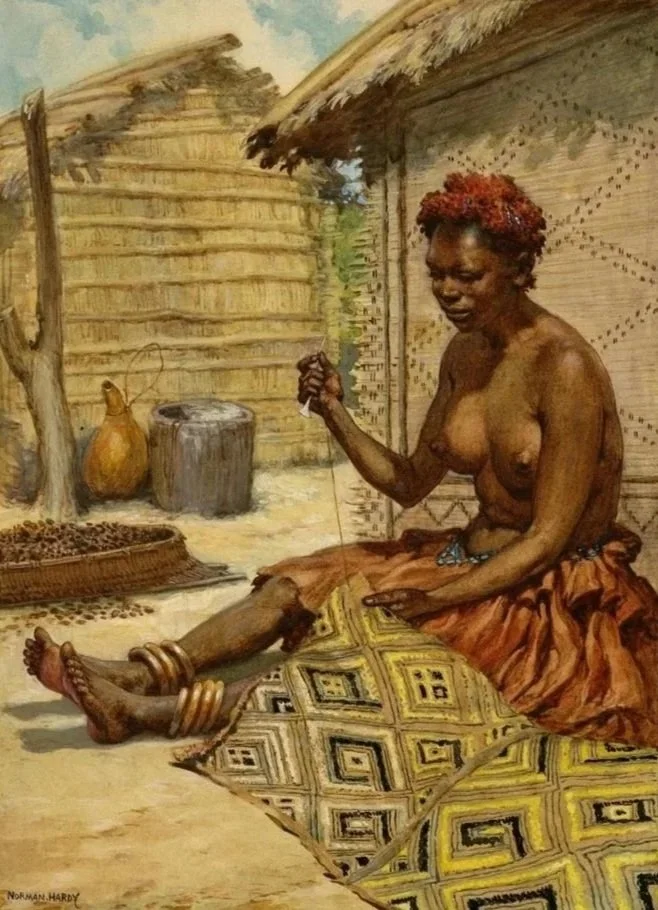
Norman Hardy, [Kuba woman embroidering raffia cloth], late 19th C. Watercolor and ink. (image): 10 7/16 x 14 3/8 in.© The Trustees of the British Museum. Shared under a Creative Commons Attribution-NonCommercial-ShareAlike 4.0 International (CC BY-NC-SA 4.0) licence.
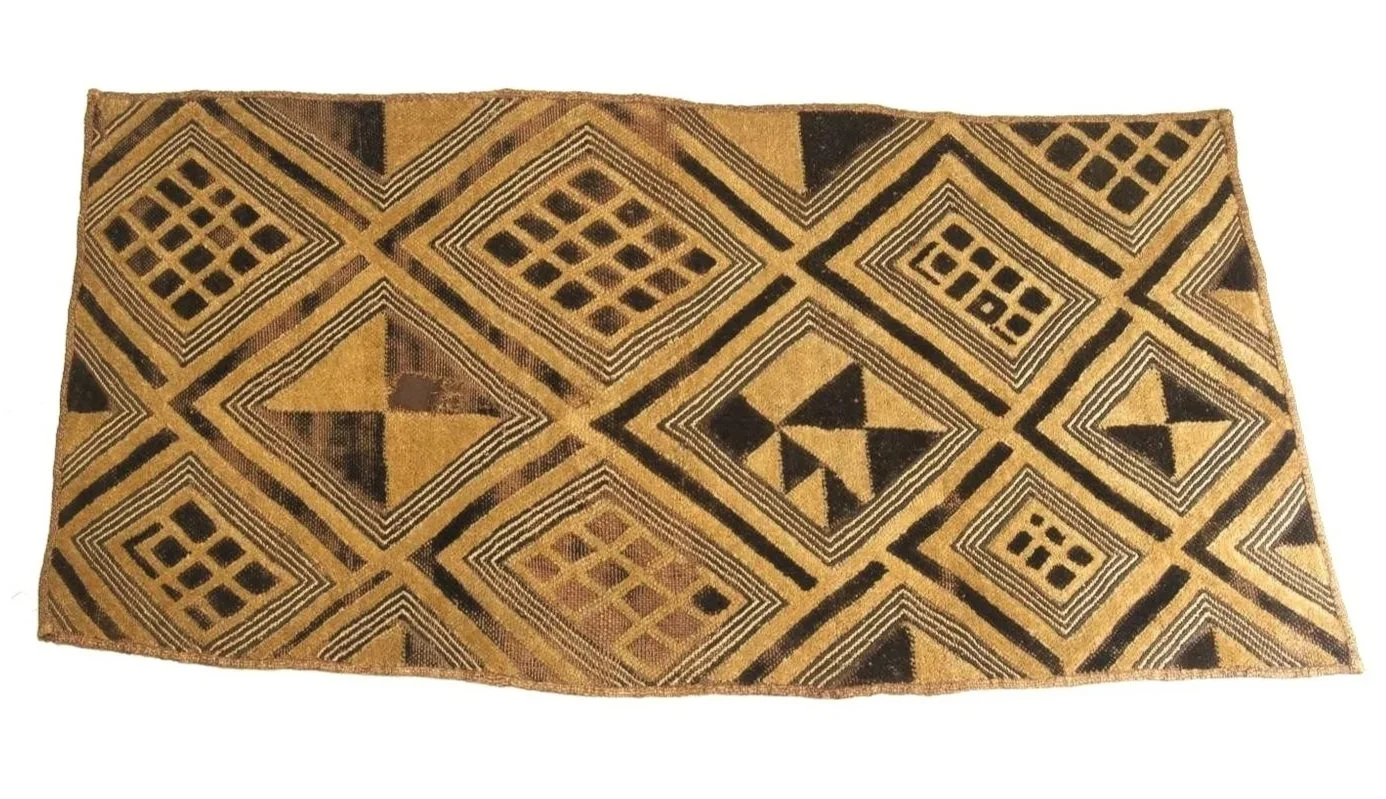
Kuba (Bushoong subgroup). Raffia Cloth, 19th century. raffia, 25 5/8 x 13 1/2 in. (65.0 x 34.2 cm). Brooklyn Museum, Museum Expedition 1922, Robert B. Woodward Memorial Fund, 22.1349. (Photo: Brooklyn Museum)