Tree of life, tree of faith
Samantha De Tillio
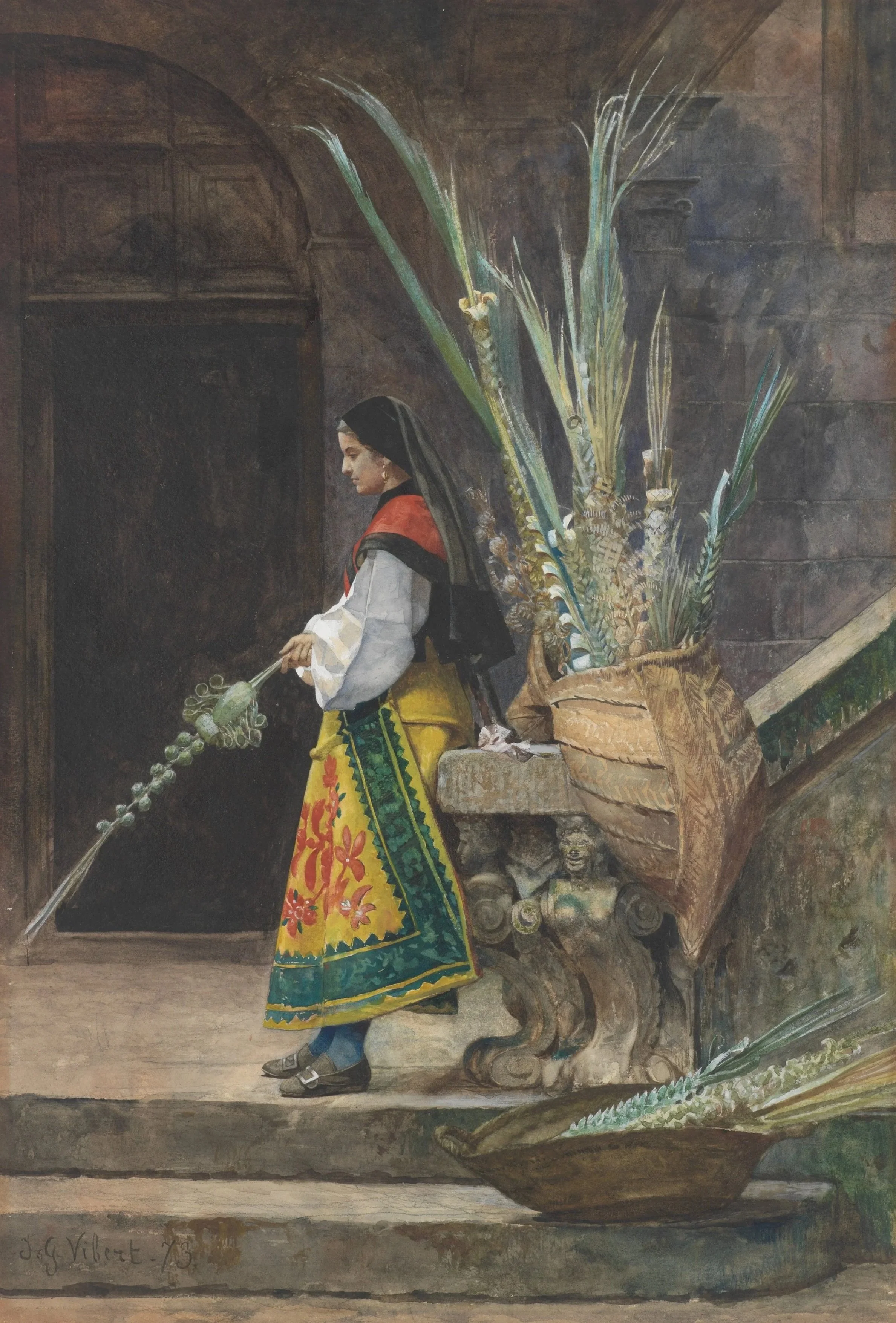
Jean-Georges Vibert (French, Paris 1840–1902 Paris), Palm Sunday in Spain, 1873. Watercolor. 20 1/4 x 13 3/4 in. (51.4 x 34.9 cm). The Metropolitan Museum of Art, New York. Catharine Lorillard Wolfe Collection, Bequest of Catharine Lorillard Wolfe, 1887, 87.15.11. www.metmuseum.org.
Palm Sunday is the genesis of Christian Holy Week, an allegorical chronicle of the time from Jesus's entrance to Jerusalem for Passover to His arrest, crucifixion, and resurrection. When I was a child in Upstate New York, growing up in a family of Italian and Greek descent, Palm Sunday Mass impressed me for its vivid narrative, accentuated by the rustling of dried palm fronds. It was as if we were gathered in a field of flax. As a prop in the Resurrection story, palm leaves offered busyness for idle hands. The fronds could be waved to and fro, uplifted and rhythmically punctuating the air, or in less sacramental moments, used in sibling sword play behind our parents’ backs. After Mass, the palms would adorn mirrors or icons in our home, eventually to be burned in the fireplace or returned to church, fated for foreheads next Ash Wednesday. The fronds could be left as they were – taking on gentle curves as they expanded and contracted with the summer’s rising humidity - or woven into various designs, most commonly crosses.
Palm weaving is primarily practiced in the Mediterranean region, in countries with Latin roots, or diasporic communities in the United States and elsewhere; a cross section of Christian and palm ecosystems. Italy, Mexico, Egypt, and Spain have prominent yet diverse traditions. In Northern and Eastern Europe, pussy willows, juniper, and other local branches are substituted, and Polish and Lithuanian Easter “palms” are confectionary-colored towers that reach several feet in height. German Palmbuschen are adorned with ribbons, hollow eggs, and apples, among other decorations.
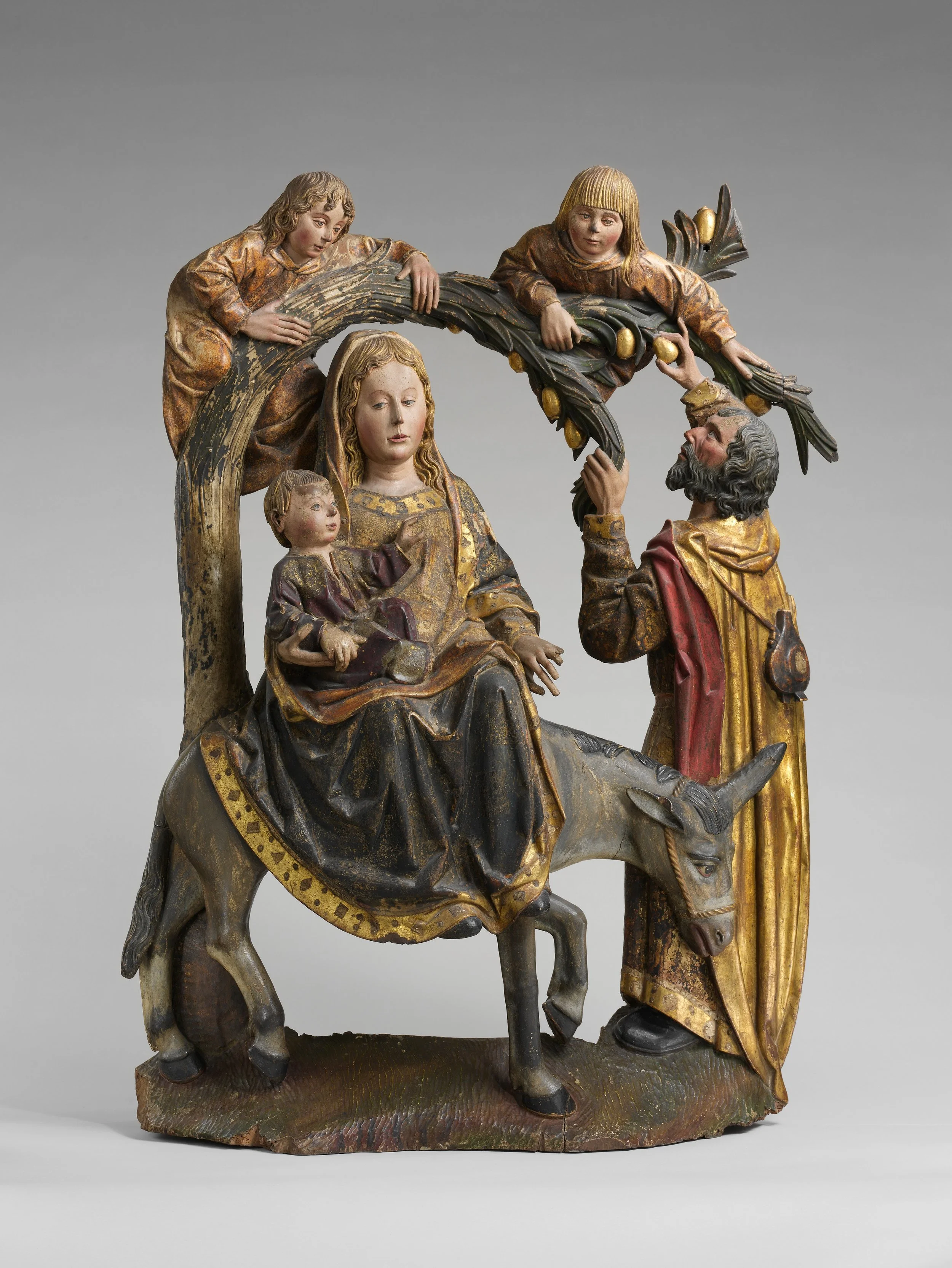
Made in Spain, The Miracle of the Palm Tree on the Flight to Egypt, ca. 1490–1510. Walnut, gesso, paint, and gilding, 49 3/4 × 36 1/2 × 10 1/2 in., 110 lb. (126.4 × 92.7 × 26.7 cm, 49.9 kg). The Metropolitan Museum of Art, New York. Rogers Fund, 1938, 38.184. www.metmuseum.org
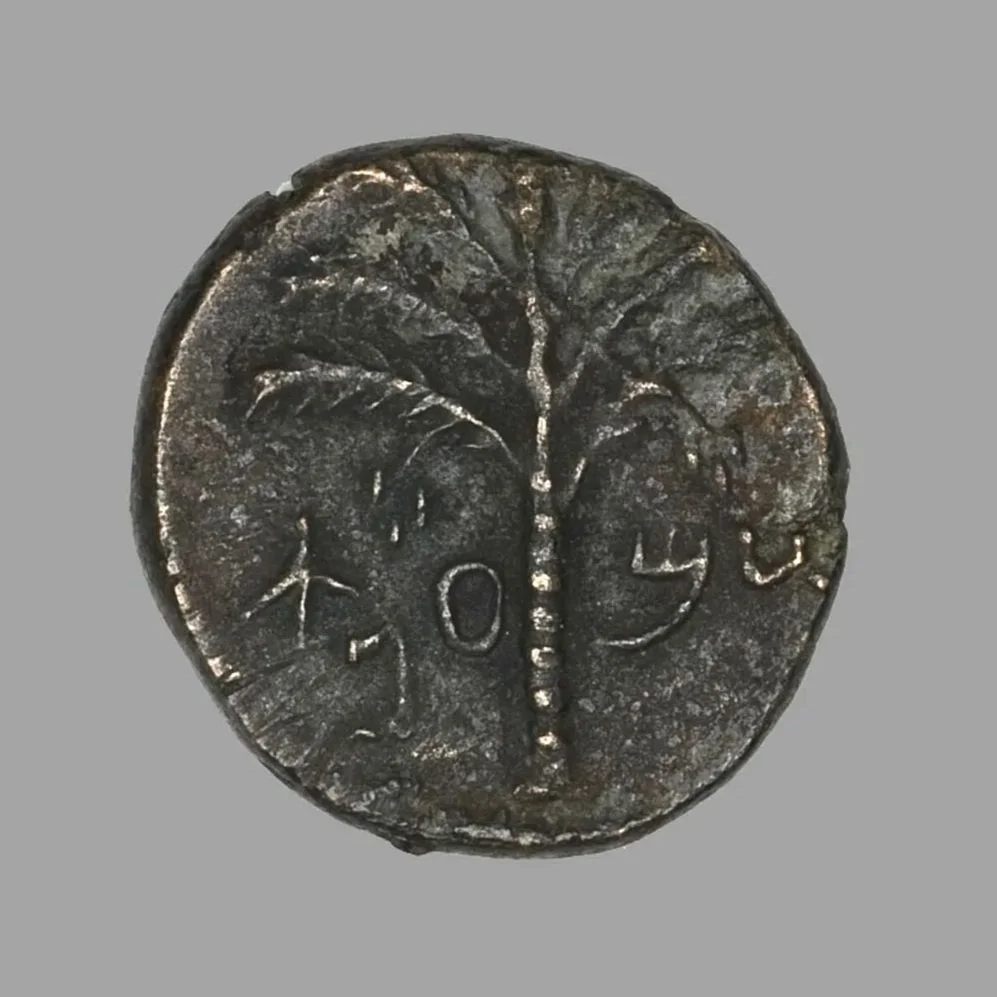
Ancient Roman, Coin Depicting a Palm Tree, 133 CE–135 CE. Bronze. 1 inch (diam.). The Art Institute of Chicago, Gift of William F. Dunham, 1920.2758.
The palm’s symbolic significance is rooted in pre-Christian antiquity. Date palms, often representing the Tree of Life, appeared on coins, mosaics, cylinder seals, and architecture across the ancient Mediterranean and West Asia. Associated with goddesses such as Isis, Inanna, and Hathor, the palm was then (and remains today) a sign of victory, peace, rebirth, wealth, and fertility. With the advent of the Abrahamic religions the date palm maintained its importance. A branch of the tree – in Hebrew, a lulav - is used in the harvest festival Sukkot to commemorate the Jews' forty years of wandering in the desert. In the Islamic tradition, which teaches that Mary gave birth to Jesus under a date palm, it is an emblem of rest, hospitality, and Paradise. The plant and its fruit is mentioned over thirty times in the Christian Bible, including in the description of Jesus’ entry into Jerusalem for Passover, the event that is commemorated on Palm Sunday: “On the next day, when the great crowd that had come to the feast heard that Jesus was coming to Jerusalem, they took palm branches and went out to meet him, and cried out: ‘Hosanna! Blessed is he who comes in the name of the Lord, [even] the king of Israel.’” (John 12:12-13).
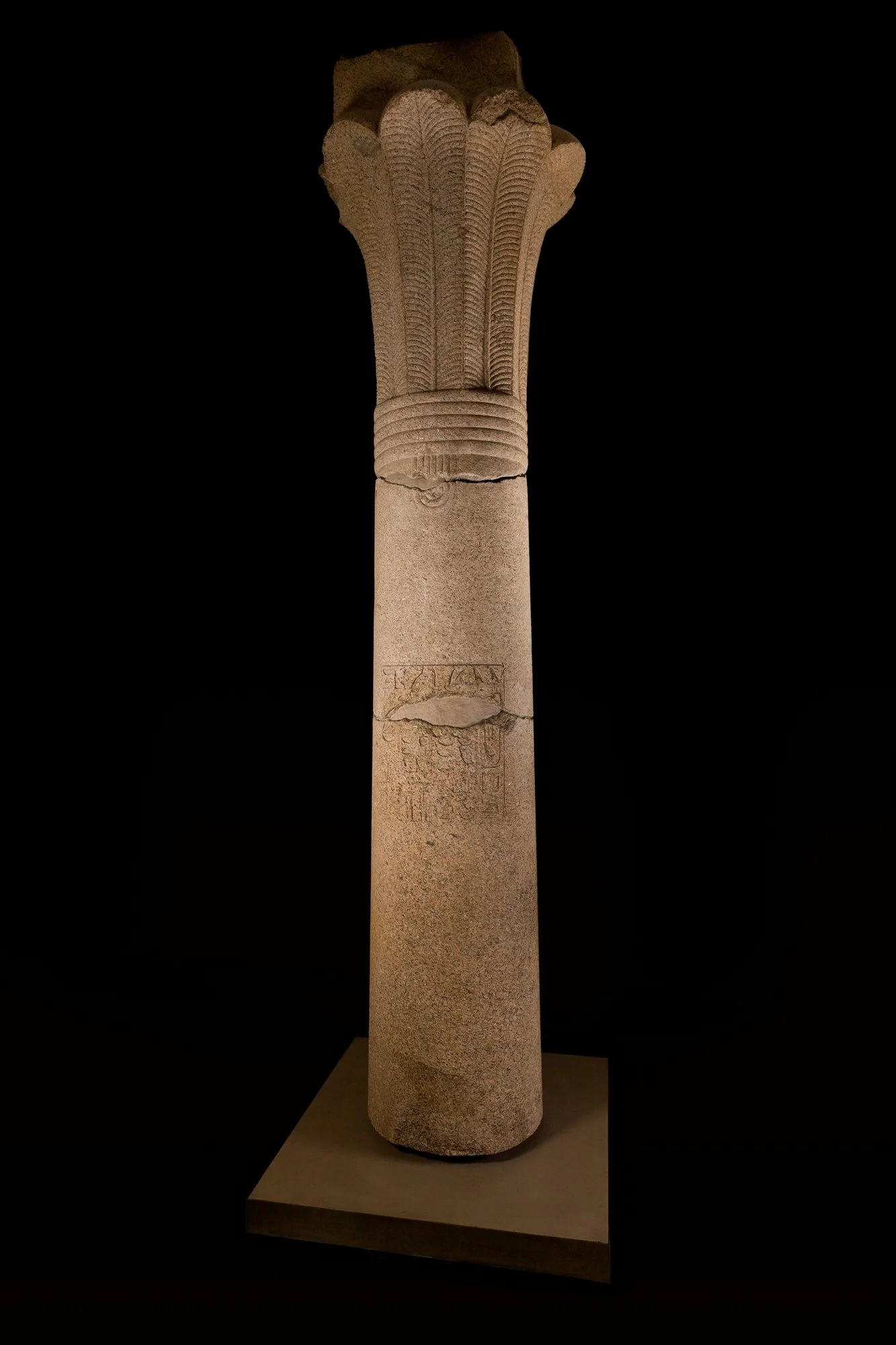
Old Kingdom, Dynasty 5, Palm Column of Sahure (From Egypt, Memphite Region, Abusir, Pyramid temple of Sahure), ca. 2458–2446 B.C. Granite, Total H. at arrival: 665.4 cm (21 ft. 9 15/16 in.); total H. now: 630 cm (20 ft. 8 in.); Diam. at foot: 86.4 cm (34 in.); Diam. above ring bands: 80 cm (31 1/2 in.); capital: H. 168 cm (66 1/8 in.); abacus: W. 87 cm (34 1/4 in.). The Metropolitan Museum of Art, New York. Rogers Fund, 1910, 10.175.137. www.metmuseum.org.
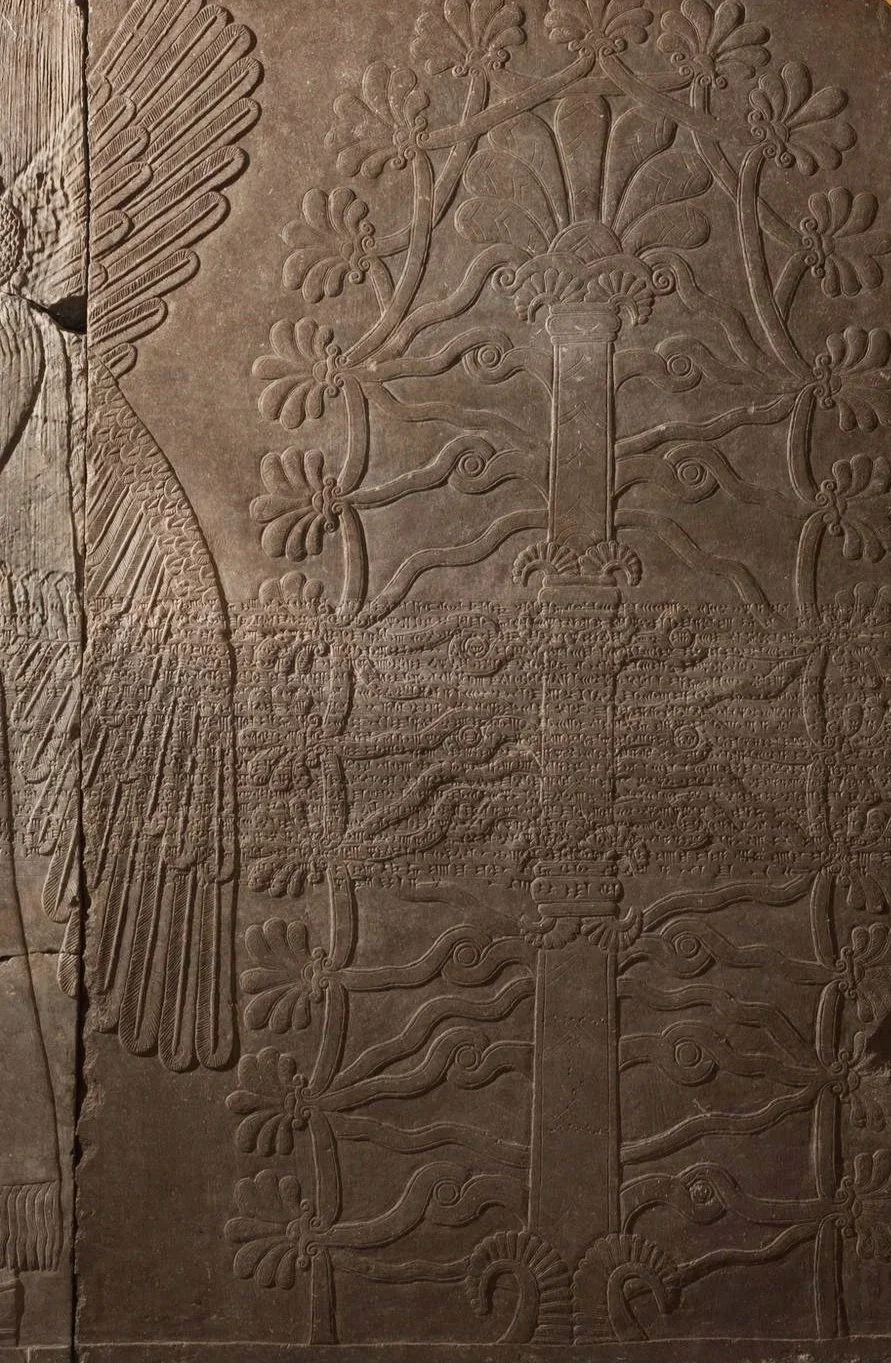
Assyrian; Ancient Near Eastern. Sacred Tree, ca. 883–859 B.C.E.. Gypsum stone, 89 7/8 x 53 9/16 in. (228.3 x 136 cm). Approximate weight: 2450 lb. (1111.31kg). Brooklyn Museum, Purchased with funds given by Hagop Kevorkian and the Kevorkian Foundation, 55.150. (Photo: Brooklyn Museum)
While palm leaves were used as a utilitarian material for weaving long before Christianity, the religious use of the craft is thought to have originated in Sicily. Eighty–nine-year-old Illinois native Gene Fideli's first experience with the material was as a child, watching parmaru (palm weavers) create elaborate crosses in the basement of his Catholic church. Later, through the Italian Cultural Center in Rockland, Illinois, Fideli – whose father emigrated from Varese near the Italian Alps – learned to create other forms including leaves, artichokes, and ribbons. Fideli weaves Easter Palms for his family and community, as well as the local churches, and has taught weaving workshops to people of various heritages throughout Illinois, Indiana, Wisconsin, and Michigan. He considers it his life's work to pass on these traditions.
All decorative palm weavings are constructed without the aid of adhesives or fasteners. The fronds dry easily, so they are refrigerated and periodically sprayed with water to keep them pliable. They are also sharp-edged, so weaving large quantities can be rough on the hands. The craft is mainly transmitted orally, but when instructions are written down, they read like those for a complex piece of crochet, needle work, origami, or basketry.
The most elaborate form of palm weaving is that of the parmureli made for celebrations of Palm Sunday in St. Peter's Square at the Vatican, attended by the Pope, cardinals, and bishops. Artisans from Sanremo, Liguria have made these towering creations, which reach upward of two meters since 1586, when the first parmureli were given to Pope Sixtus V. Deft hands guided by centuries of tradition manipulate large multi-frond constructions into foliate arabesques, flowers, bee hives, and even pictorial designs. The compositions can be so intricate that they resemble lace.
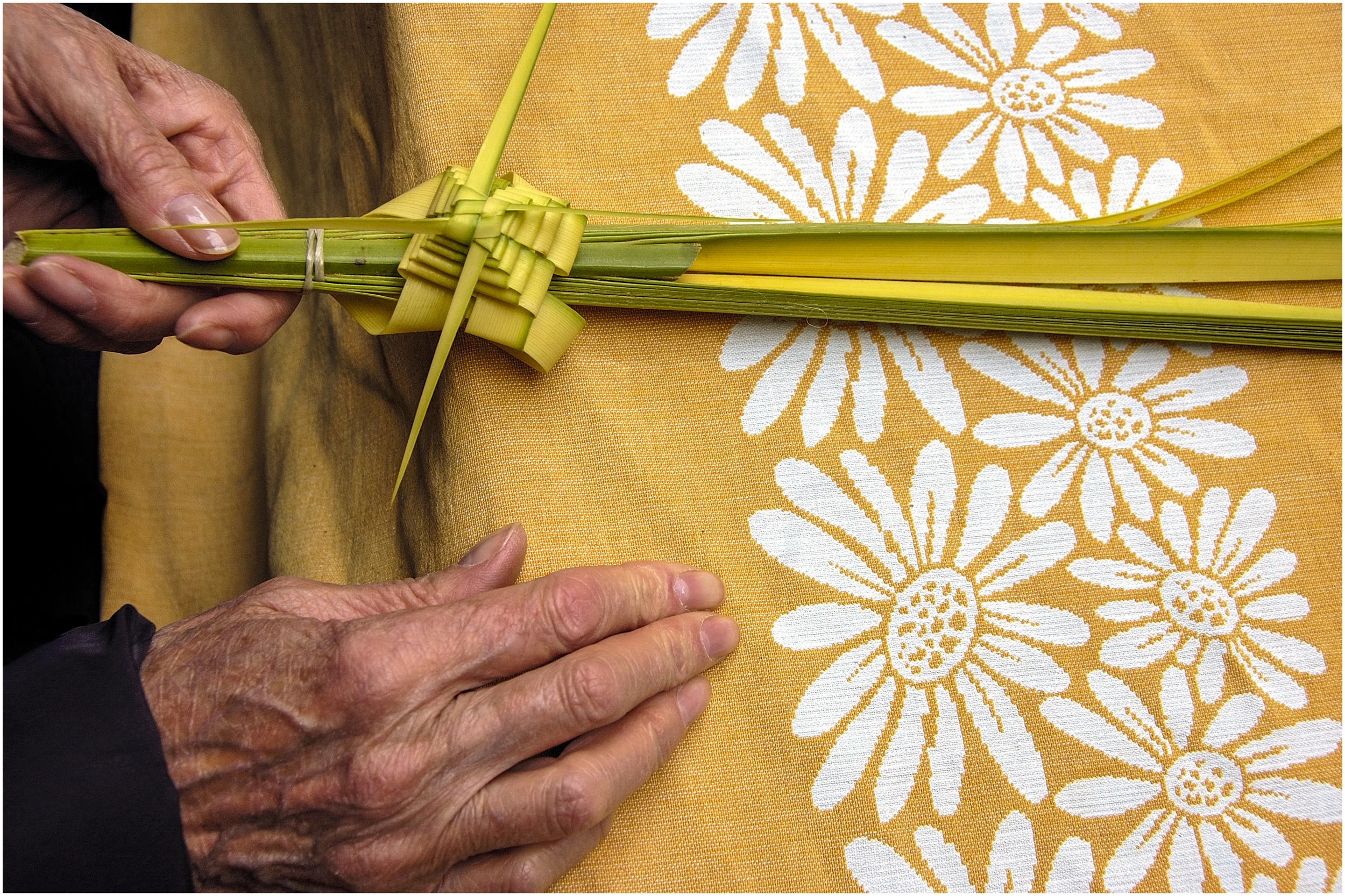
Parmureli. ©Ermanno D’Andrea
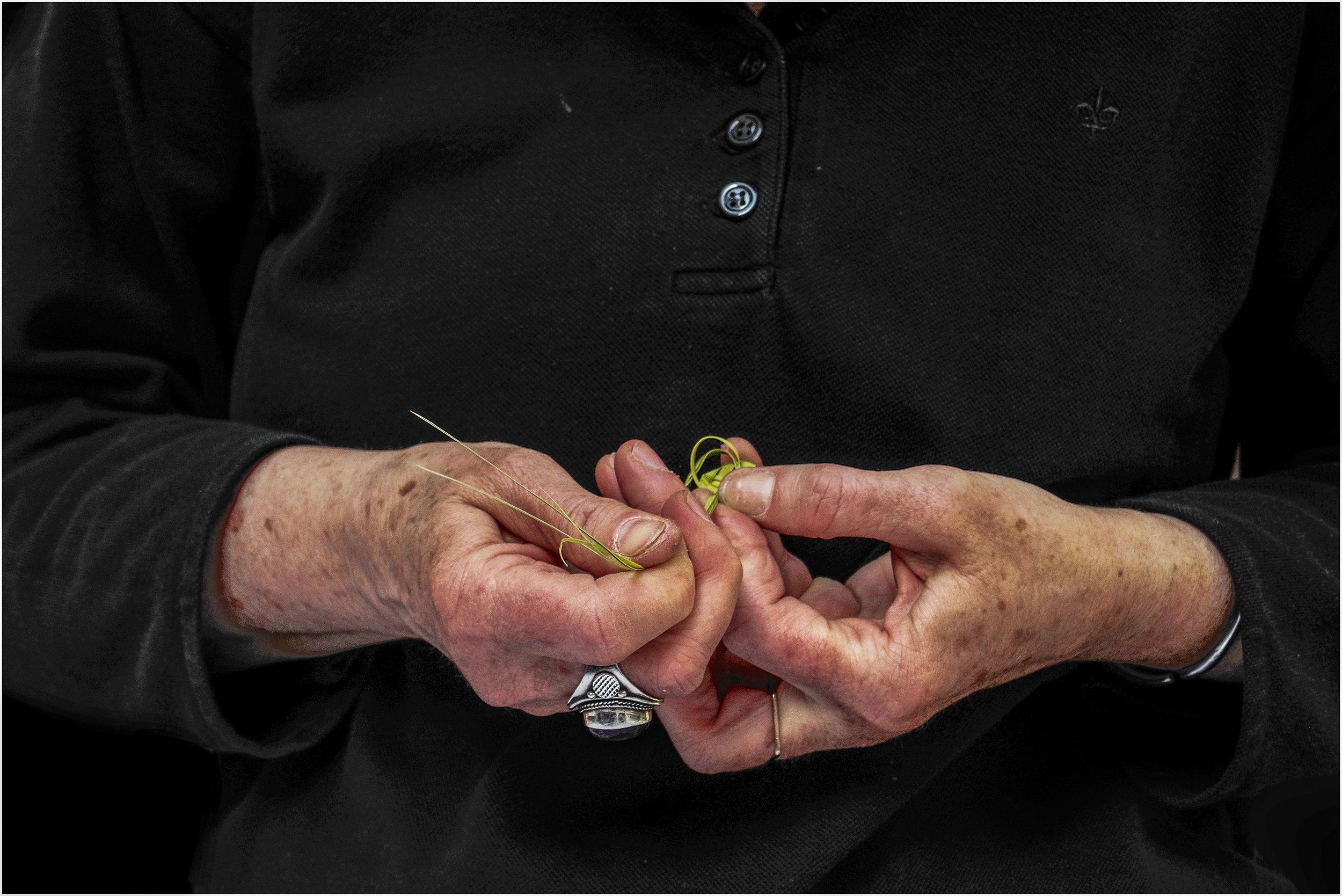
Parmureli. ©Ermanno D’Andrea
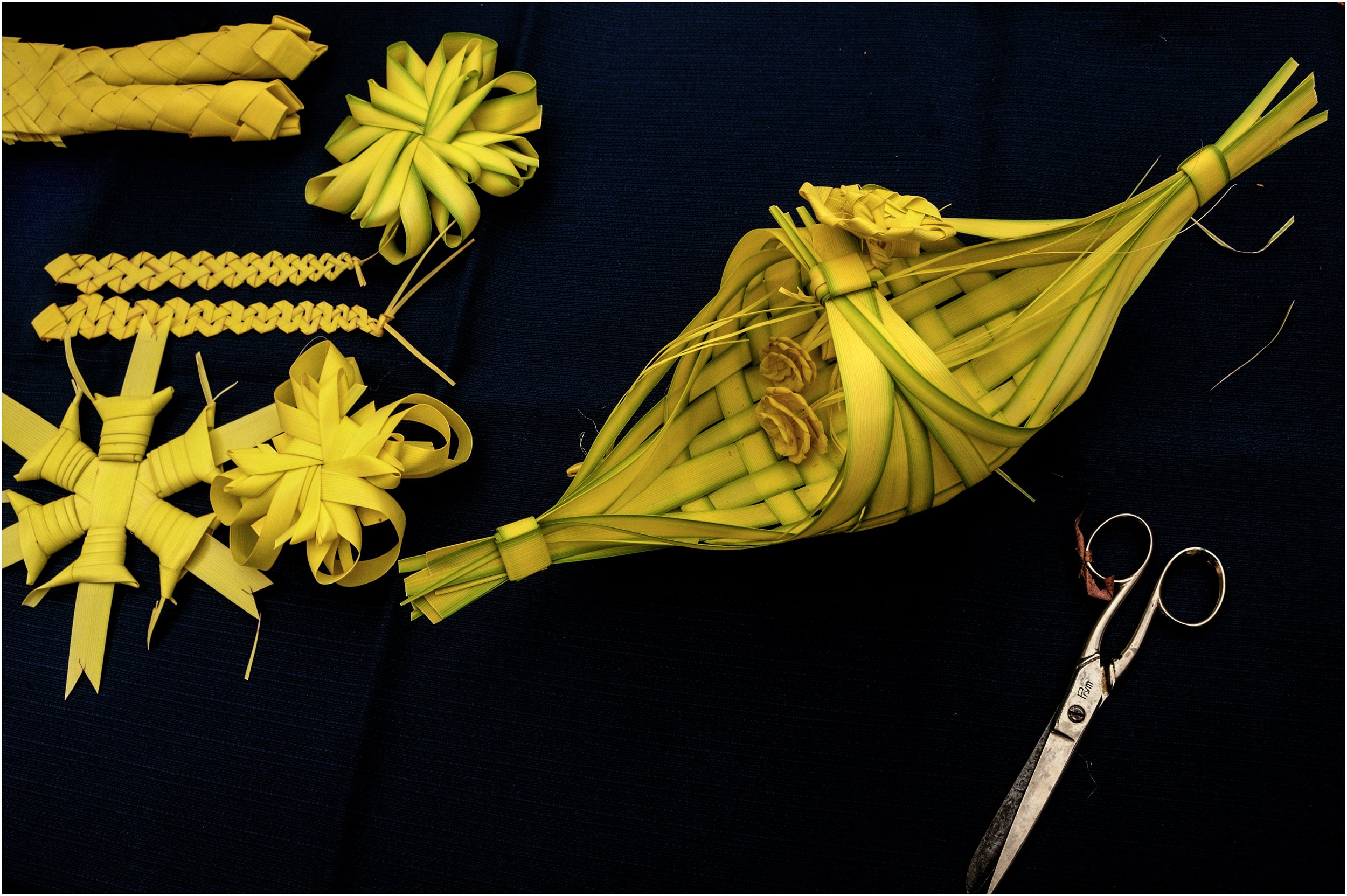
Parmureli. ©Ermanno D’Andrea