The conductor
Jaime Lopez
Cornelius Skeahan
Paul Vance
Co-edited by Barrie Cline
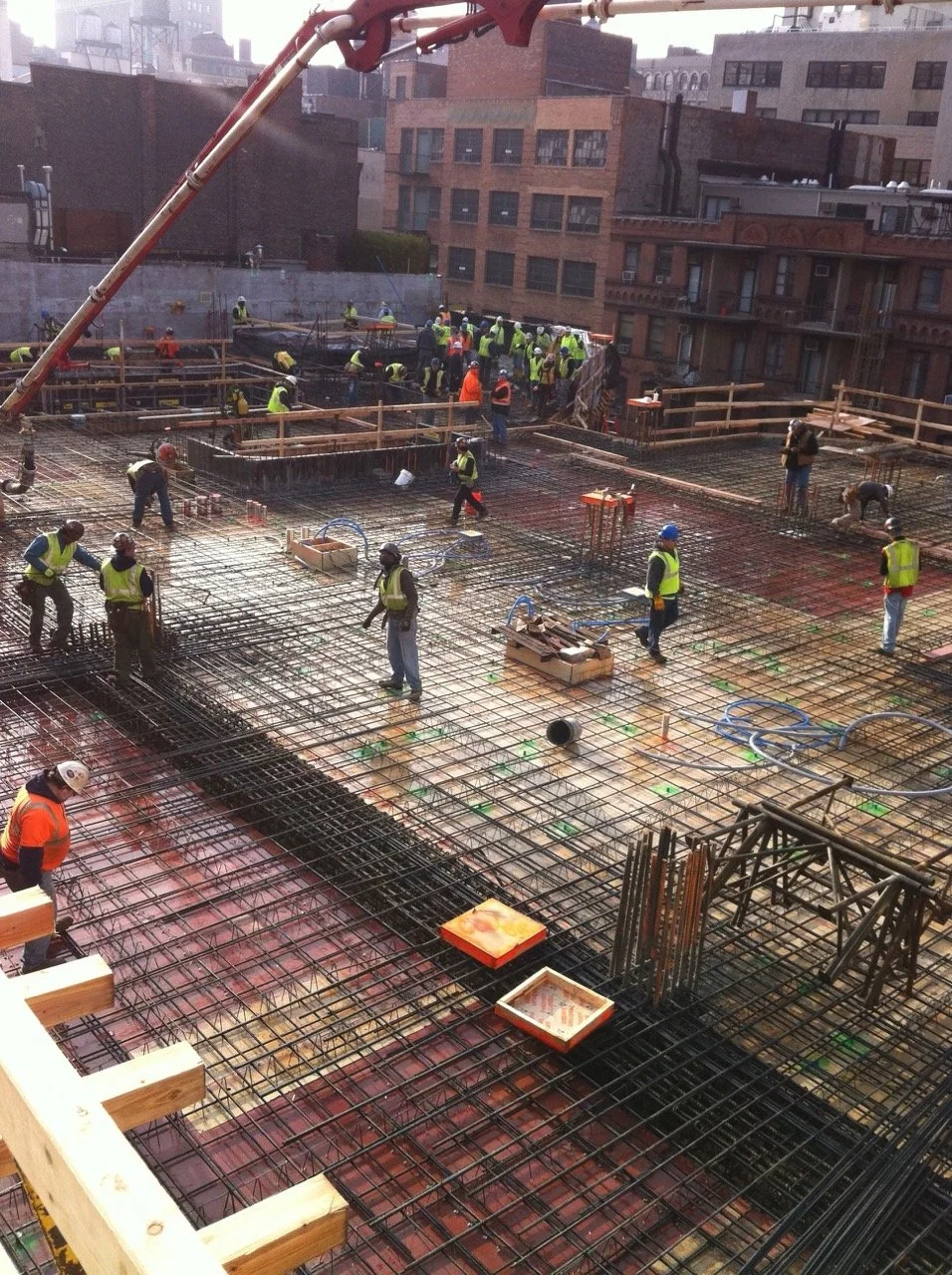
Deck job by Paul Vance (February 2012) from the Paul Vance interview conducted by Setare S. Arashloo and Barrie Cline and Jaime Lopez, 2016-11-17. Illuminating History: Union Electricians in New York City, Archie Green Fellows Project, 2016-2017 (afc 2016/035), American Folklife Center, Library of Congress.
Imagine you are outside in a blizzard, trying to manipulate a piece of thick but very cold copper wire. It feels like shaping rock into a form other than that it was given. You struggle with the cable to get it to do what you want, trying your best to act with precision. One mistake in your splice can later lead to disastrous consequences.
Copper, at room temperature, has astounding malleability. The wire can be cut, bent, chopped, twisted and shaped, to run throughout a building wherever power is needed. But if it is too thin a gauge, or—in the case of high voltage work, has an air gap beneath the wrapped insulation—the heat will elevate, and an explosion may result. It must be visually inspected constantly throughout the process, and closely monitored for heat levels. If it is humming, the system may need proper grounding. You must listen carefully to how wire communicates to you.
Electricians are the neurologists of the construction industry. Our goal is to make the safest, most efficient, and precise network of connections possible. If done right, the building’s occupants barely know what is happening. Akin to the human nervous system, symmetrical streams of conduit flow in and out of buildings, parks, running through streets and subways. Although silver is the best current conductor for this flow, precious metals are far too expensive. Copper, on the other hand, has an ideal combination of cost and conductivity, making it an excellent metal for moving both high and low voltages through a number of different raceways. It has a high heat threshold, and creates its own natural layers of protection from corrosion. Copper is durable, and with proper insulation, can survive extreme conditions of weather intact.
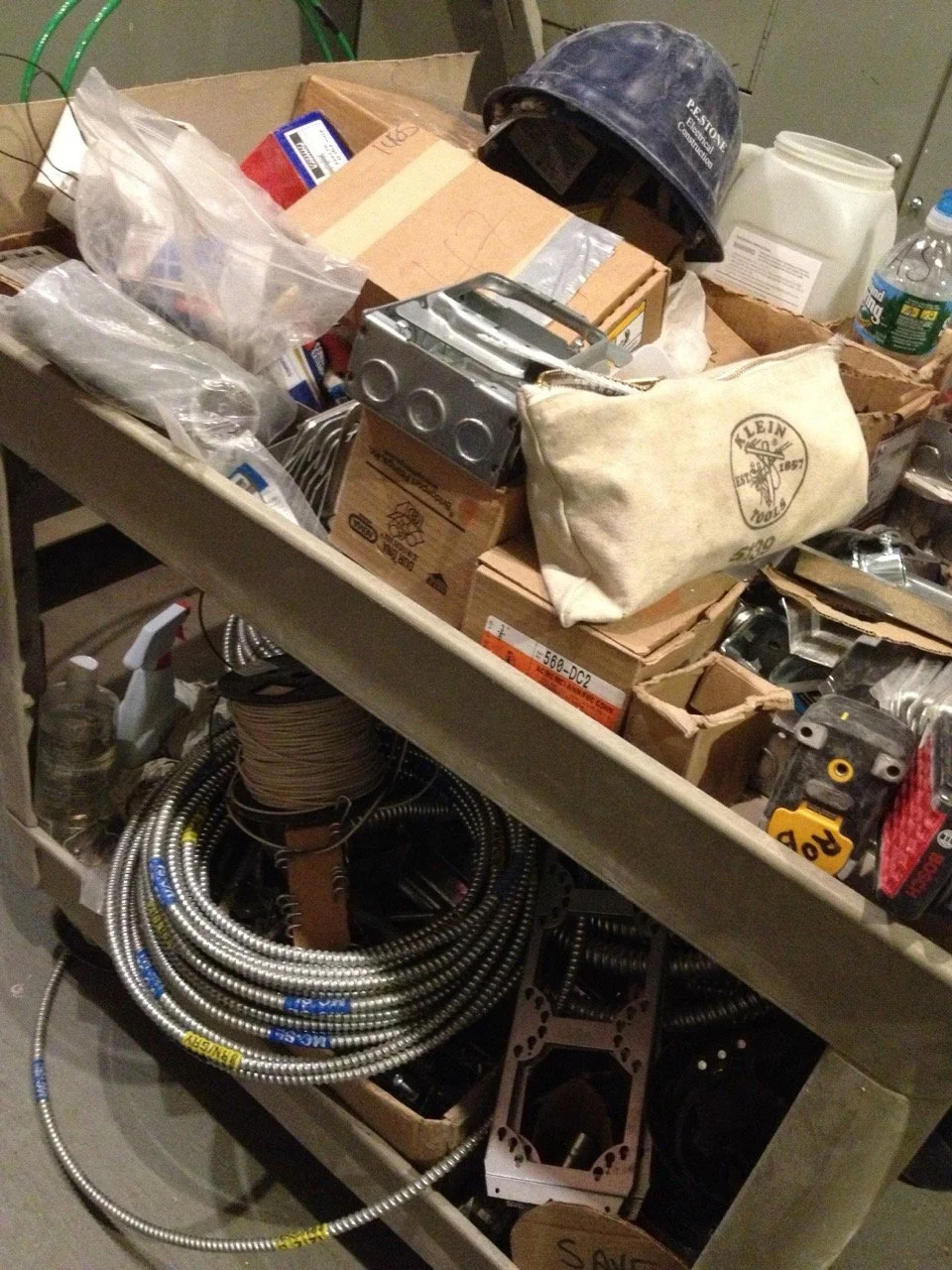
Wire cart (December 2012) from the Paul Vance interview conducted by Setare S. Arashloo and Barrie Cline and Jaime Lopez, 2016-11-17. Illuminating History: Union Electricians in New York City, Archie Green Fellows Project, 2016-2017 (afc 2016/035), American Folklife Center, Library of Congress.