Introduction
Glenn Adamson
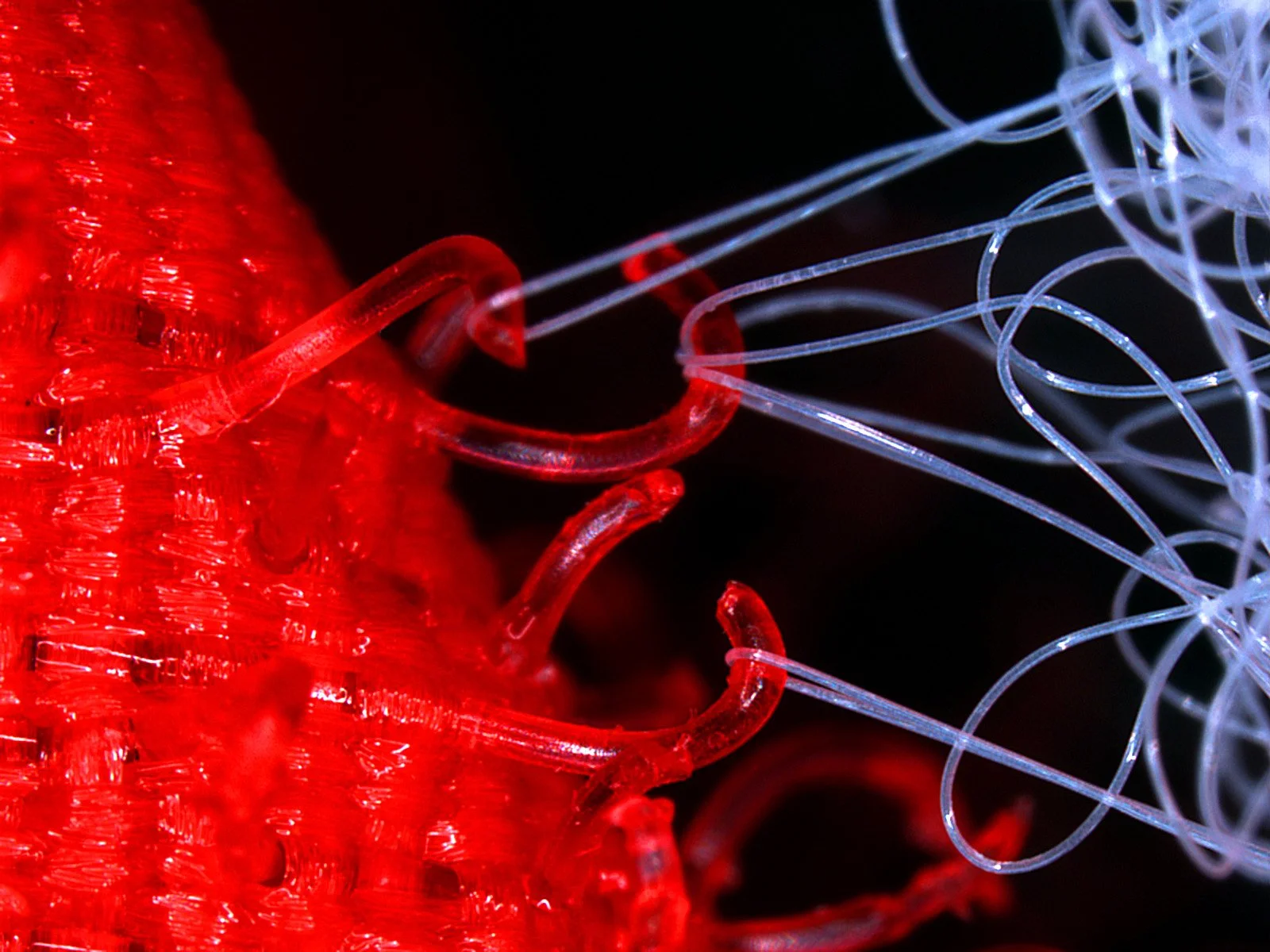
All materials have their own histories. Their human use usually stretches so far back in time that the earliest experiments are all but lost to us, glimpsed only through scarce archaeological remains. By the time we encounter materials at all, in the documentary record, we are already in the presence of well-developed material intelligence.
In previous issues of Material Intelligence, we’ve explored these deep roots time and again. The earliest extant fragments of linen date back thirty millennia. Early human civilization would have taken a very different course – and may not have even been possible – without tools made of obsidian and copper-based alloys. Even rubber, which entered the global economy only after the invention of vulcanization in 1839, had been processed and used by Indigenous Americans for many centuries before.
With nylon, we are traversing new terrain – in fact, the terrain of newness itself. This synthetic material was not grown, mined, or gathered, but instead manufactured in a laboratory. A team at E. I. DuPont De Nemours and Co., led by Wallace Hume Carothers (who had also helped to develop neoprene, the world’s first synthetic rubber) worked for over a decade to refine the process. The company touted nylon from the beginning as a wonder of the world, the world’s first totally synthetic fiber and the beginning of a “materials revolution.” Strategically, the R&D involved in creating it was part of a rapid expansion away from DuPont’s previous specialization in the production of gunpowder and explosives. As the historian Charles Pappas has nicely put it, they were in transition from “supplying arms to covering legs.”
Nylon’s existence was announced in 1938 – at that time, it was known only as Fiber 66 – and then perfected just in time to be launched the following year at the New York World’s Fair, a perfect venue, given the event’s overall theme of the “World of Tomorrow.” Nylon stole the show. “Du Pont makes yarn of coal, air and water,” LIFE Magazine enthused, enumerating its benefits of strength, fineness, and durability. A demonstrator at the fair named Eileen Leonard supposedly wore the same pair of nylon stockings every day for five weeks, 400 hours all told, and they remained “cobwebby sheer, trim at the ankle, supple at the knee.” (One of Leonard’s jobs at the fair was demonstrating a machine that wrapped candy in cellophane, which DuPont had perfected in the 1920s, leading to windfall profits in the food packaging industry.) LIFE was equally positive about the geopolitical implications of nylon: it looked certain to replace natural silk for most purposes, and this would deal a crippling blow to Japan’s export trade at a time of increasing hostilities.
When the LIFE article was published in June 1939 only DuPont employees and their wives had access to nylon hosiery. The material had already seen limited commercial availability, though particularly in products where hygiene was desired, such as toothbrush bristles and surgical sutures, or in situations in which strength was at a premium, like fishing line. But it was of course stockings that came to be the signature product, so much so that they are often simply called “nylons”—much as coins are sometimes called “coppers,” galoshes “rubbers,” and garments “clothes”. Four million pairs of nylon stockings hit the national market on May 16, 1940, and immediately sold out. Time magazine, LIFE’s sibling publication, described “madhouse” scenes in New York department stores. Over the course of the following year, 64 million pairs would be sold, about the same number as there were women in America at the time.
That same article in Time also noted that nylon was being considered for military use: “Last week the U. S. Army was testing the yarn for use in making parachutes, powder bags, etc.” Those tests proved to be game-changing for the nylon industry, and with America’s entry into the war in 1941, nylon stockings completely disappeared from the market as swiftly as they had arrived. Every inch of the fiber that DuPont could make was bought by the military, not only for parachute panels and bags, but also naval ropes and rigging, airplane components, cords for reinforcing tires, flak jackets, shoelaces, mosquito netting, and hammocks.
Civilians who did have nylon stockings were strongly encouraged to donate them to the war effort, so they could be recycled. Meanwhile, Nazi Germany was developing its own competing version of the material, called Perlon – it was manufactured by the huge chemical firm IG Farben, notoriously also the producer of Zyklon B, a poison gas used in the death chambers of the Nazi concentration camps. Japan didn’t manage to mass-produce nylon until well after the war, in 1951. Ironically, after the war, the occupying US government found itself in the position of struggling to re-establish the Japanese silk industry.
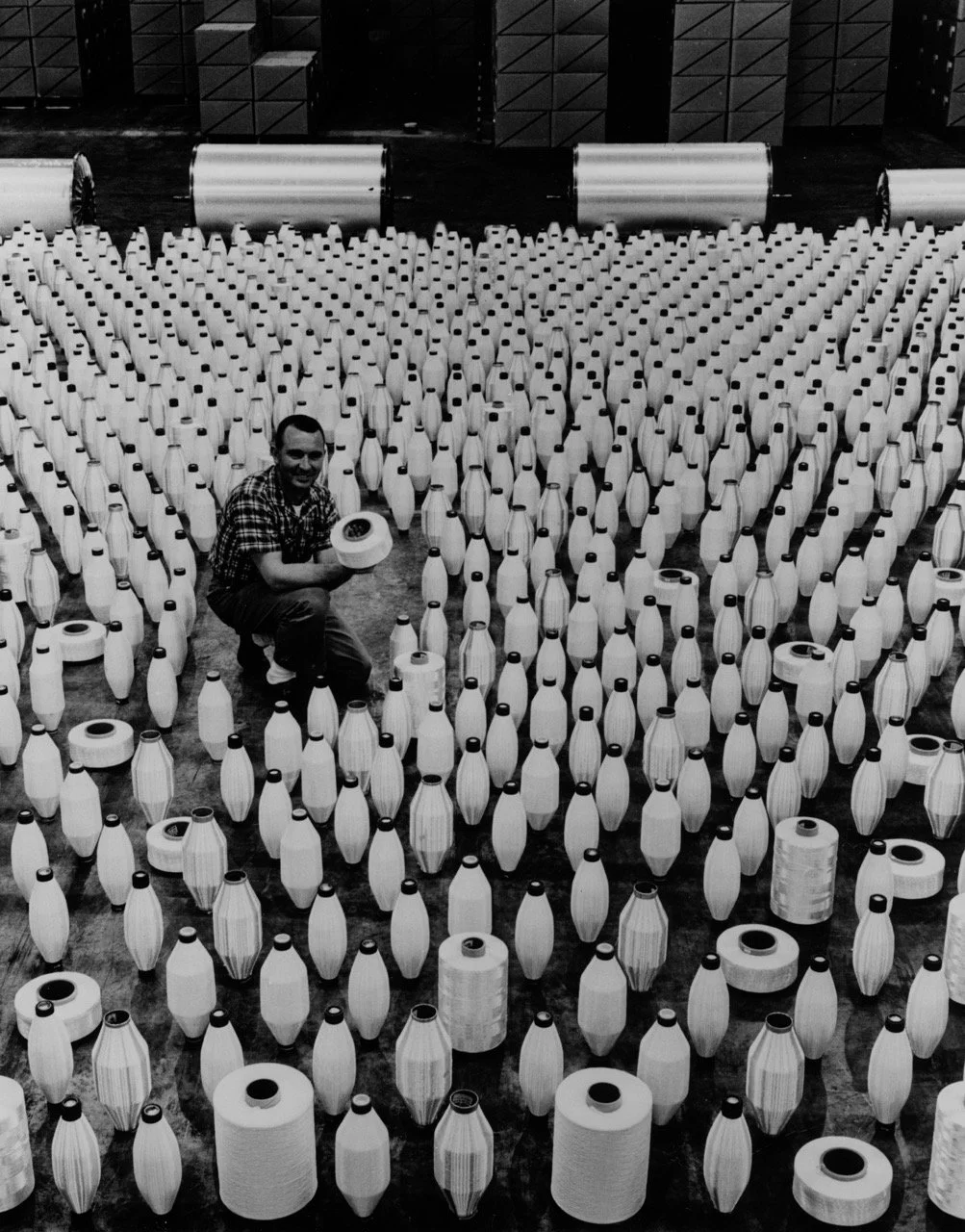
Courtesy of the Hagley Museum & Library
The war’s end also brought nylon back into the American marketplace. DuPont once again struggled to meet the demand, resulting in the single most infamous chapter in the material’s history, the so-called “Nylon Riots,” involving long lines, short tempers, and resulting minor scuffles at department stores. This was a textbook case of the adage that there’s no such thing as bad publicity. DuPont continued to capitalize on the public’s interest in the material, and promoted it ceaselessly in the postwar years, both to manufacturers and everyday consumers, and in a dizzying array of applications.
The Hotel DuPont in Wilmington was outfitted with an entire nylon suite, showing off the material’s versatility in the production of furnishing fabrics, upholstery, and carpets. A single print ad, from 1949, mentions nylon’s use in football uniforms, children’s snowsuits, luggage, ball gowns, even a cowboy’s lariat. A little later on, at the next New York World’s Fair in 1964, the company staged a pavilion with a musical revue called The Wonderful World of Chemistry: “With Antron and nylon and Lycra and Orlon and Dacron, the world’s a better place. You know we all have a smile on that started with nylon and stretches across each happy face.”
As that lyric suggests, by this time DuPont and other chemical companies were producing a wide range of synthetic fibers, each sporting its own science fiction-tinged brand name and exhibiting its own particular attributes. Antron, for example, is an especially dense stain-resistant form of nylon, developed for carpeting. Lycra – the generic name is “spandex” – is especially stretchy. Just as nylon was conceived as an artificial analogue for silk, Lycra was invented as a replacement for natural rubber. Orlon, similarly, was an acrylic fiber approximating wool. Created in parallel with nylon, it was first released in 1941) and proved to be ideal for making thick, warm fabrics. Dacron, finally, was DuPont’s brand name for fiber made of Polyethylene terephthalate, or PET, the most common form of polyester. Today, 82 million metric tons of PET are produced annually (twenty times as much as nylon), much of it in packaging and plastic bottles, and all of which will take about half a millennium to decompose.
So what is all this stuff, exactly? There is a long technical answer to this question, but the short one is that all these synthetic fibers are polymers, materials composed of very long chains of macromolecules, in which structural units are repeated many thousands of times. The monomer in nylon—the repeated unit in the macromolecule—has six carbon atoms, hence the use of the number 66 in the material’s original, somewhat enigmatic name.
There are plenty of polymers in nature. Organic rubber is an example, as are the lignin and cellulose in wood and leaves. But the family of thermoplastics that includes nylon are made from petroleum, in which long carbon chains are already present. To make nylon, separate compounds from crude oil are synthesized to form an aqueous salt, and then heated, driving out residual water. This results in a solid material that can then be broken down into chips, melted, and then molded or spun into a filament.
The Austrian journalist Robert Jungk, in his 1952 book Tomorrow Is Already Here – a pioneering 1952 study of America’s burgeoning military-industrial complex – described DuPont’s discovery of such processes as “a sort of mass attack on the secrets of nature.” In the company’s chemical plants, he saw scientists churning out patentable, marketable discoveries at an average rate of one per day: non-freezing motor oil, glow-in-the-dark materials, synthetic foods. This was futuristic stuff – Jungk even glimpsed a sign on one laboratory door that read A.D. 2000 – but it was also immediately lucrative. In the immediate postwar years, helped by the temporary absence of competition from Germany, the American chemical industry even out-earned even the booming auto industry.
Longer term, synthetic polymers became part of the mental furniture of modernity. By 1958, when nylon turned twenty, the brand had become, at least according to DuPont’s publicity materials, an international slang term for whatever was up-to-date, for better or worse: in Egypt, for example, conservative social critics focused on the dangerous figure of the “Nylon Woman.” In 1951, the Ealing Studio released the film The Man in the White Suit, obviously inspired by DuPont’s research. The plot stars Alec Guiness as a scientist who has developed a luminous fiber, completely immune to stain or damage: textile manufacturers rebel, worrying they’ll put out of business by indestructibly permanent cloth.
Meanwhile, imanufacturers were finding myriad new uses for nylon: guitar strings (1941), high-performance race car tires (1954), the seatbelts that were belatedly introduced to automobiles (1959), and ski apparel, one of the fashion crazes of the early 1960s. In Stanley Kubrick’s science fiction spectacular 2001: A Space Odyssey (1968), the furniture – designed by Olivier Morgue – is upholstered in nylon fabric. The real-life spacesuits worn in the Apollo 11 mission to the moon were made mostly of nylon, too.
Meanwhile, DuPont continually expanded production, building newer and bigger plants and developing specialized versions of the material for particular applications: extra sparkly for stockings, fluorescent for fishing line. By 1962, the company was making 600 million pounds of nylon annually. Today, that figure stands at a stunning 8 billion – meaning that each person on earth uses, on average, about a pound of nylon a year. Of course, that rate of consumption is highly geographically variable, and also indirect.
While sheer hosiery may still be what people think of when they hear the word “nylon,” these days it is mainly used in a solid form in industrial applications. Because it is strong, lightweight, inexpensive, resistant to abrasion and rust, and melts at a relatively high temperature, it is a good choice for fasteners and machine parts of all kinds, including ones that have to rotate or slide, as it also has a low coefficient of friction. Nylon can be produced as a thin film or in thicker sheets – as in a hot air balloon – and its early use in sutures anticipated many other medical applications, including surgical dressings, catheters, and dentures. (Another of its virtues is that it is “biocompatible,” and does not produce allergic or other bodily reactions.)

Geoffrey Mann (British, born 1980), Attracted to Light, 2005, 3d printed nylon, © Sylvain Deleu