Holding time
Monique Péan
Courtesy of Monique Péan and Michael Morrison.
Upon the untimely death of my sister Vanessa seventeen years ago, temporality – already a fascination – became an obsession. I’ve since explored over seventy countries across all seven continents to learn about material culture and ancestral knowledge from indigenous communities. My goal has been to learn from our past so we can improve our present, and help right the course of our collective future - not just how we can protect the Earth, but also embrace and strengthen our shared humanity.
Throughout my travels across the globe, I’ve sought out ancient materials that facilitate connections outside of space-time. One that has left a lasting impression on me is obsidian.
Obsidian, a volcanic glass that forms from the rapid cooling of a silica rich lava flow, connects disparate civilizations separated by large distances across time. Scientists have recently dated organized obsidian use by early hominins to the Pleistocene Era based on findings at Melka Kunture, a grouping of monumental sites along the upper Awash valley of Ethiopia. It is incredibly centering to hold obsidian in one’s hands, knowing that this vitrified material was used by our distant predecessors over 1.2 million years ago, and subsequently by many civilizations.
My first encounter with obsidian was on Easter Island, a remote Polynesian island in the South Pacific - one of the most magical places on Earth. When I first visited in 2016, I had the honor of learning from the indigenous Rapa Nui people, of whom there are only 3,512, as of the last population census in 2017 conducted by Chile’s National Institute of Statistics. They shared stories about their families, ancestors, and the breathtaking land that is their home. As I explored the island, with its mystical and inspiring natural beauty, I witnessed its vulnerability to climate change and rising ocean levels.
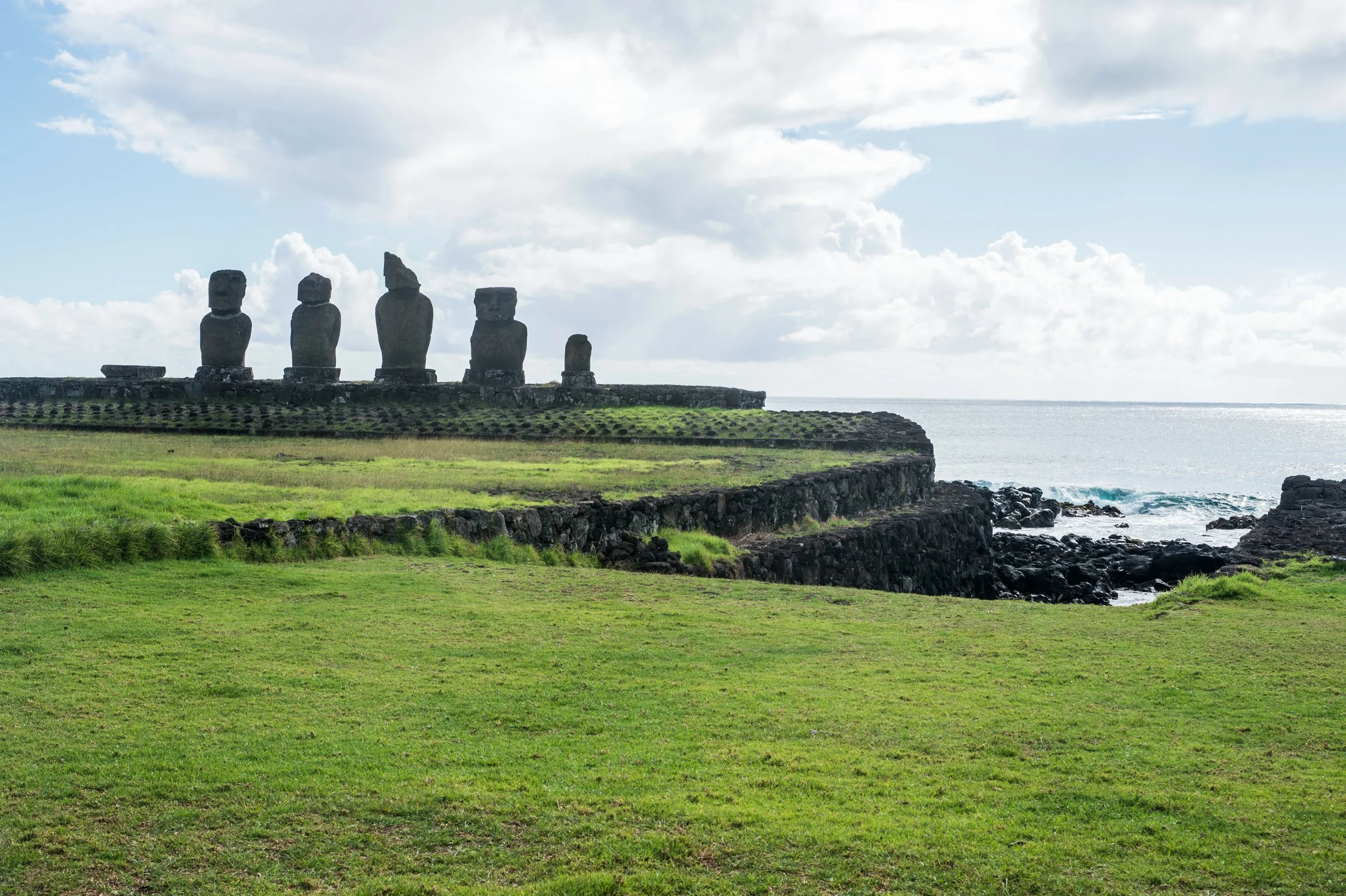
Looming over the island’s fate are the famed moai, monumental stone sculptures which the native people believe were created to honor significant ancestors. They were given eyes of coral or shell, inlaid with obsidian. The moai had already been dislodged and overturned by the time of European contact; some were buried up to their sharply defined chins.

Visiting the Rano Kau volcano crater, 2016. Courtesy of Monique Péan and Michael Morrison.
While the moai are the most recognized art form of the Rapa Nui, I was also taken by the plethora of obsidian present throughout the island, from the rocky shores to the sides of the roads and along rolling hills. The sculptural qualities and reflections of this ancient vitrified lava draw you in; as you begin to interact with this kinetic material, you instantly recognize the history and knowledge that it embodies.
There are dissenting opinions about the history of Easter Island. The first European reports, dating to the late eighteenth century, suggested that there had been a brutal war, and that the indigenous seafaring population had killed one another using obsidian weaponry. This theory (presented by Jared Diamond, among others) is a cautionary tale about ecological stewardship, that deforestation and overfishing gradually made the island uninhabitable and caused the conflict. It’s now thought, however, that obsidian was used predominantly for agricultural cultivation and the decline in population may have been due to disease brought to Easter Island by Europeans – a very different but equally important lesson about the impact of globalism.
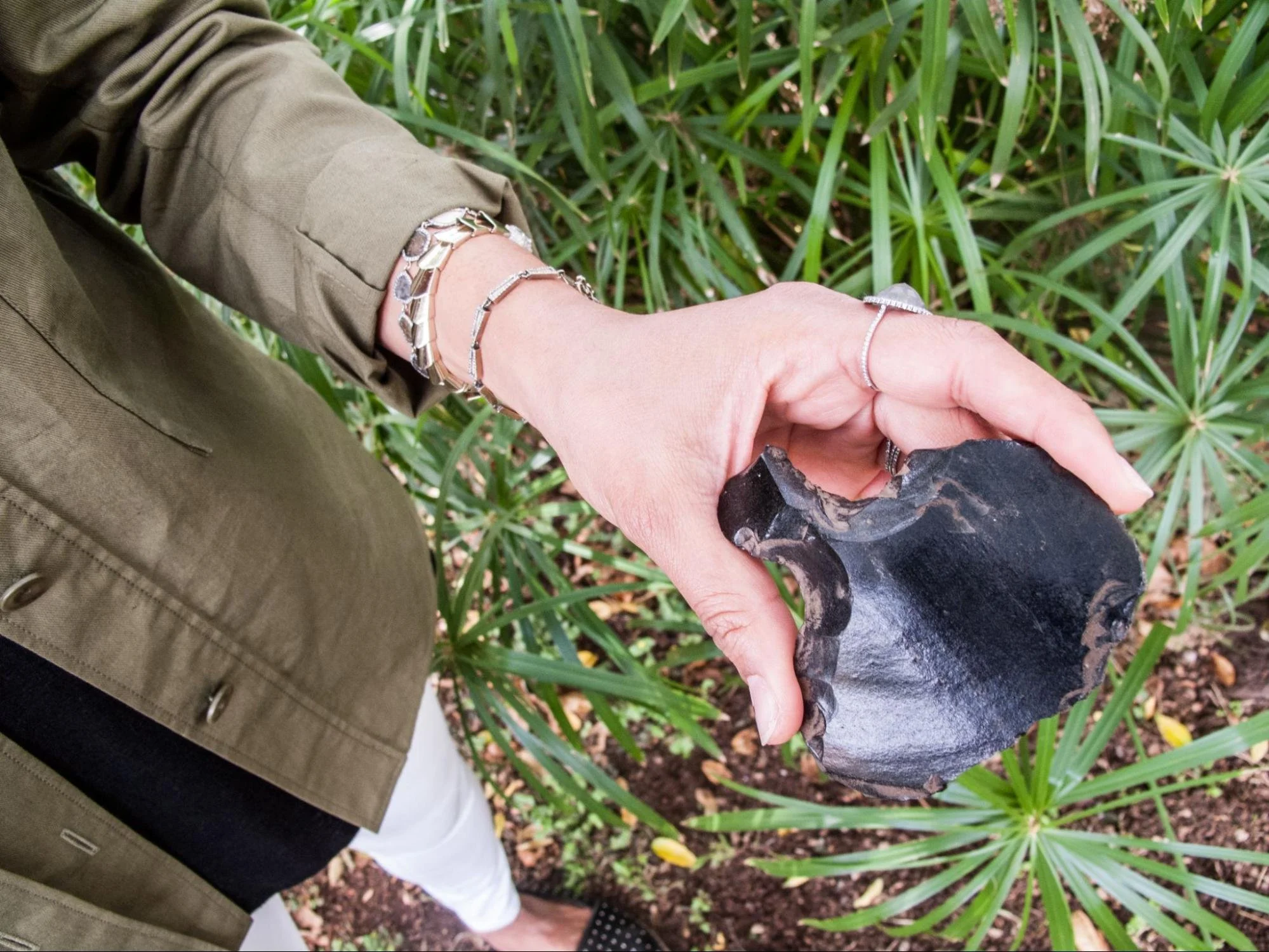
Monique Péan holding ancient obsidian on Easter Island, 2016. Courtesy of Monique Péan and Michael Morrison.
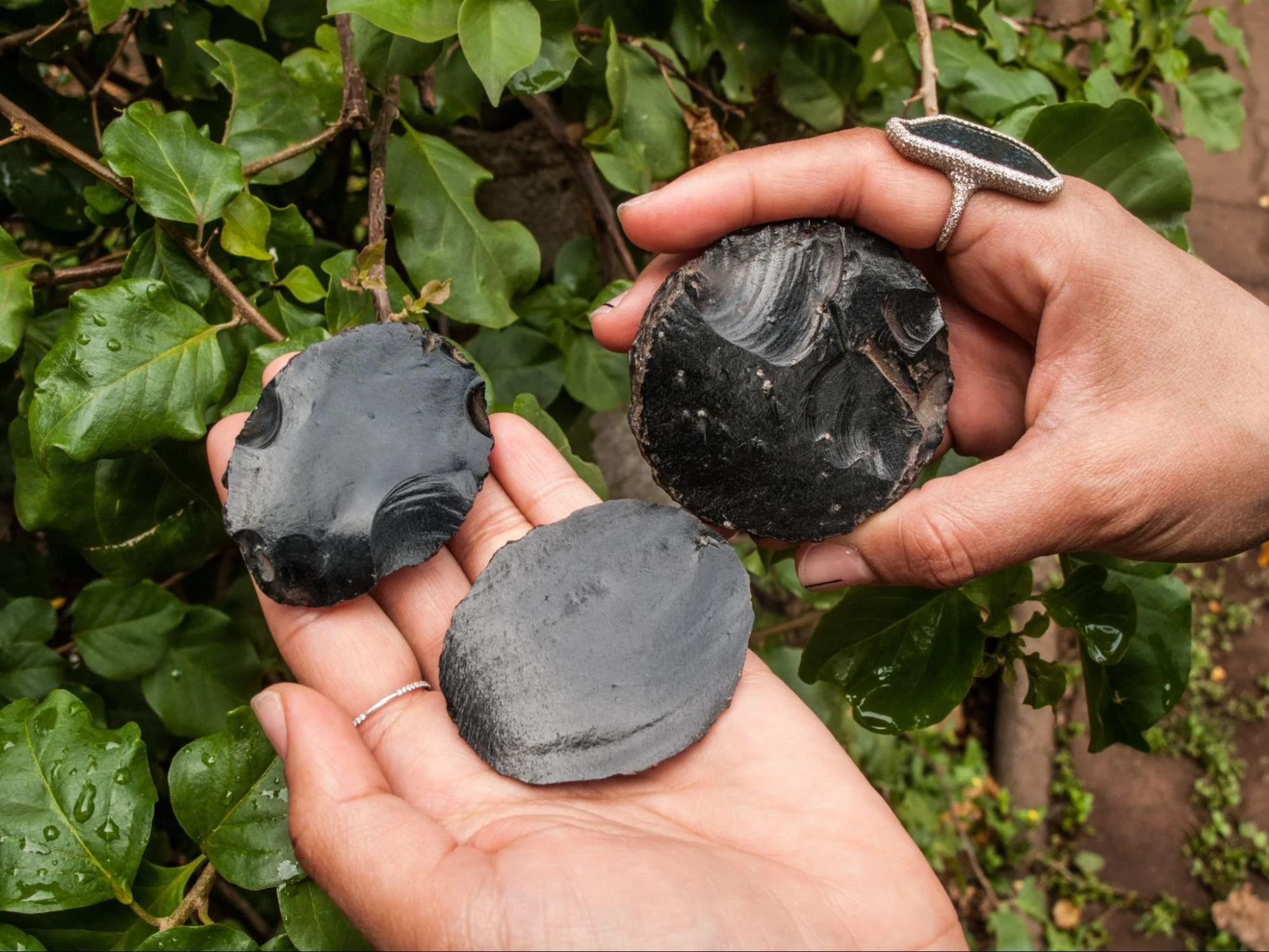
Monique Péan holding ancient obsidian on Easter Island, 2016. Courtesy of Monique Péan and Michael Morrison.
According to the Journal of Island and Coastal Archaeology, obsidian deposits on Easter Island were originally formed by volcanic activity during the island’s final eruptive phase, specifically from Rano Kau, one of the three shield volcanoes that created the island. Discovering these deposits upon their arrival, the Rapa Nui people created shallow quarries to excavate the volcanic material. Viewing these pieces up close, I could make out the subtle curves that the Rapa Nui carved into some of the obsidian to create their tools, between about 1200 and 1860. These artifacts offer archaeologists a wealth of information on ancient technologies, economies, and cultural practices.
I was particularly drawn to a variation that I found on Easter Island, commonly referred to as “cosmic obsidian”. This type of partially crystallized obsidian features white, spherical inclusions of cristobalite within the dark obsidian foundation, evoking our Universe. Also known as “snowflake obsidian,” it forms in portions of volcanic glass where high temperatures cause the obsidian to undergo devitrification: portions of the initially amorphous composition organize into larger, visible crystal formations. Although the cosmic obsidian on Easter Island is volcanic in origin, there are other locations around the globe where it forms as a result of lightning strikes and meteor impacts. In these incredible instances, which truly deserve to be called “cosmic,” intense heat transfer melts the existing material upon impact, followed by rapid cooling and crystal formation.
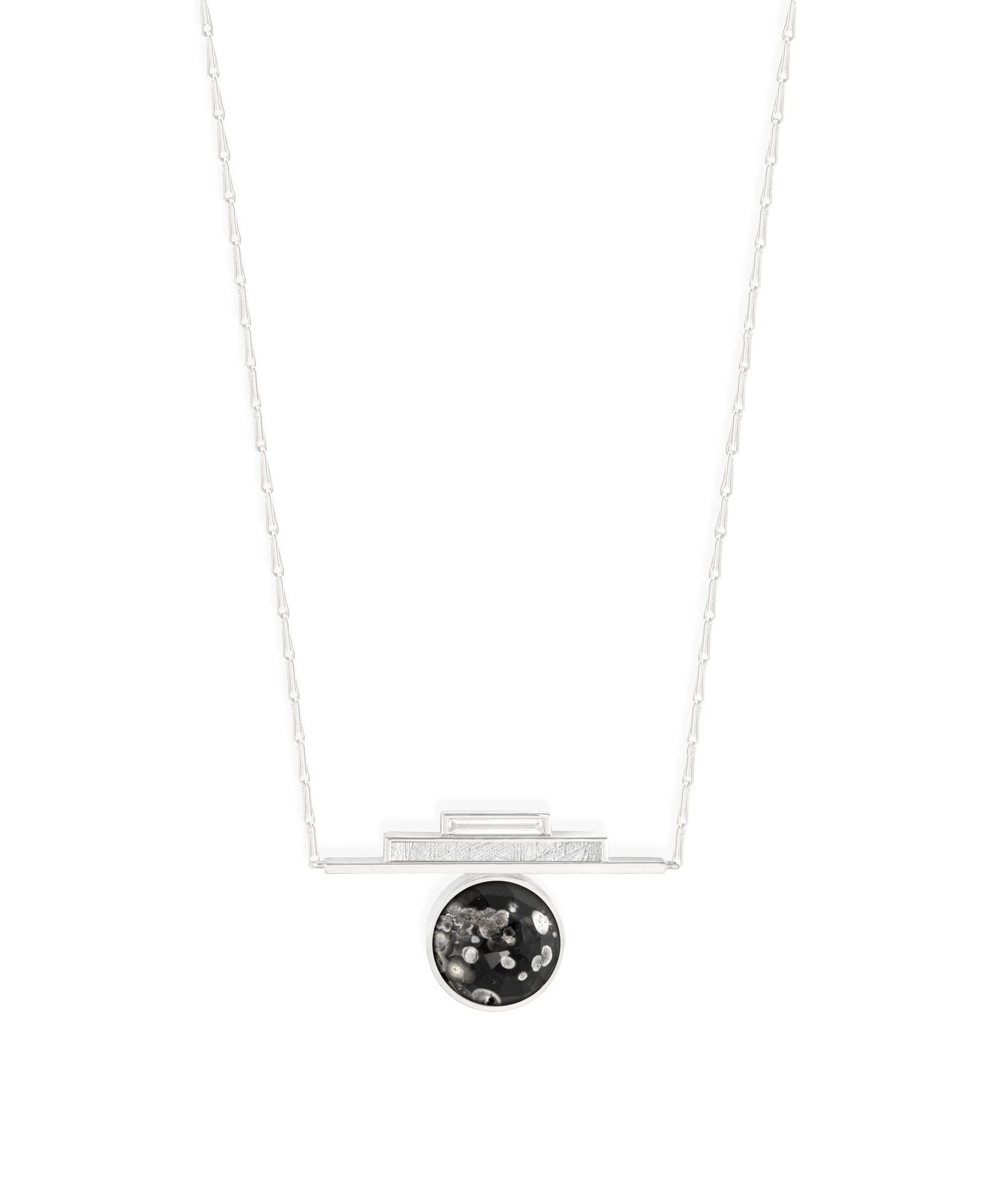
Necklace; carved cosmic obsidian, Widmanstätten pattern meteorite slice, and 18 carat recycled white gold. Courtesy of Monique Péan and Brittany Meyer