
Infinity on our fingertips
Chenoa Baker
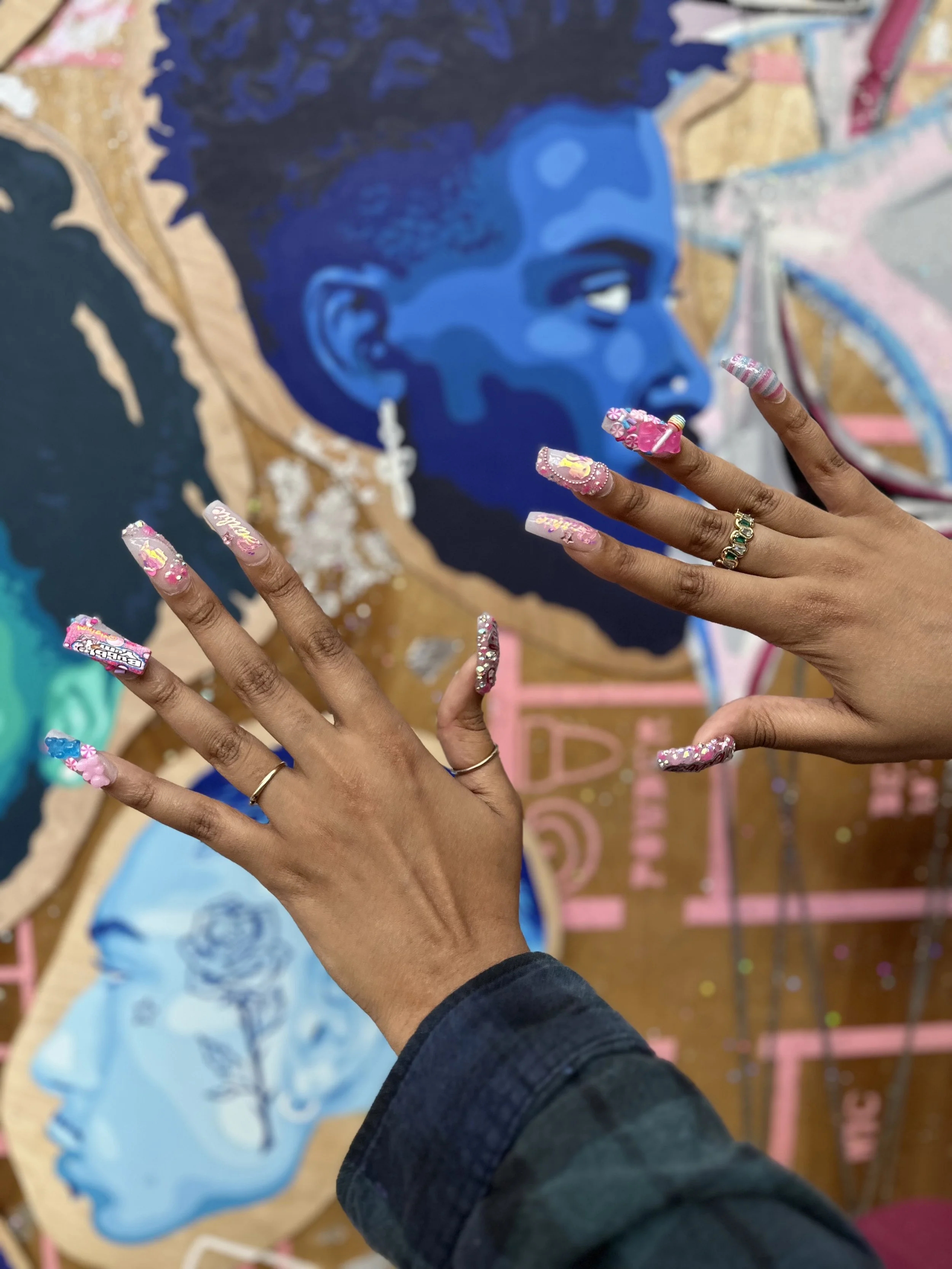
Acrylics worn by the artist Wavy Wednesday in her studio. Nails by Kamela Gissendanner.
When nail extensions first appeared in Africa, as early as 3,000 BCE, they were worn by royalty, and made from ivory, gold, or bone. They are still status symbols today but are typically made of methacrylate. This “hardy and scratch-resistant” polymer also has other applications: in dental contexts, ophthalmological prosthetics, and some household items. In the hands of diasporic communities, though, the material becomes couture: coveted, colorful, curlicue, and cuticle-extending.
Jillian Hernandez, author of Aesthetics of Excess: The Art and Politics of Black and Latina Embodiment, writes of “the improvisational nature necessary for building Black creative traditions.” Nail art, a true form of wearable sculpture, exemplifies this idea. Beginning in the 1970s, acrylics bloomed in Black and Latine glam as a mode of self-expression and a bottom-up beauty standard. As we do: nail art suggests a luxurious life for the wearer, the manicured look serving as a daily denial of manual labor and its occupational hazards.
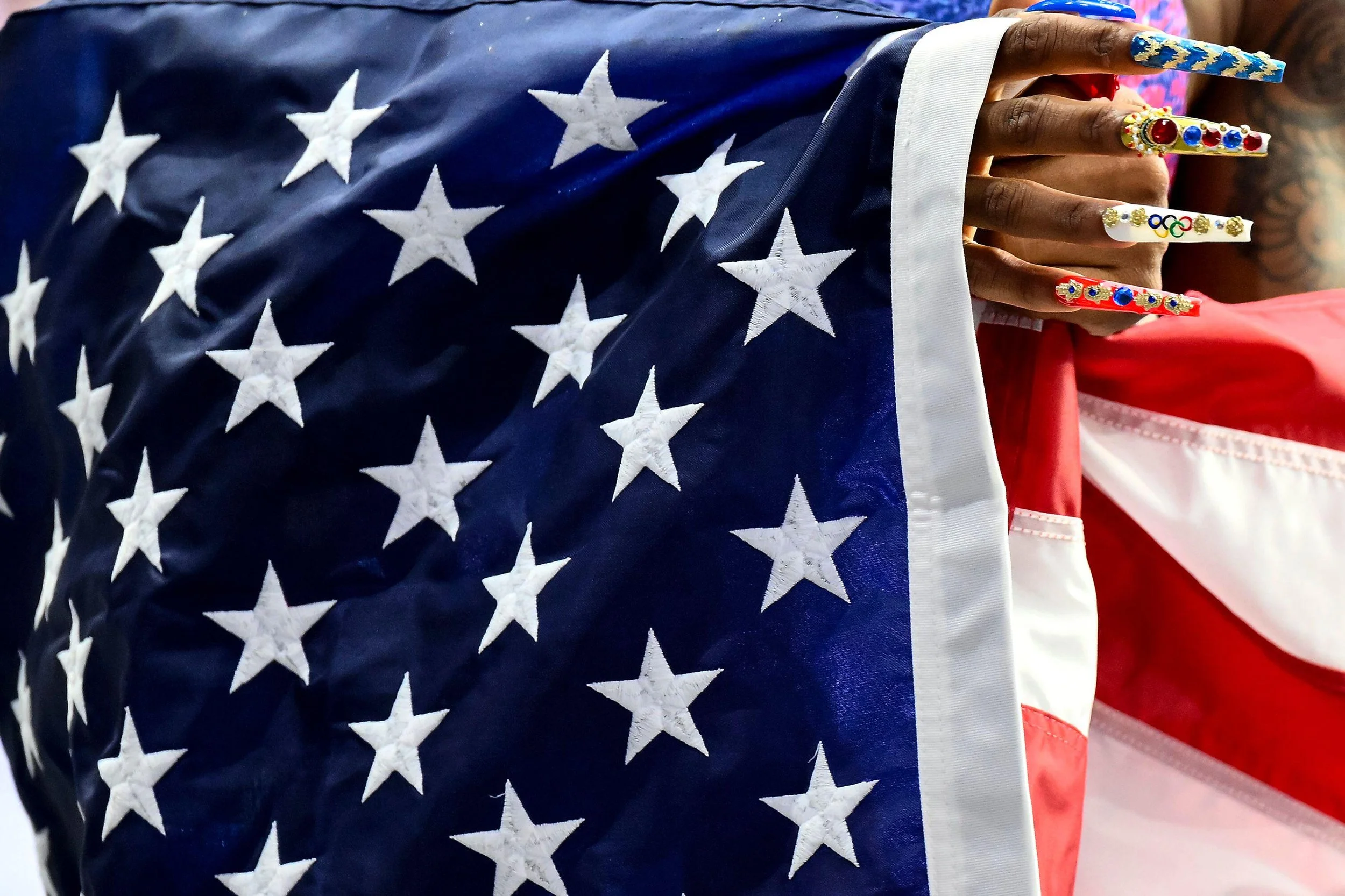
Decorated nails of Sha’carri Richardson are seen after the Women’s 4 x 100m Relay final during the Paris 2024 Olympic Games at Stade de France in Paris (France), August 09, 2024. Team United States placed first, winning the gold medal, 2024. Insidefoto / Alamy.