Layer by layer

Daniel Belasco

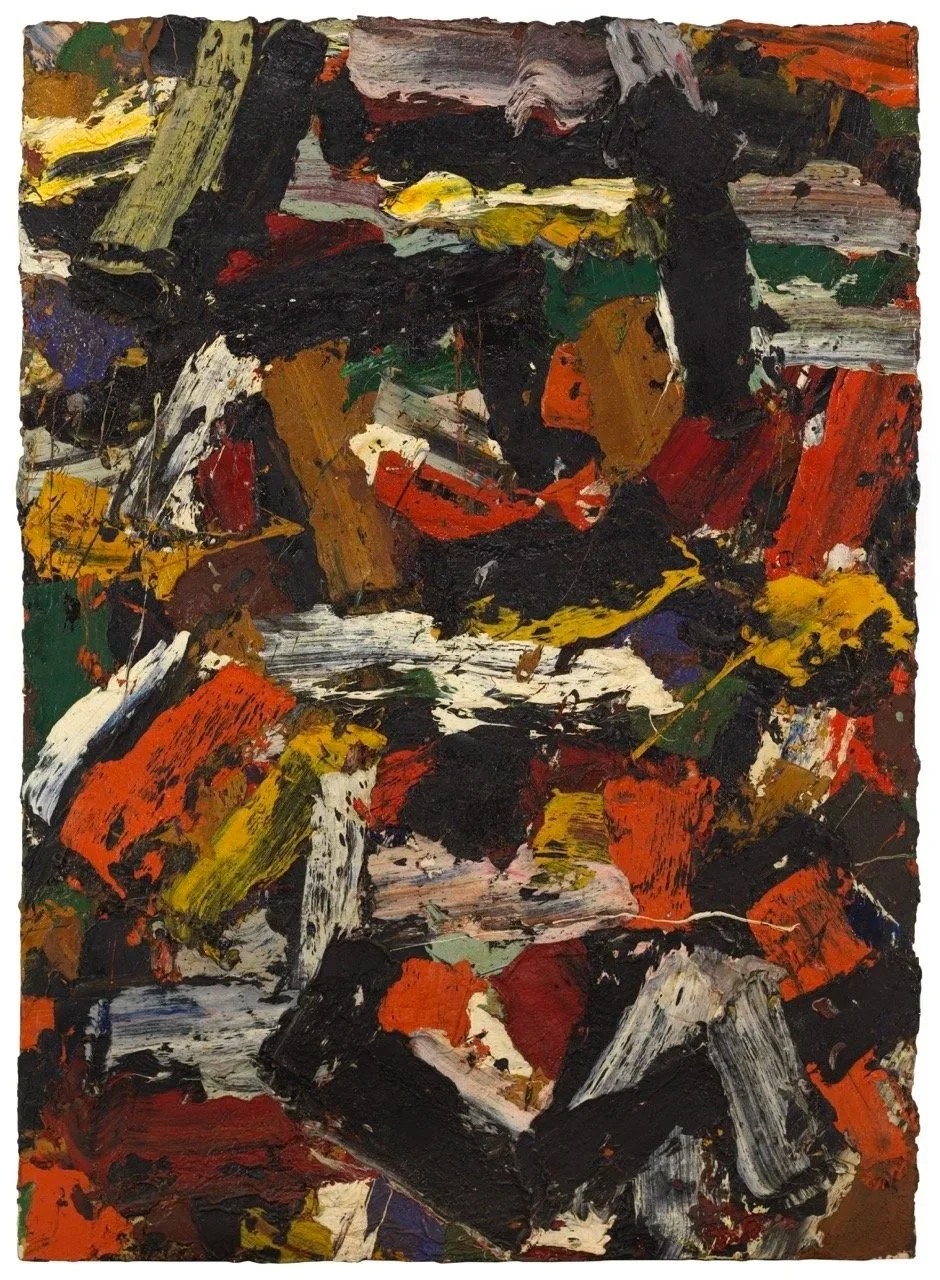
Al Held, Untitled, ca. 1958. Oil on canvas. 67 x 49 in. (170.2 x 124.5 cm). Courtesy of the Al Held Foundation.

When you think of acrylic paint and postwar American art, what images come to mind? Perhaps the thinly painted chevrons of Ken Noland and diaphanous pours of Helen Frankenthaler. Or maybe the silk-screened icons of Andy Warhol and the media-derived ironies of Roy Lichtenstein. The 1960s American aesthetic of flat optical imagery, and concurrent elimination of the “Tenth Street touch” of the Abstract Expressionists, perfectly coincided with the material qualities of acrylic paint—quick, convenient, and brilliant. Art and commerce neatly intersected with the advent of acrylic paints like Magna and Liquitex, widely advertised in popular art magazines as technological breakthroughs.
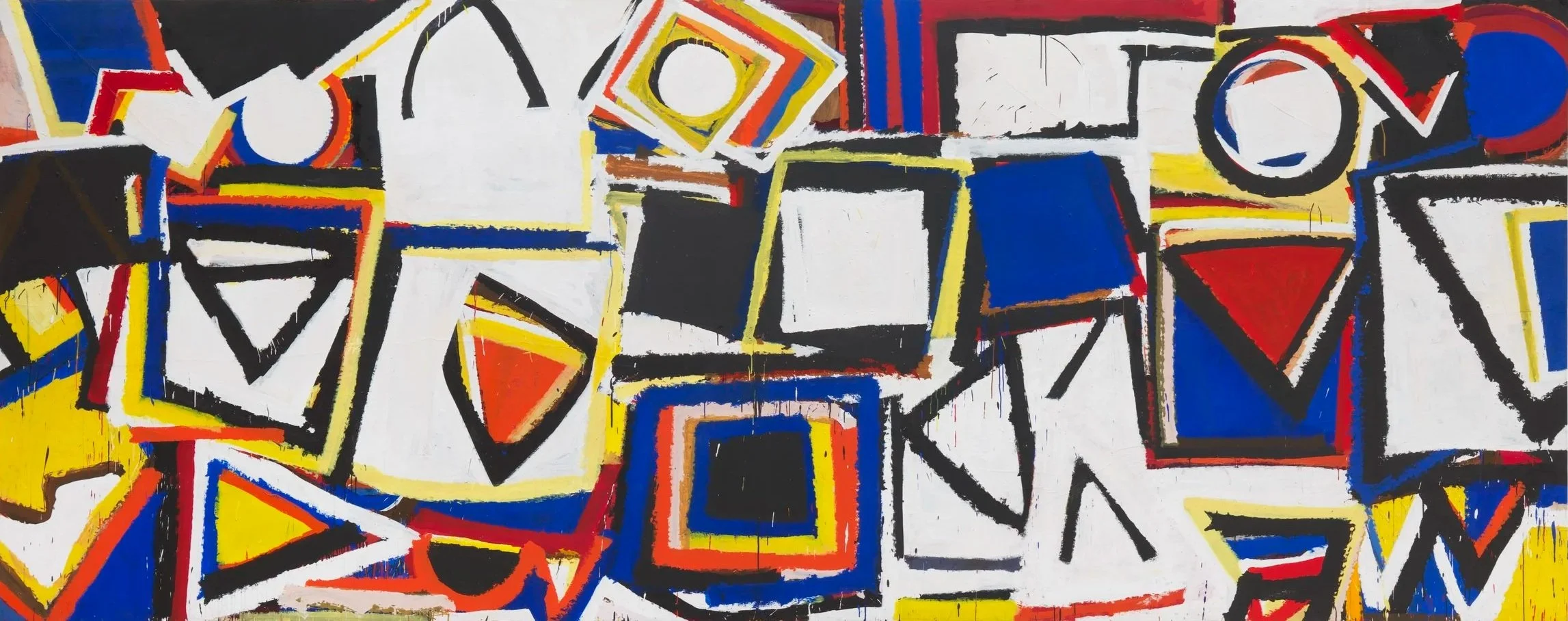
Al Held, Taxi Cab IV, 1959. Acrylic on paper over canvas, mounted on board. 108 x 276 in. (274.3 x 701 cm). Courtesy of the Al Held Foundation.
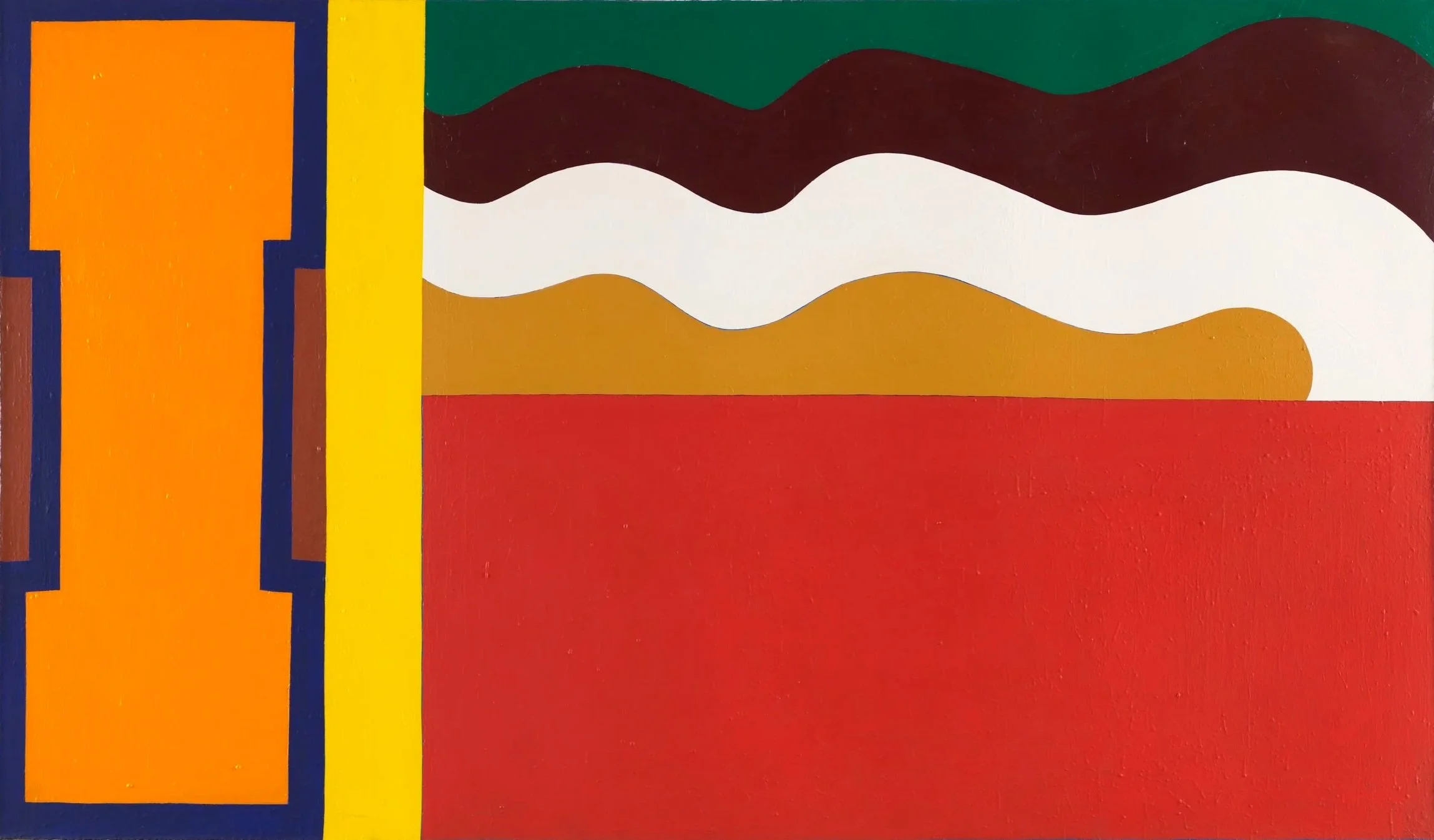
Al Held, I Beam, 1961. Acrylic on canvas. 114 x 192 in. (289.6 x 487.7cm). Courtesy of the Al Held Foundation.

Still, not every hip American artist abandoned oil paint. Ellsworth Kelly used it to saturate shaped monochromes, and so did Alex Katz to render his “brand-new and terrific” figures, as he wrote in 1962. The association of acrylic’s reductive efficiency with Color Field and Pop doesn’t fully account for other significant aspects of this plastic paint, which made it the medium of choice for generations of artists seeking alternatives to traditional oil’s slow drying time and thick viscosity, as discussed by Brie Taylor in ARTnews in 1964. There’s more to acrylic than meets the eye. 

As a second-generation Abstract Expressionist in the 1950s, Al Held struggled with the inherent physicality of his practice, literally troweling on huge quantities of oil paint, which he mixed in his studio from sacks of pigments with wax, resin, and other extenders, then used to make wet-on-wet all-over gestural abstractions. He punched holes in the back of his paintings to hasten drying, and they would sometimes gain undulating surfaces or isolated bellies from gravity’s pull on the sheer mass on the canvas. By the end of the decade, searching for greater specificity, Held introduced tighter shapes and configurations into his brushwork. 
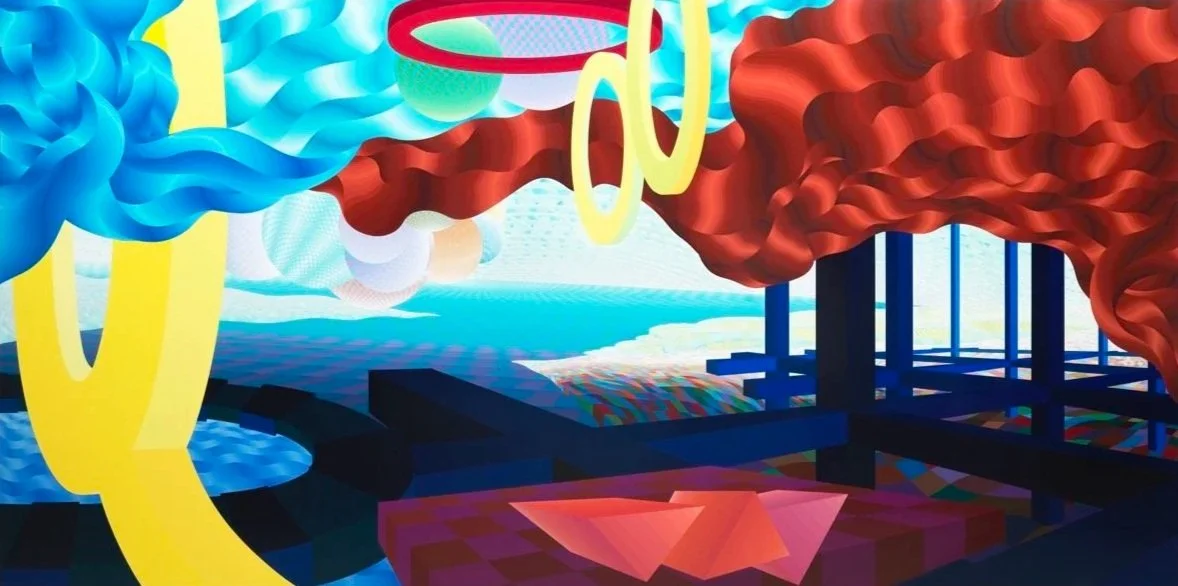
Al Held, Eagle Rock IV, 2004. Acrylic on linen. 180 x 360 in. (457.2 x 914.4 cm). Courtesy of the Al Held Foundation.

It wasn’t until his friend Sam Francis, back in New York after an extended period of world travel, suggested that he try the recently introduced water-based Liquitex that Held found a way out of the corner in which he had painted himself. He started by thinning the paint so it would handle like gouache, and experimented on sheets of paper laid out on the floor with quick sketches of circles, squares, and triangles, all rendered in high-key colors. 

Francis lent him a gorgeous skylit studio, whose walls Held lined with rolls of photographic background paper. Loading four-inch brushes with acrylic paint in primary colors, he dashed across the surface with an urgency captured in the series’ subsequent title, the Taxi Cabs. Held streamlined his expressionist stroke with acrylic’s hard film and flatness, so “the imagery remained clean and clear.”

Held was just one of a diverse group of painters enthralled with acrylic’s possibilities and sense of scientific innovation. Francis mixed acrylic with oil paint to punch up the vibrancy and sharpness of his biomorphic abstractions. Jack Whitten invented mosaic and low relief collage paintings with sculptural elements made of hardened acrylic paint. Leon Golub painted and then sanded down layer upon layer to create bruised, rusticated surfaces. Fairfield Porter, in his intimate landscapes and portraits, found that acrylic could have the delicacy of tempera. And Americans flocked to Mexico to learn how David Alfaro Siqueiros was adapting Politec paint for murals to adhere to varied surfaces. 

It was Held, however, who pushed hardest at acrylic’s positive feedback loop of rapid-drying and easy editing. In the 1960s he would quickly cover an expanse of large canvas, step back and consider revisions to add tension and density, maintaining an expressionistic spirit of spontaneity. Upwards of twenty or thirty coats resulted in an erratic buildup of bumps and rough patches, amplifying the physicality of Held’s labored process. Within a few years, even as he fine-tuned his minimalist imagery, he so closely identified with the medium that he titled two geometric abstractions after their dominant, out-of-the-jar Liquitex colors: Acracropolis and Thalocropolis, both 1966.

In the 1970s and later, Held implemented tape to precisely render complex and intricate volumetric shapes. The faint lip around the edge of each taped-out line accentuates the solidity of the acrylic-painted form. That masking process, coupled with a switch to foam brushes, eliminated evidence of the hand at work. Held’s pristine surfaces fulfilled his aspiration to invent an immersive image, as in a seductive passage evoking drapery in one of his late masterpieces, the 15 x 30 foot Eagle Rock IV. He experimented relentlessly, blending hundreds of shades of colors; his studio assistants filled notebooks with formulas and mixtures, with an eye toward future conservation. For artists like Held, Whitten, and others, the very plasticity of acrylic undergirded their evolving practices, facilitating the integration of surface and formal goals.


Daniel Belasco is an art historian and Executive Director of the Al Held Foundation, overseeing the collection, archive, educational programs, exhibitions, and historic home and studio in the Catskills. As an independent scholar, his archive-based research in modern and contemporary art, including focused studies of Louise Bourgeois, Helen Frankenthaler, Roy Lichtenstein, Dick Polich, and Bradley Walker Tomlin, has been published in a variety of journals and catalogues. His monograph Women Artists in Midcentury America: A History in Ten Exhibitions was published by Reaktion in 2024, and he is currently editing the dialogues of Al Held and Irving Sand ler for a forthcoming book.