
Plexiglas hits the road
Regina Lee Blaszczyk
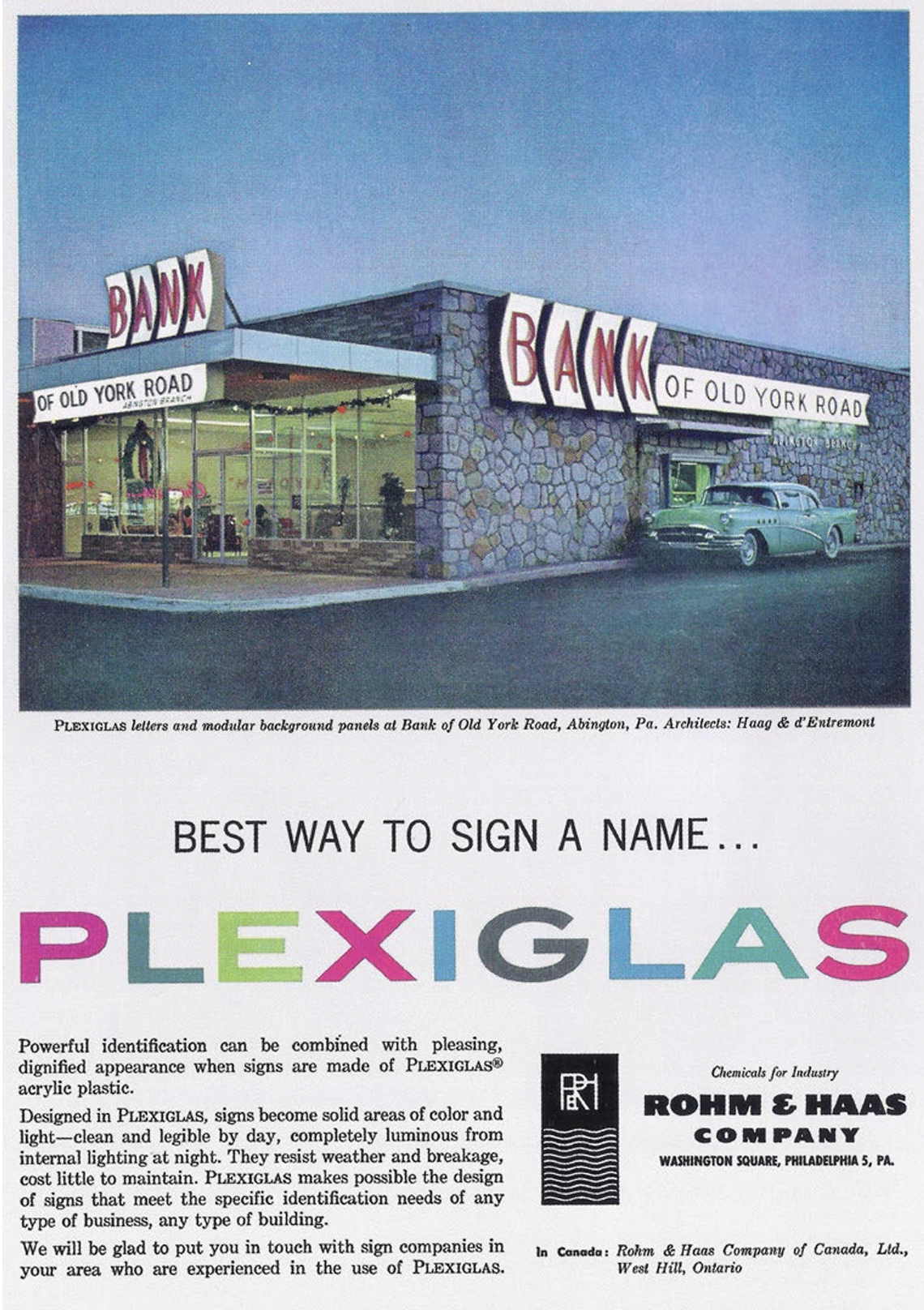
Rohm & Haas Company Plexiglas advertisement, 1960. adsR / Alamy.
In 1948, Modern Plastics Magazine reinstated their annual Modern Plastics Competition after a wartime hiatus. Several prizes went to Plexiglas, a type of acrylic made by Rohm and Haas, a specialty chemicals company in Philadelphia. The firm produced sheets and molding powder of this clear, colorless thermoplastic at plants in Bristol, Pennsylvania, and Knoxville, Tennessee. It sold those raw plastics to fabricating workshops, who in turn crafted assorted see-through products: imitation glass window panels for appliances, hard packages for consumer goods, and colorful, back-lit commercial signs. A Plexiglas design took first prize in the sign category: the Flying Red Horse, molded by the Steiner Plastics Manufacturing Company of Long Island City for the Socony-Vacuum Oil Company, today known simply as Mobil.
Plexiglas was invented by Rohm & Haas, AG, a partnership founded by the chemist Otto Röhm and the salesman Otto Haas in Darmstadt, Germany. In 1909, Haas emigrated to the United States to open an overseas branch, and the German and American firms shared know-how in the ensuing decades, navigating wartime exigencies. When established markets for leather-processing chemicals slumped during the Great Depression, Röhm ventured into cutting-edge research on the acrylic-acid family, conducting laboratory experiments on methyl methacrylate, or MMA. The 1930s witnessed the birth of the modern plastics age, with industrial designers enthusing over the aesthetic possibilities of the new materials and automakers on the hunt for some type of shatterproof windshield.
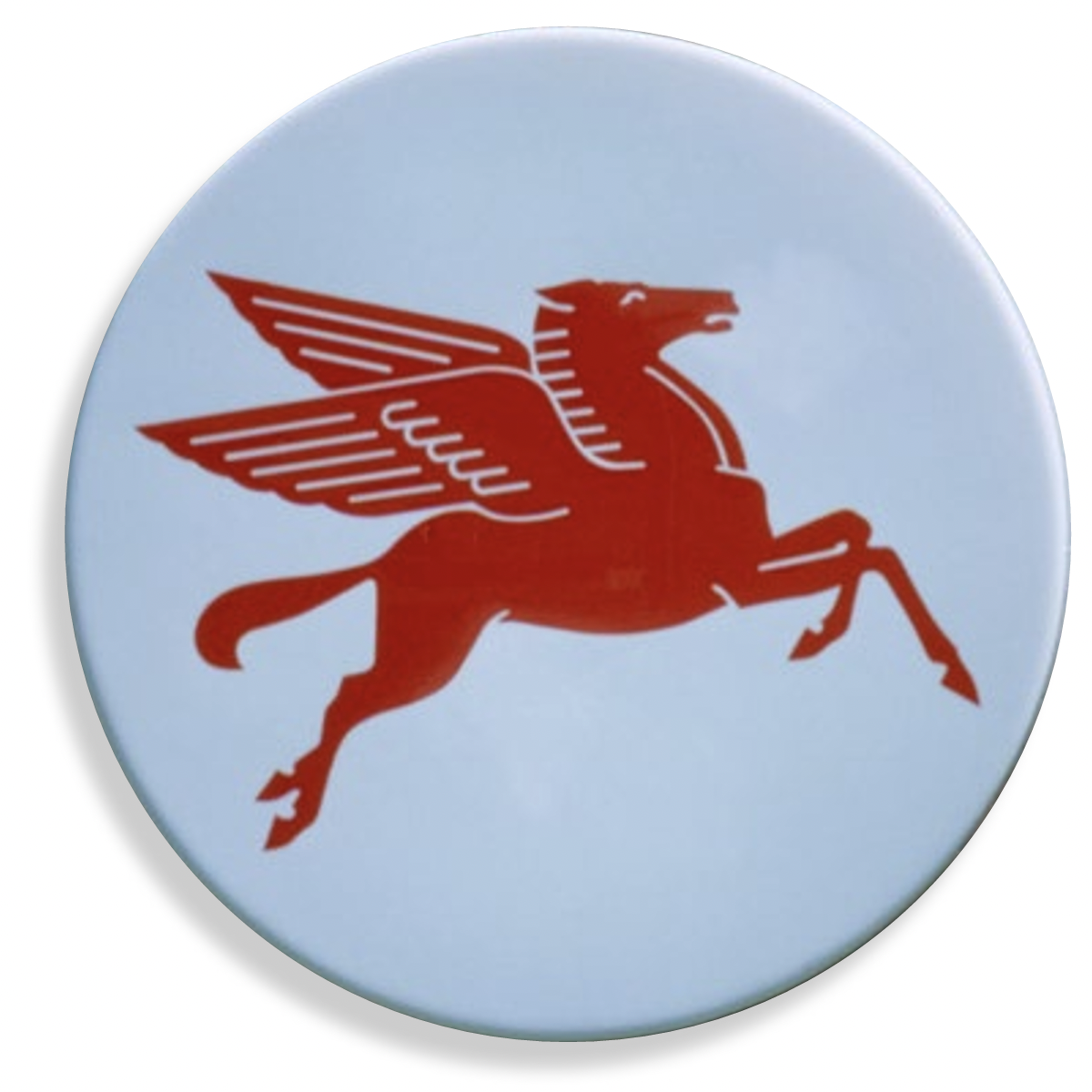
Detail, Mobil badge/logo/trademark on a filling station wall. Paul Shawcross / lgpl / Alamy.
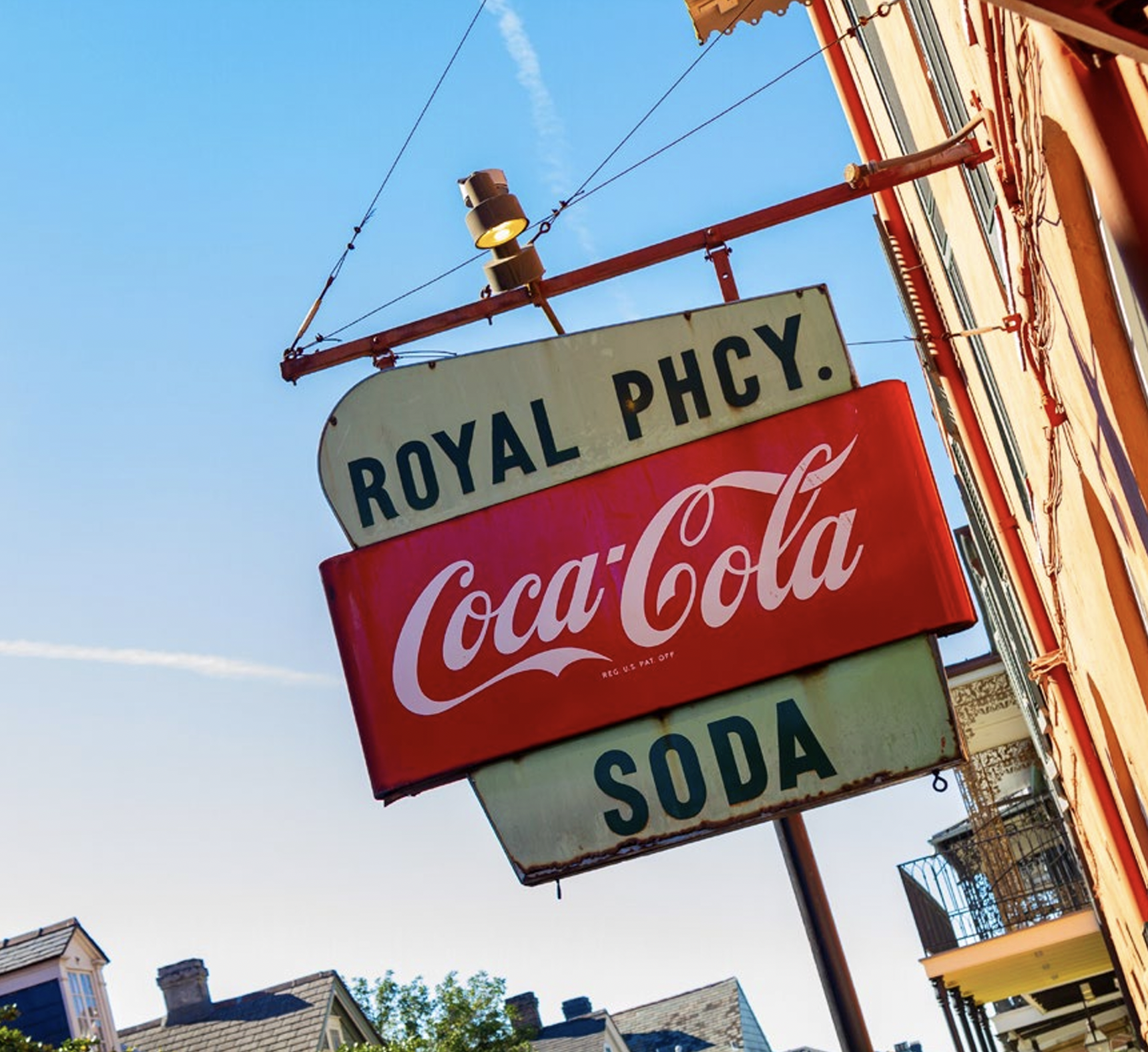
Old Coca-Cola sign in the historic French Quarter of New Orleans, LA, USA, March 2, 2022. iStock/Ampuero Leonardo.
In 1933, Röhm registered the trademark Plexiglas in Germany, and three years later, Haas built his first plastics factory in Bristol, just north of Philadelphia. In the summer of 1939, the New York World’s Fair provided Rohm and Haas with the chance to push Plexiglas to a broad audience. Besides dominating the firm’s own exhibit, Plexiglas stole the show at the automotive pavilion of General Motors Corporation. GM beckoned visitors to its Highways and Horizons Building with a spectacular white Plexiglas sign spelling “GENERAL MOTORS” that lit up at night and thrilled fairgoers with the Plymouth “Ghost car,” a sedan with a transparent body of Plexiglas.
Acrylic further captured the public imagination during World War II. The new plastic was sometimes called the “eyes of aviation” because it was widely used as a glass substitute in planes such as the Boeing Flying Fortress. Unlike components made from conventional glass, windshields of acrylic wouldn’t crack or shatter if struck by a bird or a bullet. Plexiglas could also be bent to make the large, bulbous, see-through components that gave American war planes their distinctive look. Starting in the late 1930s, Rohm and Haas engineers collaborated with the military and major aviation companies to develop shatterproof imitation glass aircraft parts: the window, bomber nose or “greenhouse,” cockpit canopy, and machine-gun turret enclosure. In 1946, the Hollywood director Frank Capra immortalized Plexiglas acrylic aircraft parts in It’s a Wonderful Life, when he showed bubble-shaped components rolling off a wartime assembly line.
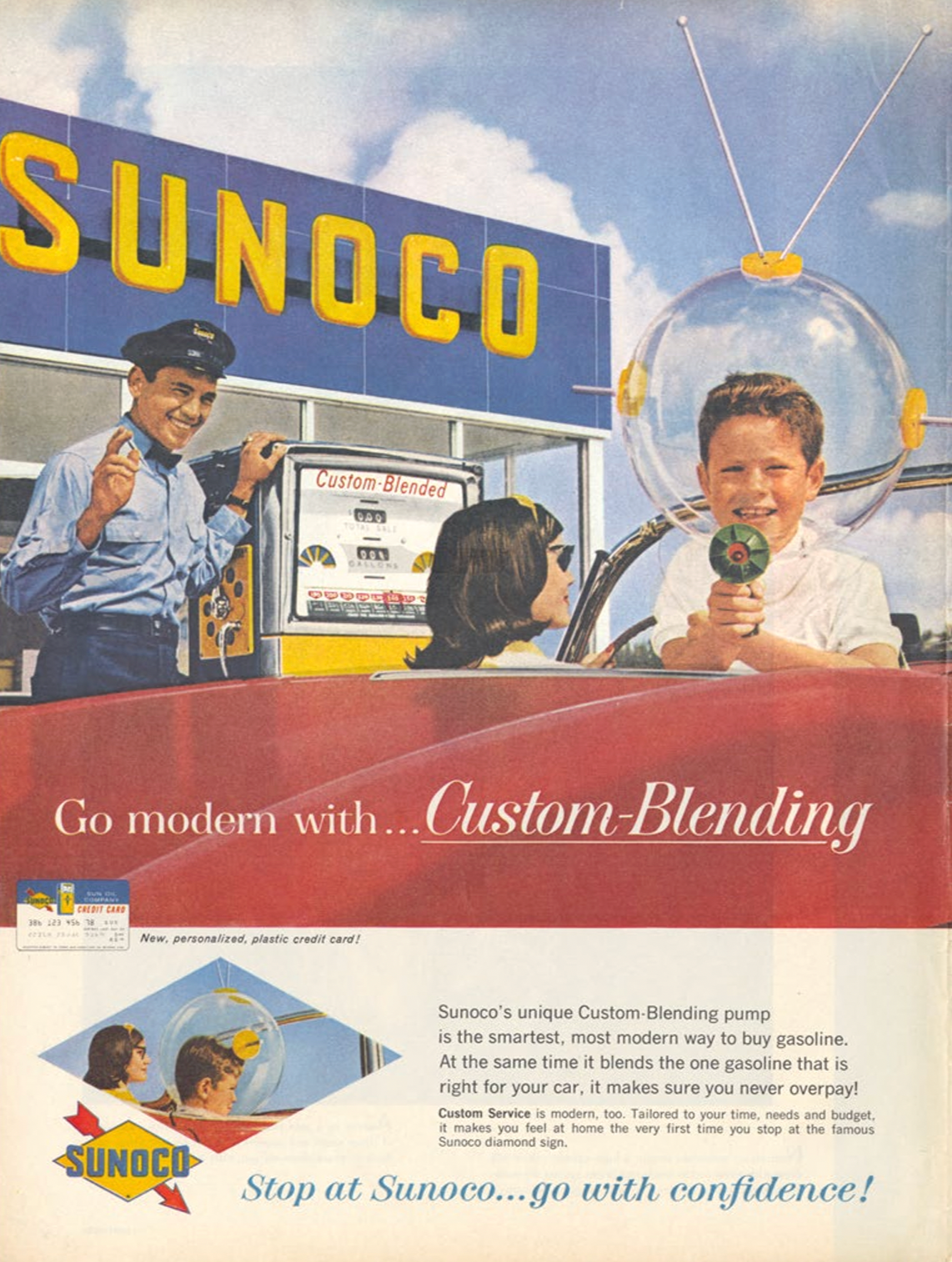
Sunoco vintage print ad, Saturday Evening Post, May 1962.
As the war neared its end, Rohm and Haas executives, aware that federal authorities would soon abolish restrictions limiting Plexiglas to military applications, looked for new markets in the civilian economy. Department stores like the J. L. Hudson Company of Detroit promoted merchandise with arresting window displays built around Plexiglas aircraft parts. In October 1945, a special display called the Dream Suite opened at John Wanamaker, the luxury department store in downtown Philadelphia. Created by Rohm and Haas in collaboration with House and Garden magazine, the suite included a bedroom, a bathroom, and a dressing room with Plexiglas fixtures and furnishings.
Executives soon turned away from household novelties to explore a more profitable opportunity, ushered in by the rise of corporate identities. The New York World’s Fair pointed to a bright future in illuminated commercial signs. Right after the war, the Coca-Cola Company of Atlanta collaborated with Rohm and Haas to create standardized back-lit signs, featuring its iconic brand of white scripted letters on a deep red ground. The chemical company developed techniques for back painting molded Plexiglas to add color, while sign fabricators—many of whom had worked in wartime plastics production—honed their skills at precision crafting the plastic into unusual shapes. Soon, Plexiglas Coca-Cola signs could be seen at beverage bottlers, soda fountains, corner variety stores, and supermarkets nationwide.
The concomitant rise of automobile culture generated a new advertising challenge. How could a roadside business best catch the eye of America-on-the-go? As the population relocated from the city to the suburbs, there appeared commercial byways lined with strip malls, eateries, supermarkets, and gas stations, all wanting to catch the attention of people as they sped by. Colorful, back-lit Plexiglas signs could be seen by urban pedestrians and by suburban motorists alike, attracting attention day and night.
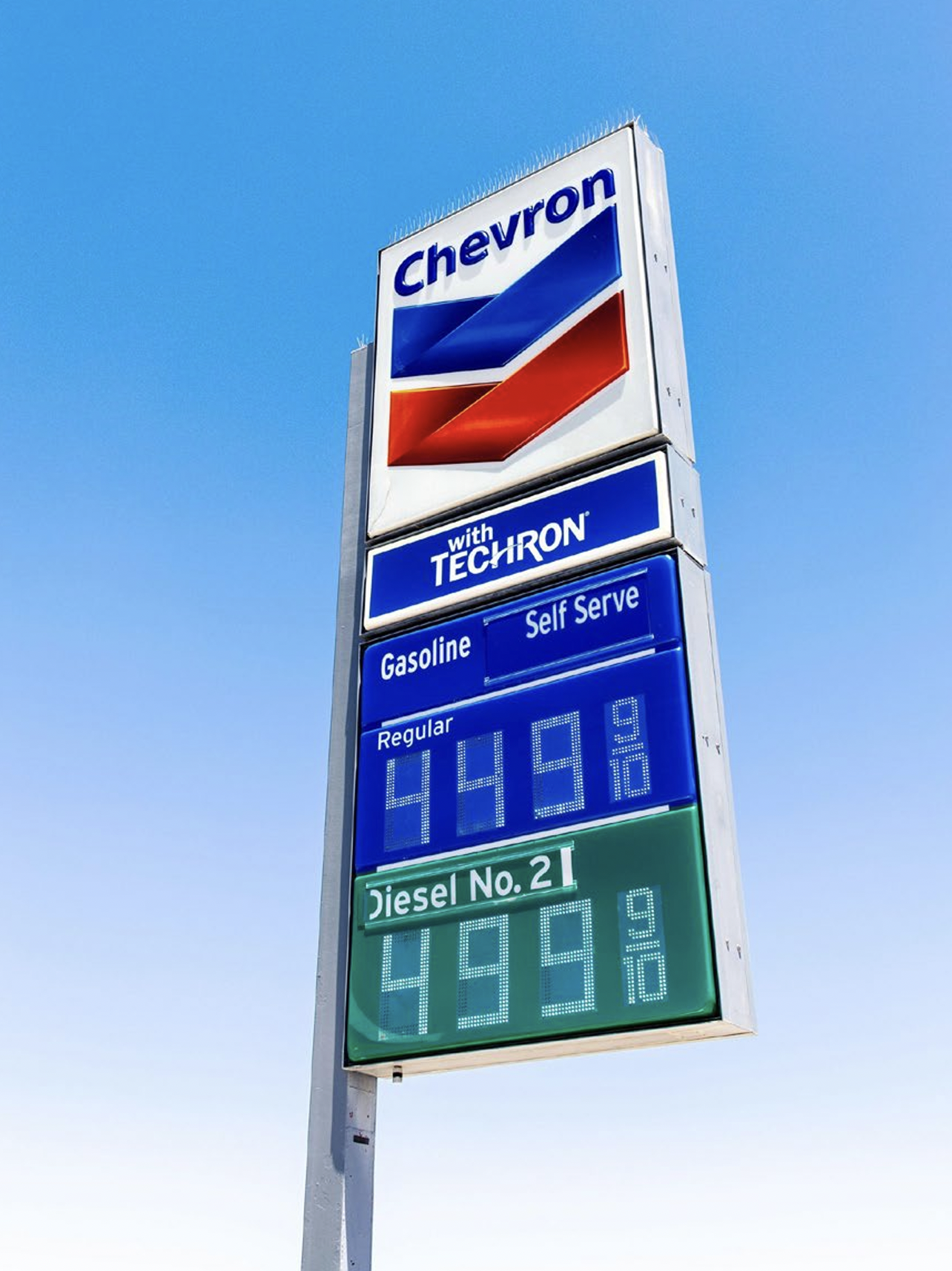
Sign with petrol prices at a Chevron gas station, USA. Nathaniel Noir / Alamy.