Good copper
Kawther Alsaffar

Craftsmen and the metal sinking process in Souq Alsaffafeer. Photographer, Mathais Deaprdon.
In 2015 I was in the middle of my Master’s studies at The Royal College of Art. Days before I was due to fly to Kuwait for the holidays I was given a prompt: to make products that revolved around musical resonance. The idea connected, for me, with the word Saffar—my ancestors’ trade. The colloquial translation is “good copper.” Alsaffafeer were tinkerers who made and mended pots and pans, on a wage that relegated them to poverty.
I visited Souq Alsaffafeer in Kuwait to reinvest in this long-neglected craft. What I found was a shanty town mainly dedicated to tanak, simple objects from folded sheet metal. There were little reminders of the past everywhere: admiralty anchor replicas, badly wrought iron nails, a spray-painted date of 1957 on the chinko (folded sheet aluminum) ceilings. I went around the workshops, asking for someone from Alsaffar family, and found only one man by that name, Ahmed Alsaffar, whose work was in tin plating Dallahs, brass coffee pots. But he and the other workers met me with hostility and suspicion. I was not welcome here.
Why did I care? And why should they? My interest didn’t make sense to them. After a good deal of pleading, a craftsman named Ghandi and his assistant agreed to sink some circular brass and copper sheets to my design specifications. They quickly jury-rigged their own tools: metal pipes, blunt hammers, butane torches and car acid for the pickle. A few days later I came back to collect the small shallow plates they had made. They were nothing special, but we were inventing our own methodology, and they were certainly unique. When I asked how much money they wanted, they exchanged confused glances, then asked for 10 kwd (about thirty US dollars) per piece. I gave them what they asked for, happily. The discomfort dropped from their faces. The exchange now made sense. I wasn’t there to exploit them, as they must have assumed.
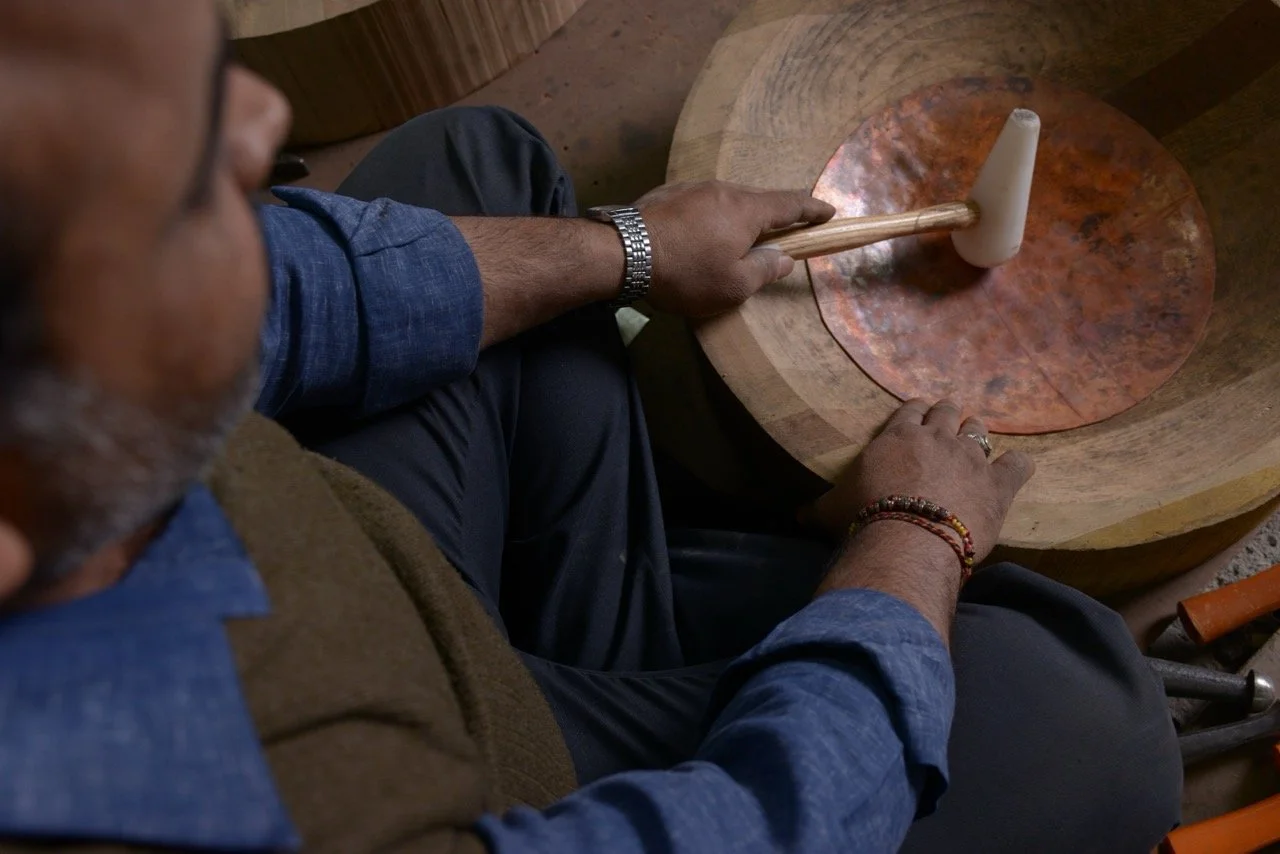
Craftsmen and the metal sinking process in Souq Alsaffafeer. Photographer, Mathais Deaprdon.

Dual Bowls in process in Alwafi Foundry. Photographer, Mohamad Chehimi.
I set up my own makeshift workshop in my backyard and spent over a month, hammering and annealing, hammering 23and annealing. I recorded the sounds. The process was indeed deeply resonant; the material wanted to be heard. It told me when it was too brittle, when it was getting too thin, and how to hammer in rhythm to make my pattern concentric and even.
But I could only understand Kuwait’s craft culture through the work of Alsaffafeer. Beginning in 2016, I created new designs blending traditional and new technology, applying an engraved concentric grid on the sheets of copper, to aid 24 in the methodical hammering. I made improvised wooden molds, and spent months making copper and aluminum pieces with the craftsmen in Souq Alsaffafeer. The bottom line for them was profit, but I was showing up daily, and caring deeply. So they did too, in return. It instilled a sense of pride they were sorely due.

Pentu and Haneef pouring brass and zinc. Photographer, Mohamad Chehimi.

Craftsmen and the metal sinking process in Souq Alsaffafeer. Photographer, Mathais Deaprdon.
There is a stark difference between metalworking in Kuwait and that in neighboring countries, like Iran, where repoussé and inlay techniques are venerated traditions. Crafts in Kuwait are fundamentally utilitarian, and with the influx of oil wealth in the 1950s, came to be associated with poverty. Trades long held by Kuwaitis were now occupied by laborers of other nationalities, who were not treated as social equals. Their work was not considered as design or intellectual property. What permeates much of Kuwaiti society instead is what William Morris called the “false distinction of luxury”—imported commodities and superficial architecture in classical and orientalist styles.
As my relationship to the artisans of the Souq deepened, I explored sand-casting, too. Again I went door-to-door asking for the best craftsmen, and again I was met with resistance at first, then collaboration and understanding. In Kuwait, casting is done with recycled metals and “green” 25unprocessed sand from Egypt. Through economic necessity, the foundries operate within a circular economy: they use discarded remnant metals from other industries and building demolitions, ironically benefiting from Kuwait’s lack of concern with sustainability.
Gradually I established myself at a foundry called Alwafi. I found that when there was too much decorative interference from me as a designer, the objects didn’t express their material qualities. The best form of work was in-depth material exploration, with form taking a back seat. A couple of weeks into the experiments, I had a dream that two of the artisans, Mahir and Pentu, were using long ladles to pour two different metals into the mold simultaneously, via separate gates. When I told Mahir about the dream he laughed and said that was impossible, but then we took the risk, and the results were beautiful from the start. I was ecstatic. In my eyes we had just managed to metaphorically turn sand into gold. We spent the next couple of weeks making Dual Bowls, as I called them. The pieces were primitive yet completely exemplified the beauty of raw casting techniques.
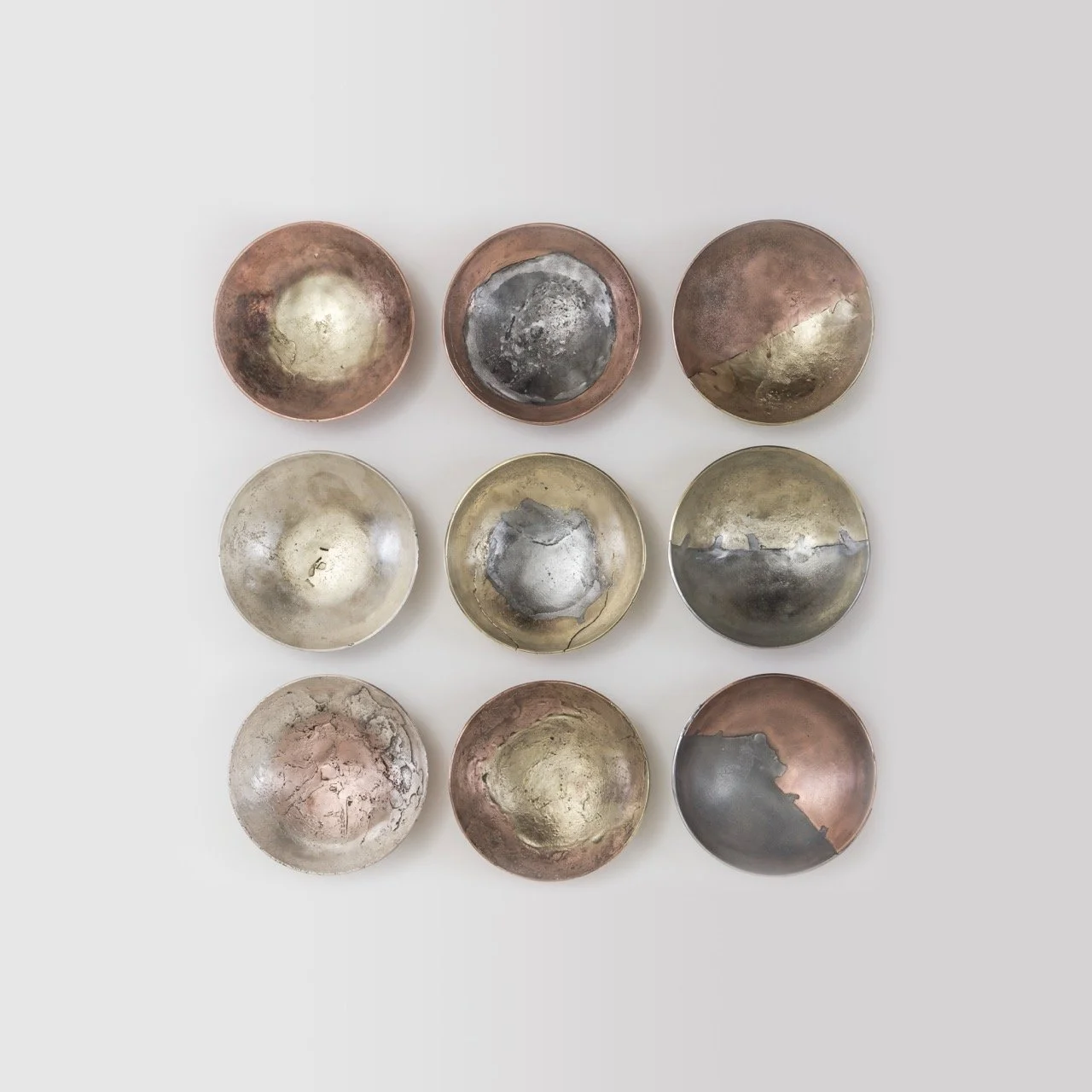
Dual Bowls, 9 materials and methods. Photographer, Mohamad Chehimi.
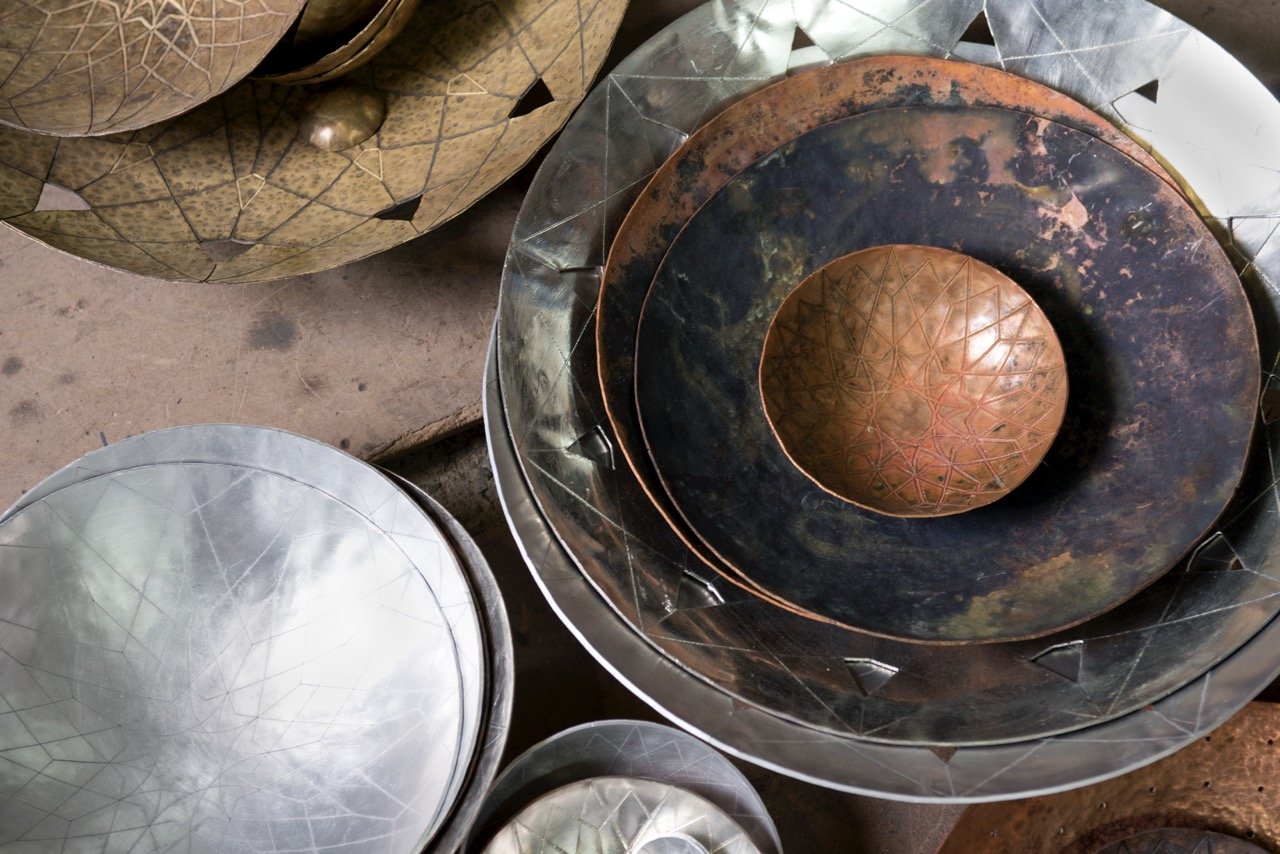
Craftsmen and the metal sinking process in Souq Alsaffafeer. Photographer, Mathais Deaprdon.