The copper king
Christina L. De León
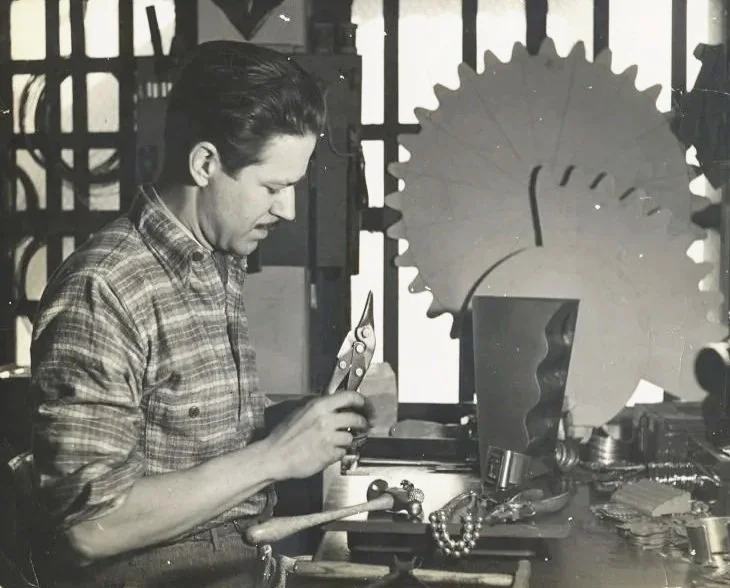
Francisco Rebajes pictured working in his workshop, c. 1940s. Peri Shaw Archive
In the mid-twentieth century, Rebajes was one of the most sought-after costume jewelry brands in the United States. The story of its founder is a quintessential rags-to-riches tale. A young immigrant achieved the “American dream” by redefining a humble material, copper, into a coveted fashion accessory.
Francisco Torres set sail for New York from the Dominican Republic as a sixteen-year-old boy, in 1922. In his newly adopted city, he transformed himself into Frank Rebajes, taking his mother’s last name, which he believed possessed a unique flair. While clever and quick-witted, money and fame eluded him for years as he worked a variety of jobs to make ends meet.
In 1932 Rebajes married Pauline Schwartz, and in an effort to become financially stable, he began transforming cans and scrap metal into animal-shaped sculptures that he sold at the Washington Square Park Outdoor Festival. His work caught the eye of Juliana Force, the first director of the Whitney Museum of American Art, who purchased his entire inventory for $30. Rebajes used the capital to open a modest shop in Greenwich Village, and it was there that he started experimenting with copper, often lining it with aluminum to protect the skin from staining.
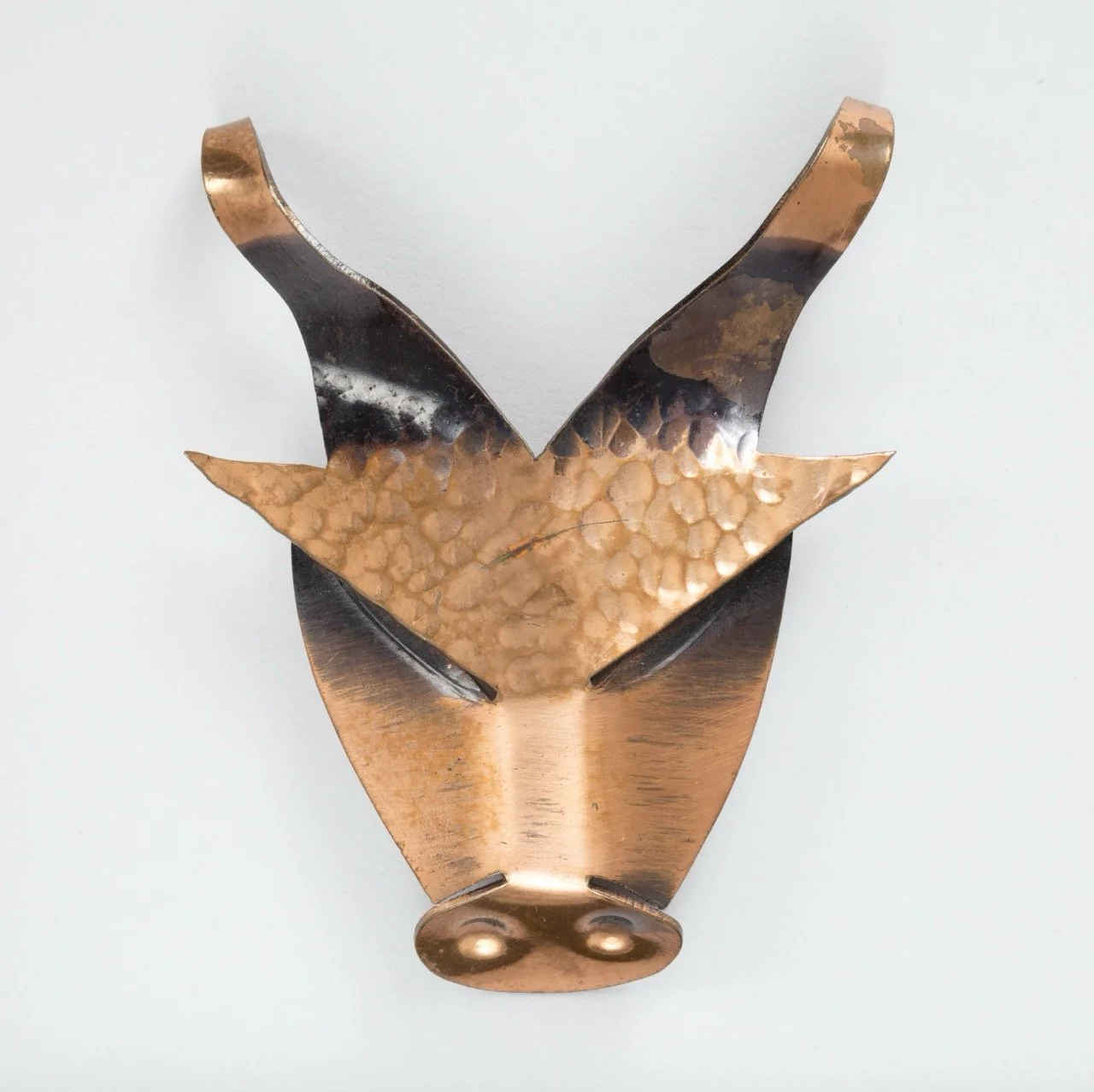
Bull Brooch by Francisco Rebajes, ca. 1940s. Hammer and cut copper. Gift of Linda Lichtenberg Kaplan; Cooper Hewitt, Smithsonian Design Museum, 2017-59-3.
Rebajes’ pieces had a bold sculptural quality that showed his adeptness with the material. This is particularly evident in his brooches representing animals like bulls, lobsters, rams, and antelopes. In these designs, he manipulated the copper in a variety of ways, hammering, twisting, and folding the metal to create three-dimensional objects, and selectively oxidizing the surface to produce depth and shadows.
Rebajes was determined to elevate the value of copper. He believed the public should have access to well-designed and affordable objects: earrings, broaches, rings, bracelets, cuff links, necklaces, tie clasps, and eventually decorative home goods. Everything he made sold for less than $10 (about $100 in today’s money), a price point calculated to fill a gap in the market. In a 1953 interview, Rebajes said, “There is no other jewelry in Europe like mine. It is either very costly, or ten-cent-store stuff.”
It is not difficult to imagine how an articulated bracelet made of highly polished copper would have given its wearer a sense of pizzazz—a fashionable pop of color, without breaking the bank. Even his kitschiest designs, like a cowboy-shaped pin with legs that swing from side to side, were charming and whimsical accessories.
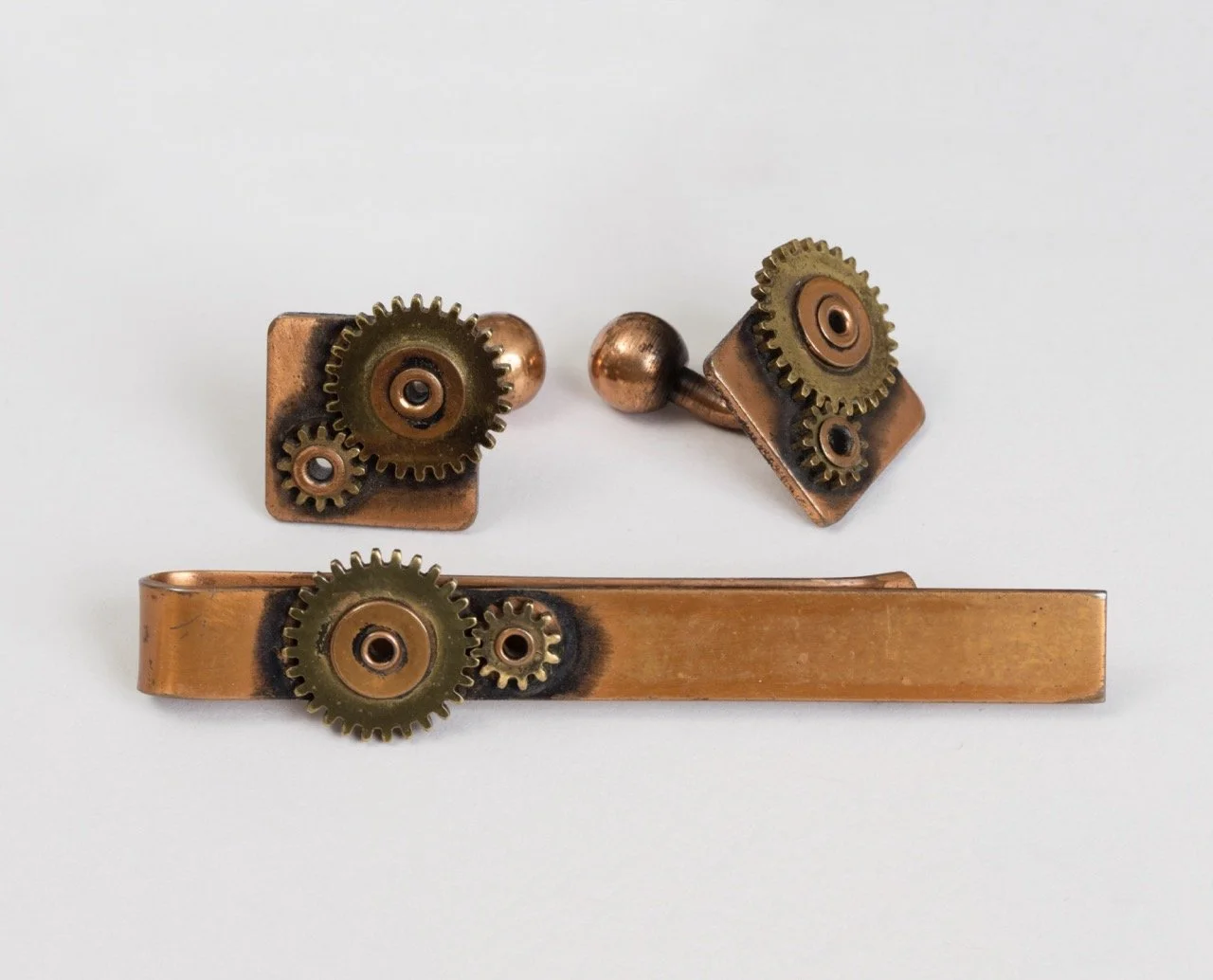
Gears Tie Clip and Cufflinks by Francisco Rebajes, ca. 1940s. Copper plate and gears. Gift of Linda Lichtenberg Kaplan; Cooper Hewitt, Smithsonian Design Museum, 2017-59-22-a/c.
A curious aspect of Rebajes’ work, rarely commented on, is the way he used copper to render skin tone. He often employed stereotypes of Asian, Indigenous, and Black people in his designs, such as African women with exaggerated facial features, wearing oversized earrings and stacks of necklaces. His use of copper in this context is reminiscent of the way that onyx and other dark stones were used to depict Black women and men in the eighteenth and nineteenth century (oftentimes these figures, too, were meant to be worn as personal adornment). Although Rebajes was from a coastal town in the Dominican Republic, his parents originally hailed from the Spanish island of Mallorca in the Mediterranean. He is known to have had a racially mixed social circle; yet, what do these pieces say about Rebajes’ viewpoint on race? Perhaps more importantly, what did it say about the people who purchased them?
Unlike contemporaries such as Sam Kramer, Art Smith, and Margaret de Patta, Rebajes was not an adventurous or experimental designer. He directly catered to the masses. He once said, “The original piece has to be made. What’s the difference if we make a million copies. Real artists are interested in money.” Despite the success he garnered throughout his lifetime, however Rebajes today remains in the shadows of design history. Could it be that the populist approach that led to his success is what has caused him to be disregarded since? Maybe so, but this misses the most interesting thing about Rebajes: the way he managed to reflect the social, economic, and cultural milieu of his time using little more than a humble piece of metal. His story yields insights the everyday reception of mid-century modernism, rather than its elite consumers. With copper, Rebajes proved excellence is not limited to the exclusive.
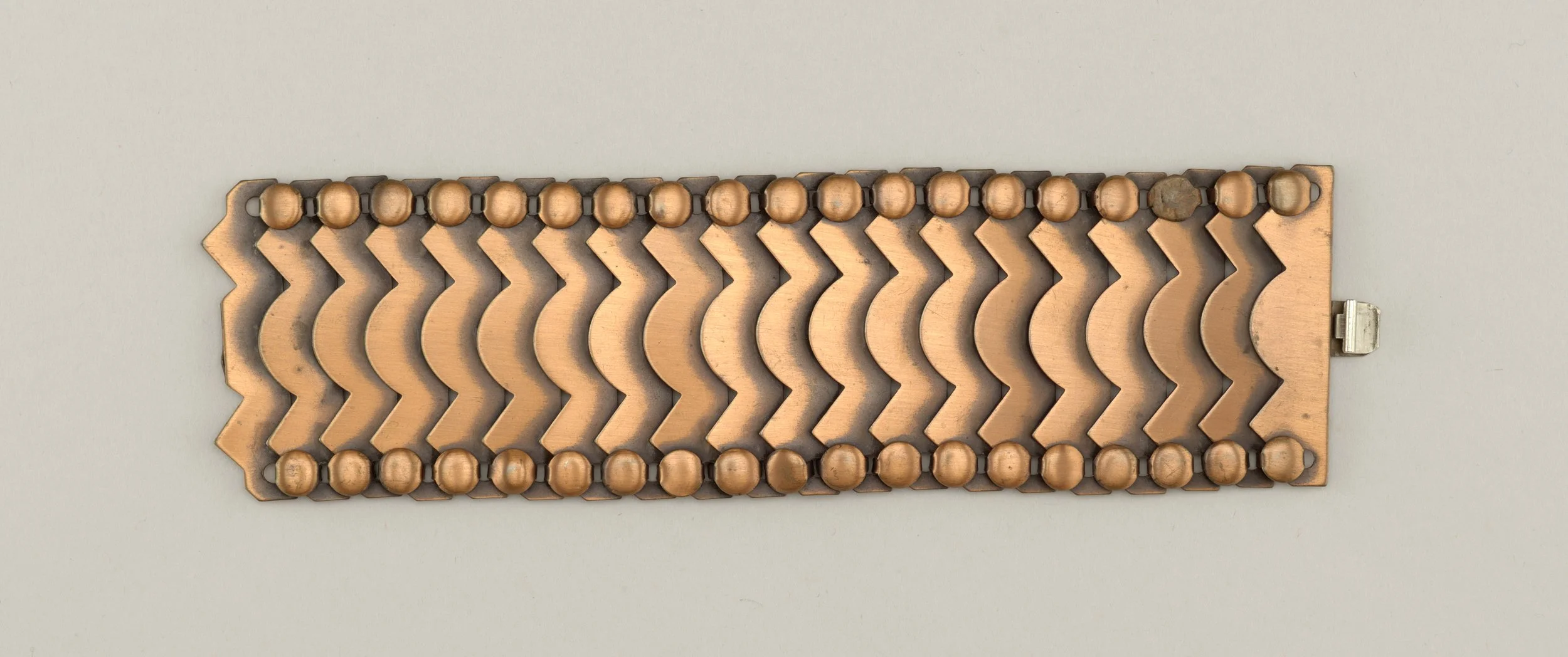
Bracelet by Francisco Rebajes, ca. 1940-1950. Copper. Gift of Dorothy Hoberman; Cooper Hewitt, Smithsonian Design Museum, 1992-138-1.
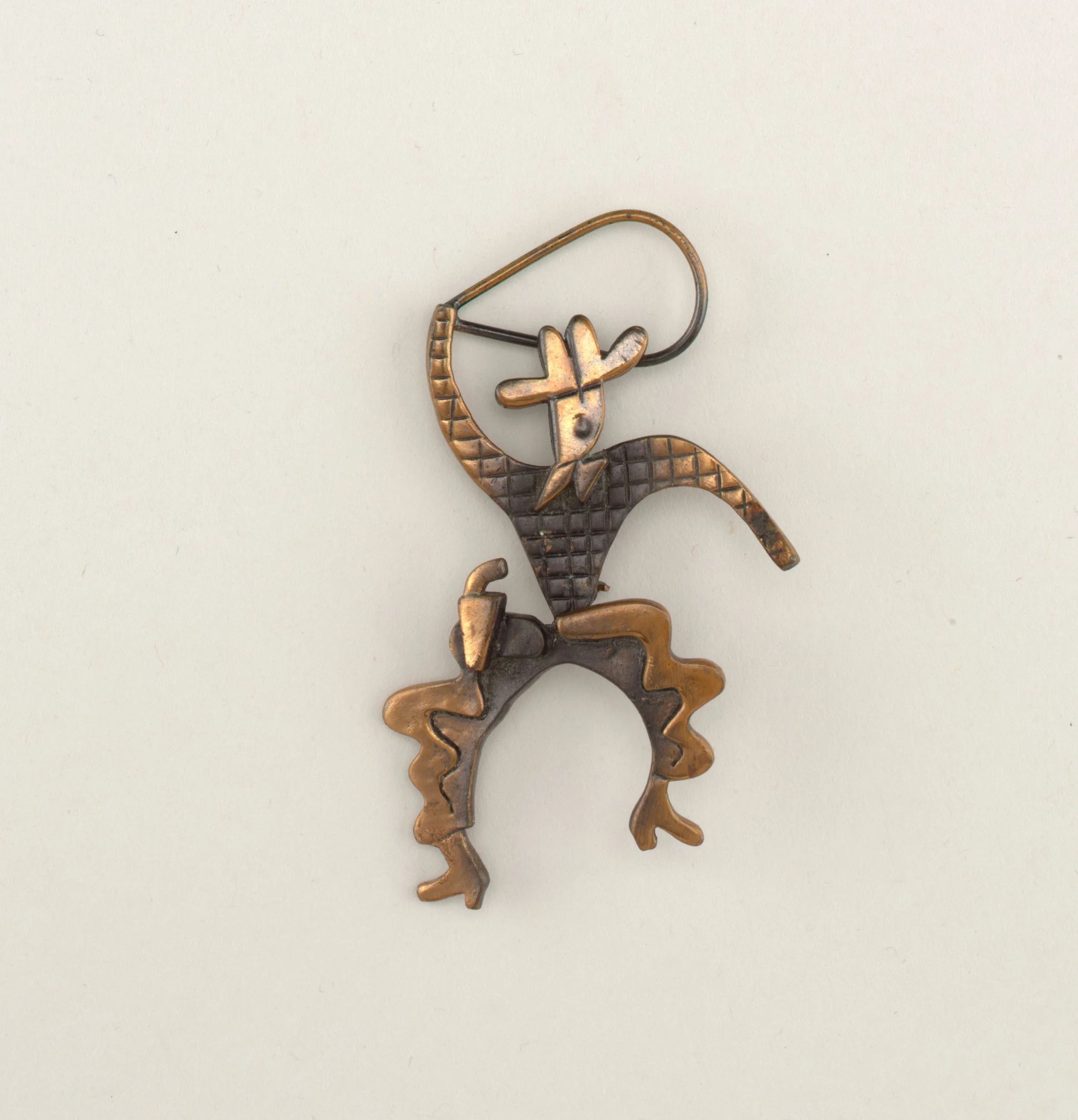
Brooch by Francisco Rebajes, ca. 1945. Copper. Gift of Eitel and Frances Groeschke in memory of Pauline and Frank Rebajes; Cooper Hewitt, Smithsonian Design Museum, 1990-108-8.
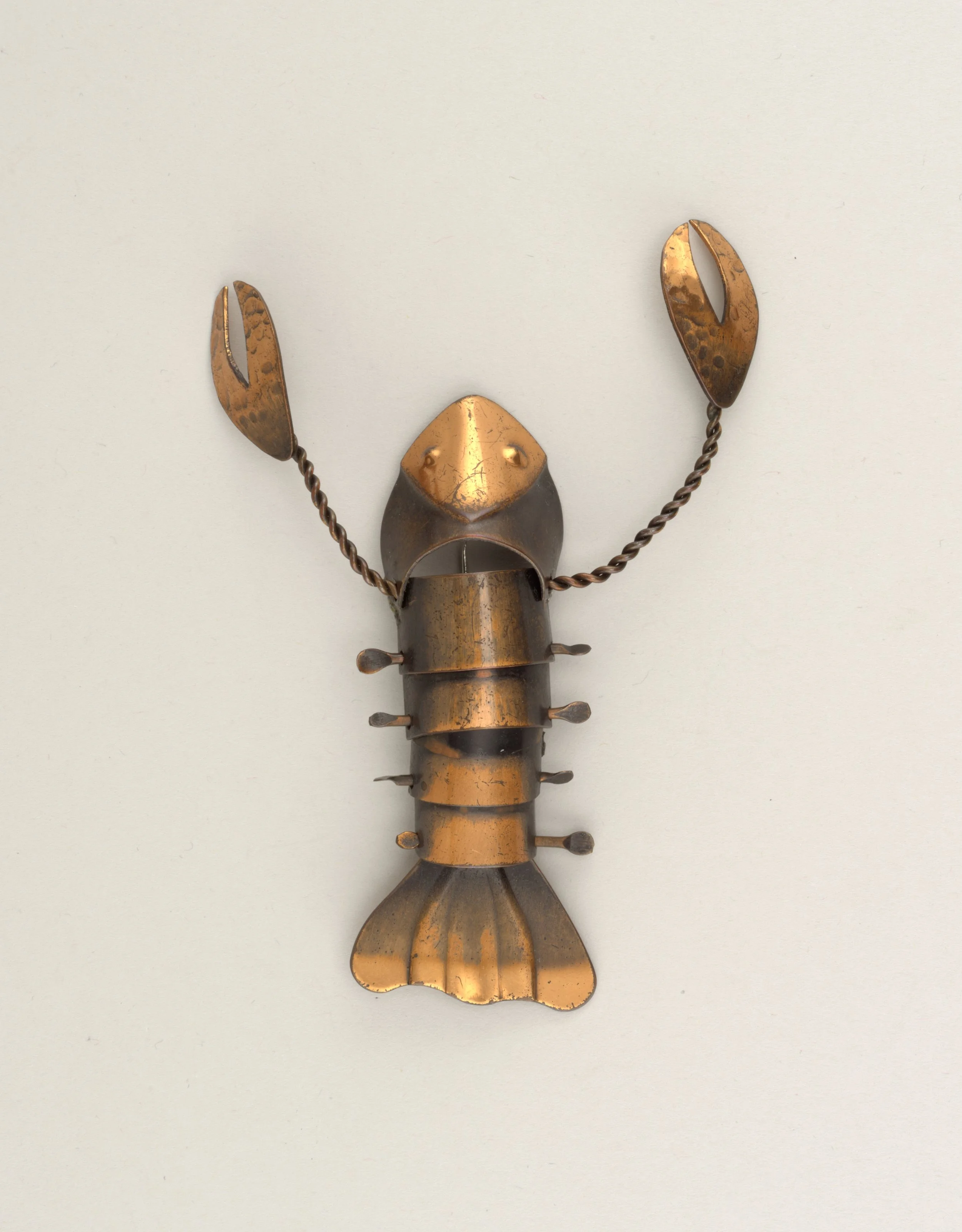
Brooch by Frank Rebajes, ca. 1950. Copper. Gift of Eitel and Frances Groeschke in memory of Pauline and Frank Rebajes; Cooper Hewitt, Smithsonian Design Museum, 1990-108-7.