Introduction
Glenn Adamson
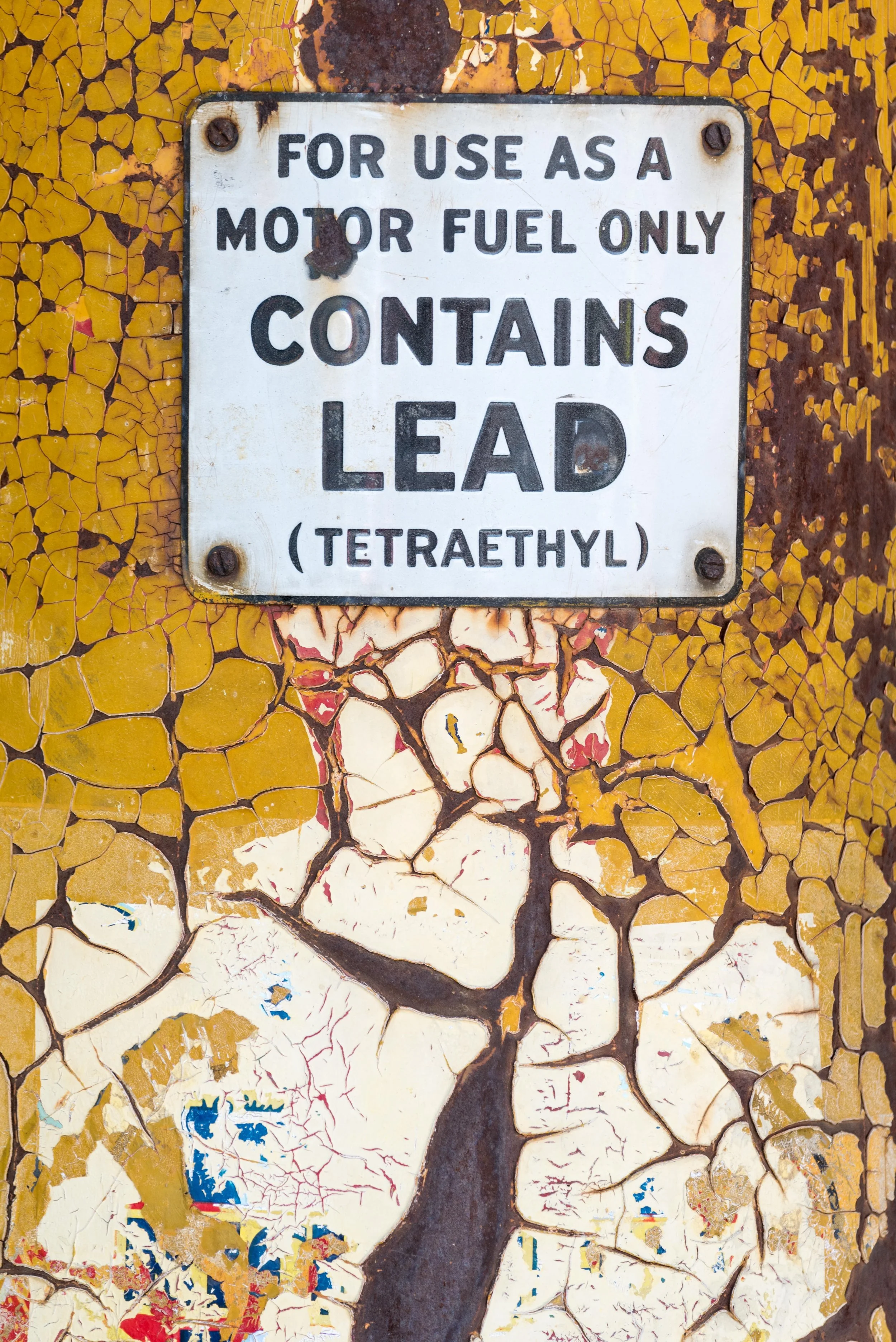
Gas pump sign, Oregon. Leon Werdinger / Alamy / 2017.
Let’s just say it right up front: lead is terrible stuff. If ingested or otherwise allowed into the human bloodstream, it acts as a toxin. The body treats it as if it were calcium, which is an essential nutrient, and naturally absorbs it, only for the metal particles to play havoc with the nervous system, bones, liver, kidney, and brain. Young kids, who process everything more quickly, are especially at risk. Most people know that lead-based housepaint of the 1970s and earlier was a bad idea, but they also probably assume that it is a problem long past. In fact, lead poisoning is still thought to affect one in three children worldwide, concentrated in low-income nations, with terrible consequences.
One may well ask, given how dangerous lead is, how it ever became so prevalent, much less why it remains so. Did people not know? Or did they just not care? The answer is a little of both. There’s an old story you may have heard about lead water pipes causing the fall of the Roman Empire. The idea is that the whole population was poisoned, and driven slowly into cognitive decline. Recent archaeological work suggests that this was likely not the case (significantly more lead exposure would have come from cooking pots), but even in ancient times some observers did worry, among them the architectural theorist Vitruvius: “when lead is smelted in casting, the fumes from it settle upon their members, and day after day burn out and take away all the virtues of the blood from their limbs. Hence, water ought by no means to be conducted in lead pipes, if we want to have it wholesome.”
Despite such warnings, the metal remained in use not only for plumbing (the very word is taken from the Latin for lead, plumbum, which is also where we get the abbreviation Pb, familiar from the Periodic Table) but also in numerous industries: cosmetics and paint, architectural elements, ceramics and glass. Miners and smelters were particularly susceptible to its toxicity, but as these people were right down at the bottom of the social hierarchy – in many cases, enslaved – there was little concern for their welfare, or incentive to investigate the problem. As a result, lead poisoning remained an occupational hazard across the world and across the centuries. Even among comparative elites, it is thought to have been widespread; scholars have hypothesized that it may have exacerbated Caravaggio’s erratic behavior and worsened Beethoven’s deafness (surviving strands of his hair indicates a strong presence of lead, which he likely ingested in the form of cheap wine).
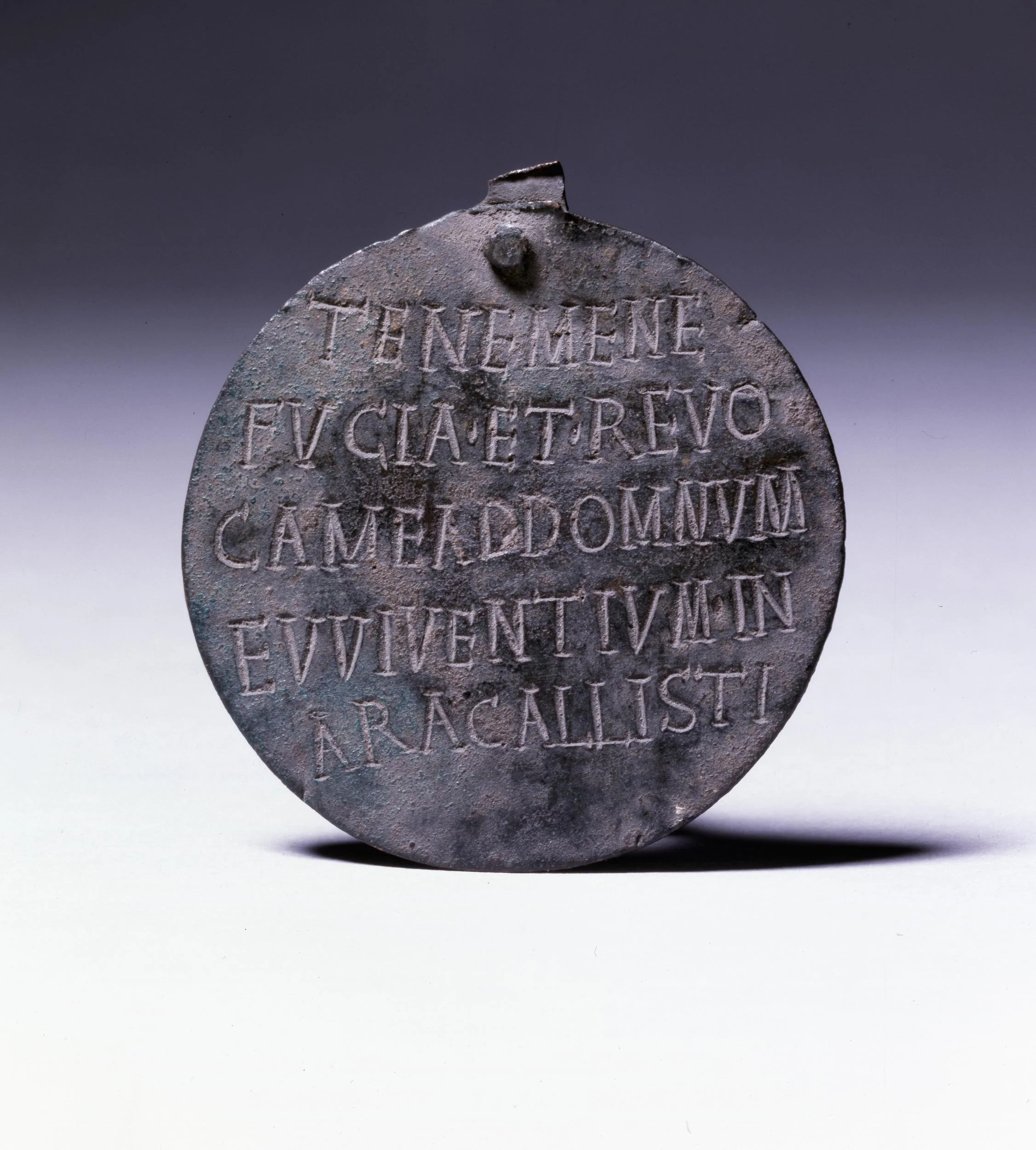
Roman, Tag, 4th century. Copper alloy tag that was rivetted to the collar of an enslaved person. Inscribed with a demand to return to the slave master in his estate in Rome. The British Musem, 1975,0902.6. © The Trustees of the British Museum. Shared under a Creative Commons Attribution-NonCommercial-ShareAlike 4.0 International (CC BY-NC-SA 4.0) licence.
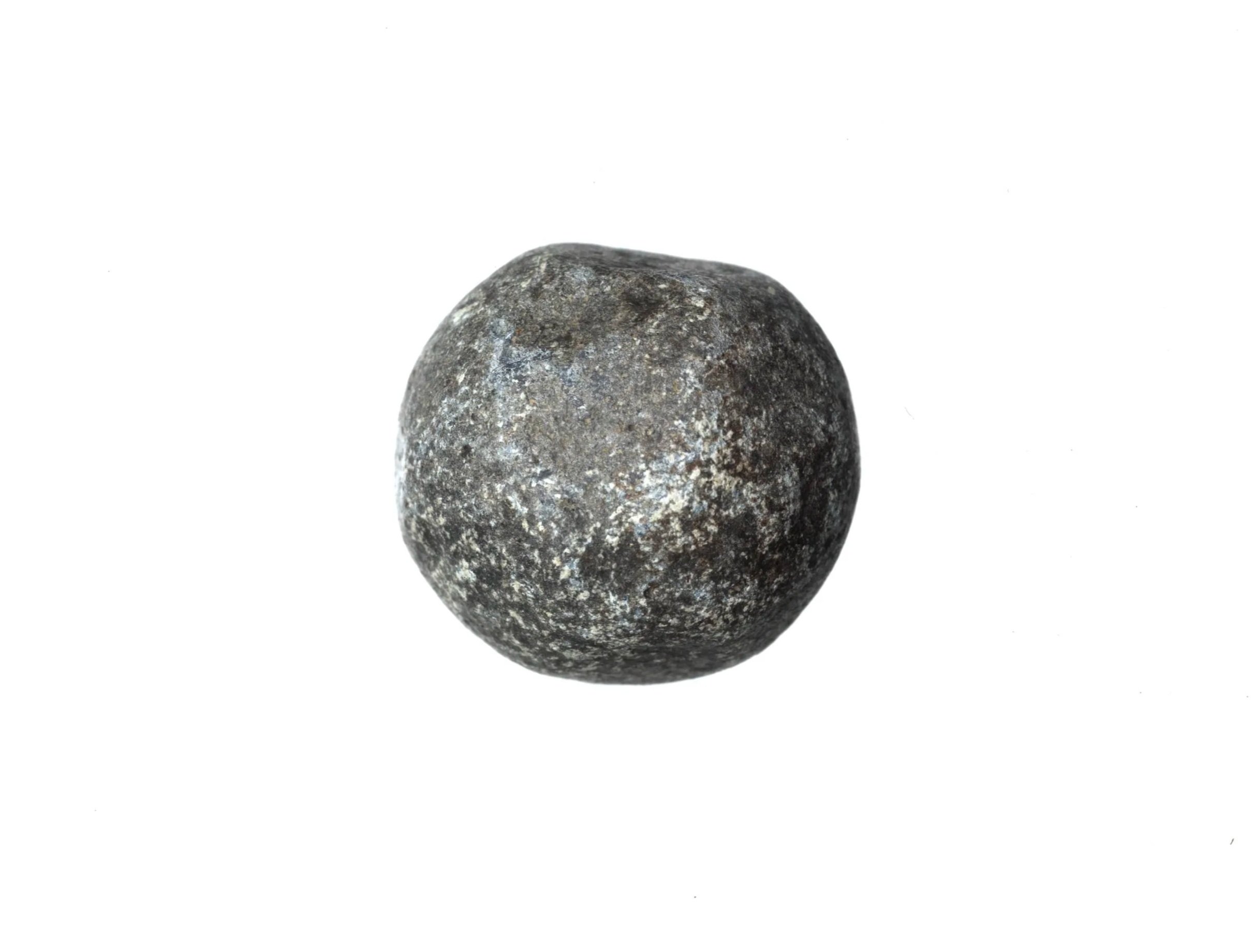
Post-Medieval, Lead musket shot, 17th century. Lead. London Museum, A18270. digital image © London Museum.
The problem, of course, is that lead is so useful in so many ways, and therefore hard to do without. Somewhat counterintuitively, its value for industrial applications is primarily the result of the inherent weakness of its atomic bonds. This means that its crystalline structure is easily disrupted, making it unusually soft for a metal despite its high density, and also giving it a very low melting point of 621.5 °F (by way of comparison, that of pure iron is 2,800 °F; lead’s melting temperature can be lowered still further by alloying it with other metals like tin and bismuth, which is how solder and pewter are made). These two properties – technically known as ductility and fusibility – have made it the material of choice for countless manufacturing needs.
Nothing could be easier than making lead shot, for example: simply drop a batch of the molten metal from a tall tower into a pool of liquid, and it will form spheres in a range of sizes, variously useful as musket balls or shotgun ammunition. More typically, lead was cast or beaten by hand into various shapes. In the form of ingots, it served as ship ballast; the phrase “get the lead out,” i.e. hurry it up, may have originated in tossing weight over the side in time of battle or emergency. Before the days of barcodes, lead seals were a preferred method for identifying bales of cloth, somewhat like the wax used on official documents, but much more durable in a ship’s hold. Architectural elements from the ornamental (finials, fountains, to the functional (shingles, flashing, gutters) have commonly been made of lead, as has sculpture – famously including a statue of King George III that was melted down to make patriots’ bullets on July 9, 1776.
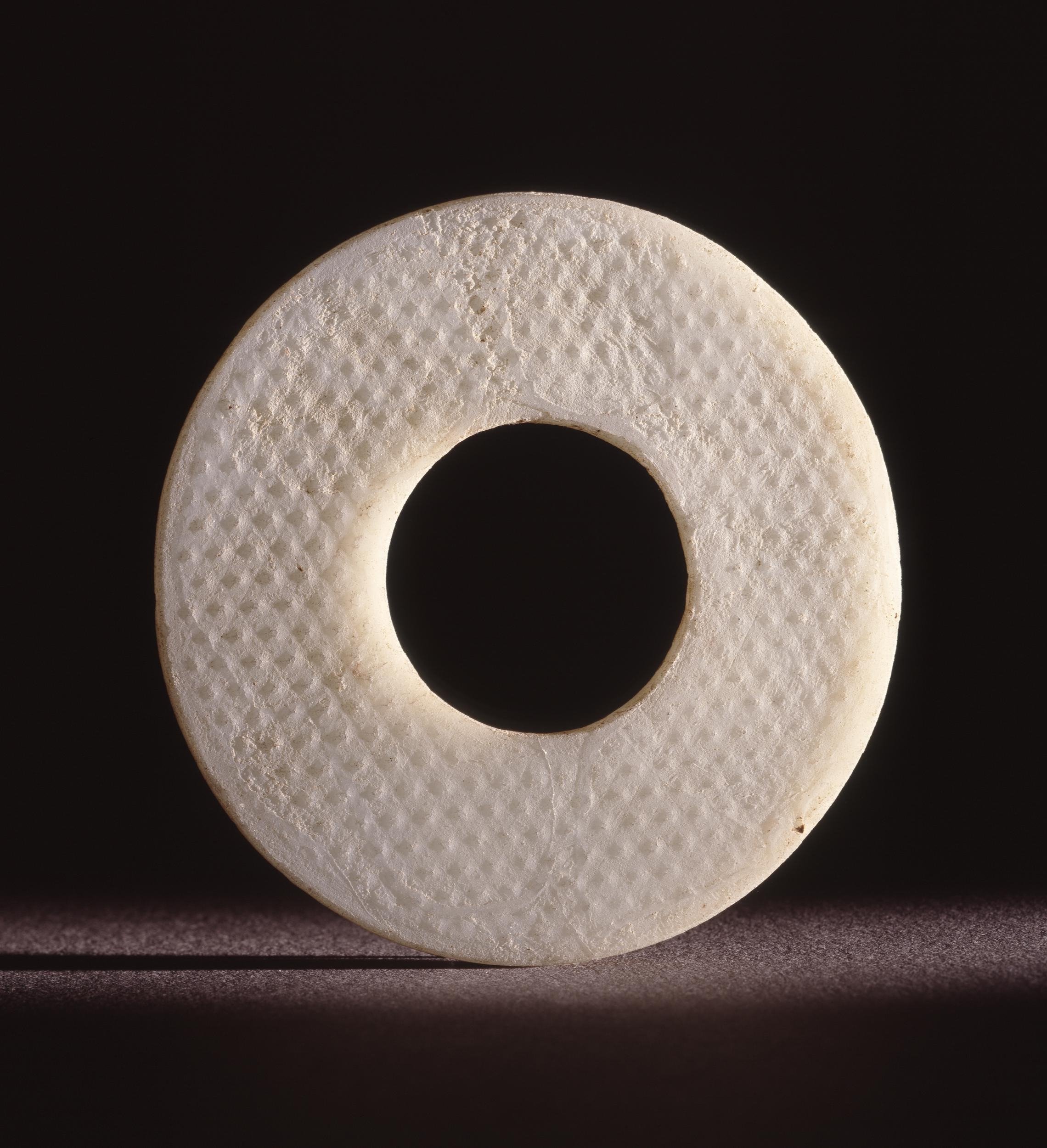
Han Dynasty, Bi disk, 206BC-220. Glass. Purchased from: Karlbeck Syndicate, The British Museum, 1935, 0115.3. © The Trustees of the British Museum. Shared under a Creative Commons Attribution-NonCommercial-ShareAlike 4.0 International (CC BY-NC-SA 4.0) licence.
The pamphlets and handbills that promoted revolutionary sentiments were also made with lead; an alloy of the metal (typically mixed with antimony for hardness and tin for durability) had been standard for movable type since Gutenberg’s day. As a result, printers too were apt to suffer from lead poisoning, particularly if they were involved with type casting. In their entry on “Caracters d’Impimerie,” published in the second volume of their encyclopedia (1752), Diderot and d’Alembert describe cats literally defenestrating themselves to avoid the vapors, though adding (not entirely convincingly) that “the first exposure not having been fatal, they enter the fumes that affected them so violently on first exposure and live quite happily in foundries.”
Glass provides a less obvious but still outstanding example of lead’s advantages in action. In ancient Mesopotamia, Egypt, and India, the metal was added to silica and wood or plant ash, serving as a flux to lower the melting point of the batch, and also making the glass more brilliant. In Han Dynasty China, a convincing imitation of green jade was achieved by combining silica, lead, and barium, while the ancient Greeks and Romans combined lead with antimony to create an opaque yellow glass. And in late seventeenth-century London, a clear lead glass – also called “flint glass,” because that mineral furnished the silica source – was successfully mass produced as an import substitution for Venetian cristallo (itself an imitation of carved rock crystal, made colorless through the addition of manganese oxide). In 1674, a “perticular Sort of Christaline Glasse” was successfully patented by George Ravenscroft, an entrepreneur with Venetian trading connections; traditionally, he was also credited with perfecting the formula for lead glass to avoid “crizzling” or micro-fissuring in the glass as it cooled. Recent research suggests, however, that his apparent technical breakthrough was – as so often in the history of craft technologies – more likely built on experiments by others over the preceding decade. In any case, his flint glass was the toast of the town, and it remains prized in drinking vessels for its clarity, ringing tone, and heaviness.
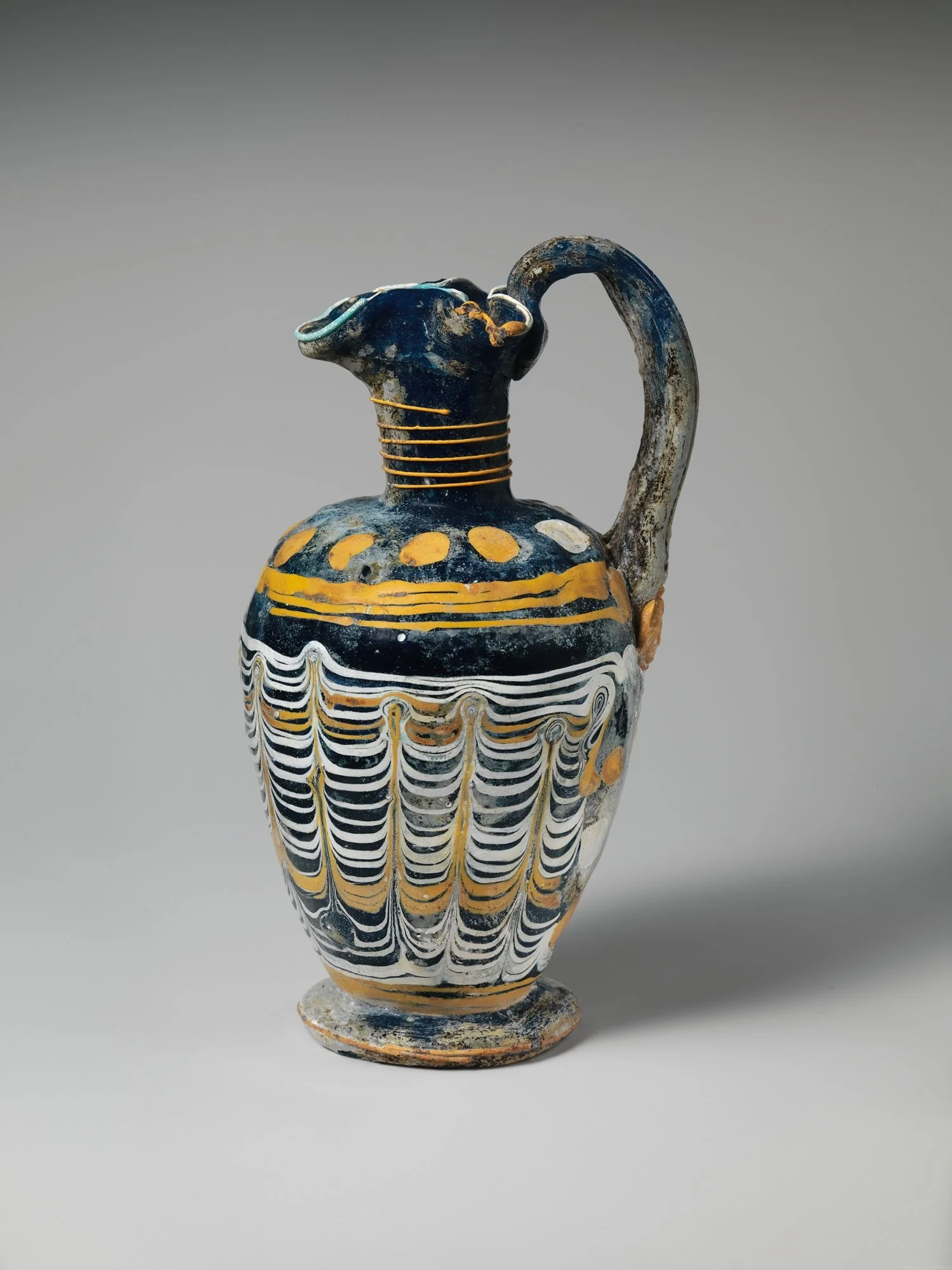
Greek, Glass oinochoe, mid-4th–early 3rd century BCE. Glass. 7 11/16 x 4 3/16 in. (diameter.) × 2 15/16 in. The Metropolitan Museum of Art, New York. Gift of Renée E. and Robert A. Belfer, 2012, 2012.479.7.
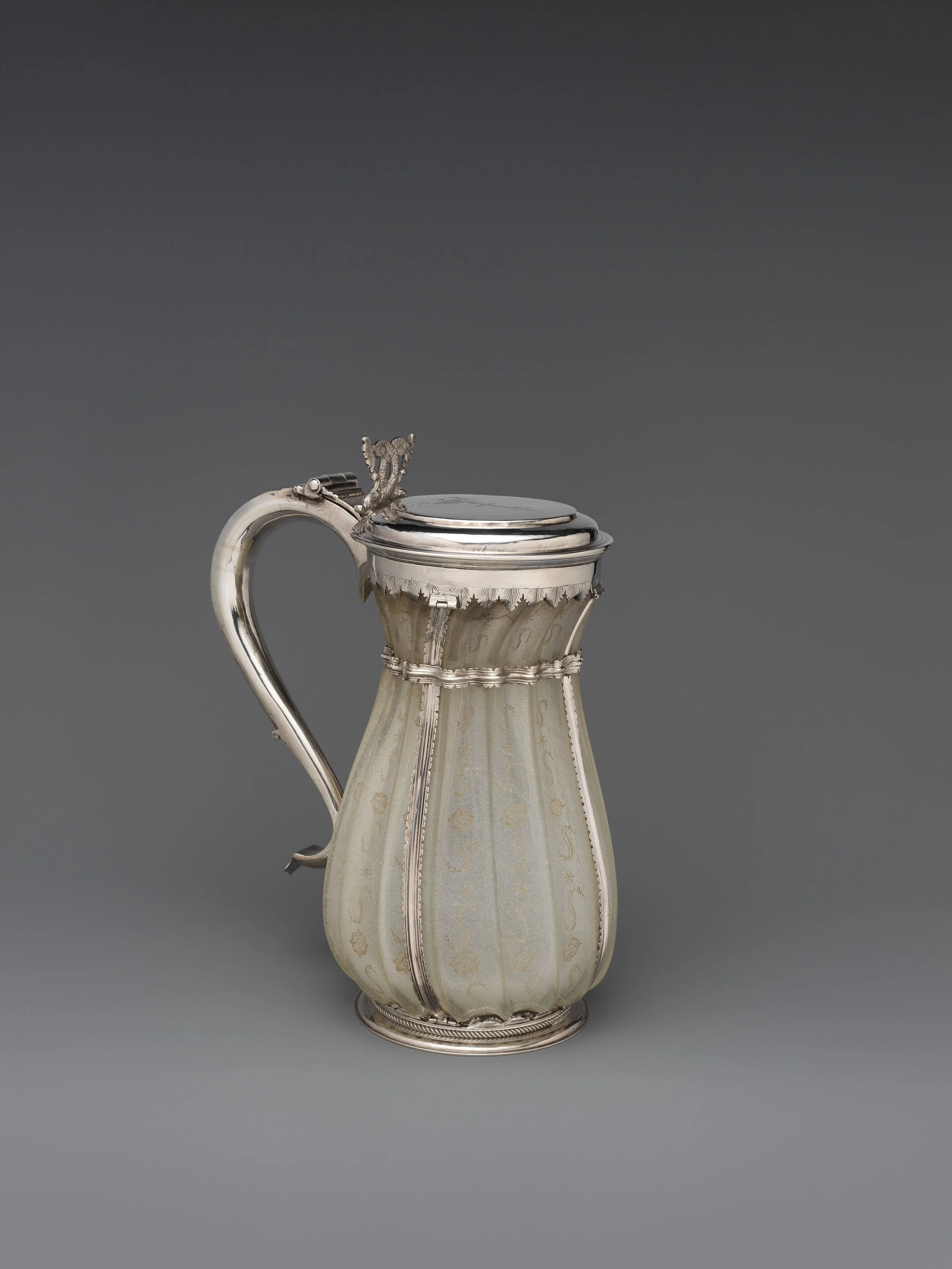
British mounts with British or Dutch glassware, Tankard, ca. 1675. Engraved glass with silver mounts. 9 7/8 x 5 1/16 x 7 5/16 in. The Metropolitan Museum of Art, New York. Purchase, Rogers Fund, by exchange, Gift of Douglas Dillon, by exchange, and Gift of Mrs. Constance D. Steiglitz, in memory of her husband, Marcel H. Stieglitz, by exchange, 2016, 2016.491.
These days, the lead in lead glass has been replaced by other metal oxides like barium, zinc, titanium, and zirconium, all of which preserve the material’s optical effects without toxicity. But that is a surprisingly recent development; manufacturers continued to use it into the 1990s, just one of many examples of the continuing use of the metal in industrial contexts. Shortly after Ravenscroft first fired up his furnace, the Italian physician Bernardino Ramazzini published a rivetingly ghastly compendium called De Morbis Artificum Diatriba (published in 1700, and translated into English in 1705 as A Treatise of the Diseases of Tradesmen), arguably the earliest book about workplace safety, or rather, the widespread lack thereof. “Tis a wonderful thing,” Ramazzini reflected in a passage about ceramics, “that Lead, which affords so large a stock of wholesome Remedies, both for internal and external Uses, should harbor in its Bosom such wicked seeds.”
Potteries nonetheless continued to work with lead glazes right into the twentieth century, as did many other industries. The case of cosmetics is perhaps best known to the general public, because of exaggerated and arguably sexist claims about thick layers of Venetian ceruse – a mixture of lead white and vinegar – on the famous faces of historical figures like Queen Elizabeth and Marie Antoinette. Perennially fascinating as this topic may be, it should not distract us from much more widespread and lethal applications of the much more recent past.
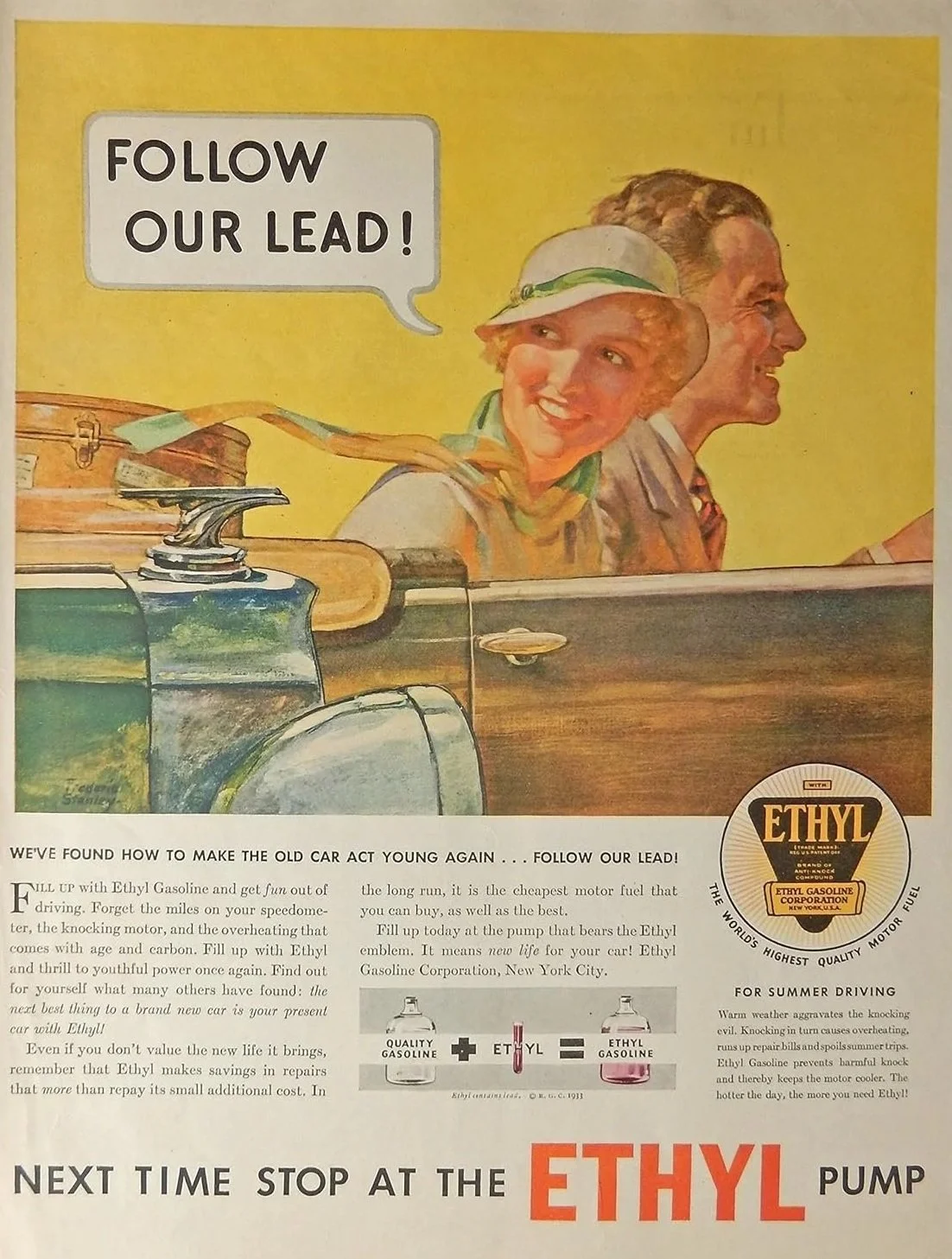
Ethyl Gasoline Corporation; artwork by Frederick Stanley, Adverisement from Collier's Magazine, 1933.
For example: gasoline. To this day, fuel is specifically sold as “unleaded” in US gas stations, even though it’s illegal to sell it otherwise. The ban began in the late 1970s, finally taking effect worldwide only in 2021 (the last holdout was Algeria). This finally brought closure to an environmental catastrophe which began a century ago, when Thomas Midgley Jr., a scientist working for a General Motors subsidiary, discovered that adding tetraethyl lead (TEL) to gas would prevent engine “knocking” by slowing down fuel ignition. In a now notorious incident, Midgley held a press conference in 1924 in which he poured TEL over his hands and inhaled its vapors to prove it was safe – despite the fact that he and several of his colleagues had already been suffering from serious lead poisoning. In an amazing twist of fate, he then went on to be a major contributor to the development of Freon, a chlorofluorocarbon (CFC) refrigerant, for the GM division Frigidaire. This proved to be another environmentally disastrous innovation, due to negative impact on the ozone layer, and CFCs too were banned, around the same time as leaded gasoline. If you’re looking for an example of material intelligence misapplied, Midgley is your man.
Despite all the efforts to expunge lead from the landscape – even while I was writing this introduction, the US Congress was considering a law prohibiting the use of lead ammunition or fishing lures on public land – this is one material that has a nasty habit of hanging around. Post-mortem examination suggests that fully 1/4th of bald eagles suffer from chronic lead poisoning (there’s an American story for you), and it is the most common form of toxicity found among cattle. The problem is not just that lead continues to circulate in the atmosphere and sit in the soil forever – it does not biodegrade, and unlike carbon dioxide, is not processed by plants – but also because it is still part of the active supply chain. The major offender today, accounting for 90% of lead-based manufacturing worldwide, is the production of batteries, for which no adequate affordable replacement material has yet been found. This is one of those situations where environmental considerations must be weighed against one another: lead is released into the wild when batteries are recycled, and many of the technologies that we look to for the replacement of fossil fuels – including wind turbines and electric vehicles – require batteries to store and release power.

Lead batteries for a tramway being recharged at a maintenance garage. EThamPhoto / Alamy / 2014.

Lead drainpipes for a residence block, Tel Aviv, Israel. Eddie Gerald / Alamy / 2005.