Lead mines, lead lines
Tobah Aukland-Peck
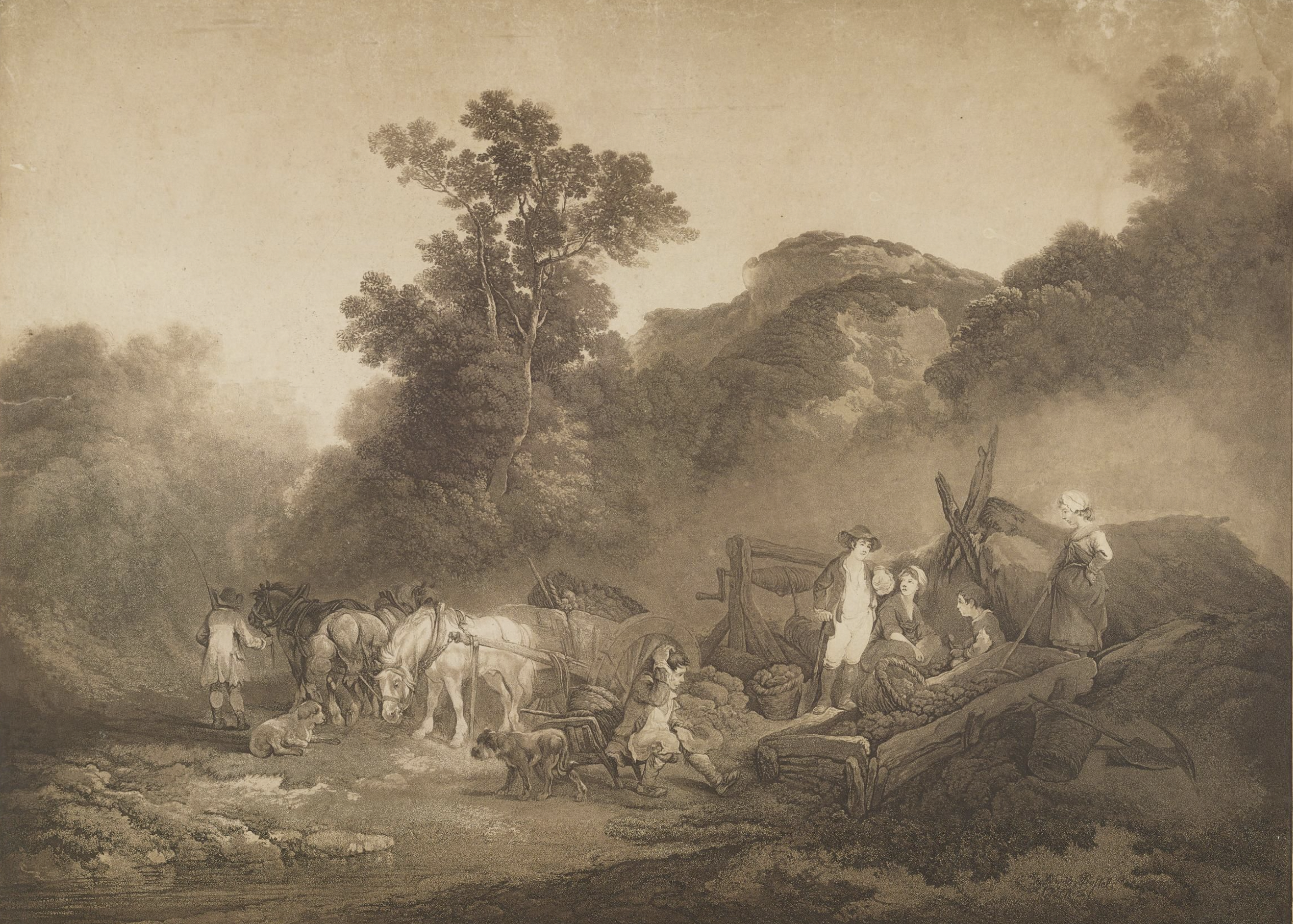
Philippe-Jacques de Loutherbourg, A view of the black-lead mine in Cumberland, 1787. Aquatint. Science Museum Group, © The Board of Trustees of the Science Museum, 1950-279.
Phillip de Loutherbourg’s Labourers near a lead mine, which appeared at the London Royal Academy in 1783, is a quiet painting of a rural scene. The painting likely depicts a Derbyshire mine where the mineral galena was extracted. This ore was smelted into lead and used to make pigment, bullets, roofing, and water pipes. Here, a group of men and women are at rest, their faces turned away from the simple mining infrastructure next to them —a rope winch and sorting trough. Lead ore, the putative focus of this industrial apparatus, appears only incidentally, a rough, barely visible pile that fades into the landscape.
Five years later, the scene was reproduced as an etching after de Loutherbourg by Maria Katharina Prestel titled A view of the black-lead mine in Cumberland. The same workers in casual conversation, the same standing horses, the same rugged cliff. Yet the identification of the mineral at the heart of the scene shifted considerably. Hundreds of miles away, in the Cumbrian Lake District, the famous Borrowdale black-lead mine produced a dark grey mineral with a similar lustre. Yet the “black-lead” referenced in the Prestel etching was a different substance altogether: graphite.
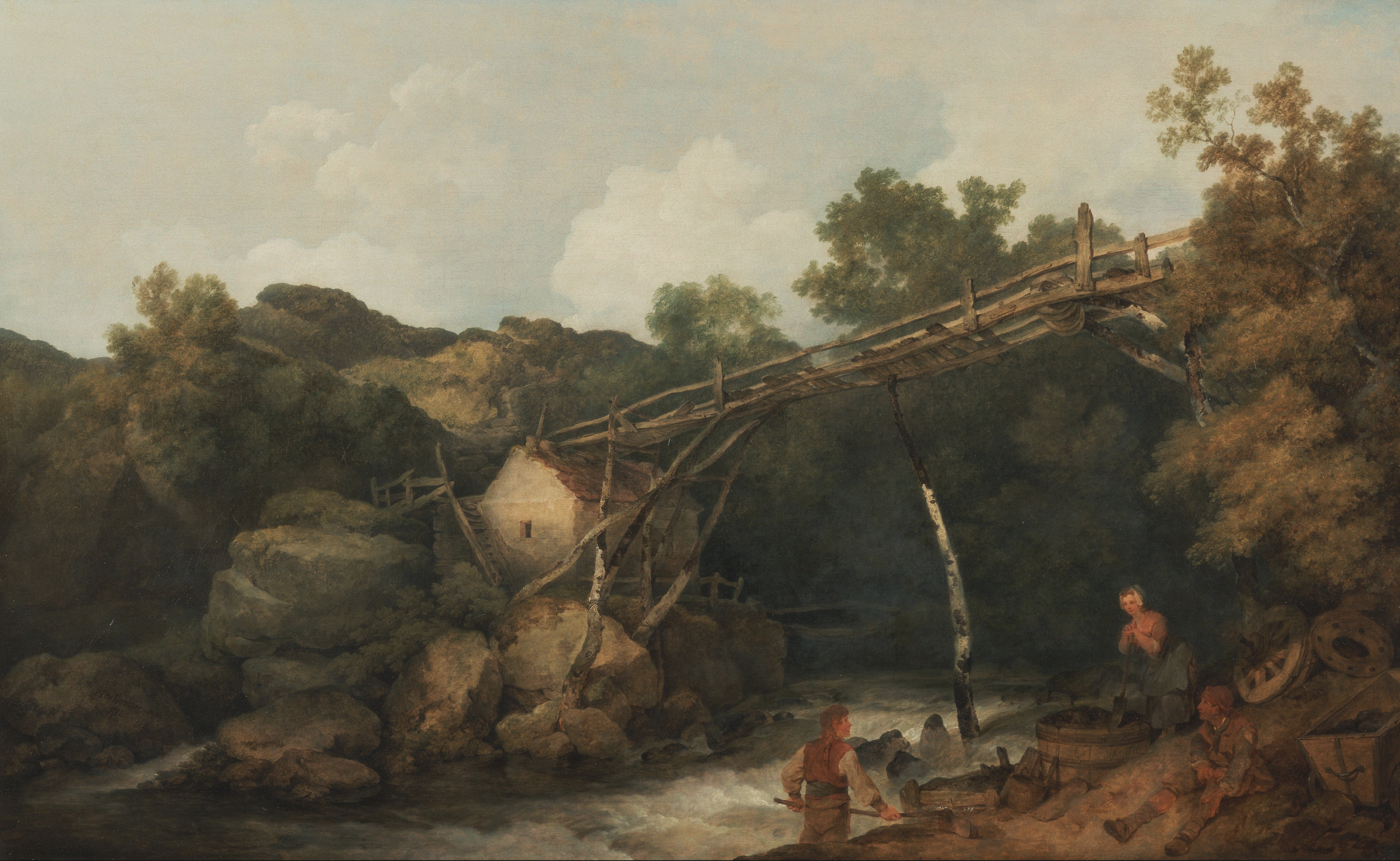
Philippe-Jacques de Loutherbourg, 1740–1812, A View near Matlock, Derbyshire with Figures Working beneath a Wooden Conveyor, 1785, Oil on canvas, Yale Center for British Art, Paul Mellon Collection, B1981.25.225.
Rather than a simple error, the conflation of these two geologically heterogenous products points to a longstanding cultural association between them. Lead and graphite were closely related to British identity and its imperial dominance. These rural mines in remote Derbyshire and Cumbria were sites of global trade but also, crucially, artistic innovation. Graphite deposits were discovered in Borrowdale during the sixteenth century and, almost immediately, the unique calligraphic capacity of the slick, dark substance was evident. While there were graphite seams found in the West Indies and, later, Siberia, the Lake District black-lead mine produced a global supply of the best quality material. It was a site-specific resource. The English historian William Camden noted its artistic potential in 1607, writing of the mine, “Here also is found abundance of that mineral earth, or hard shining stone, which we call Black-lead, used by painters in drawing their lines and shading.”
The still common term “lead pencil” is based not on graphite’s mineral composition but on what it replaced. Previously, forming clear lines with portable implements had been an elusive undertaking. Small brushes, also called “pencils,” made delicate strokes, but the wet pigment could be difficult to handle. Lead styluses had been used since Roman times to make marks on wax tablets and, eventually, paper. Along with gold and silver, lead was also used for metalpoint drawings in the Medieval and Renaissance period. While the precious metals needed an abrasive ground, lead was soft enough to make lines on its own, but it was light in color and challenging to erase. The mineral extracted in Borrowdale, by contrast, was easily manipulated, making clear lines of varying thickness, and could be erased with common materials like bread. Graphite encouraged easier notetaking and soon, plein-air sketching. As artists on sketching tours in the eighteenth and nineteenth centuries crowded Britain’s scenic districts, they did so with a piece of the British landscape in their hands.
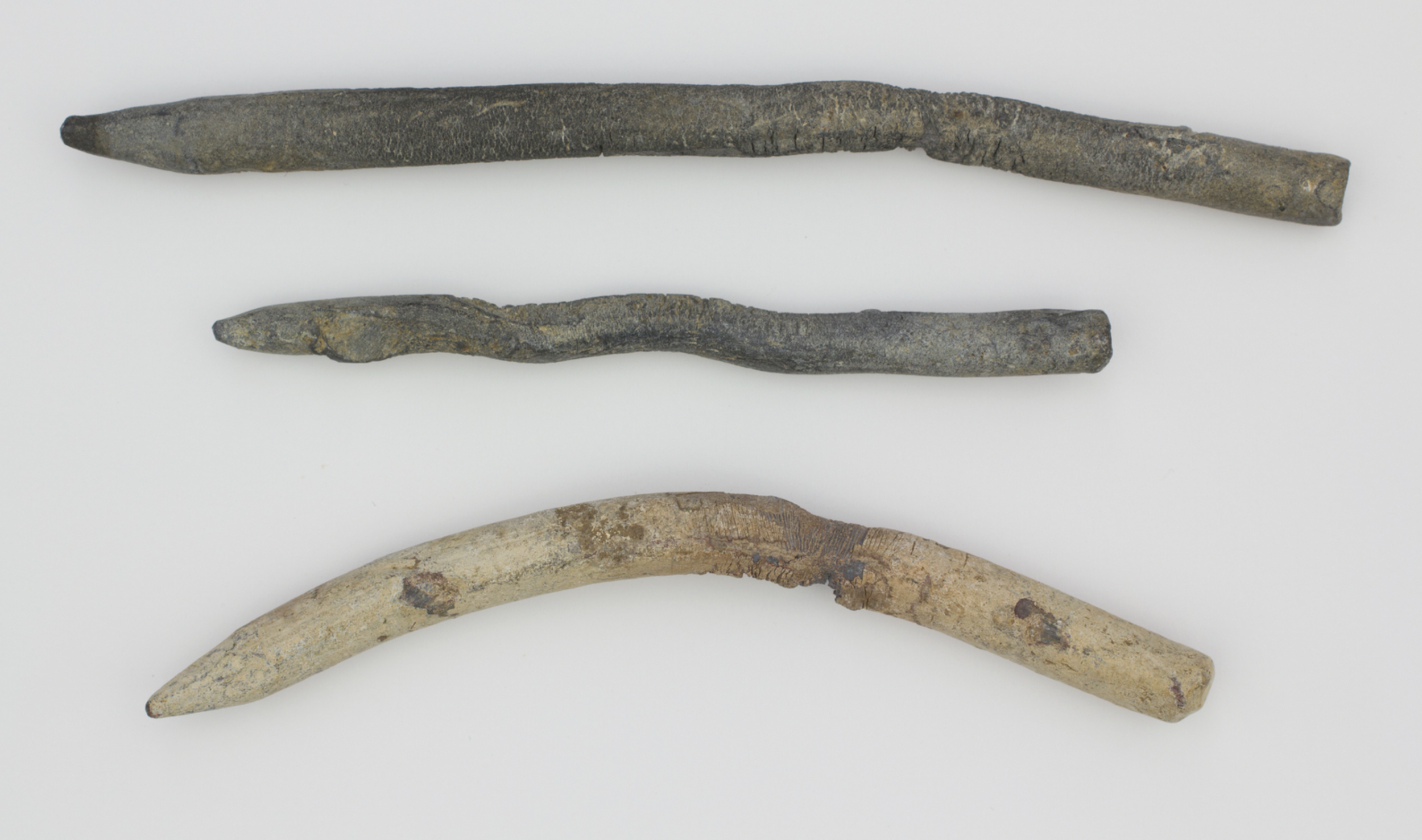
European, Three leads, 13th-15th century. Leading from stained-glass windows. Institute of English Studies, University of London, Museum of Writing, 2011.4194.
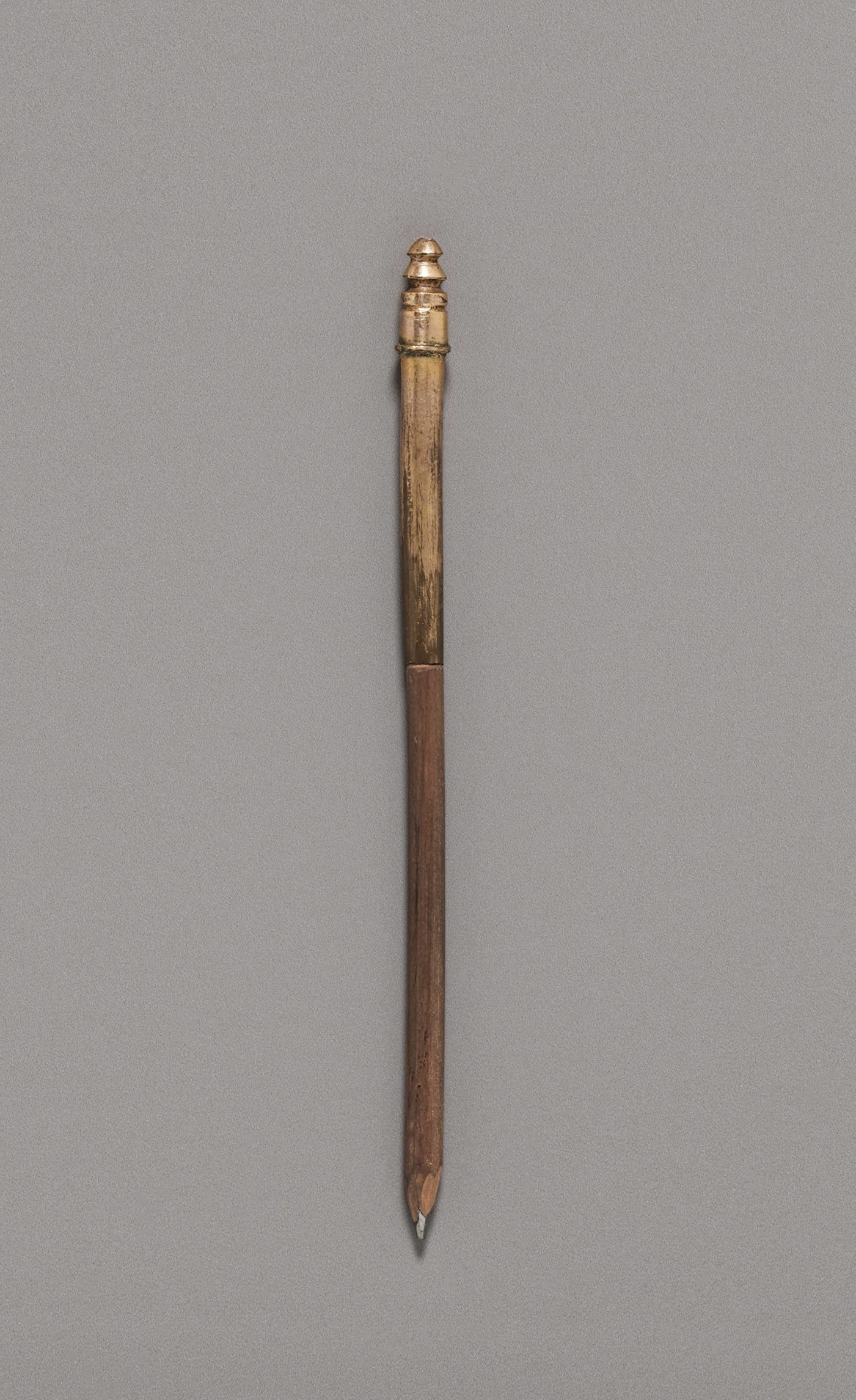
English, Pencil, ca. 1770. Gilt metal. The Cleveland Museum of Art, Gift of Mr. and Mrs. J. H. Wade, 1916.313.f