Light to dark and back again
Spike Bucklow
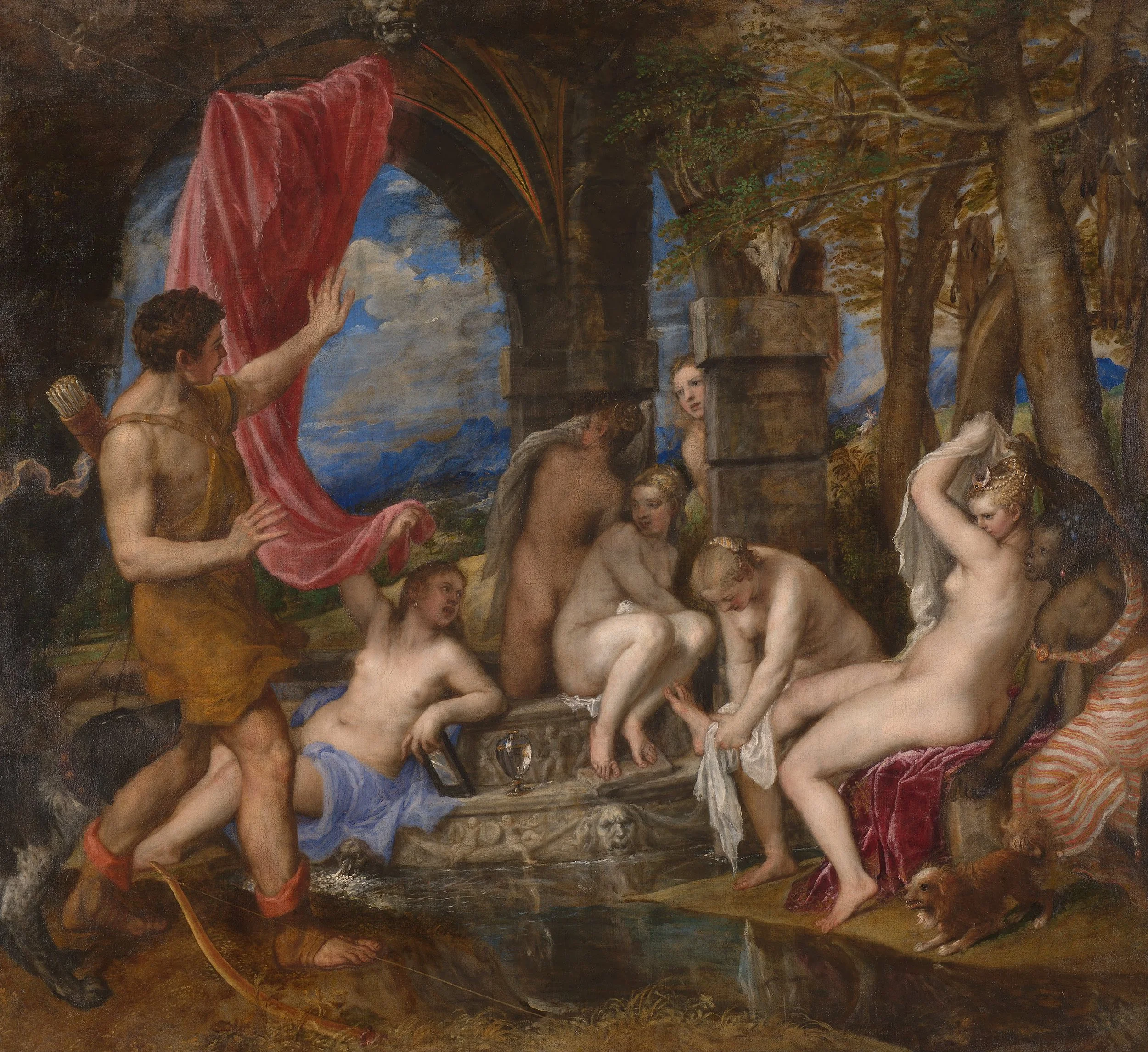
Titian, Diana and Actaeon, 1556 - 1559. Oil on canvas. Purchased jointly by the National Galleries of Scotland and the National Gallery, London, with contributions from The Scottish Government, the National Heritage Memorial Fund, The Monument Trust, Art Fund (with a contribution from the Wolfson Foundation), Artemis Investment Management Ltd, Binks Trust, Mr Busson on behalf of EIM Group, Dunard Fund, The Fuserna Foundation, Gordon Getty, The Hintze Family Charitable Foundation, J Paul Getty Jnr Charitable Trust, John Dodd, Northwood Charitable Trust, The Rothschild Foundation, Sir Siegmund Warburg’s Voluntary Settlement and through public appeal, 2009, NG 2839. Photo, National Galleries of Scotland.
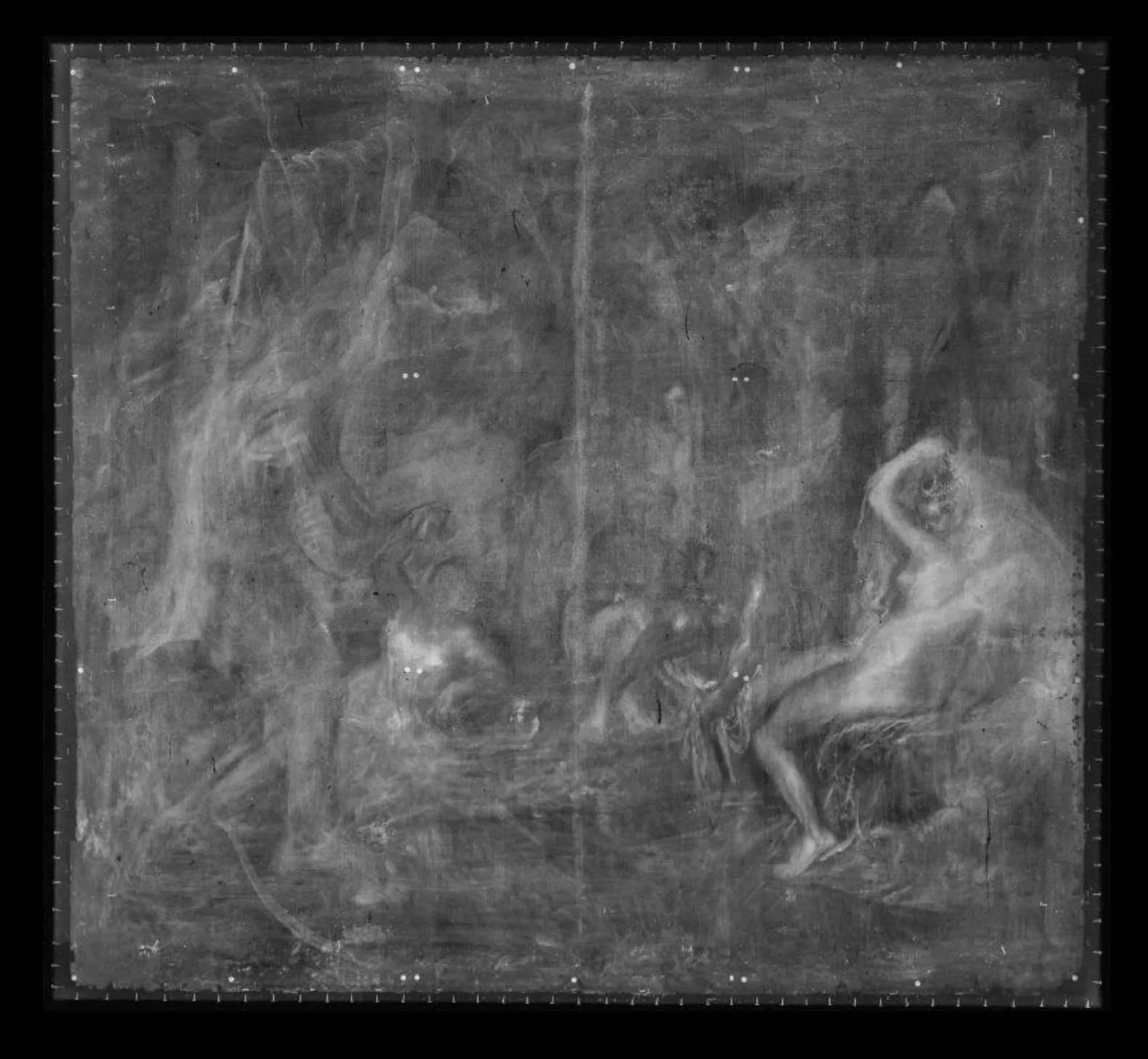
Detail, Titian, Diana and Actaeon, 1556-1559. X-radiograph (Computer assembled mosaic), with the effect of the painting stretcher reduced by digital manipulation. NG6611. © The National Gallery, London. CC By-NC 4.0.
In the late-twentieth century, longstanding concerns about toxicity finally caused lead pigment to fall from favour. But before that, it was Europe’s white paint of choice for well over two thousand years. Lead’s poisonous nature had always posed serious problems, but it became deadly when paint-making was industrialised. Outsourcing its manufacture involved scaling-up processes that exposed unskilled workers to lead in its dangerous powdered form.
The purest and most noble color on the palette had surprisingly putrid origins. Traditionally, lead white was made by placing a coil of the metal under a heap of manure, digging it up after a month, and scraping off the coating of white crystal salt. Variations on the recipe included sprinkling the metal with vinegar and urine. Up to the seventeenth century, most apprentice painters started by making pigments, so they were familiar with such procedures, and respected their materials.
The Renaissance painter Titian – whose handprints in lead white oil paint are evident in X-rays of his canvases – showed no signs of lead poisoning, actively running a highly successful studio into his late-eighties, when he was cut down by the plague. Titian knew his pigments and where they came from; his father was manager of a mine near Venice that produced the ore, galena, that was the source of lead. So Titian would have known how a friable, shiny bright ore was turned into a malleable, dull dark metal, and how that metal could be transformed again back into a friable, shiny bright pigment. He would have known, too, about theories of alchemical transformation – opposites engendering opposites – that might explain why white pigment’s immediate origins were black.
In Titian’s day, most galena was mined not for its lead content, but for its hidden silver; the dark metal was actually a by-product. And, like lead, silver also exhibited alternate states of being bright and shiny, then dark and dull. But in silver’s case, the changes were reversible –the familiar cycle of polishing and tarnishing – whilst lead’s changes were permanent. The ancient Greek philosopher, Theophrastus, described the white pigment as the terminal ‘rust’ of lead metal.
Contemporary understanding of such transformations connected the metals to the planets. Silver was a terrestrial reflection of the Moon, while lead reflected Saturn. Titian – and his clients – knew these symbolic connections, so he could even allude to them in his paintings. For example, in his Diana and Acteon, he depicted the goddess of the Moon, nature, and the hunt, accompanied by an African handmaiden. The two figures’ embrace is so intimate that they almost make one composite, a visual reference to the Moon which, of course, also cycles through light-and-dark phases.
Titian identified Diana with a (polished) silver crescent Moon diadem, painted in lead white. The pigments used for the African handmaiden’s skin appear transparent under X-rays, while the pigment for Diana’s skin – mainly lead white again – is opaque. An X-ray of the painting shows that the African handmaiden had originally been painted as a Caucasian, like all the other figures; to the best of my knowledge, there are no other such pentimenti in Titian’s work. Changing her ethnicity appears to have been a cosmological after-thought, a way of reinforcing Diana’s lunar connections. It is also possible that the joint alabaster-and-bronze coloring was inspired by classical statues representing the Moon in two of its other mythological guises, the goddesses Artemis and Selene.
Lead was also associated with Saturn through the contemporary alchemical connection between the seven metals and planets. (Silver was associated with the moon, mercury with its namesake planet, copper with Venus, gold with the Sun, iron with Mars, tin with Jupiter, and lead with Saturn.) So, lead white was associated with the planet furthest from the Sun, cold, slow-moving, and associated with melancholy. It was believed that the pigment could not only influence their general health but also their state of mind. Those painters who did not make the pigment from scratch bought it from apothecaries, where it was also sold for medicinal purposes.
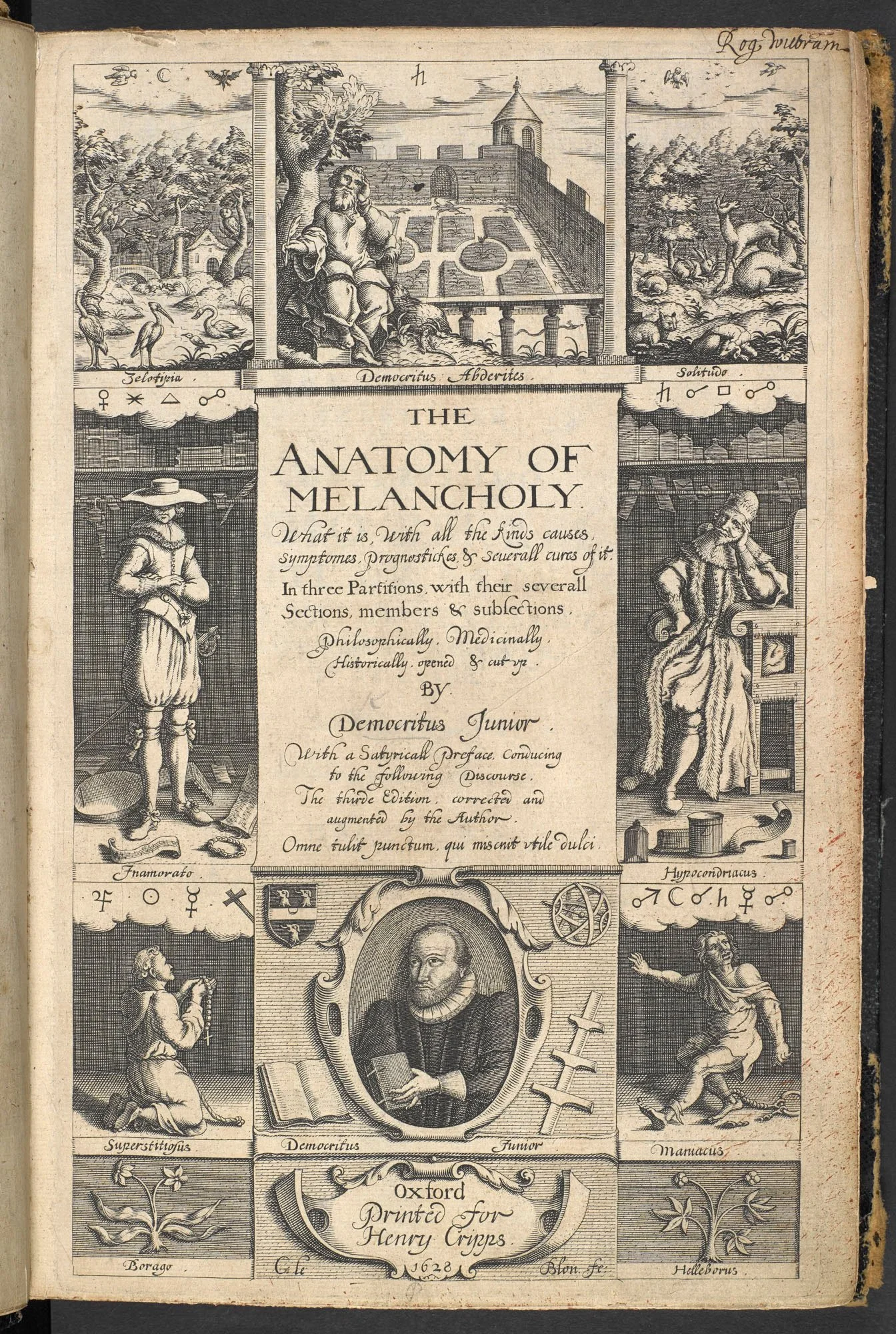
Robert Burton, Anatomy of Melancholy, 1628, third edition. British Library, Public Domain.
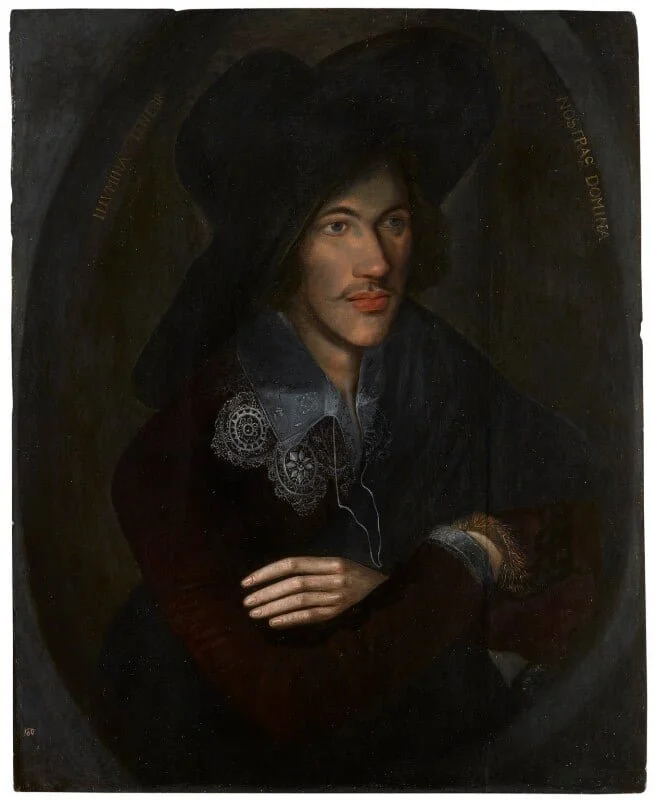
Unknown English Artist, John Donne, ca. 1595. Oil on panel. Purchased with help from the National Heritage Memorial Fund, the Art Fund, Lord Harris of Peckham, L.L. Brownrigg, the Portrait Fund, Sir Harry Djanogly, the Headley Trust, the Eva & Hans K. Rausing Trust, The Pidem Fund, Mr O. Damgaard-Nielsen, Sir David and Lady Scholey and numerous Gallery visitors and supporters, 2006. NPG 6790. © National Portrait Gallery, London. CC BY-NC-ND 3.0.