Lead Mines, Lead Lines 

Tobah Aukland-Peck

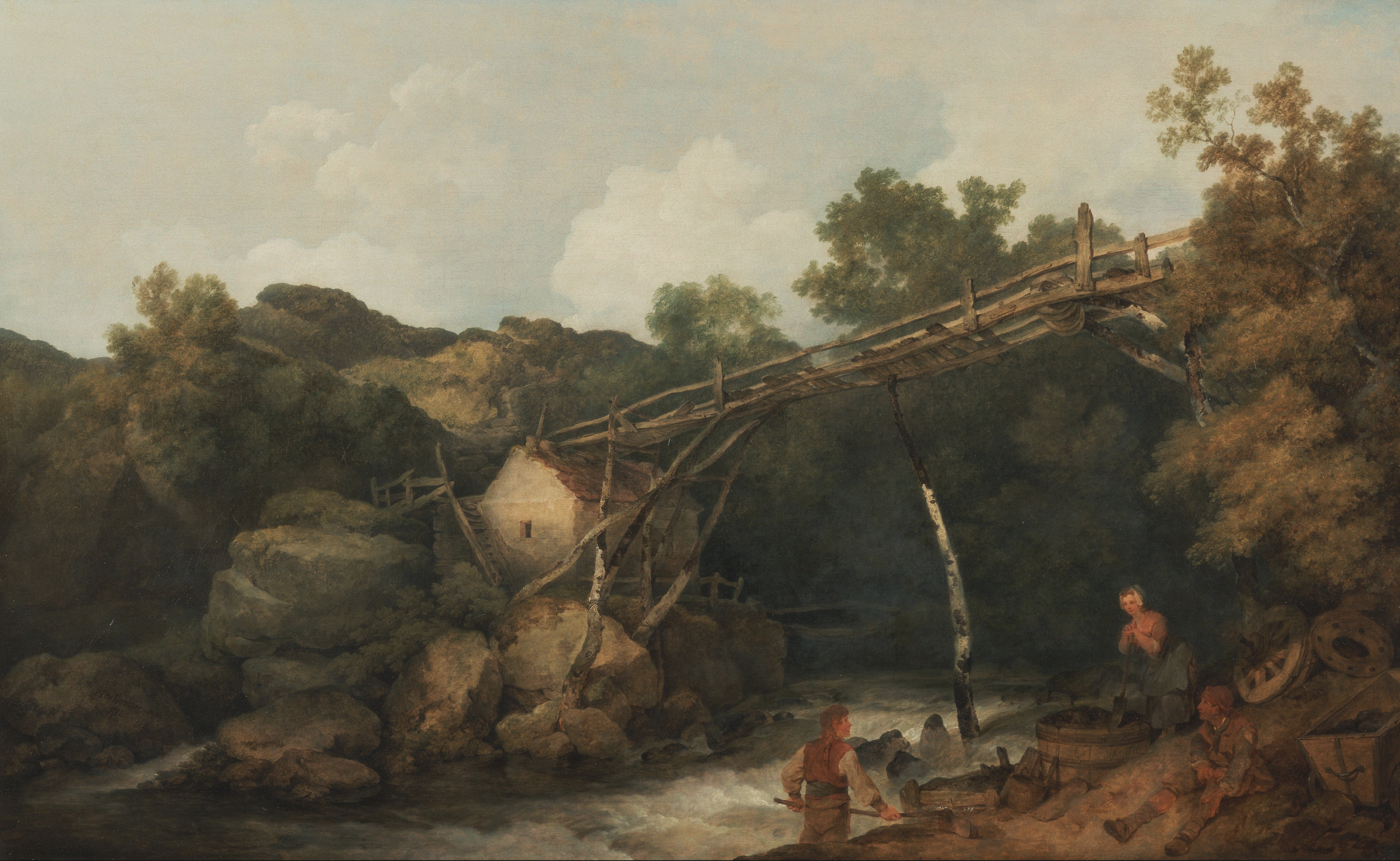
Phillip de Loutherbourg’s Labourers near a lead mine, which appeared at the London Royal Academy in 1783, is a quiet painting of a rural scene. The painting likely depicts a Derbyshire mine where the mineral galena was extracted. This ore was smelted into lead and used to make pigment, bullets, roofing, and water pipes. Here, a group of men and women are at rest, their faces turned away from the simple mining infrastructure next to them —a rope winch and sorting trough. Lead ore, the putative focus of this industrial apparatus, appears only incidentally, a rough, barely visible pile that fades into the landscape.

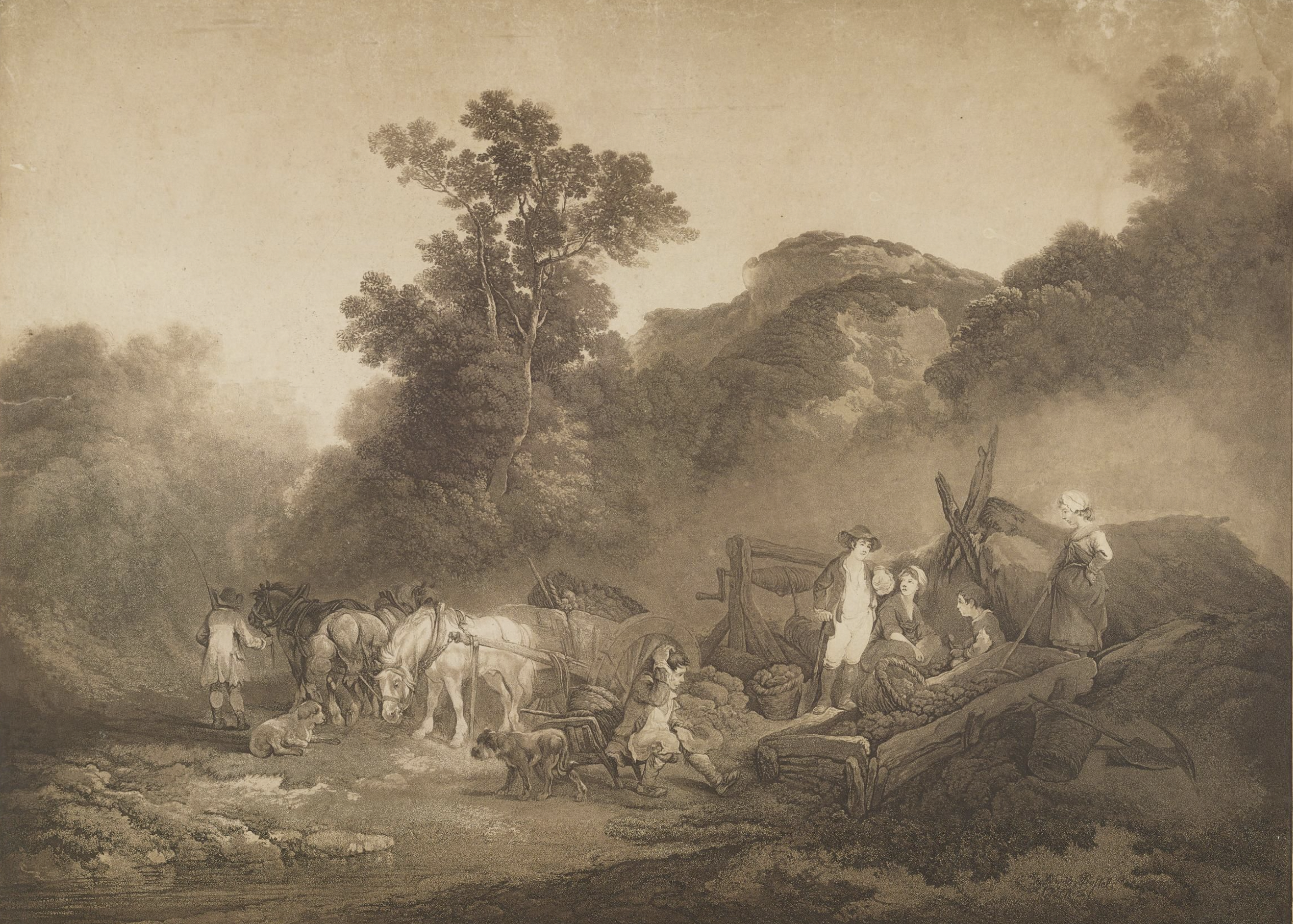
Five years later, the scene was reproduced as an etching after de Loutherbourg by Maria Katharina Prestel titled A view of the black-lead mine in Cumberland. The same workers in casual conversation, the same standing horses, the same rugged cliff. Yet the identification of the mineral at the heart of the scene shifted considerably. Hundreds of miles away, in the Cumbrian Lake District, the famous Borrowdale black-lead mine produced a dark grey mineral with a similar lustre. Yet the “black-lead” referenced in the Prestel etching was a different substance altogether: graphite. 

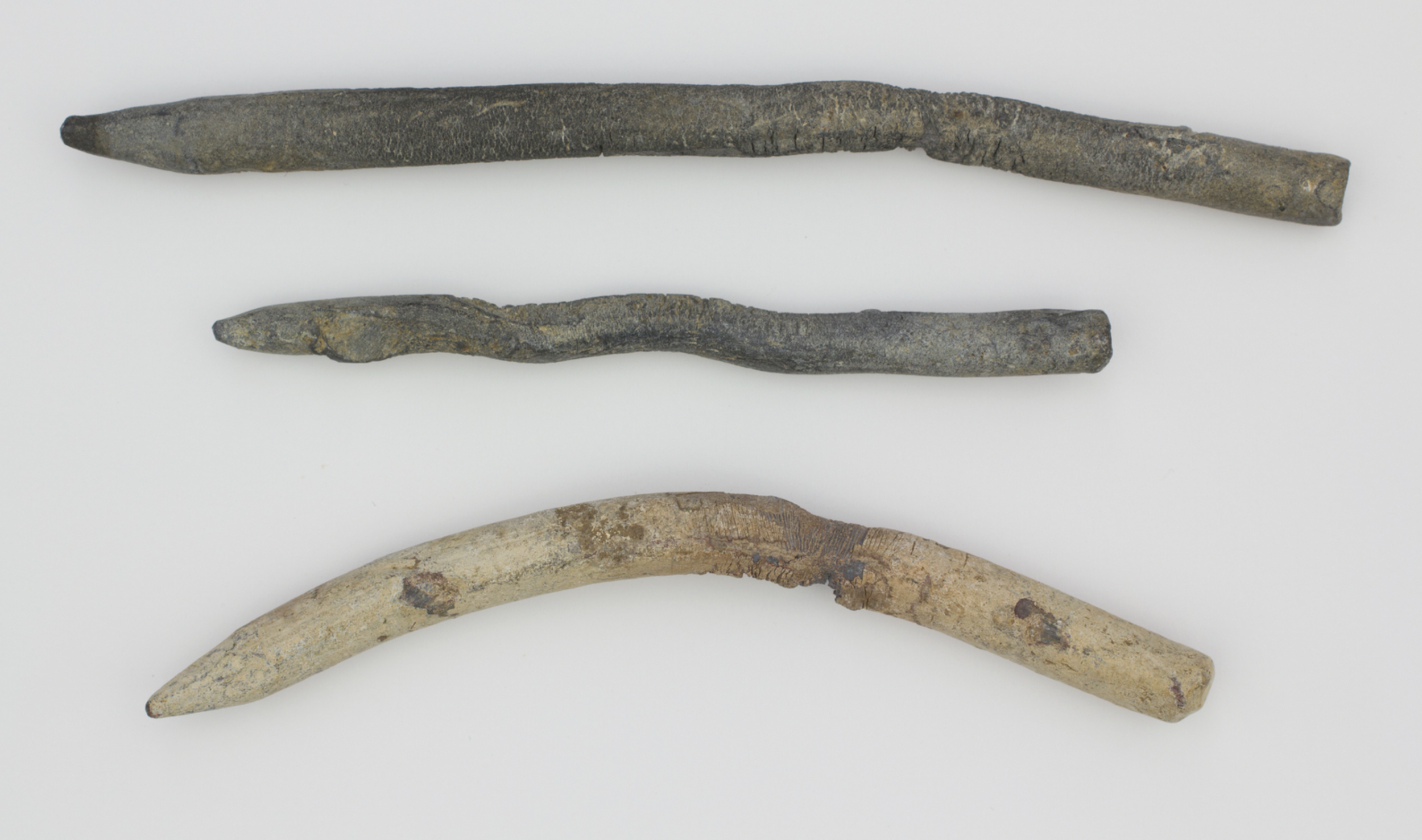
Rather than a simple error, the conflation of these two geologically heterogenous products points to a longstanding cultural association between them. Lead and graphite were closely related to British identity and its imperial dominance. These rural mines in remote Derbyshire and Cumbria were sites of global trade but also, crucially, artistic innovation.  Graphite deposits were discovered in Borrowdale during the sixteenth century and, almost immediately, the unique calligraphic capacity of the slick, dark substance was evident. While there were graphite seams found in the West Indies and, later, Siberia, the Lake District black-lead mine produced a global supply of the best quality material. It was a site-specific resource. The English historian William Camden noted its artistic potential in 1607, writing of the mine, “Here also is found abundance of that mineral earth, or hard shining stone, which we call Black-lead, used by painters in drawing their lines and shading.” 

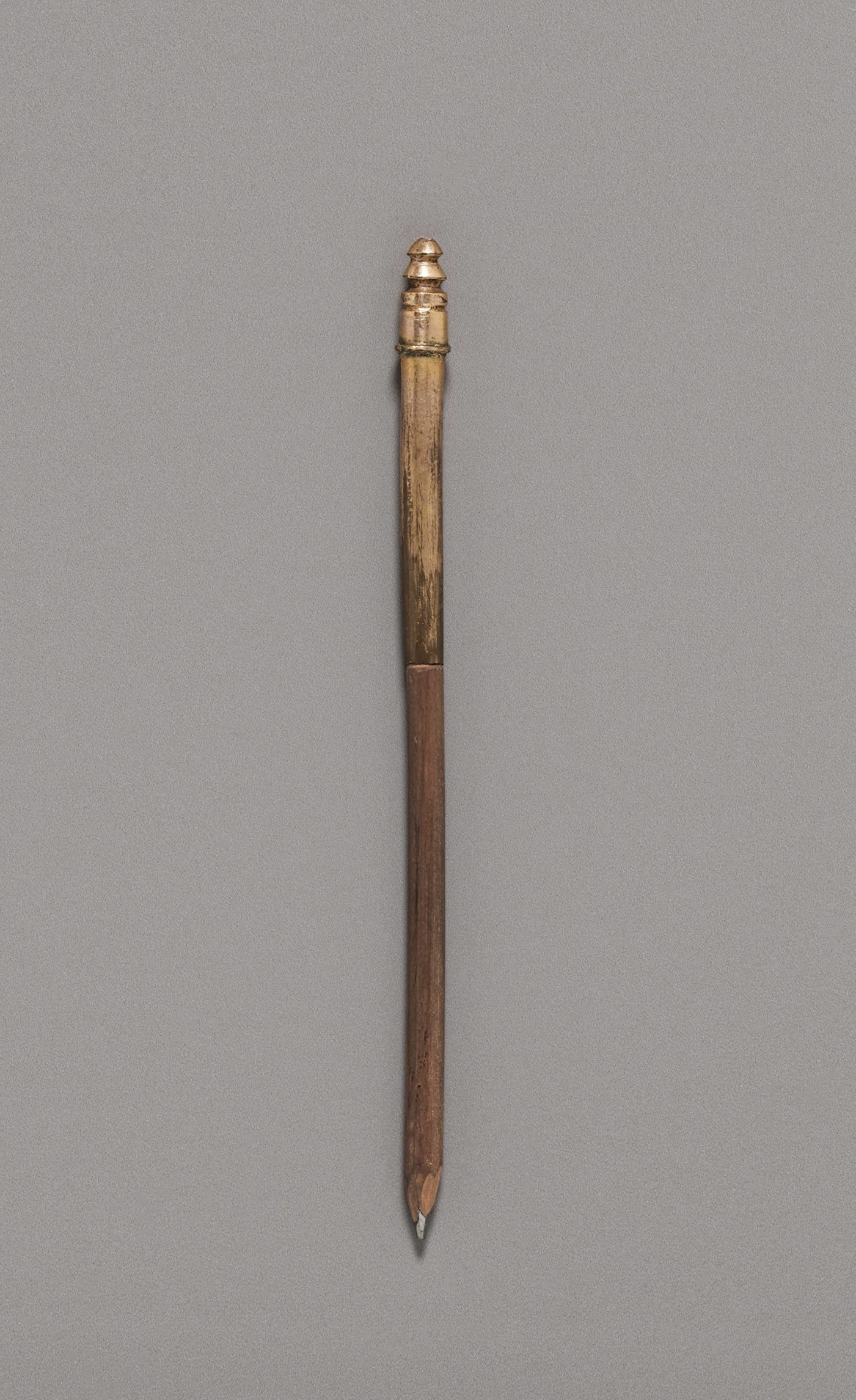
The still common term “lead pencil” is based not on graphite’s mineral composition but on what it replaced. Previously, forming clear lines with portable implements had been an elusive undertaking. Small brushes, also called “pencils,” made delicate strokes, but the wet pigment could be difficult to handle. Lead styluses had been used since Roman times to make marks on wax tablets and, eventually, paper. Along with gold and silver, lead was also used for metalpoint drawings in the Medieval and Renaissance period. While the precious metals needed an abrasive ground, lead was soft enough to make lines on its own, but it was light in color and challenging to erase. The mineral extracted in Borrowdale, by contrast, was easily manipulated, making clear lines of varying thickness, and could be erased with common materials like bread. Graphite encouraged easier notetaking and soon, plein-air sketching. As artists on sketching tours in the eighteenth and nineteenth centuries crowded Britain’s scenic districts, they did so with a piece of the British landscape in their hands.

The visual interchangeability of Derbyshire and Cumbrian mines relied not only on the longstanding linguistic relationship between lead and graphite, but on the fact that both lay in well-known scenic areas. Derbyshire’s crags, caverns, and mines were subjects of a 1779 pantomime, with a set design by de Loutherbourg himself. Though the area’s lead mines had grown and professionalized during the Industrial Revolution, the scenes from the production – entitled The Wonders of Derbyshire – depict extraction as a natural phenomenon rather than a matter of human agency. Similarly, while there are glimpses of infrastructure in de Loutherbourg's Labourers near a lead mine,he depicts no actual labor. The gathered workers are, instead, romanticized figures from a preindustrial age; the scene was easily transplanted to the Lake District. 

These generalized scenes were, by design, depicted as remote from the breadth and power of Britain’s mercantile empire. But geological resources like graphite and lead garnered significant profit and influence for the nation. Lead production was expanding rapidly even as de Loutherbourg painted, and in the late eighteenth century, British lead, mined predominantly in Derbyshire, made up the majority of the global supply. Similarly, Britain dominated the period’s graphite market. While the mineral could be found elsewhere, Borrowdale graphite was a superior product that could be carved into a point and made a consistent line. It was so valuable that a 1752 Parliamentary Act made unauthorized entry into the mine and its environs a national offence.

While these resources had other applications, the prominence of lead and graphite as national resources, and global exports, was tied to their visual capacity. Graphite extracted from Borrowdale was taken to London, where exporters and colourmen purchased the raw material. It is likely that sketches by prominent artists from John Constable to J.M.W. Turner contain black lead from Borrowdale. Likewise, lead from English mines was processed for use in lead white, a heavy, bright pigment essential for oil paintings. 

Labourers near a lead mine and A view of the black-lead mine in Cumberland, with their lush trees and bubbling stream, seem far from the industrial pollution associated with mining procedures, or the toxicity of widespread lead paint use. The artwork is not contaminated by the mine. The bucolic brook in the foreground of de Loutherbourg’s painting, however, indexes an unseen dispersal of polluted material. Lead poisoning did threaten areas around Derbyshire mines, spreading through wastewater from subterranean operations. De Loutherbourg’s images show neither the piles of stony waste that accumulated around mining operations nor the difficult subterranean labor necessary to bring lead and black-lead to market. Even so, the importance of both materials in his toolbox pulled him into proximity to extractive sites. Whether lead or “black-lead,” mineral resources were essential to artists, the material basis of their practice. They worked a landscape that, just like the one being depicted, was increasingly pervaded by waste.


Tobah Aukland-Peck is an art historian and a Postdoctoral Fellow supported by the Paul Mellon Centre for Studies in British Art. Tobah’s writing on energy, class, and environmental disaster has been published in British Art Studies, the Open Library of Humanities Journal, Oxford Bibliographies, and Grey Room. She is at work on her first book project, “Abstract Ground: Fossil Industry and Modern British Art.”

Brilliant Move

Brilliant Move is the Brooklyn-based creative studio of Marci Hunt LeBrun specializing in building websites on the Squarespace platform – among many other things.

I love working with small businesses, nonprofits, and other creatives to help them organize their ideas, hone their vision, and make their web presence the best it can be. And I'm committed to keeping the process as simple, transparent, and affordable as possible.

https://brilliantmove.nyc
Previous
Previous

Gutter level

Next
Next
Light to Dark and Back Again