Gutter level
David Clarke
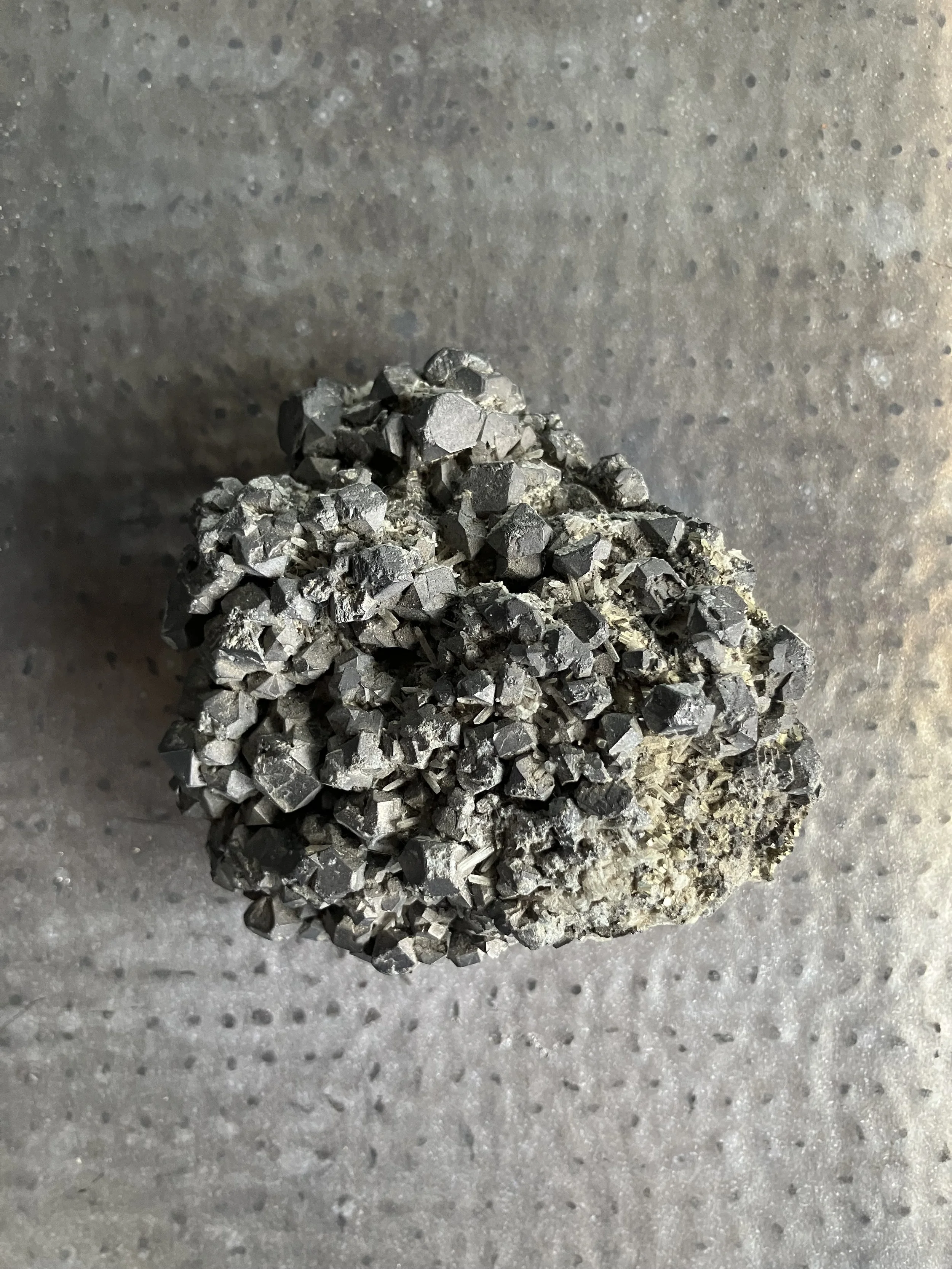
A lump of galena, purchased 2020. Collection of the author.
A lump of galena, straight from the earth. Up to 0.5% of it is silver; you’d have to mine all of it to get just a drop. Silver is housed in lead.
To me this confirms the absurdity, the arbitrariness, of materials: where we get them, what’s considered important, what’s left over. It used to be that we ate from pewter tankards and plates that contained lead. Our fillings were made of it, we made it into powder for our teeth and our skin, all because it was cheap. We had a much closer relationship to it as a material. Lead was in the air, on the buildings, in the road paint. We had lead-lined coffins, purely to keep the stench inside. Queen Victoria would have been lead-lined; the weight of that coffin must have been immense.
Then new knowledge came in. We realized that lead was toxic, and so we moved away from it. We created an antiseptic world. But as soon as I’m told ‘you can’t do something,’ of course I’m going to do it. Why shouldn’t we explore the darker side of metalwork? I get the rules and regulations, but I also think it’s stifling to have a material that’s untouchable. Lead is mistreated, it’s misunderstood, but it has a fantastic history. We might scratch at the surface, but we don’t really understand it.
Lead has a low melting point, and in a liquid state it moves in a very beautiful, quiet way. It doesn’t need much heat – it does a lot, with not a lot. In a solid state it’s kind of chewy, or claggy. You can cut it with scissors – you don’t need a complex tool system at all. But it messes up your bench. It is a kind of cancerous growth: warm up a sheet of silver, pour lead on to it, and it just eats right through. It is an infestation, it sort of creeps around.
When you’re repairing sterling silver, you can cheat with lead: stuff it into a seam, silverplate it, and no one will know. Sometimes you’ll pick up an old candlestick and think, ‘that’s a lot of silver.’ But if you open up the base you’ll find it’s filled with lead and wax; heat it up and all this crap drips out. The weight is all lead, and the silver is the meanest most miserable existence, supported by that core. I’d like to do a collection of plates, lead with a thick layer of silver. You know the poison is inside there as you cut into it with your knife while you’re eating your steak and chips.
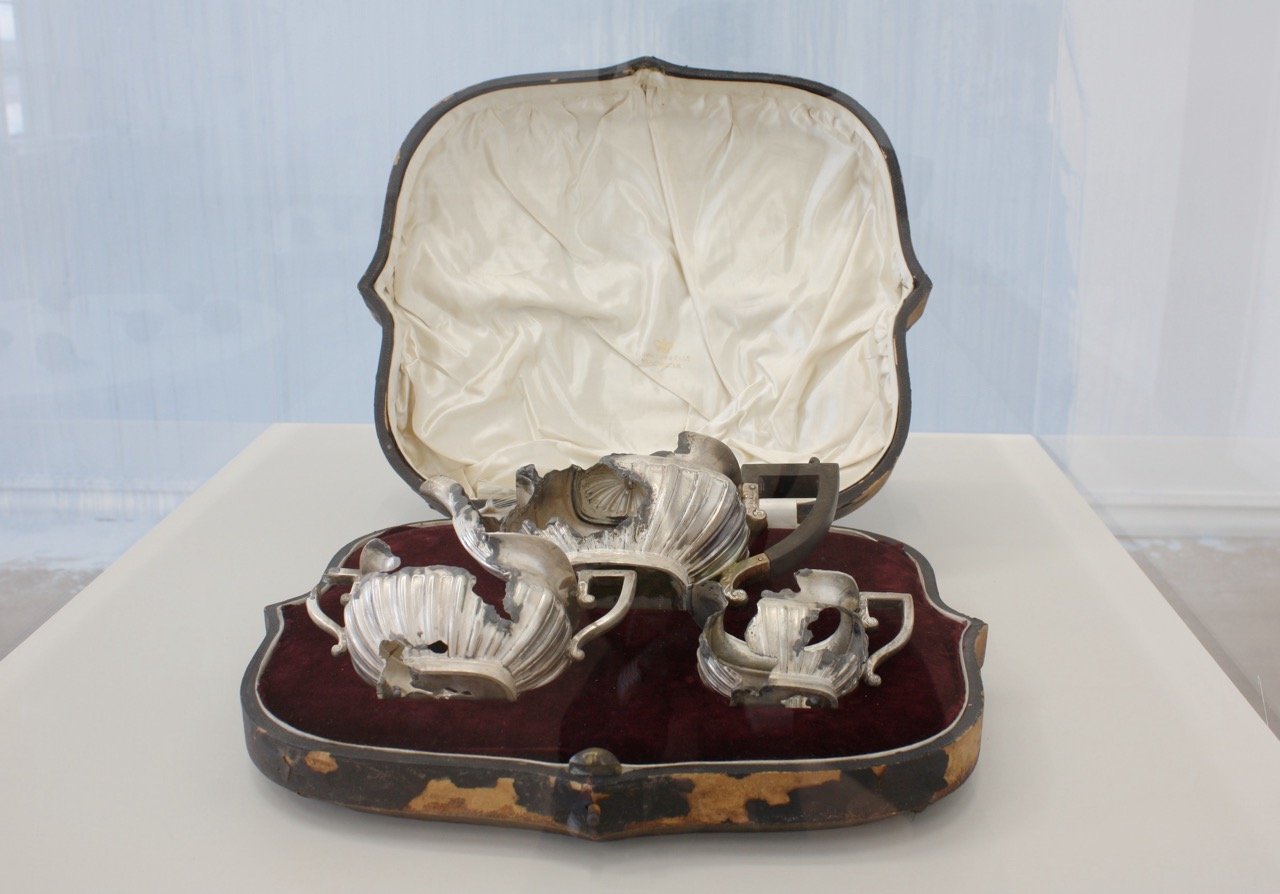
David Clarke, DOA (Dead On Arrival), 2009. Lead, sterling silver and presentation box. Collection of the author.
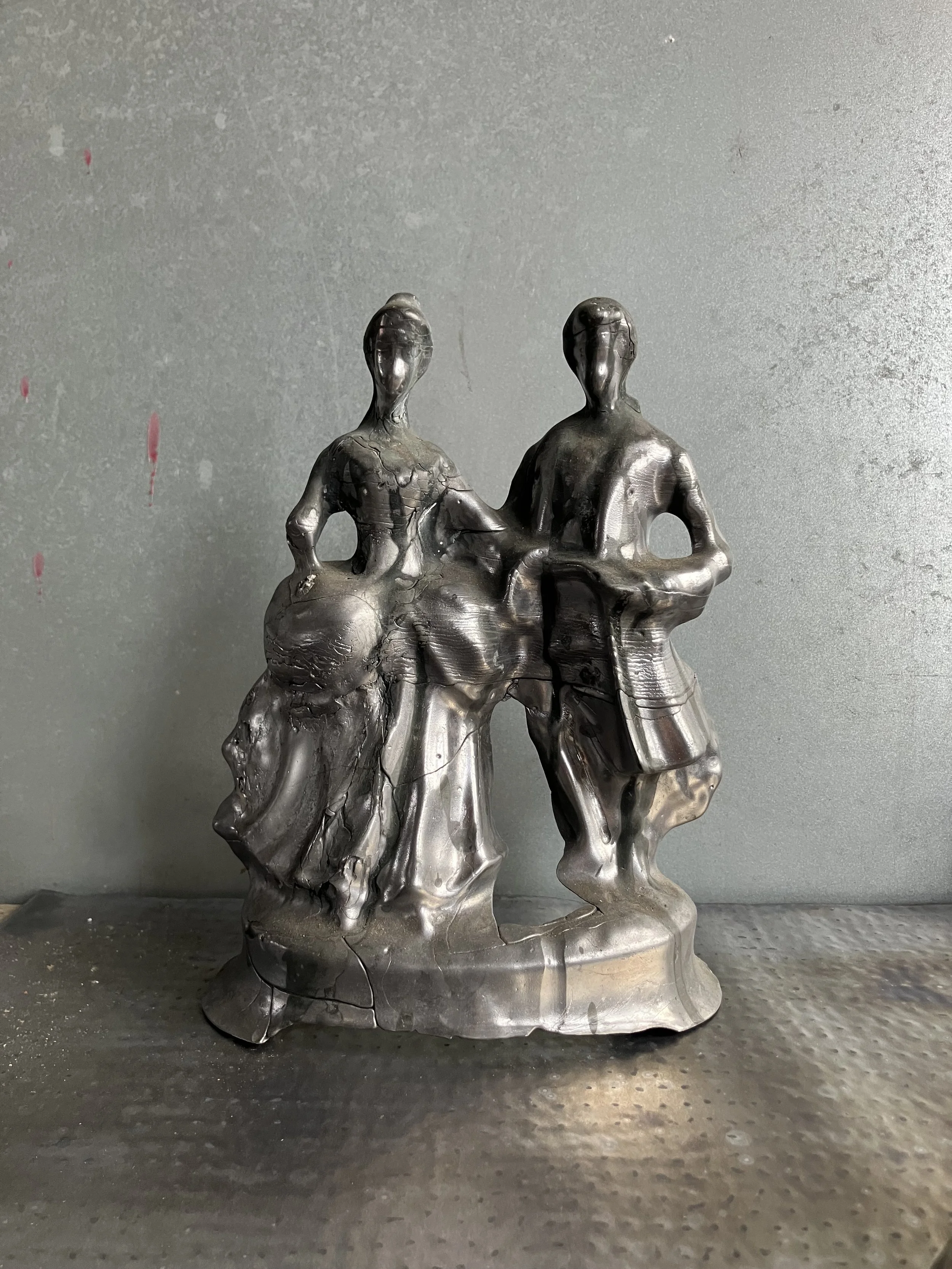
David Clarke, Coupled, 2018. Old pewter (probably containing lead). Collection of the author.
I was in Istanbul once and they were re-doing the roof of Hagia Sophia with the most colossal inky blue rolls of lead. We’re prepared to pray under it, but not to live with it. Think of the sinister beauty of water being supplied by lead pipes, so subversively quiet. Or making white paint out of the bloom on lead gutters or roof flashing: one material that’s a byproduct of another.
The last shot tower in London was in Waterloo. They would melt lead and drop it off the top of this tall chimney, into a pool of water or oil. Drip, drop, lead into bullets. I wonder if lead is still used in the ballistics and bombs that are going off now. I don’t know why they wouldn’t – it comes down to economics. It’s cheap, and you’re just sending it into people’s bodies. And it’s soft, so it spreads on impact.
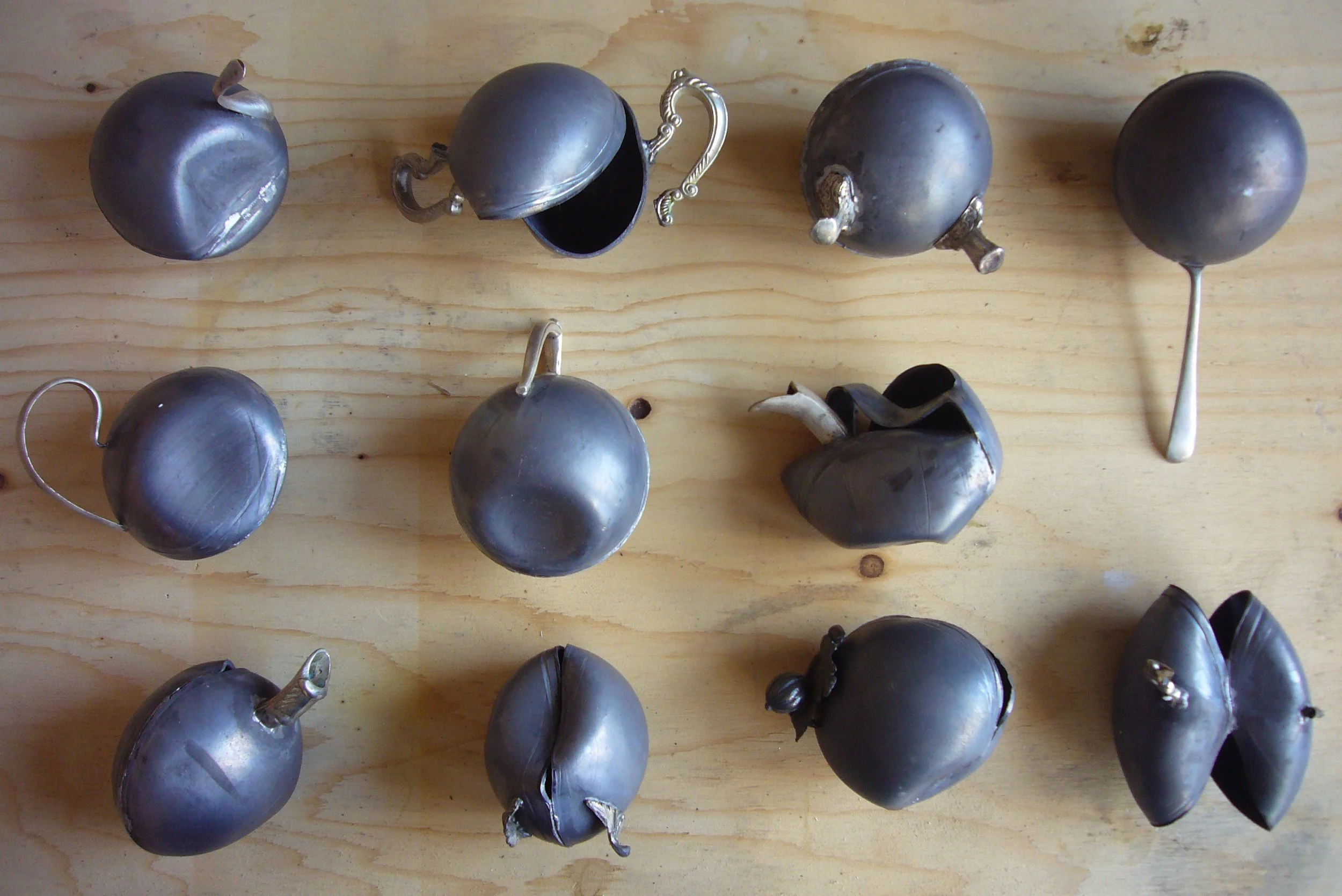
David Clarke, One Day My Plinth Will Come, 2008. Lead and silver plate. Collection of the author.
I did a beautiful series of pure spheres with added handles. I climbed up a twelve-foot ladder and dropped them to the floor. However they dented, bruised or split, that’s how they would stay. Lead is really like our skin; it doesn’t crack, it tears. And it marks very easily. This is another reason traditional metalworkers stay as far away as possible, but for me, the way it takes on a collision or physical impact – that’s like receiving the weight of history.
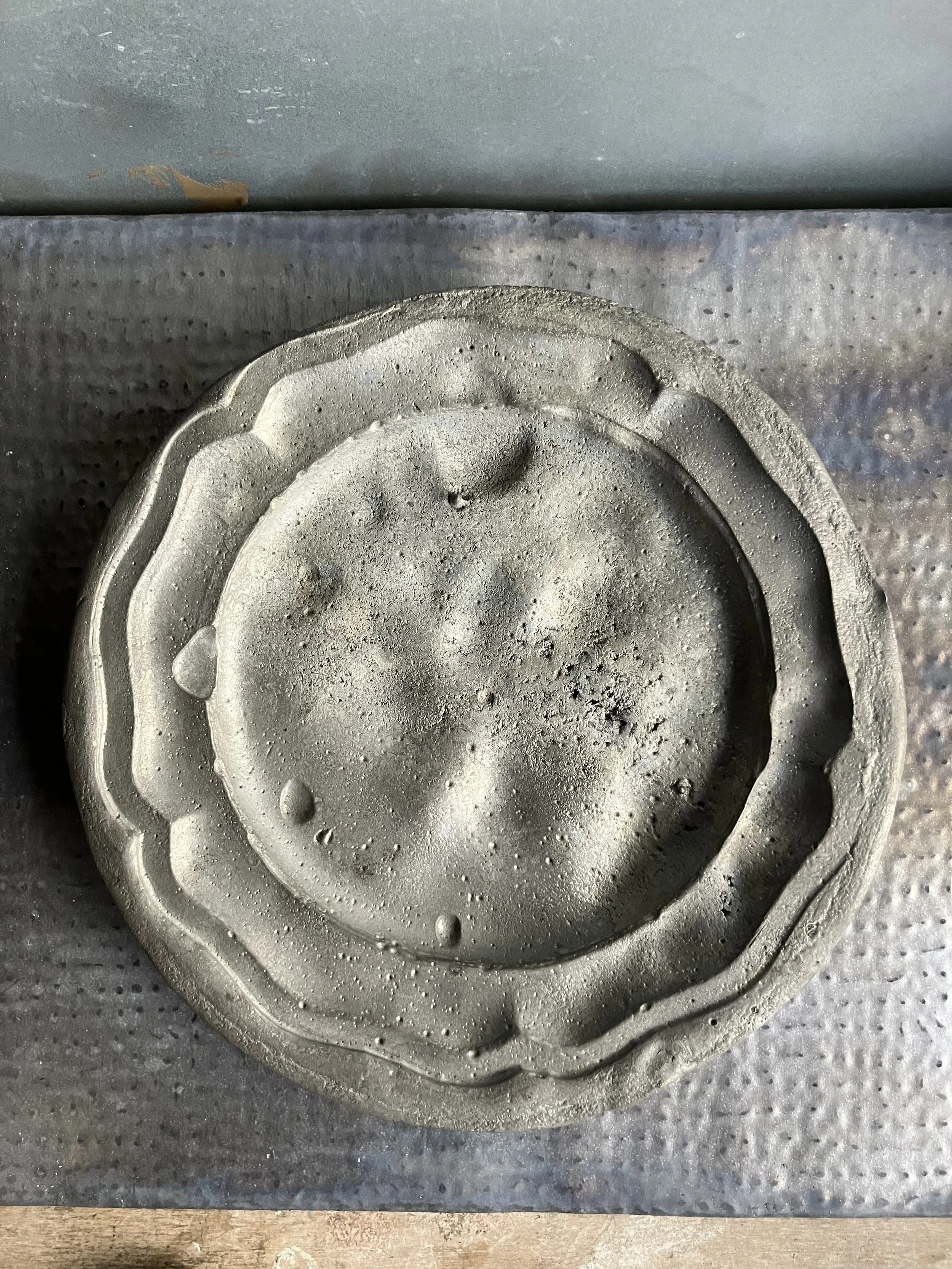
David Clarke, Heavy Air, 2015. Pewter (lead-free). Collection of the author.
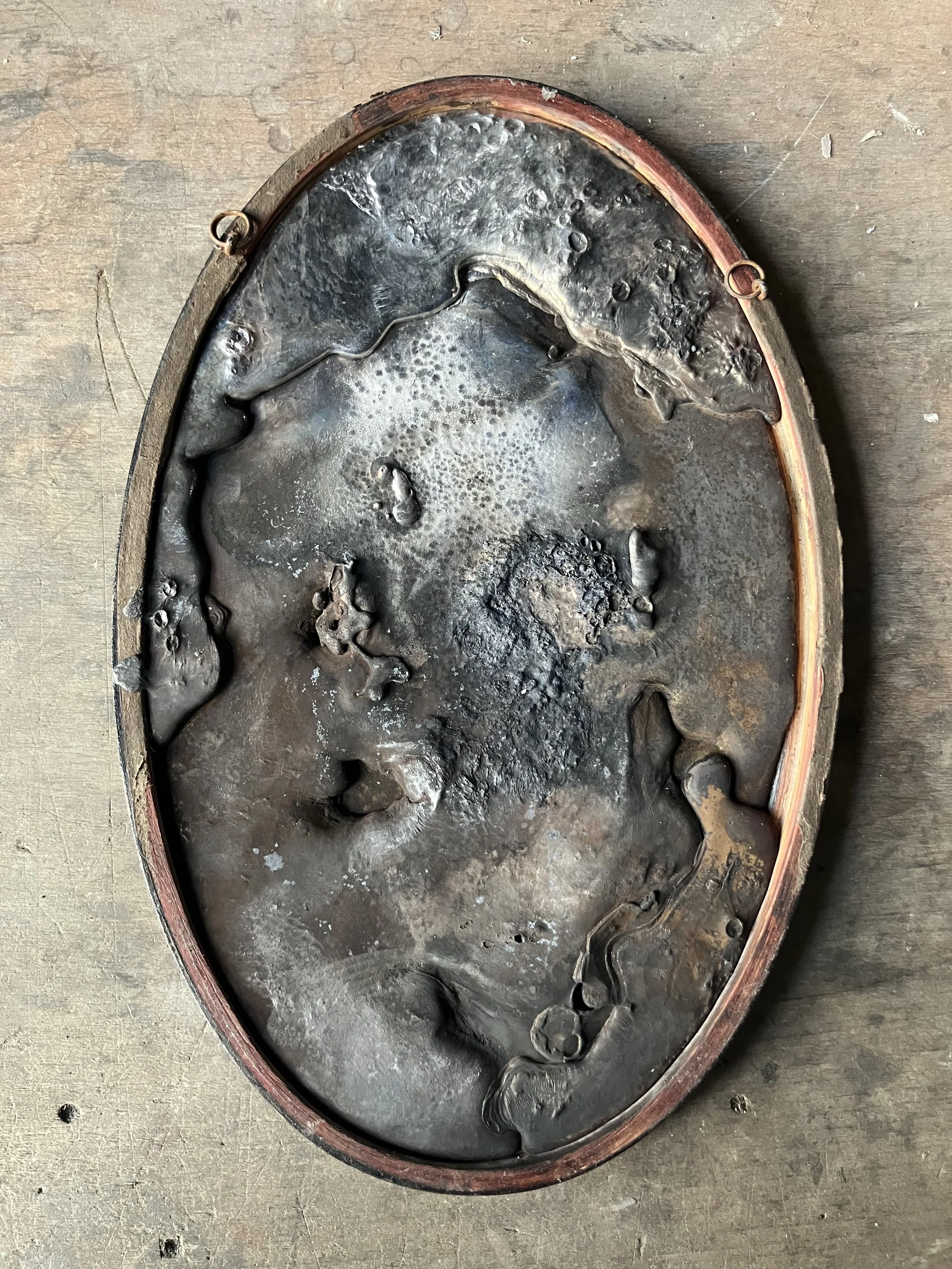
David Clarke, Leaden Skies, 2022. Lead and vintage picture frame. Collection of the author.