Full leather jacket
Deborah Landis
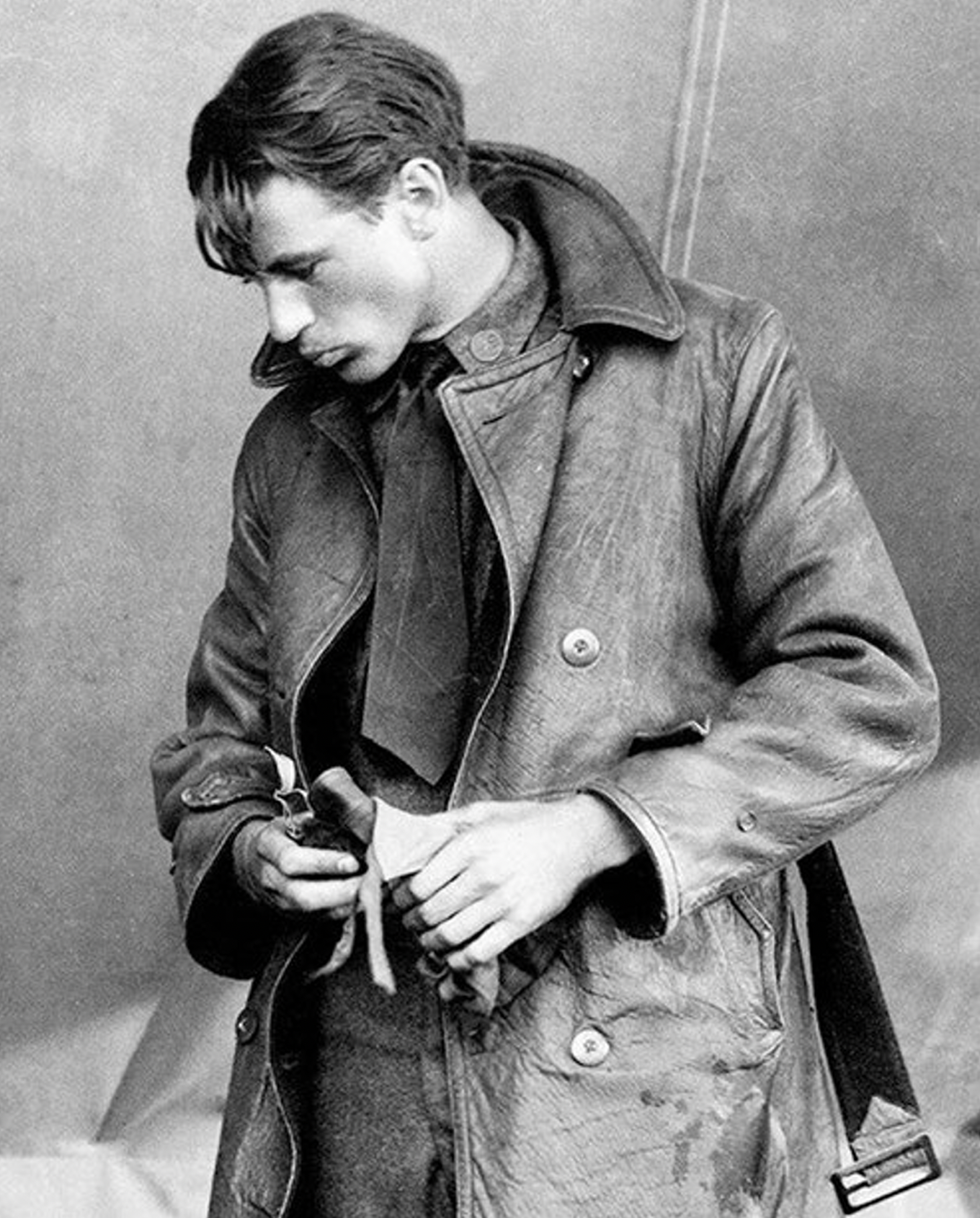
William A. Wellman (American, 1896-1975), Wings, 1927, Paramount Famous Lasky Corporation.
In 1927, Howard Hughes made a silent picture for Paramount called Wings. It had costumes designed by Edith Head, but in fact, she only designed Clara Bow’s gowns. The film is really about the look of the flyers in the Great War – the first to be won with air power. Hughes presented these men as heroes, engaging in spectacular dogfights; and each of them wore a standard, shearling-lined leather jacket.
It was the beginning of a long romance. Wings had a huge impact – it won the very first Academy Award for Best Picture – and soon, short leather jackets were being worn everywhere in film, initially by characters riding motorcycles, like police officers. The garment became commonplace in black-and-white adventure serials, nickel movies for a Saturday mornings. The leather jacket projected an image of strength. It had something gladiatorial about it, like a Roman leather cuirass or chest piece. It’s tough, resilient, not quite impenetrable – but impermeable.
The leather jacket was invariably shown closed, to define the actor’s silhouette: you needed to see the broad shoulder and narrow waist. It was the masculine version of a corset, keeping everything in, tight and defined. Like any garment meant to appear on screen, the jackets would typically have been made in studio workrooms, or perhaps a custom house like Western Costume. Once fabricated, they would be washed multiple times and dry cleaned, to give the material some semblance of having been worn before. To this day, nothing goes on screen that has not been lovingly aged to look as if it has had a life before the film started.
As always, cinema led popular taste. During the Depression era, a brown felt cap or fedora and a leather jacket were pro forma for the man on the street, as well as a certain kind of man in the movies. You never saw an upper-class character wearing one. More likely suede, which is soft, luxurious, and drapey. When you’re wealthy, it’s money that protects you: the only thing that’s leather is your wallet. And your really expensive shoes, which don’t have much to do.
There was a transition just after World War II, a shift in American heroism. By the 1950s, studios were principally making two kinds of picture, which could almost have been made on different planets, certainly by different organizations. In fact, they were all created by the same studios: big budget Technicolor films, musicals like Singin’ in the Rain (1952) and epics like Cecil B. DeMille’s The Ten Commandments (1956), but also films that would appeal to a younger generation, like The Wild One (1953), starring Marlon Brando, and East of Eden (1955), with James Dean. These latter films were aimed at the new teenage generation, and they were gritty, technically unpolished. You can draw a line forward from Brando’s iconic leather jacket in The Wild One to Dennis Hopper’s long-fringed jacket in Easy Rider (1969), signifying a very different moment in the American Counterculture.
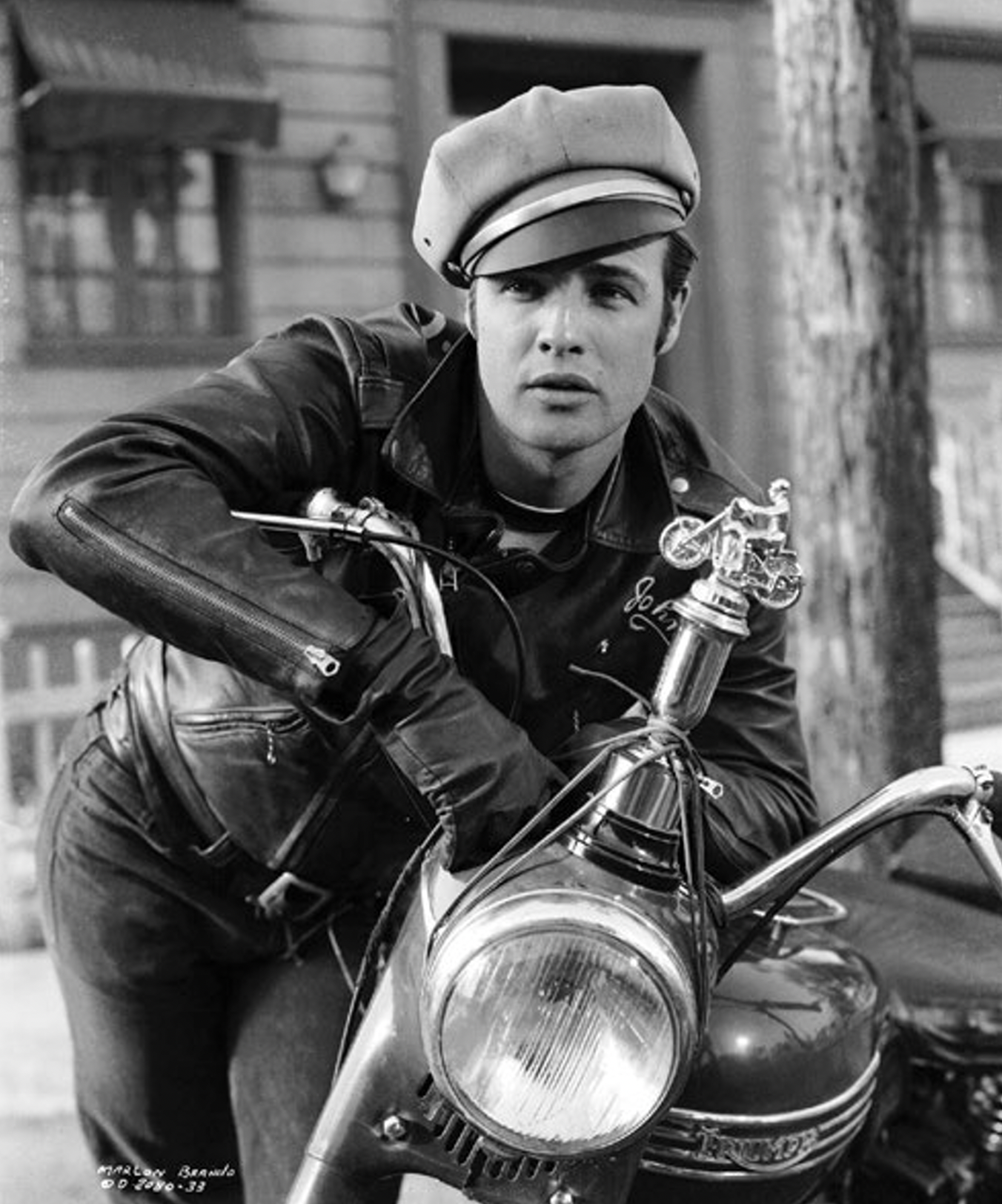
László Benedek (Hungarian, 1905-1992), The Wild One, 1953, Columbia Pictures / Stanley Kramer Pictures Corp.
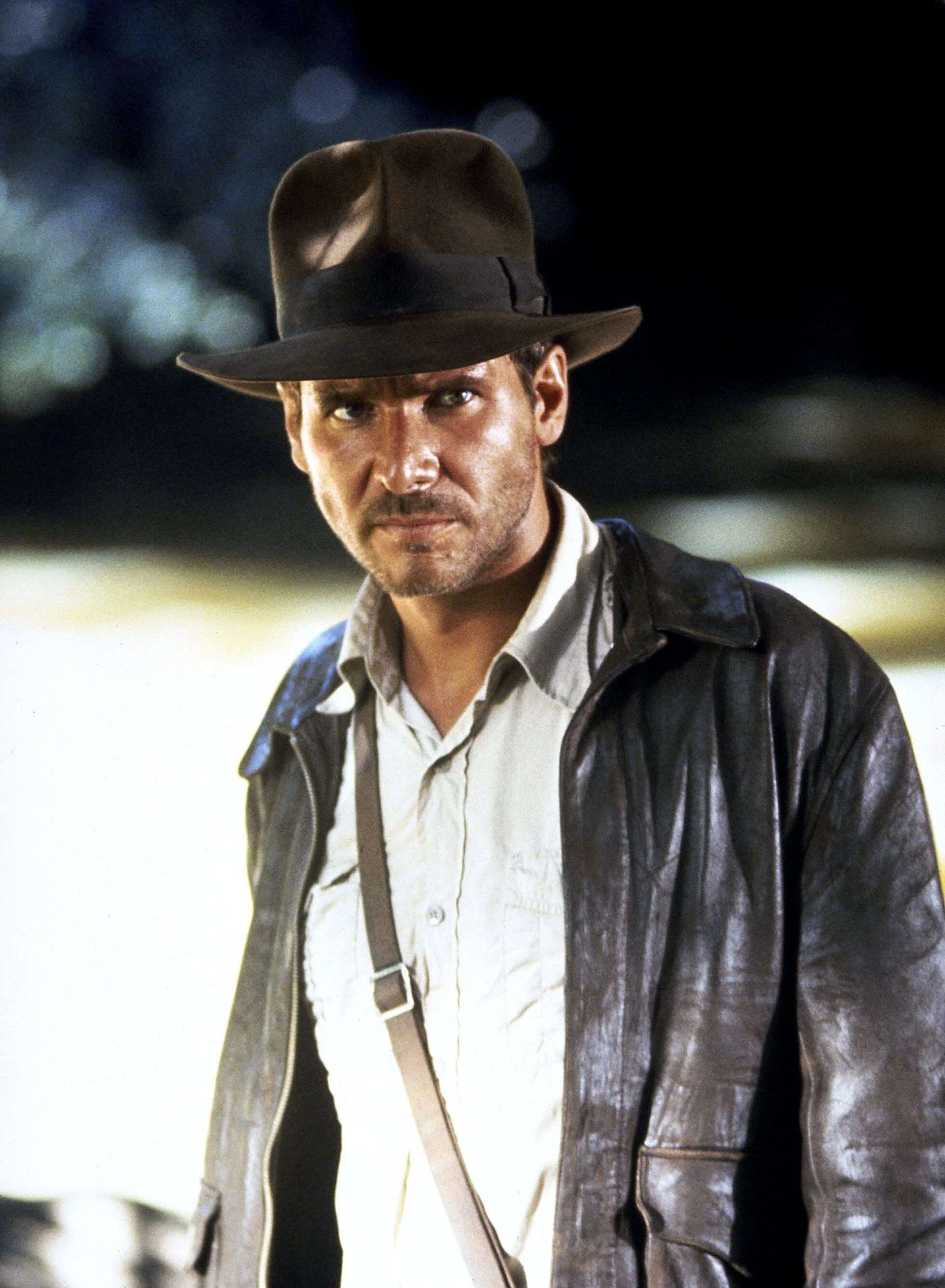
Steven Spielberg (American, 1946-), Indiana Jones And The Raiders Of The Lost Ark, 1981, FlixPix / Lucasfilm.
I arrived at Paramount in 1975. A few years later, while I was designing The Blues Brothers (1980), Steven Spielberg approached me about a new film he was working on: Raiders of the Lost Ark (1981). Tom Selleck had been cast in the role of Indiana Jones, and Spielberg had clear ideas about how he should look. Together, we watched the Alan Ladd picture China (1943) and Lost Treasure of the Incas (1964), with Charlton Heston. My job was to make a bespoke version of that archetype; it was always going to be a brown fedora, khakis and a brown leather jacket and work boots.
I made the costume, then threw it away, when Harrison Ford replaced Selleck in the role. He was four inches shorter and a completely different personality, reticent and self-effacing, a real intellect. I remade the jacket; it sat tight around his waist, with D-rings to keep the slim fit. In the fitting room, we came up with an unusual detail: deep pleats in the back, almost to the center, so that it opens out when Indiana Jones cracks his whip. It’s a trick jacket, a sort of special effect, and the audience is not aware of it; if you buy an Indiana Jones-style jacket, it certainly won’t have a five-inch insert. But it was necessary to maintain the silhouette from the front.
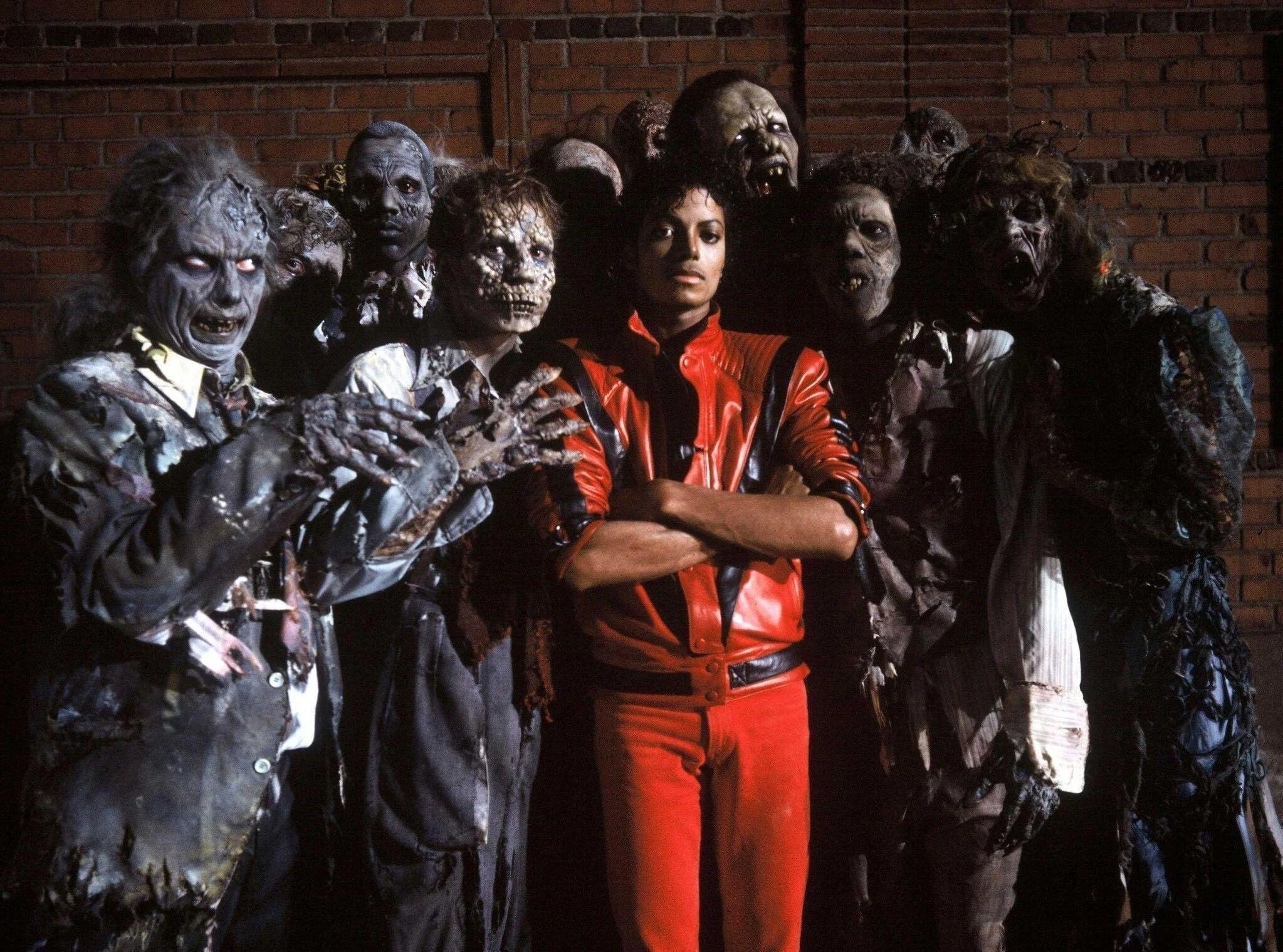
John Landis (American, 1950-) and Michael Jackson (American, 1958-2009), Thriller, 1983, Optimum Productions / Album.