Golden leather
Ulinka Rublack
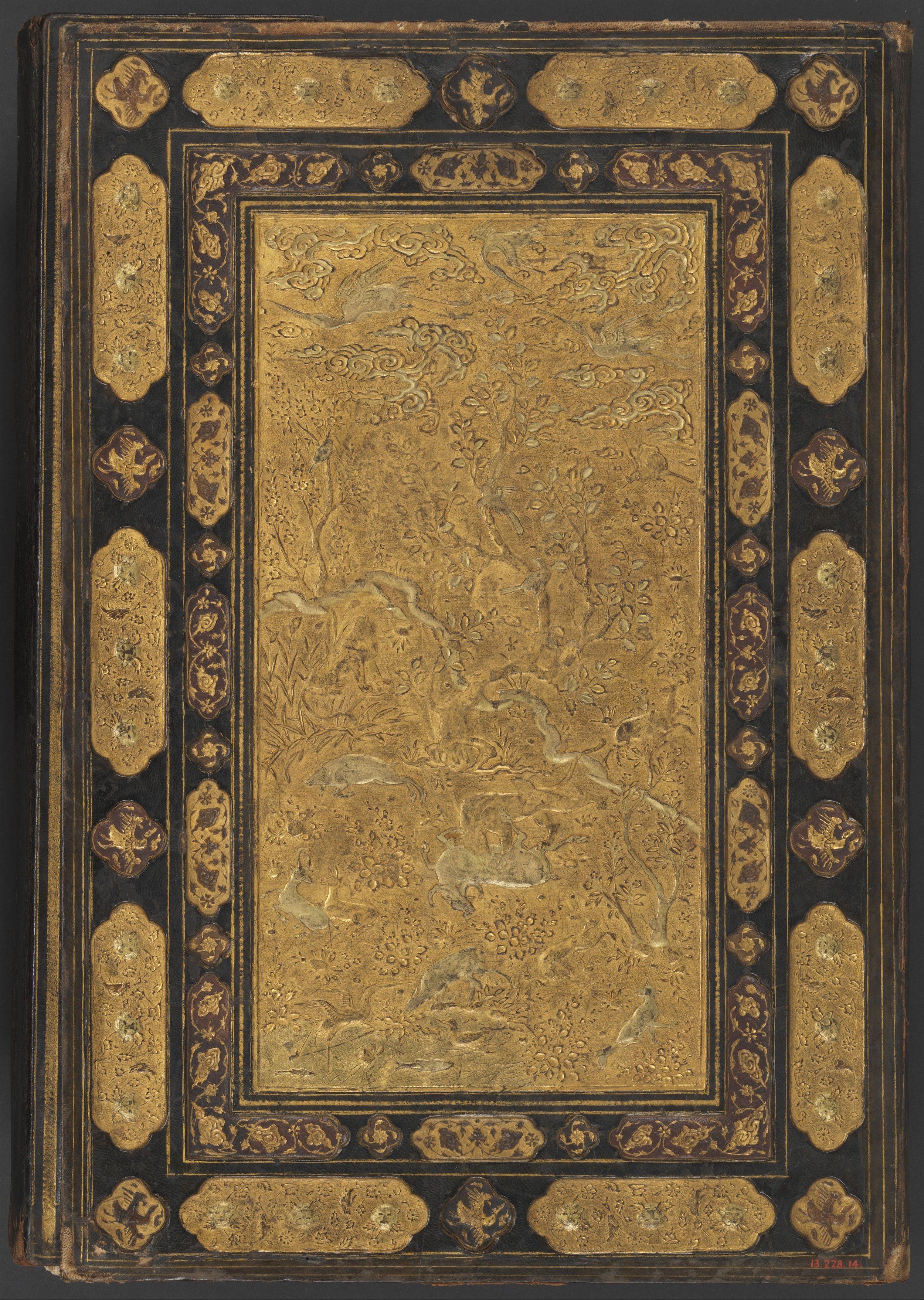
Shahnama (Book of Kings) of Firdausi, 1475–1675, Iran, Leather; tooled and gilded; ink on paper, Metropolitan Museum of Art, 13.228.14.
Leather has not often been written about as a ‘Renaissance material,’ or art form. Yet the demand for leather developed significantly during the sixteenth century, and so did the craft skills associated with its processing. Leather was used for an astonishing range of products: gilded wallcoverings, cases, bags, book-bindings, furniture, cushions, shields and saddles; and fashion items, including belts, gloves, doublets, hose, caps and footwear. Colonial trade increased the supply of raw materials through imports from the Hispanic Caribbean. The decimation of the local population there provided colonists with large pastures on which to graze cattle, whose hides provided leather. In 1580, the merchant Simón Ruiz recorded the arrival of 75,000 hides on just one vessel from New Spain, which had shared their journey across the seas with cochineal dyestuff, linen and silk.
Clever city councils actively sought out those skilled in the leather and other luxury crafts. Antwerp, for instance, turned into a booming center of Atlantic trade. Numerous new luxury industries had been introduced there by the middle of the century. A foreign shoemaker named Martin Gaillard was allowed to settle in the city in the 1530s, and was provided with a house and workshops near the horse-market, to introduce the fabrication of Cordovan leather (named for the city of Cordoba in Spain, where fine leather goods had been produced since ancient times). His successor, Jean van Tricht, was granted similar privileges.
Leather was valued because it was easy to keep clean, and also for its ornamental possibilities: sixteenth-century advances in painting and stamping techniques were spectacular. Many wealthy art connoisseurs acquired leather wallcoverings for their most representative rooms. No paintings were hung on top – rather, the decorated leather replaced them, to stunning effect.
Gilding produced a sparkling, vibrant luminosity, a sensation that the room glowed with gold and silver. Only the best leather sufficed for such treatment. Techniques of gilding leather had been developed in the Ottoman Empire and North Africa and had been advanced in Moorish Spain; they were subsequently adapted in Northern Italy, Flanders and France. The process was elaborate. Calf, goat or sheep skin was prepared and covered with thin sheets of silver leaf. After further preparation of the surface, a design was stamped, printed or painted onto the leather; sometimes layers of color were added at this stage, or the leather could be embossed with metal plates. Stamped moresque patterns provided an appealing sense of texture and tactility. Finally, a yellow varnish was applied, making the silver simulate gold.
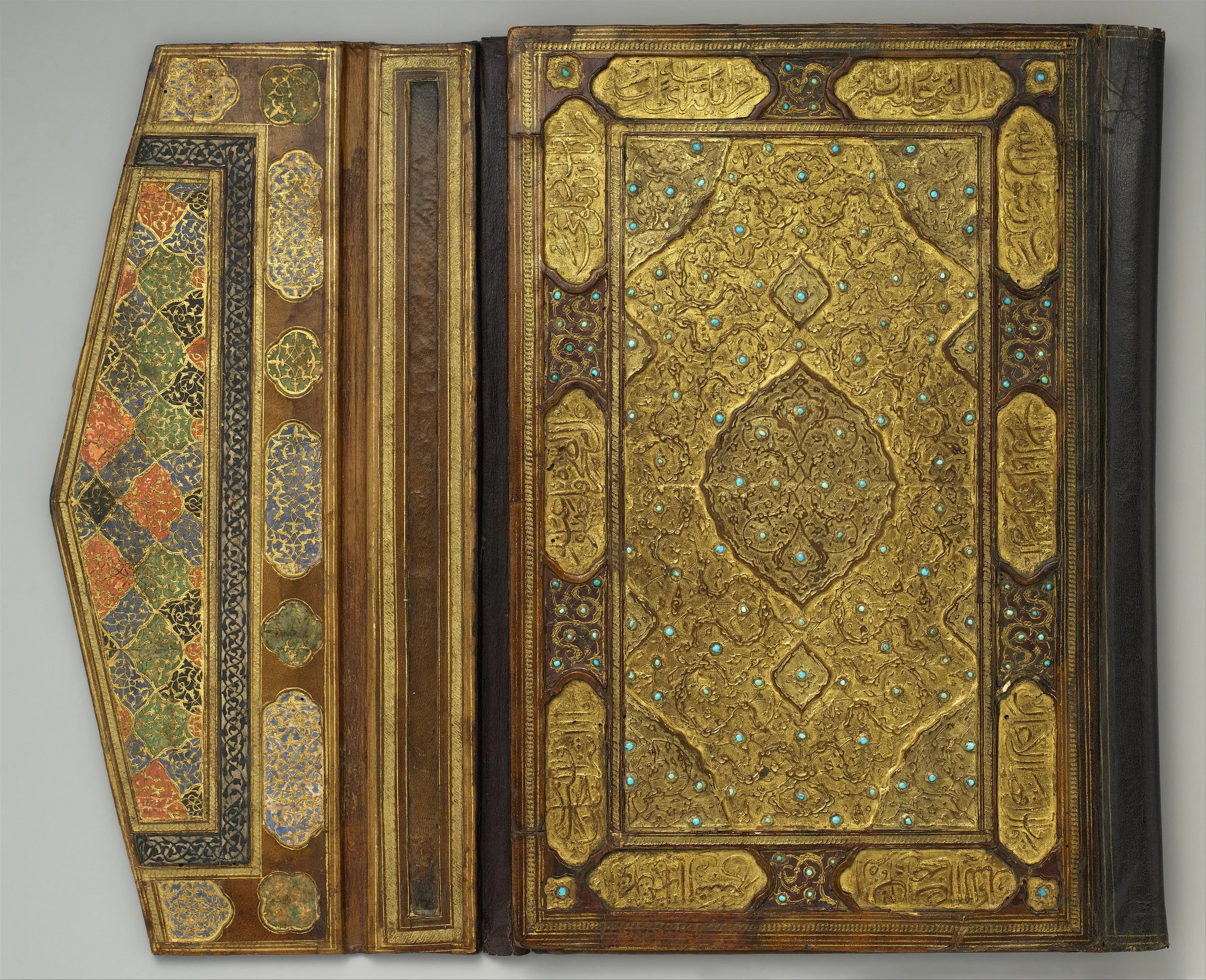
Qur'an Bookbinding Inset with Turquoise,16th Century, Iran, Leather; stamped, painted, gilded, and inset with turquoise, Metropolitan Museum of Art, 56.222.
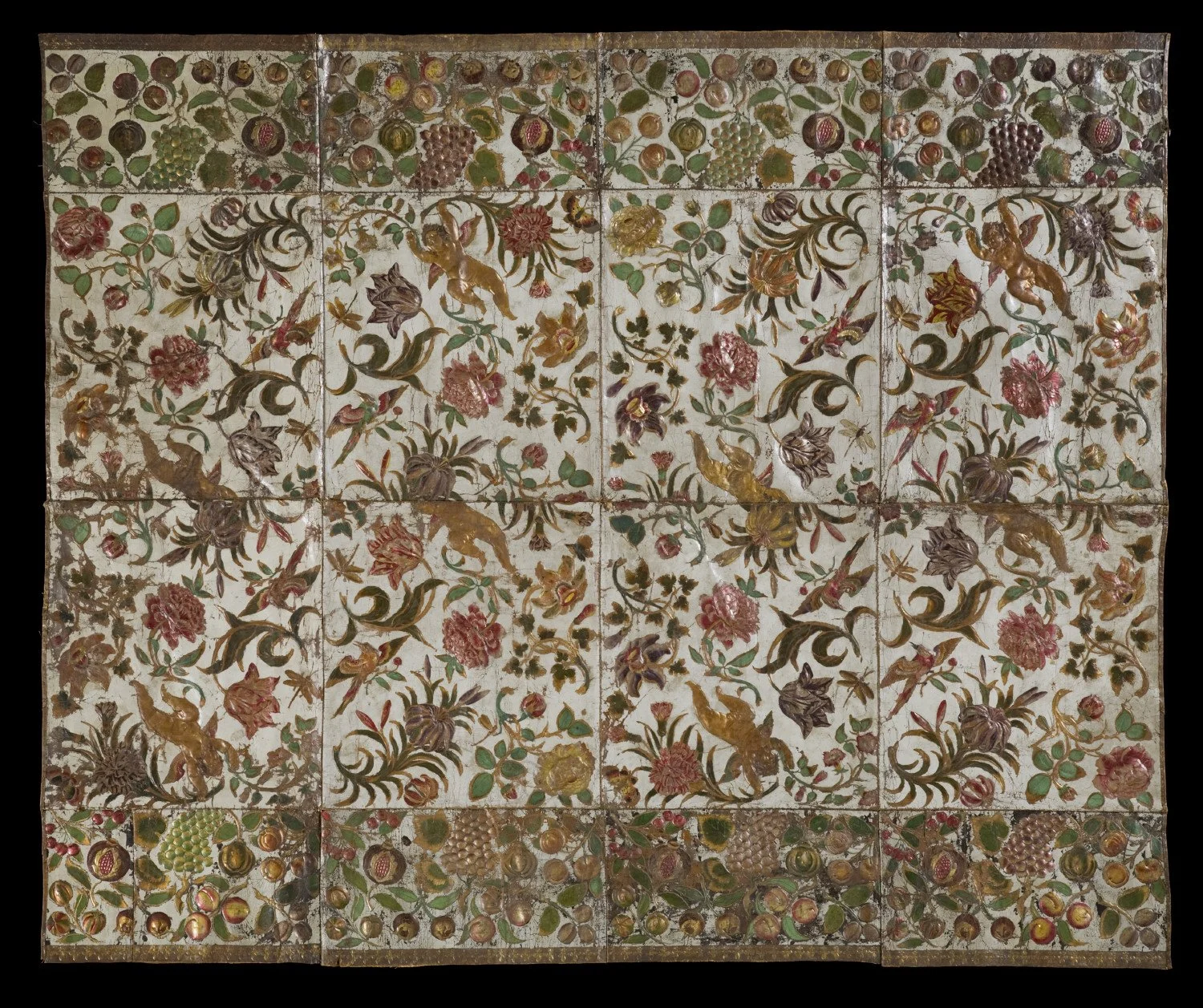
Leather panel, 1675, Gilded chamois, Ham House © National Trust Photo Library.
All this was fiendishly difficult to get right, but the same techniques could be used to furnish chairs, settees, beds and cover cushions. Coats of arms, mottoes and ornaments could be easily applied. All these possibilities ensured the extraordinary success of this product. The Moorish craftsmen of Cordoba dominated this trade until their expulsion from Spain in 1610, producing around ten thousand pieces of leather wallcoverings annually.
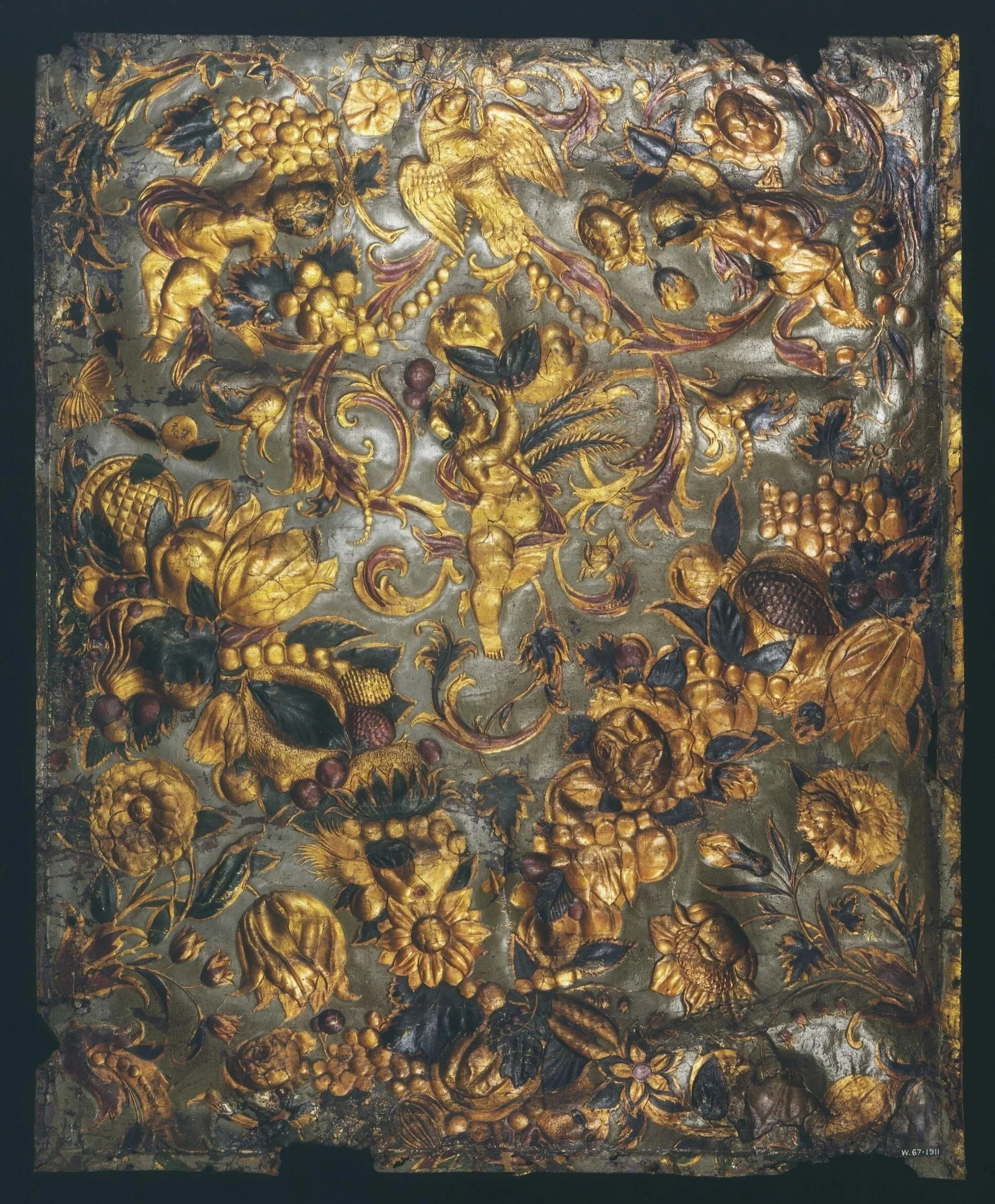
Martinus Van Den Heuvel (The Younger) (Dutch), Leather panel, ca. 1670, Amsterdam, Netherlands, Gilded, embossed, and painted leather, Victoria and Albert Museum, W.67-1911, © Victoria and Albert Museum, London.