When linen remembers
Deborah Valoma
“…the green flax is full of loveliness, Inanna, the green flax is full of loveliness…”
The Bridal Sheets, Sumerian poem, ca. 2800 BCE
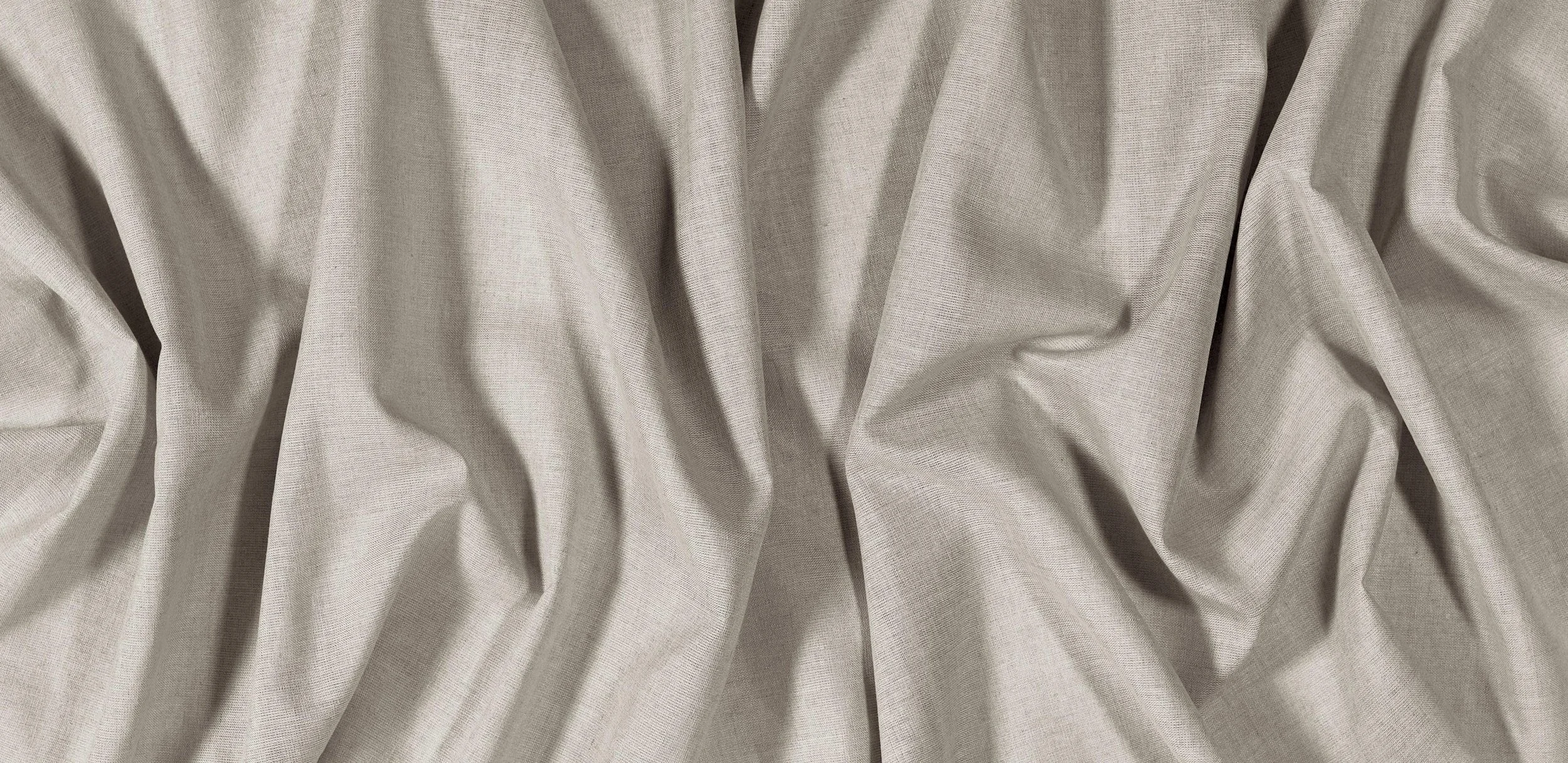
Deborah Valoma, shroud, 2019, plain weave, unbleached linen, 3 x 10'. Photograph by M. Lee Fatherree, courtesy of the artist.
Linen is difficult to weave. Not supple, not pliant—it is stately and proud. It does not bend freely to the will of others and is downright defiant at times. But as we dress our looms, we are enticed by linen’s whispers. We hear its origin story, we understand its stalk-straight lineage. So we come to linen with honey and dates, herbs and leaves, water and smoke, and together play the loom in a rhythm of remembering. As we weave, its archaic memory flows into our hands, its golden seeds flood us with the gift of recollection. Memory is linen’s mother tongue.
Linen remembers back a thousand generations when it was wild and tempestuous, when it was plucked by its throat from the earth in the Caucasus foothills and spun in a dizzying dance. It remembers when it was tamed and planted in the company of date palms along the great diluvial rivers—between the Tigris and the Euphrates, along the Nile and the Jordan. And it remembers when it nearly drowned in the watery stench of its own decaying body and took the beating when it was turned first into fiber and then thread—that moment when they changed its name from flax to linen.
Linen’s body is sturdy, its back firm, its hand strong, its skin sleek. Its muscles relax in warm water and its beauty ripens in aging. It delights in its silvery-brown complexion and defies those who attempt to sully its earthbound flesh. Linen wears no adornment, no embellishment to detract from its plain-woven and plain-spoken radiance. It resists the whitening of tamarisk ash, oil, and sunlight—however insistent. And it does not thrill, like the commoner wool, to gaudy color—however seductive.
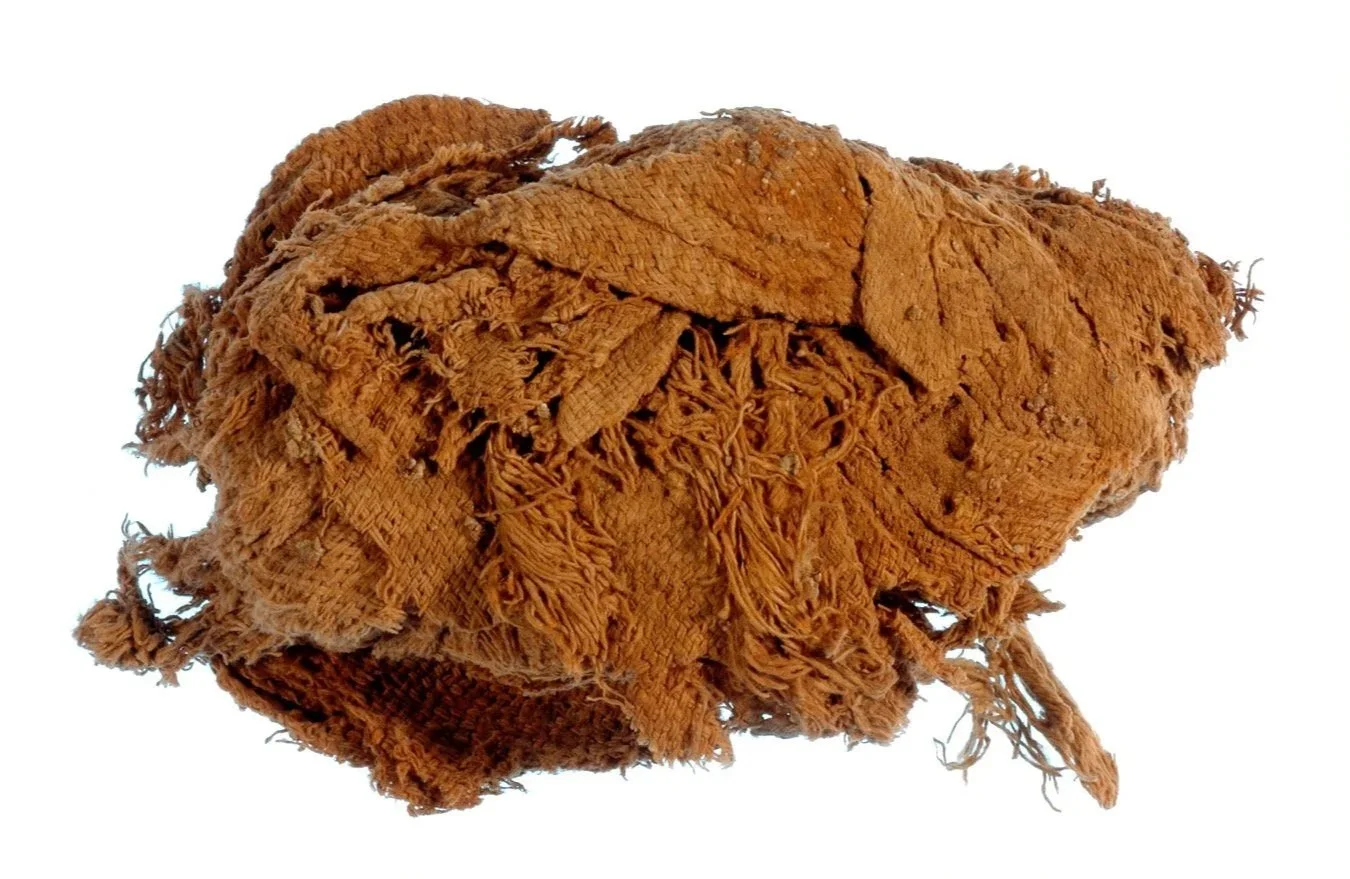
Remains of a linen shroud with a knot above the right shoulder of the deceased, Ein Gedi, ca. 2nd–1st centuries bce, 13 x 9 cm. Photograph by Clara Amit, © Israel Antiquities Authority.
Linen is a second skin. Draped on human bodies, it gently wicks sweat to cool and lifts dirt to cleanse. It has the power to make the tactile visible: it memorializes movements, mapping gestures of sitting, bending, and lifting. But they are not always so kind to linen. They boil it over fire, soak it in lye, and press it with muscle and heat and stone in a futile attempt to obliterate their sometimes sordid deeds. But linen rebels against such acts of subjugation. It definitely writes the next chapter of their memoirs with its creases and folds and stains, telling secrets whether they consent or not. Linen is a faithful storyteller.
Heavy with the pleasure of gravity, linen falls. It sinks into horizontality, it crumples into a topography of lion-colored hills and river-cut valleys, as if in commemoration of its indigenous landscape. There, linen’s feet sink into warm, wet sediment, its waist-high stalks blow in the breeze, and its short-lived blue flowers ripple like water. Linen’s rival wool is coarse and impure, sheared from the backs of mindlessly bleating sheep, following their masters in the drylands. But linen bows to no one; servants laboriously tend it because it alone is worthy of draping sacred objects, spaces, and bodies—mortal and immortal.
Linen has been called by many names in many homelands: eight in the Torah and twenty-six in ancient Egyptian. In Sumerian they called linen gada—the flaxen cloth of protection. There in the Land Between Two Rivers, it was divine cloth, woven by acolytes in sanctuary workshops. It, and it alone graced their exalted places and clothed Inanna, who walked flanked by lions. It alone adorned her mosaic temple at Uruk, the House of Heaven for the Queen of Heaven, with lengths of its sacred simplicity, perfumed with aromatics, mediating between the mundane and the divine.
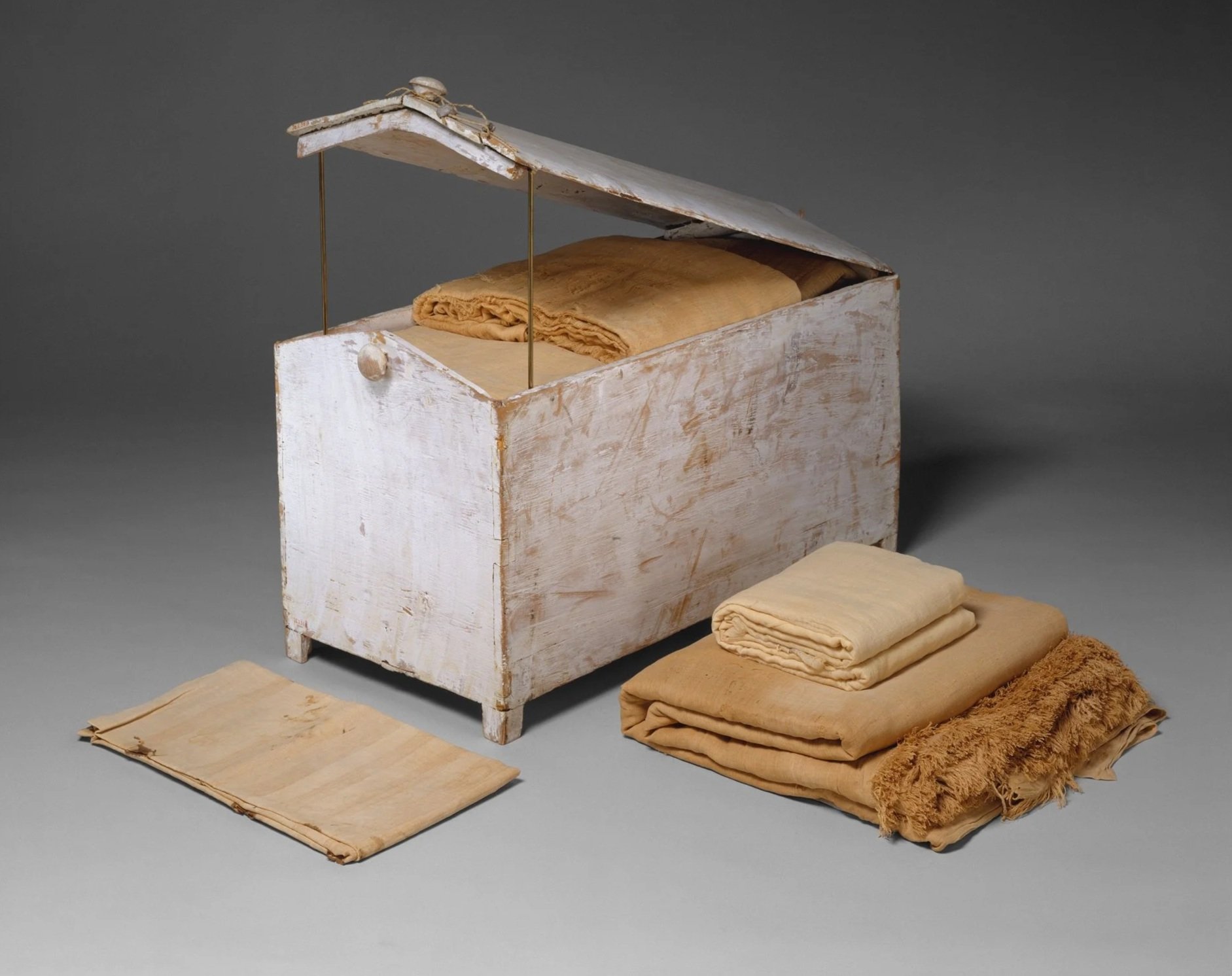
Wooden chest filled with folded linen, tomb of Hatnofer, ca. 1492–1472 bce, height of chest 17 5/16". Metropolitan Museum of Art, Rogers Fund, New York. Photograph courtesy of Creative Commons.