My love of linen
Scott Bodenner
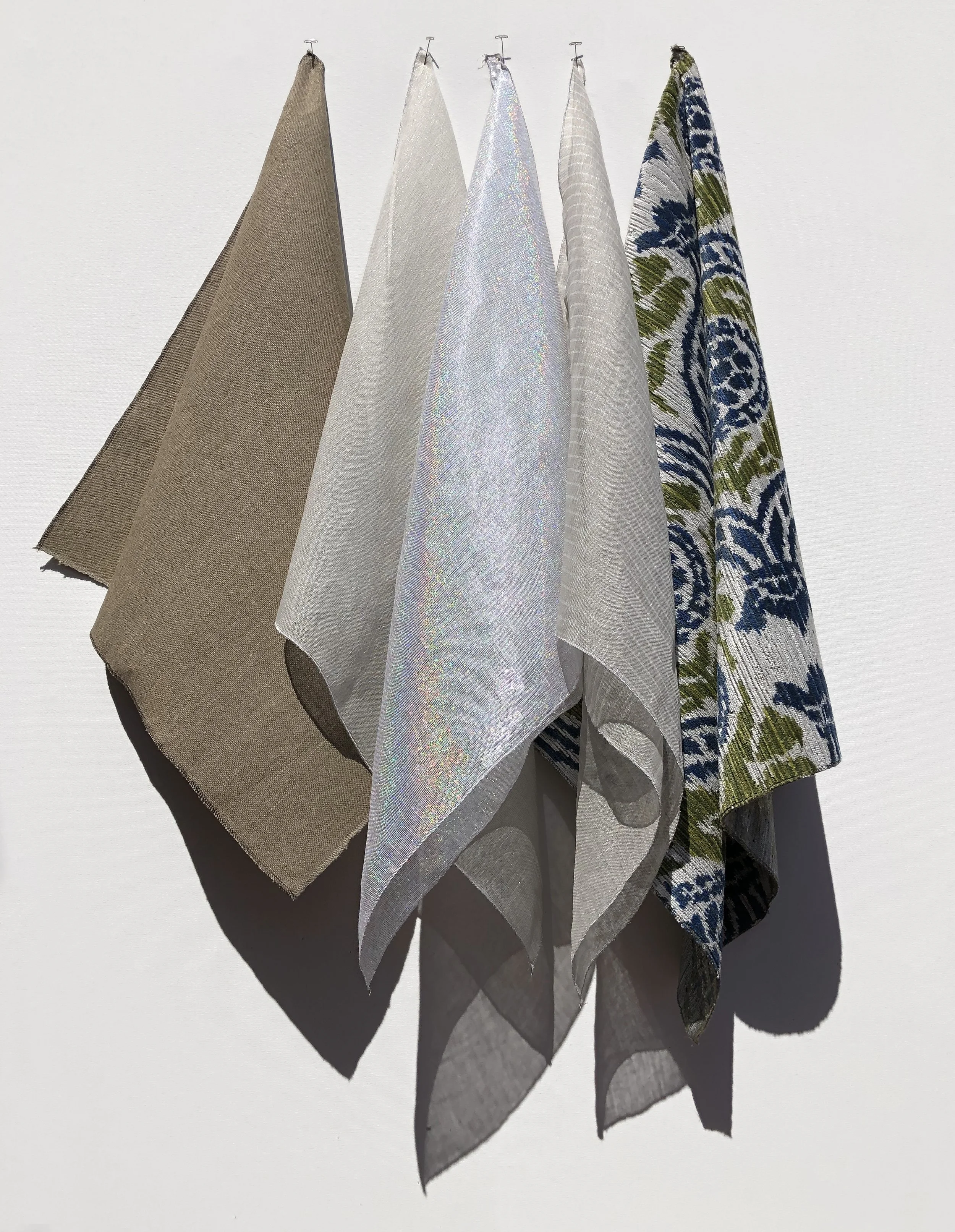
From left to right: Heaviest Linen 1002, Moonlight 1000, Rainbow 1012, Moonbeam 1001, and Ottoman Ikat Velvet 1007, The Bodenner Collection. Photograph by Fabio Toblini.
My love of linen started around the time I was in art school. My mother-in-law, Betty Lou, held estate sales outside of Philadelphia. She typically had no luck selling Irish linen damask table cloths—they were way out of fashion—so they became my bed sheets. At first they were stiff, but after being machine washed and dried they became so magically supple. They would drape over me, in a way that made me feel sculptural.
I initially studied architecture but slowly and surely gravitated to the textile studio. One of my initial hand weaving projects involved heavy olive cotton army shoelaces as a weft, on a widely spaced warp of rough linen. During the weaving process the cloth was rigid and contained, but when washed the warps would travel and become irregular in their intervals. Once dry, both materials had enough grip that the trippy spacings remained stable.
Today I work as a designer with industrial mills and still seek to achieve those interesting effects of irregularity. Often my work involves the use of linen, a difficult fiber to work with. Any industrial weaving process creates dust, called “fly” and most modern mills have vacuum systems that ensure the fly will not build up on the work. However, linen warps and weft create much more fly than cotton does, so mills often place a long bar of beeswax across the warp at the back, to try to tamp down the fly just a little—of course, not enough to transform the warp into waxed cord. Even with the beeswax in place, a German mill I used to work for had to run its suction system double-time to keep up with linen’s tons of fly.
Linen is also tricky to work with at large scale because the fiber changes with each harvest. I’ve been told the primary factor is differences in annual rainfall, which among other things can mean that the unbleached color is very different from year to year. The aforementioned German mill was aggravated to discover it had to reformulate its color formulas for each new lot of yarn. If they hadn’t, the same dyestuffs would have resulted in wildly different colors.
The finishing of linen is also a challenge in an industrial context. Some materials, like cotton and wool, come off the loom ready to use, but freshly woven linen is stiff as a board. Washing lets the fibers relax and open up. After washing, linen feels great, although it looks rumply in a shabby chic way. To achieve a more tailored look the linen has to be stretched on a giant moving frame and steamed. This phased finishing gives us both the “hand” we love and the flatness we want. (The apt German word for this finishing process is Voredelung, literally, “pre-eleganting.”)

Scott Bodenner weaving Mix Tape in Greens. Photograph by Graham Friedman.
Now I put together my own collection of fabrics for interiors, some of which I have designed, and some selectedfrom existing mill product lines. One of the latter is called Heaviest Linen and it really is just that. It is cottage-woven in Italy and traditionally was used—in an era before waterproofed nylon or acrylic—to cover boat sails when they were furled. This linen is actually waterproof, because when the yarns of the warp and weft get wet, they swell so much that no more water can get through. Don’t use this one for your swim trunks.
My collection also includes the sheers Moonlight, which includes a glow-in-the-dark plastic film yarn (if you write on it with a pen flashlight, the words will glow for a few minutes), and Rainbow, which incorporates hologram-etched Lurex. Both of these materials are unabashedly synthetic. And you know what plastic really needs? Nature! I make these fabrics with an all-linen warp, and for wefts, mix more linen the sparkly materials. The result has the elegance we expect from handkerchief fabric, with an eerie shimmer and glow. As my friend Jesse says, this surprising dual character is “like salt and caramel.”
There is one particular linen fabric I still think about as ‘the one that got away.’ I did prototype it: a simple damask, with an upholstery-weight linen warp and a weft of alpaca. This literally un-kosher combination—observant Jews are careful not to use mixed linen and wool fabrics—seemed unremarkable at first. The mill I was working with had a machine that softened fabric with steam and pressure. This process gave the linen the feel of my college era bed sheets, while causing the alpaca to felt and shrink, becoming fuzzy and soft. The whole thing had a deep, luscious drape and the areas of the damask became dimensional, puffing out where the unshrinking linen was on top, concave where the receding alpaca was on the surface. Unfortunately, this seemingly magical process also resulted in reduction in width to below the standard 54 inches, which made it a challenge to bring to market. The project was put on hold but I still hope to make it happen someday along with other unexpected materials centered around the creative use of linen.
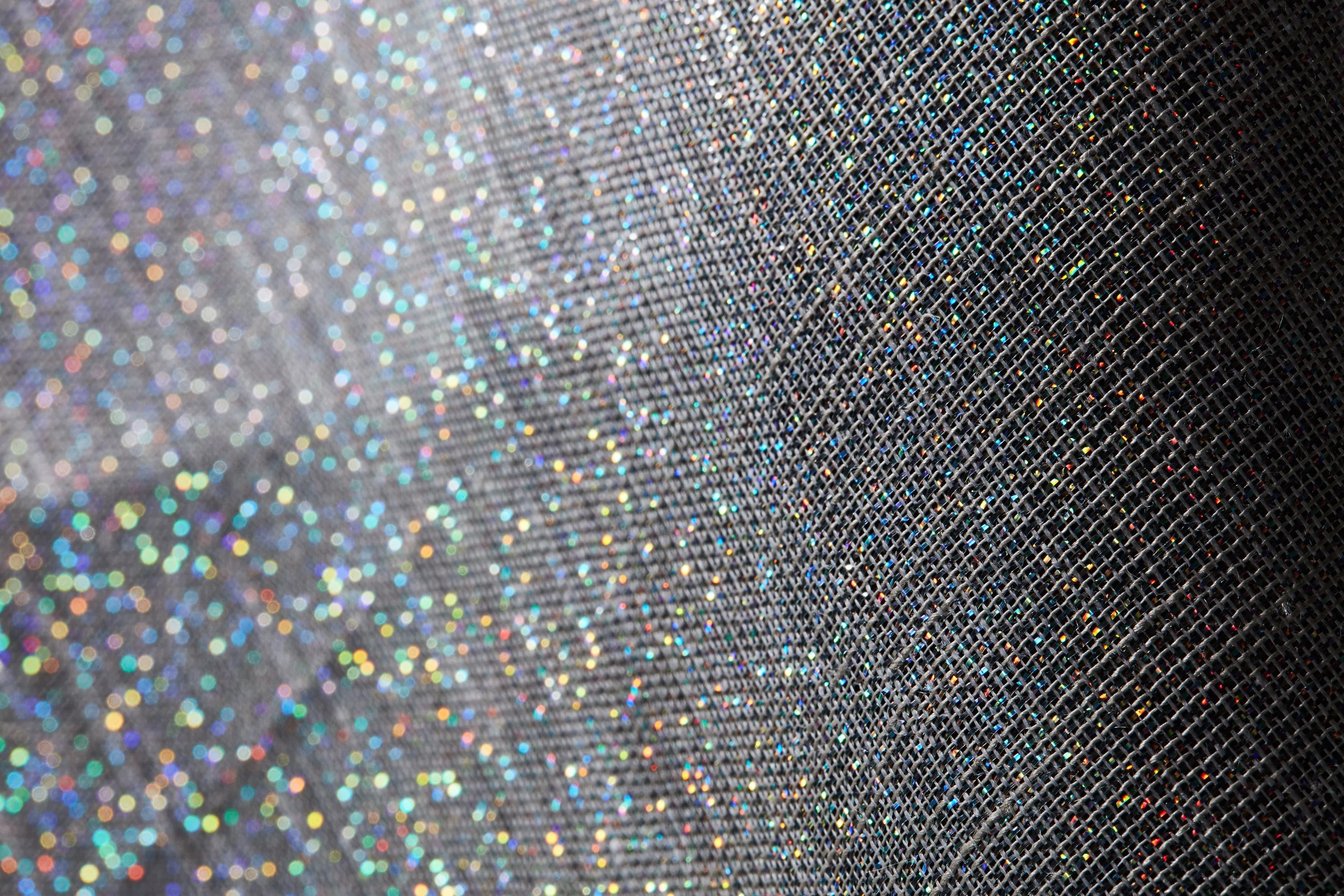
Detail of Rainbow 1012, The Bodenner Collection. Photograph by Graham Friedman.