Fashion-Able
Natalie Wright
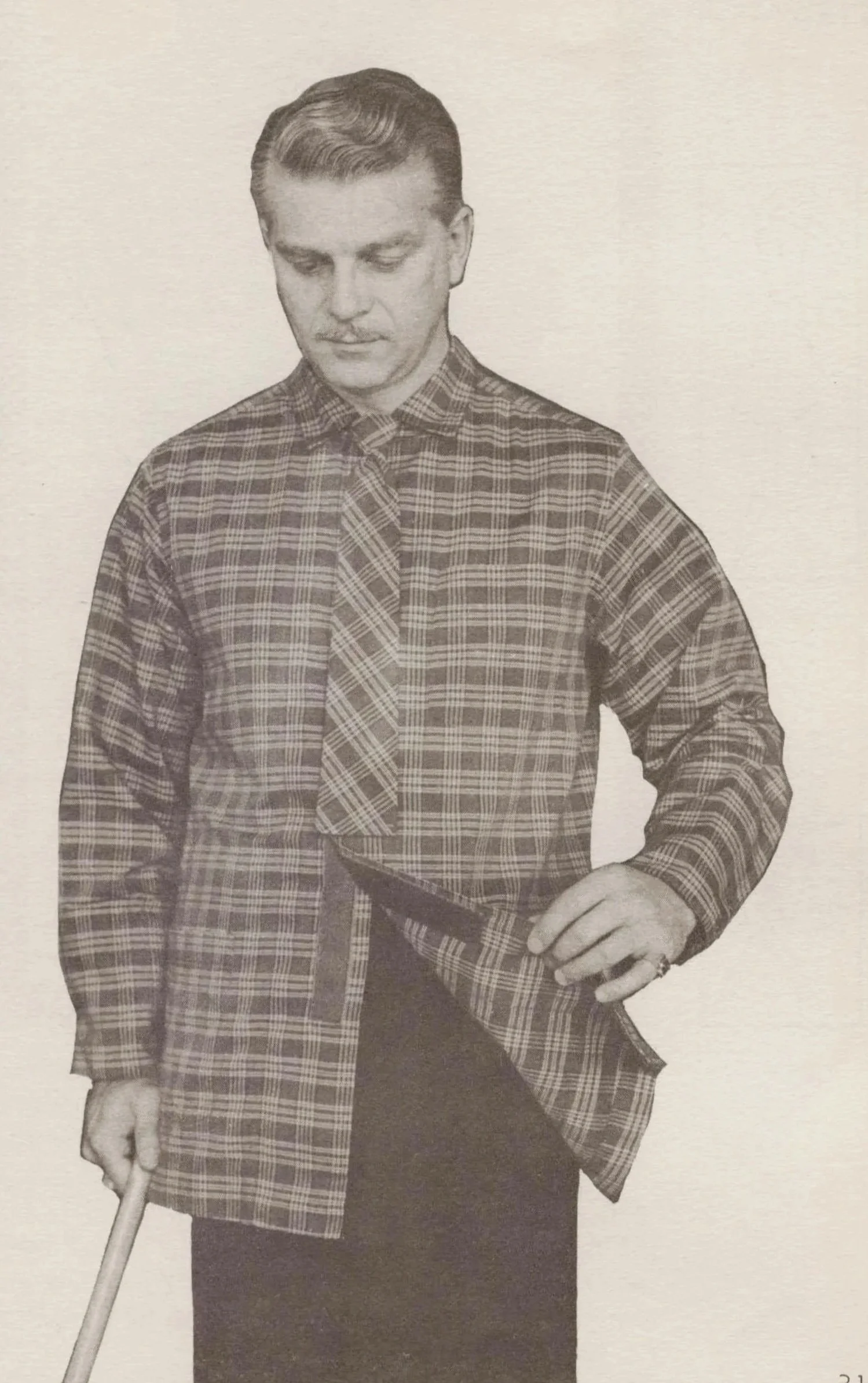
Helen Cookman and Muriel E. Zimmerman, Functional Fashions for the Physically Handicapped (New York: Institute for Physical Medicine and Rehabilitation, 1961), 31. Image courtesy of The Lillian and Clarence de la Chapelle Medical Archives at NYU.
In 1941, coming home from an outdoor excursion, Swiss inventor George de Mestral noticed burrs sticking to his clothing and to his dog’s fur. He examined the burrs under a microscope and saw thousands of tiny hooks. He wondered if the same structure could be created in a fabric weave. De Mestral’s two hurdles were to develop a loom that could cut each hook at a specific angle, and to identify a material that would not wear from repeated use. He found the latter in nylon, which adhered when pressed together and sprung back when pulled apart. In 1955 he patented the hook and loop invention and named his company “Velcro,” a combination of the French words velour (velvet) and crochet (hook). Two years later American Velcro Inc. of New Hampshire began production for the North American market.
At the same time, at New York University, clothing designer Helen Cookman was embarking on a three-year research residency at the Institute for Physical Medicine and Rehabilitation. Her goal was to develop a line of accessible clothing. Cookman studied the problems faced by disabled persons at the Institute, identifying fastenings as one of few shared issues that affected a wide variety of impairments. When Velcro became available towards the end of her tenure – marketed as a “zipperless zipper” that users could “touch and close” – she quickly integrated it into a pilot line of garments for disabled men and women, which she called Functional Fashions. Cookman presented her designs incorporating Velcro – among them a men’s casual shirt, a “belt pocket unit” to help carry necessities, and a women’s wheelchair cape – in the autumn of 1958. Articles such as “Saluting the Dawn of the Velcro Age” mentioned Cookman’s line as an early usage of the new product.
It is no coincidence that when Velcro companies hosted a fashion show in 1959 at the Waldorf-Astoria in New York, an individual who was disabled as a result of polio modeled Velcro fasteners as “an aid to the handicapped.” Many other designers took notice, too. In 1961 the United States Department of Agriculture published a pamphlet showing twenty-one garments and accessories for “handicapped homemakers” by Clarice L. Scott – a researcher at the Institute of Home Economics – meant to inspire home sewers and commercial pattern makers alike. Scott incorporated Velcro into a skirt with a front opening, as well as an apron with a detachable towel.
Accessible garments also borrowed ideas from elsewhere. Vogue first reported on Velcro in 1959 when Lily of France created a bra in which it was used for an adjustable closure. Five years later, Van Davis Odell debuted her similar Fashion-Able brand, which focused on accessible undergarments for women, and featured a bra with “satin-covered Velcro panels.” Another crossover was in childrenswear. Velcro was instantly incorporated into so-called “self-help” clothing, which aimed to train children to be independent by dressing and undressing themselves. In 1962, a team of home economists at the University of Connecticut published Self-Help Clothing for Handicapped Children. One of the benefits of Velcro, they noted, was that mothers could make ready-to-wear clothing more accessible by replacing zippers and buttons at home.
Despite all the positive interest, Velcro did face some obstacles in these first years. Initially, garments sometimes popped open unexpectedly – a problem the company solved by altering the way they cut the hooks. Harder to fix was the noise: a newspaper article introducing Velcro to readers cited the tearing sound of opening a Velcro fastening as a primary drawback. During the four-part series “Clothing for the Handicapped” on the television program Today’s Homemaker, a home economics specialist at Iowa State University tried to reassure her viewers. When using Velcro, she said, “you’ll hear the noise, it sounds like ripping, doesn’t it? But that doesn’t matter, it’s over in a minute.” These days we are accustomed this sound, but it can still be an issue: in 2010 the United States army removed Velcro from soldiers’ uniforms because it was dangerously loud in combat.
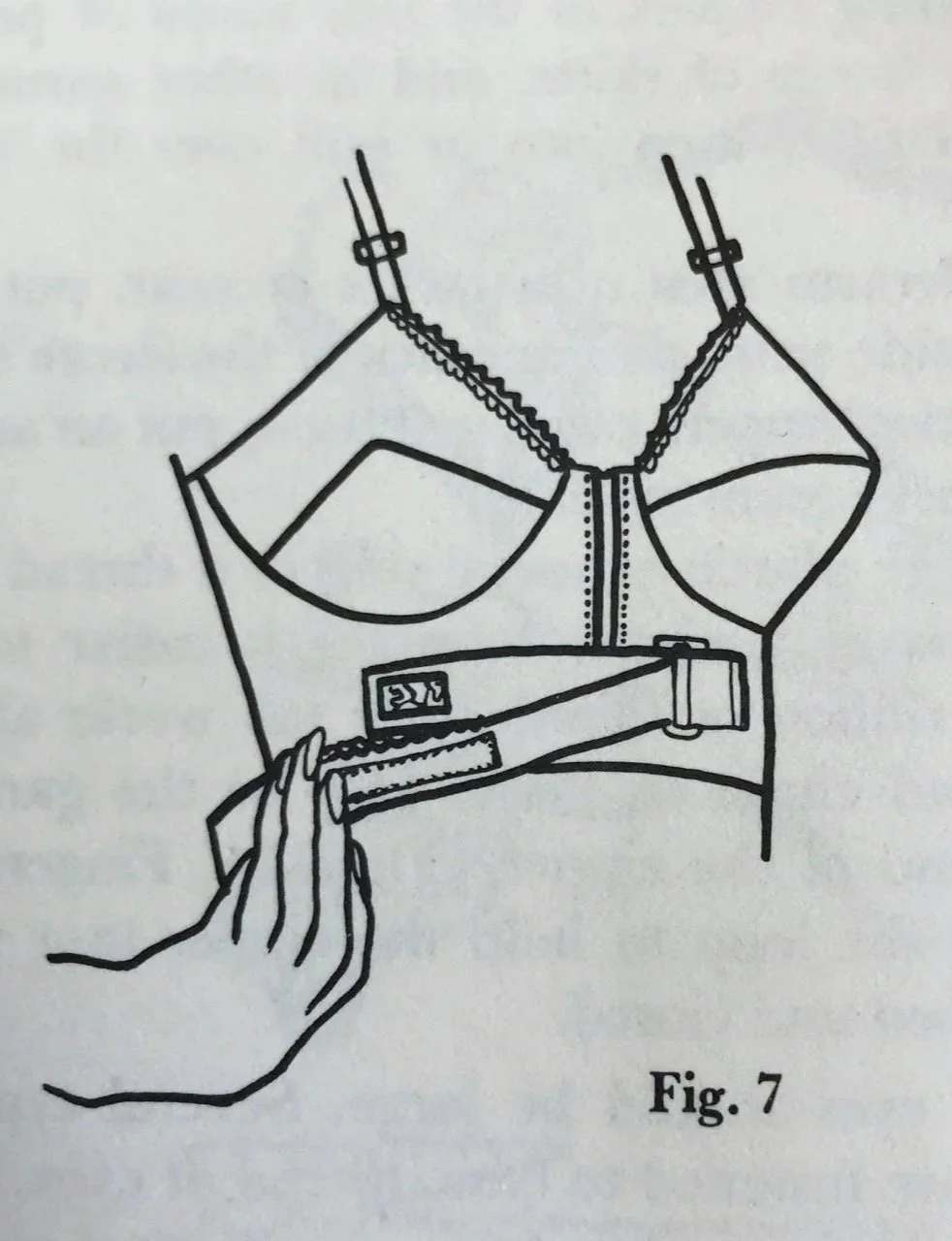
Majorie Mead, “Some uses of Velcro: [...] as a front fastener for bras,” Clothing for People with Physical Handicaps (Champaign: University of Illinois at Urbana-Champaign Cooperative Extension Service, 1980), 3.
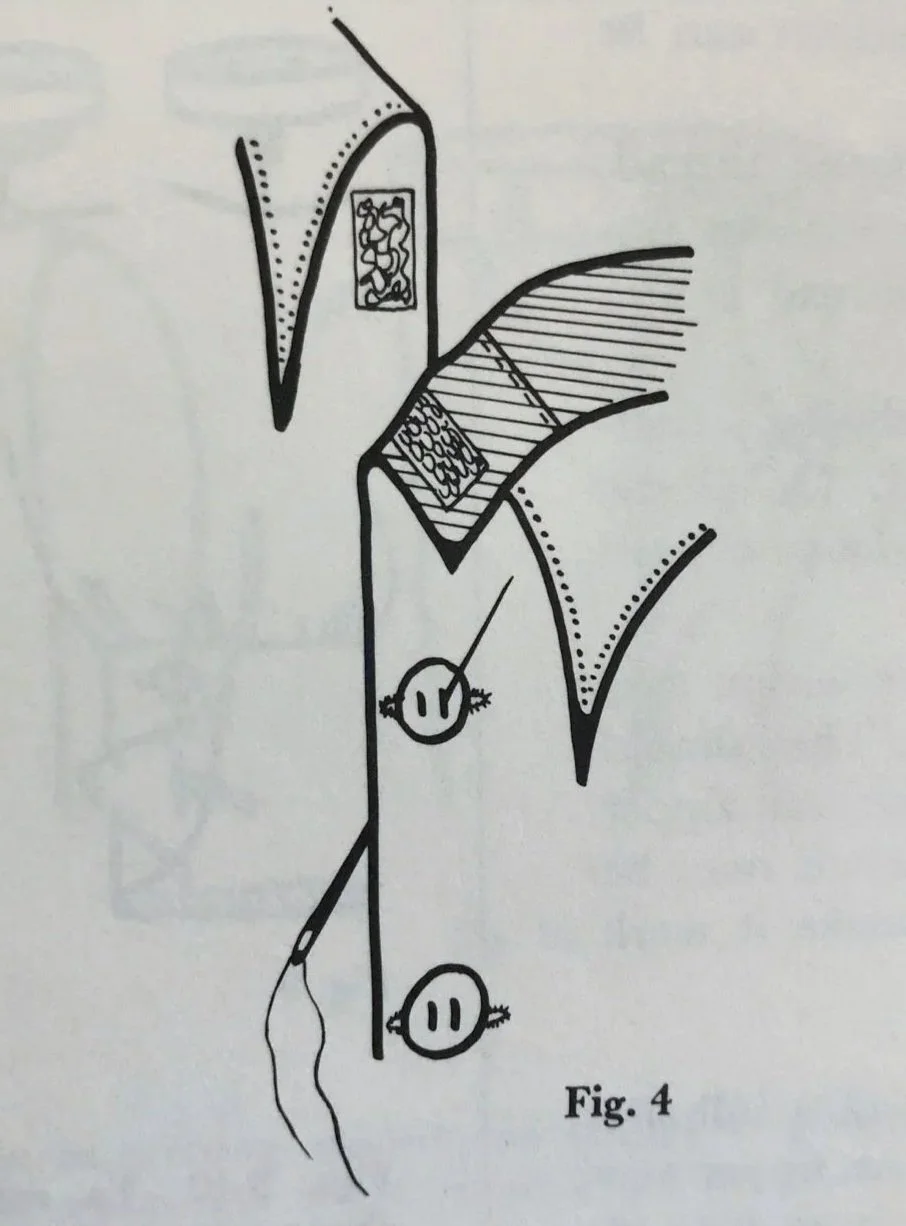
Majorie Mead, “Some uses of Velcro: [...] under buttonholes, with buttons sewn on top of the buttonholes,” Clothing for People with Physical Handicaps (Champaign: University of Illinois at Urbana-Champaign Cooperative Extension Service, 1980), 3.
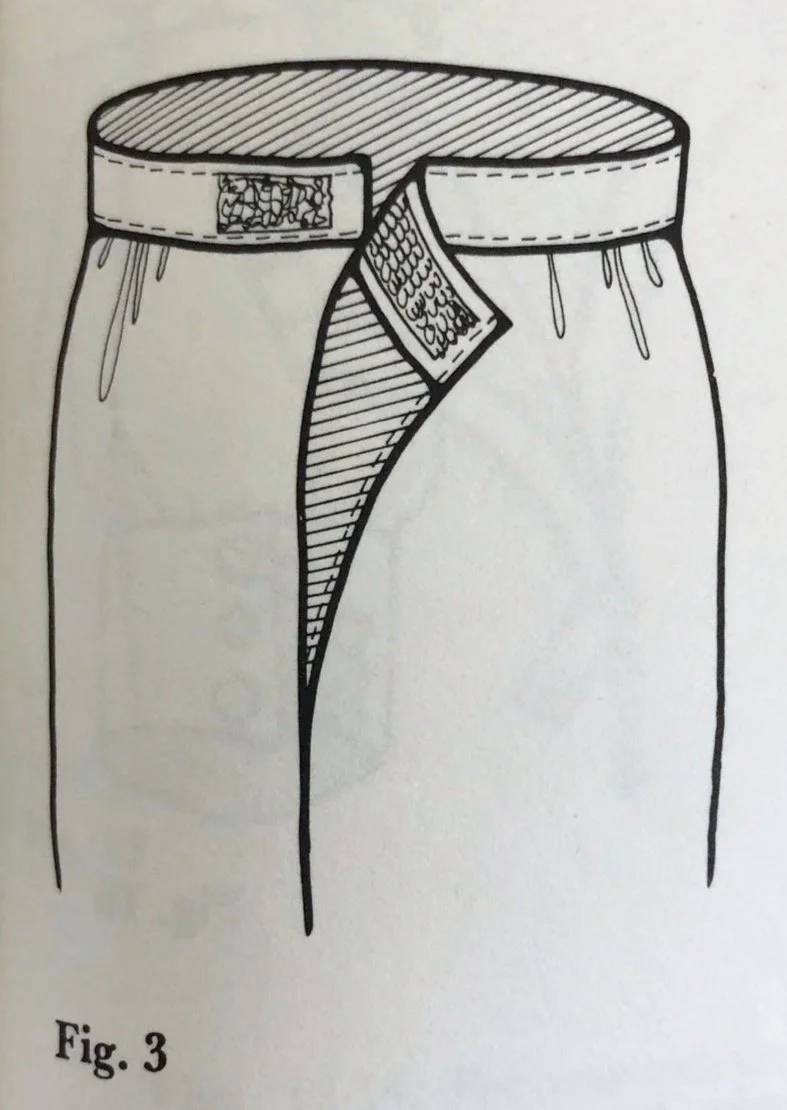
Majorie Mead, “Some uses of Velcro: [...] under buttonholes, with buttons sewn on top of the buttonholes,” Clothing for People with Physical Handicaps (Champaign: University of Illinois at Urbana-Champaign Cooperative Extension Service, 1980), 3.