Bodies, bodies, bodies
Laura Bannister
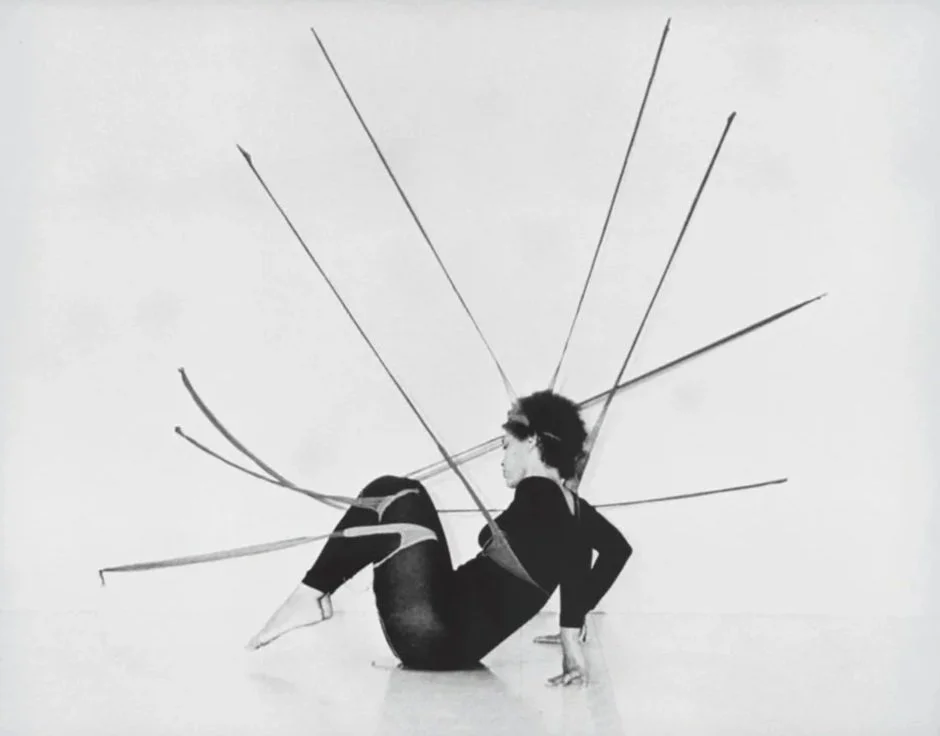
Senga Nengudi (American, born 1943), Performance Piece, 1978 (detail), Silver gelatin prints, triptych, © Senga Nengudi, 2023, Courtesy of Sprüth Magers and Thomas Erben Gallery, Photo by Harmon Outlaw.
In Senga Nengudi’s R.S.V.P Fall (1976), two pairs of brown pantyhose are splayed across a wall, their condition intimating bodily violence—whether caused by a person or circumstance, or the slow ravages of time. Each set of legs has been torn from its waistband. Two segments of long nylon stocking are pulled taut, ends pierced to the wall with silver pins. The central part of the composition resembles a tattered g-string and rump: a Y-shape giving way to looping outlines of buttocks (though they might also be breasts, or some other fleshy appendage). Looser, thinning strips of nylon are knotted together and frayed, like a worn-out body pushed to extremes. Elsewhere, a small sandbag is stuffed where a foot might be, causing the pliable fabric to stretch and swing. “From tender, tight beginnings to sagging,” Nengudi wrote in 1977, “the body can only stand so much push and pull, until it gives way.”
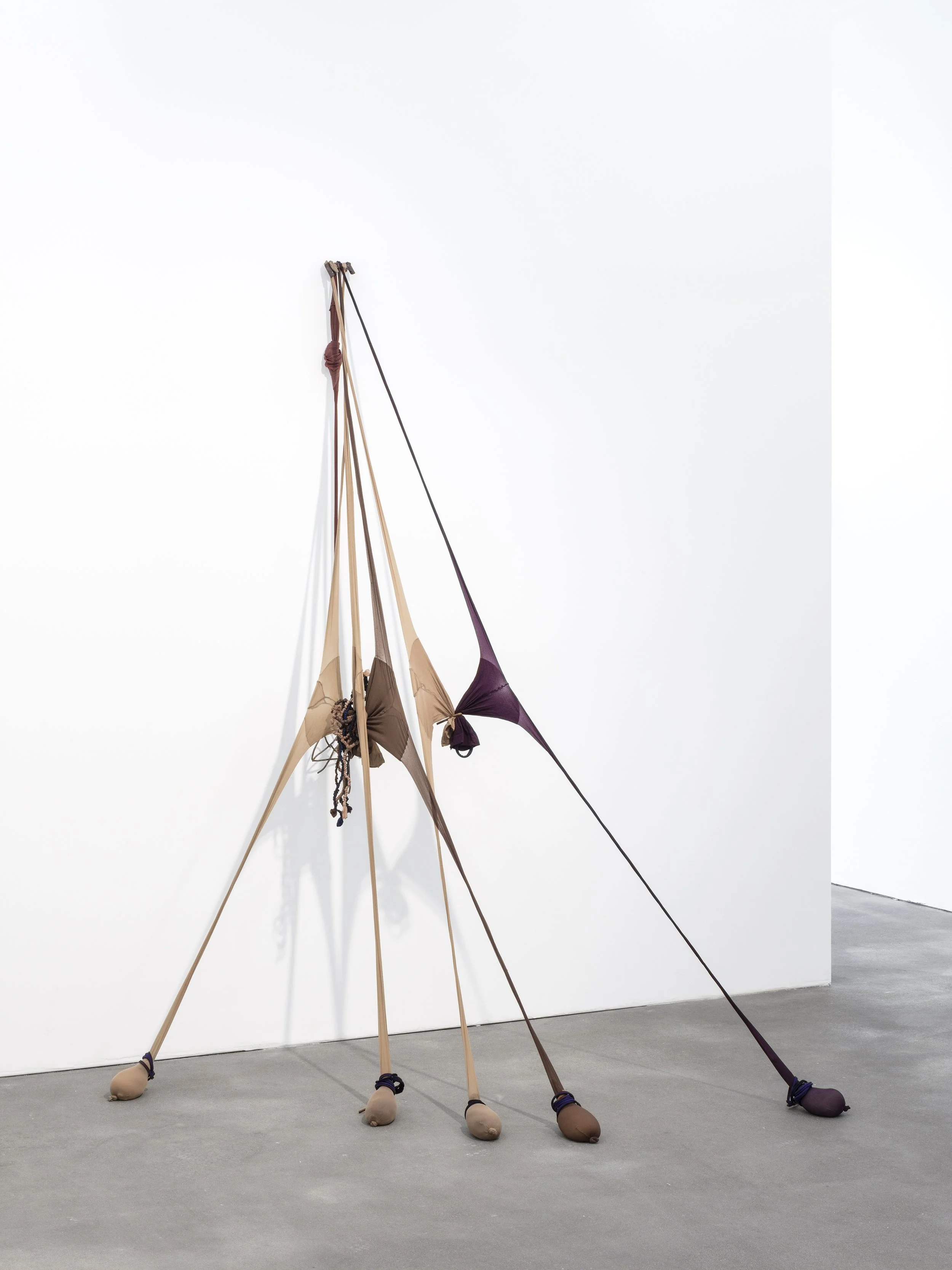
Senga Nengudi (American, born 1943), R.S.V.P Reverie “Scribe”, 2014, Nylon mesh, sand and found metals, © Senga Nengudi, 2023, Courtesy of Todd Levin, New York, Photo by Timo Ohler.
Nengudi, who was born in Chicago and now lives in Colorado Springs, began her allusive R.S.V.P series in 1975, following the birth of her son. She was looking for materials that could mimic her body’s maternal changes—the swelling belly and breasts, the growing womb. Pantyhose, she found, were ideal. Decades later, and after she’d started remaking the series, she’d tell the New York Times that R.S.V.P was also connected to the sexual abuse she experienced as a child, and kept a secret from her mother. Just as easily as her nylon alludes to the body in metamorphosis, it conveys a resilient, contorting psyche, wrenched in all directions.
Even in photographs, Nengudi’s R.S.V.P compositions convey urgency and movement. They have a jack-in-the-box buoyancy, as though just sprung from an open purse. Crotches are splayed. Legs zigzag between walls and flooring. Foreign objects interject—among them, scrappy metals, ropes, and refrigerator parts. (Even the series name is a call to action: an invitation to reach out and touch.) Often, the configurations are activated with sound and gestural performance, underscoring their resistance to fixed forms or closure. Maren Hassinger—a fellow African-American sculptor who trained in dance—is a longtime collaborator. In seemingly improvised movements (immortalized in YouTube clips) Hassinger frees nylon strips from the gallery walls, bending and criss-crossing them in a kind of trance. She wraps flopping legs around her thighs and chest, echoing the sensation of actually wearing ill-fitting pantyhose, an itching body sock of thermoplastic that can seem at odds with your own skin.
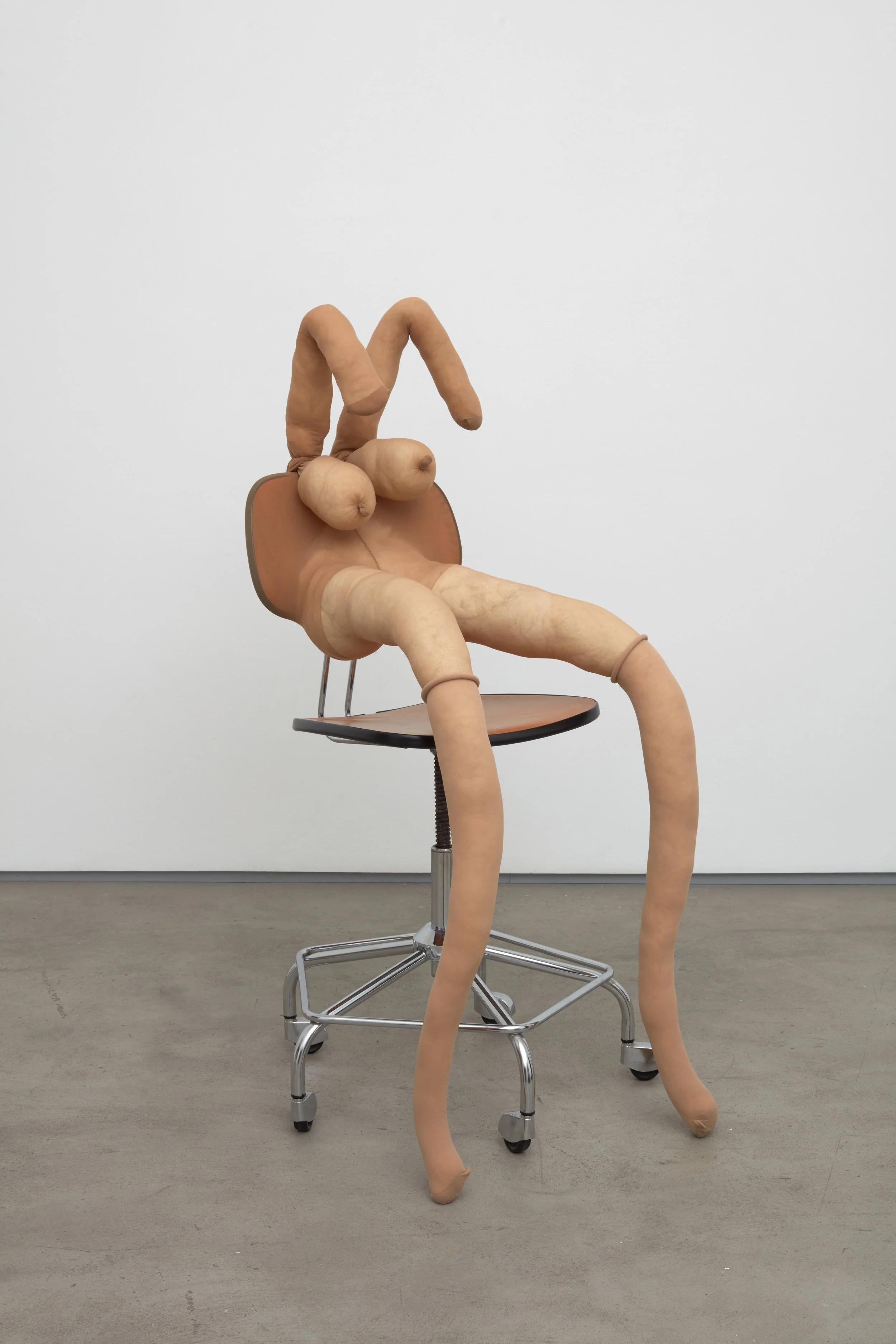
Sarah Lucas (British, born 1962), Titty Bunny, 2018, Tights, fluff, wire, chair, 44⅞ x 20⅞ x 26⅜ in (114 x 53 x 67 cm), © Sarah Lucas. Courtesy Sadie Coles HQ, London. Photo: Robert Glowacki.