Better guitar through chemistry
Pete Prown

The virtuoso classical-guitar duo of Ida Presti (right) and husband Alexandre Lagoya (left) in 1964.
Can a synthetic product be musical, actually pleasing to the ear? In the case of nylon guitar strings, the answer is – resoundingly – yes. Since their introduction in 1947, nylon strings have become the bedrock of the classical or Spanish guitar, an acoustic instrument built from select tonewoods and animal-hide glue. These days, such instruments feature three “wound” bass strings, wrapped with metal wire, and three nylon treble strings – producing sounds also used by folk, Latin, jazz, country, rock, and pop guitarists.
Prior to nylon, most stringed instruments used an animal fiber called catgut (something of a misnomer, as no felines are involved; “cat” refers to cattle, as cow intestine was one of several sources, though sheep was still more common). While gut strings deliver a fine musical sound, they are brittle, temperamental, and can throw instruments out of tune as temperature and humidity fluctuate. The onset of World War II further complicated matters. With the outbreak of hostilities, American livestock was redeployed for other uses, notably medical sutures.
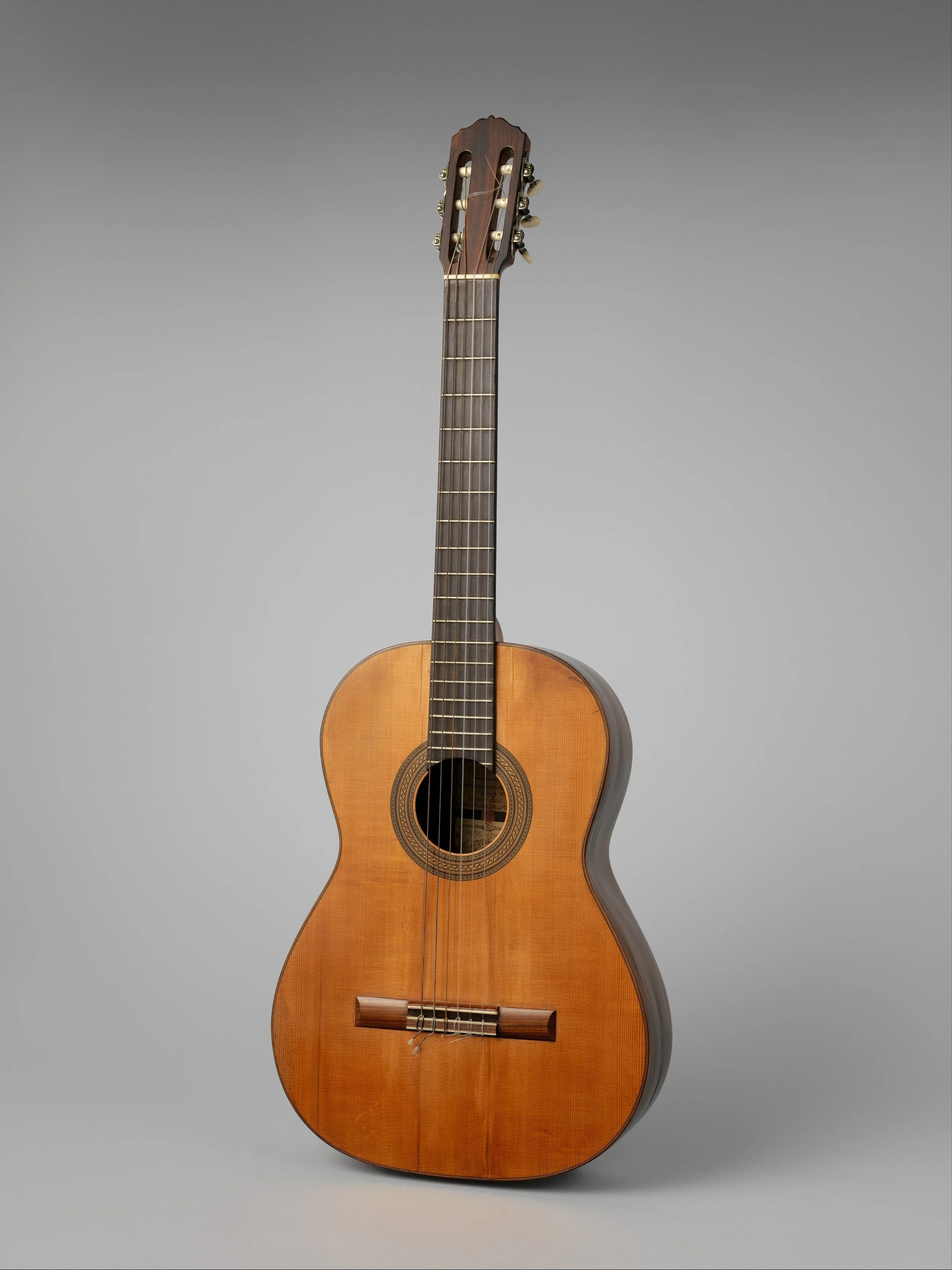
A Spanish guitar used extensively by Andrés Segovia, from the workshop of Manuel Ramírez and attributed to luthier Santos Hernández. Manuel Ramírez (Spanish, Alhama de Aragon, 1864–1916) and Santos Hernández (Spanish, 1874–1943), Guitar, 1912, Spruce, rosewood, cedar, ebony, ivory or bone, Metropolitan Museum of Art, Gift of Emilita Segovia, Marquessa of Salobreña, 1986, 1986.353.2.
It was at this moment that the Danish-born, New York City-based luthier Albert Augustine (1900–1967) stepped into musical instrument history. Augustine discovered DuPont’s nylon fishing line at an army surplus store and wondered if it might make a good replacement for gut. He began experimenting with the new polymer, to see if he could achieve a tuneful result.
This was a significant feat of engineering; to understand why, a brief examination of string anatomy is required. The thickness of each string – the so-called gauge, measured in thousandths of an inch – is apparent to the naked eye, an incremental progression from the thinner treble strings to the fatter bass strings. The single-strand, monofilament strings are simply lengths of nylon held in tension and tuned to G, B, and high E. But the bass strings, tuned to low E, A, and D are composed of nylon, silk or steel cores that are mechanically wrapped with thin strands of silver-plated copper. Augustine needed to consider various material combinations, and then mechanically wind, shape, and/or grind his strings to proper thickness.
Today, the variety of shapes, tensions, and coatings for classical strings – much less the broader universe of steel strings – is vast and dizzying. In the mid-1940s, guitarists had few such options. But when a set of Augustine’s new strings reached the hands of the maestro Andrés Segovia – then and since considered the greatest of all classical guitarists – the reality of musical nylon leapt forward. Segovia’s initial reaction was that the strings were functional, but had a slightly metallic tone. So he undertook an unprecedented collaboration with Albert Augustine, Augustine’s wife Rose (a public-school chemistry teacher), and researchers at DuPont, eventually leading to guitar strings that were warmer, longer lasting, and more pleasing to the ear.
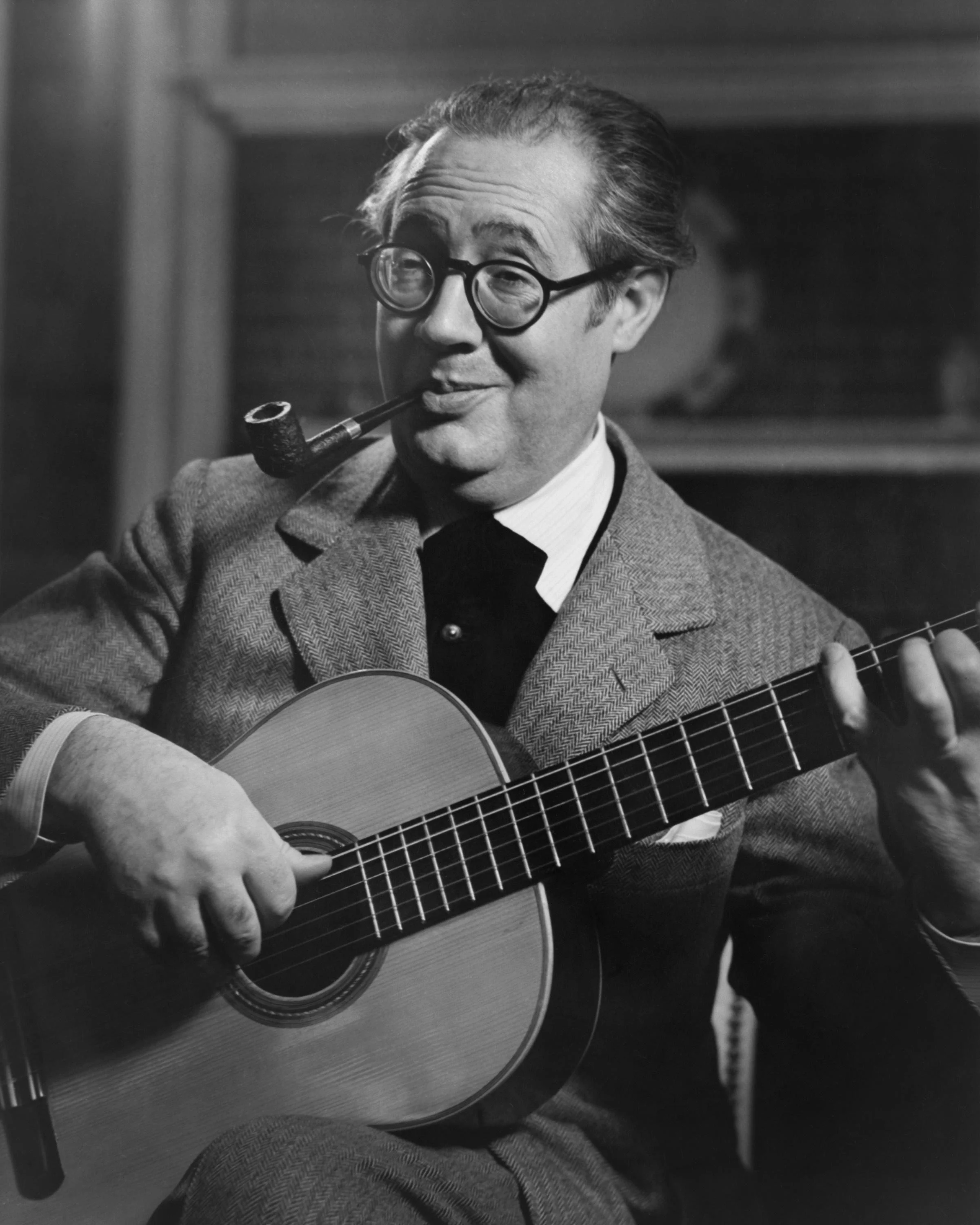
Andres Segovia in 1947, photo by Peggy Duffy.