The edge of elasticity
Chenoa Baker
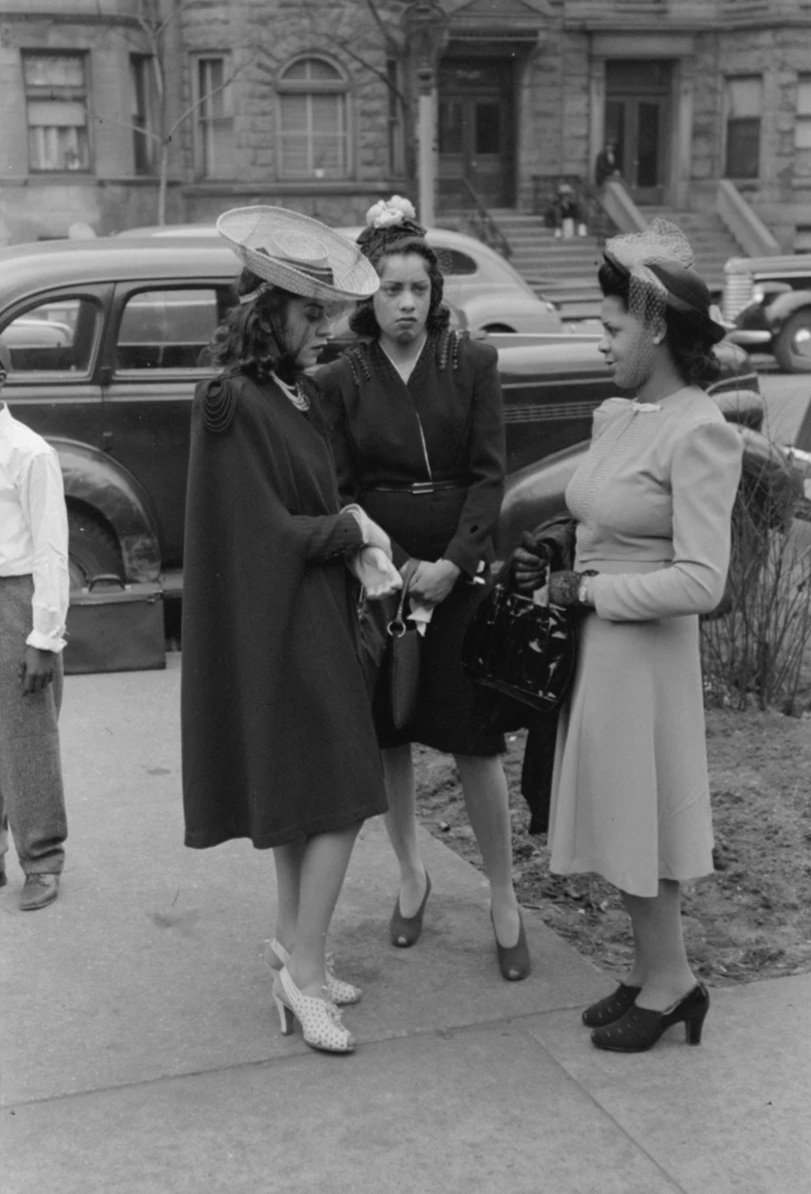
Opaque, patterned, sparkly, or plain, hosiery gathers by my feet. “Don’t slide pantyhose up because that could cause a run,” my mom’s voice echoes in my head. She instructed me many times to bunch them at my ankles and put in one foot after the other, then pull them up to my waist. Perhaps I had little patience, and had to be reminded often. At a young age, one of my first lessons about presentation was about nylon, its give and its delicate nature. When wearing tights, it was customary for me to wear a slip skirt or dress of the same material to buffer the static, lest I forget and have to use anti-static spray. Now as an adult, I realize a ‘run’ is the edge of elasticity: when a stretchy material gives out and ruptures.
Therefore, nylon takes me to church. A formative place where they tell ladies to cross their legs with stockings, ruffled socks, and Mary Janes. First Rule: “Don’t come bare-legged.” Second: “Don’t get runs in your tights.” That’s hard for a child who saw pews as slides and hide-and-seek spots. Ironically, when a preacher said something powerful, ladies in the church often threw a shoe off of their leg, for respect, telling the preacher they are good. How did a stray strap of the shoe not catch? And why are shoes optional but tights aren’t? Early on I questioned practices that were seen as a given.
Tights are important in a religious context because of the correlation between how one presents oneself and ideas of piety or sexuality. They are a signifier of decency. In the book Red Lip Theology, Melissa Harris-Perry writes, “Shamed for being fast, womanly, or too damn grown, Black girls are encouraged to stop doing so much or being extra,” she says, “Even when the bank account is empty or emotional resources are low, sisters are taught to never bring raggedy dresses, stockings, shoes, bags, belts, lashes, or nails into the House of the Lord.” Sunday Best attire puts on the pretense that you and your family are doing well.
Juanita Bynum, a Church of God in Christ (COGIC) singer and televangelist, ranted about tights on Instagram Live in 2017:
“For some reason, the women of God in this hour don’t wanna put on clothes and I don’t know why. I can’t even get the concept of somebody preaching and leading praise and worship with no stockings on, with thongy-stringy shoes on, and your legs all greased up…”
Whether Bynum realizes it or not, though, nylon can represent holiness or lasciviousness, depending on where it is on the body, what type of body is wearing it, and if it has run or not. Context tells you if tights are boudoir or modest. Hosiery rides that line: modest yet sultry, seen and unseen; covered legs in a see-through fabric adjacent to undergarments. Some nylons even offer tummy control, for that hourglass shape.
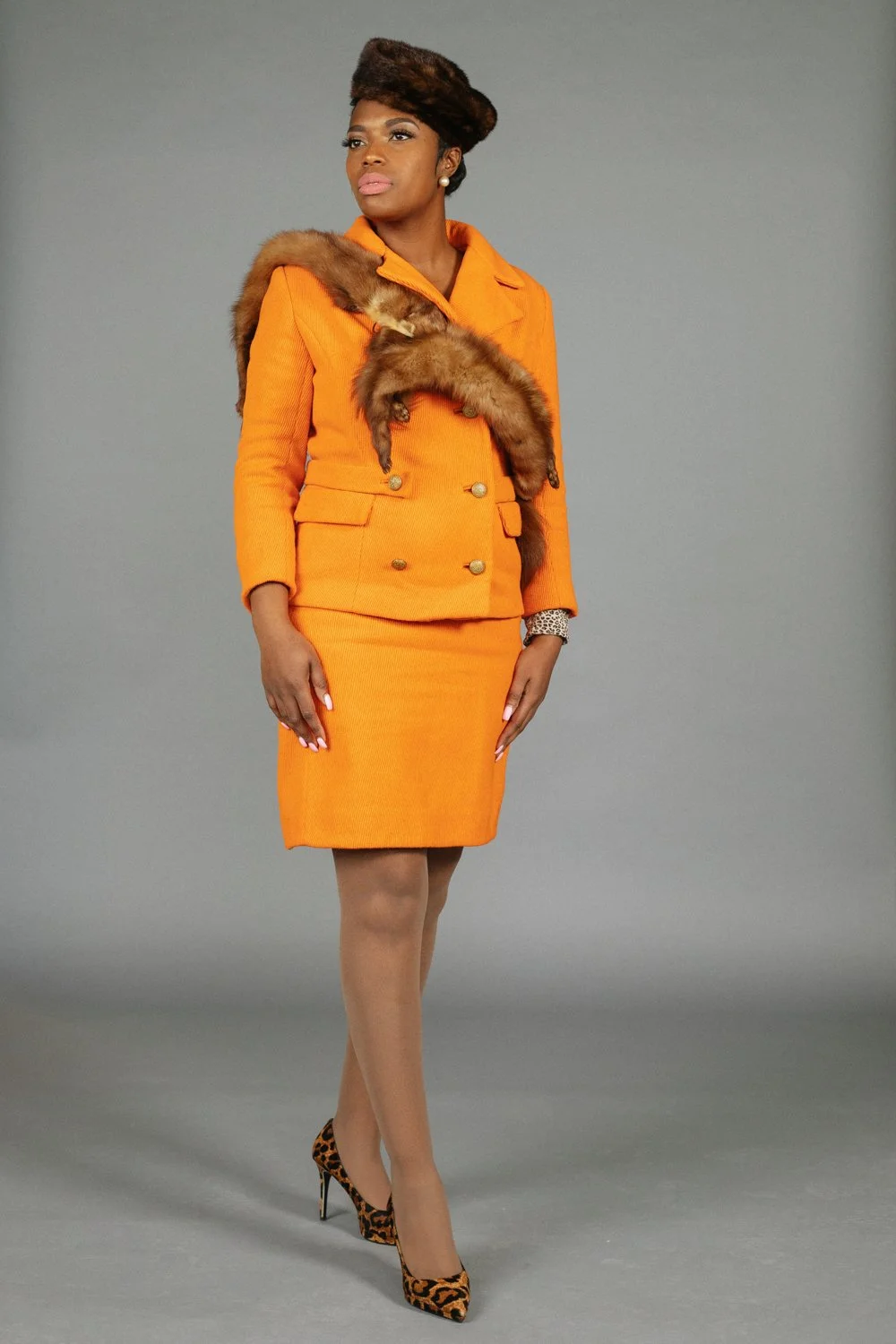
Jacob Moran (American) for Aesthetic Artist Management, Sharon Justice, 2021.
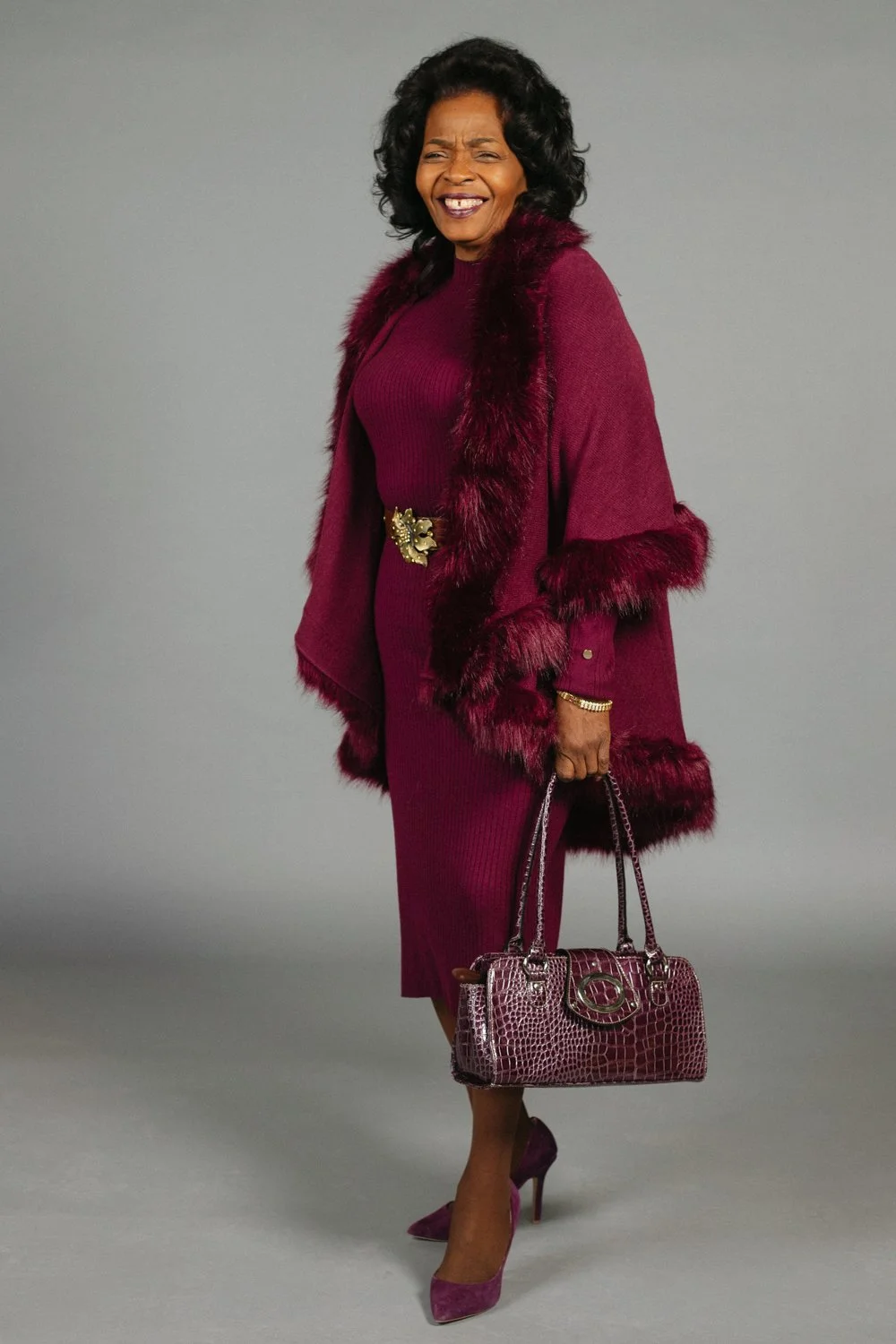
Jacob Moran (American) for Aesthetic Artist Management, Idalia Wilmoth, 2021.