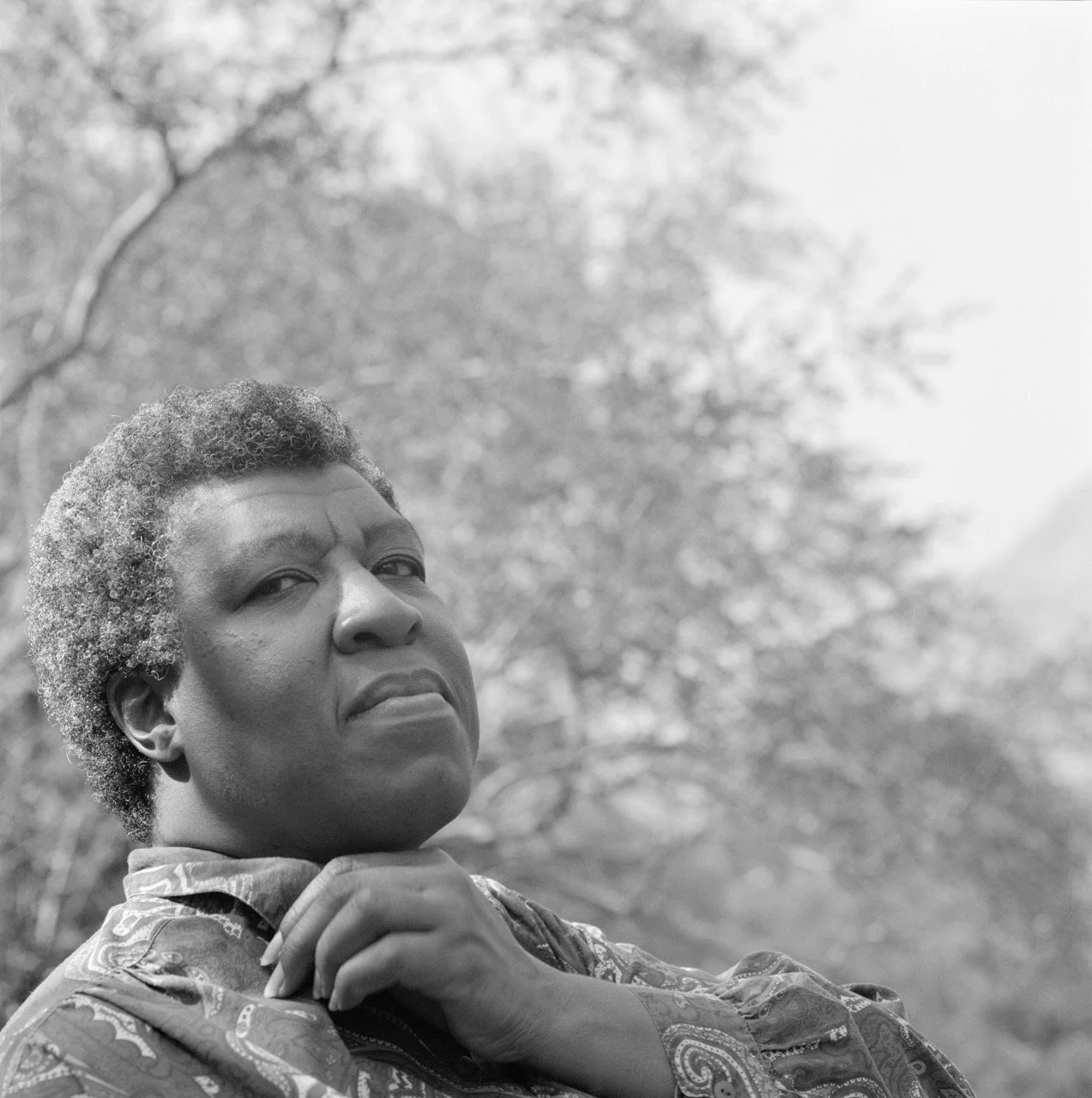
The science fiction writer Octavia Butler occupies a space that is akin to a modern day prophet. Since her death in 2006, her works have inspired many social theorists, writers, and artists, from books to operas; her stories have been widely referenced and dissected. Butler’s key literary themes of adaptability and survival are invoked in the manifests of many grassroots communities: nonprofits, farms and artist collectives. And yet, despite this rich cultural influence, fourteen years after her death, Octavia Butler has just finally made the New York Times Bestseller list with her best-known novel Parable of The Sower (1993).
The title of the book refers to one of the parables of Jesus, which describes a farmer who sows his seeds indiscriminately. Scattered everywhere, many fall and yield nothing, but a few make it to good soil, and thrive. Written during the 1980s, during the height of the Reagan administration’s implementation of trickle-down economic theory, Parable of The Sower is a narrative of class dysfunction and racism - issues that have long plagued society. Perhaps Butler thought she was telling us a story of the inevitable, but if we listen, there might still be time to change.
Starting in southern California in 2024, the novel follows Lauren Olamina, a young Black girl, as she fights to survive in the ecological and economic collapse of a decaying United States of America. Society has fallen into chaos. Resources are scarce, poverty is the norm, and racial tensions are pervasive. In this dystopian world, Olamina must hide her ‘ailment’ of radical empathy - an ability that lets her feel physical manifestations of the joys and pains that others feel around her. A daughter of a Christian reverend, Lauren is fifteen when she starts to develop Earthseed, a religion that grows from her reactions to the crumbling world around her. Once scavengers destroy her childhood home, community, and family, she heads northward with survivors. Throughout the novel, the symbol of the acorn grows in parallel to Lauren Olamina’s journey. In her life and religion, the acorn is the “chosen seed.” Dismissed by others for its simplicity, the acorn’s potential becomes an analogy for home and change.
The importance of this motif begins with Olamina’s family, who teach her a traditional way of turning the nuts into bread flour. On the road, the kernel stays in her mind: “Acorns are home food. And home is gone now.” As she shares the religion of Earthseed with her followers, the nut becomes an adaptable survival method, a means of reassurance. Like the sower’s seeds, Lauren’s first attempts of spreading Earthseed aren’t successful; it takes many tries for the new beliefs to take root. Finally, when Olamina does create a community to foster her new religion, she plants oak trees for the dead, and names her settlement Acorn. “The Destiny of Earthseed,” she believes, “is to take root among the stars.”
In the summer of 2020, after George Floyd was murdered at the hands of police officers, I scrolled hopelessly on Instagram, waiting for updates during nationwide protests. I stumbled on an image taken in Richmond, Virginia. It shows a young black man with a gun, standing across the street from a photo mural of Octavia Butler. There she sits, with a sly smile, reclined. The image seems to encapsulate her legacy. As the national conversation shifted from police brutality to public monuments, Butler herself looks - well, simply monumental. She is like an oak tree, deeply rooted and fundamental to her surroundings.
More and more, we are living in a world akin to the one that Octavia Butler meticulously crafted. We exist in a state of turbulence: a global pandemic, climate catastrophe, systemic racism. As in the Parable of the Sower, the systems in which we were raised are irreparably broken. They have always been. Octavia Butler has left us a handbook on adaptability and survival.
What does it mean to survive? A central tenet of Earthseed, which echoes the generative cycles of nature, suggests an answer:
All that you touch can Change.
All that Change
Changes you.
The only last truth is Change.
God is Change.