No Bad Wood

Hank Gilpin

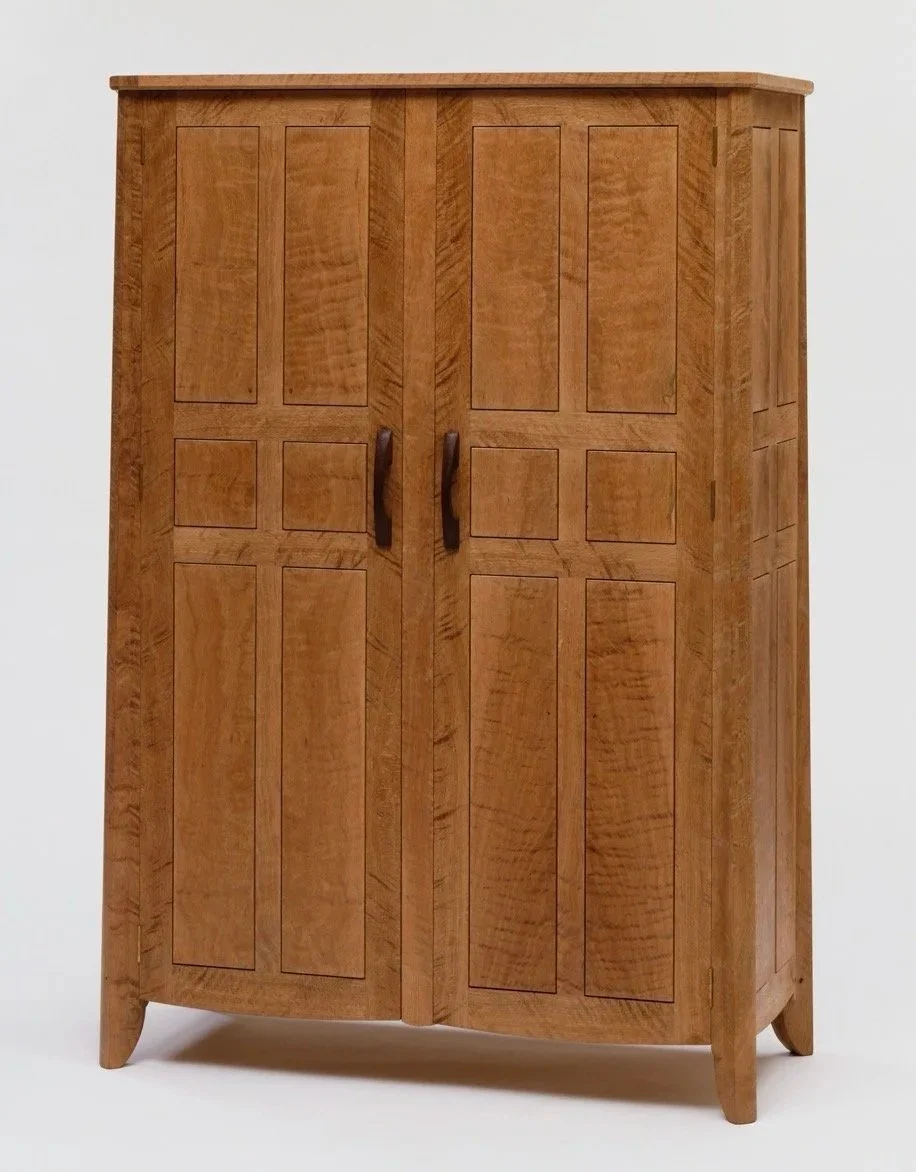
Wardrobe. 1989. Object Place: Lincoln, Rhode Island, United States Designer: Hank Gilpin, American, born in 1946. Figured white oak, wenge. 142.24 x 94.61 x 41.91 cm (56 x 37 ¼ x 16 ½ in.) Museum of Fine Arts, Boston. Bequest of Katherine Dexter McCormick, by exchange. 1991.450

I’ve worked more woods than you can name. Think of a woody stemmed plant and I’ve probably made something out of it. Oak is at the top of the list. When you finish it, it’s a rich brown, with a tight grain and dramatic medullary rays. I like it quarter-sawn, flat-sawn, curly, decayed, knotty, or chipped. All of them offer opportunity. And unlike many other woods—white pine, say, which deviates little tree to tree, board to board—working it is not the same each time.

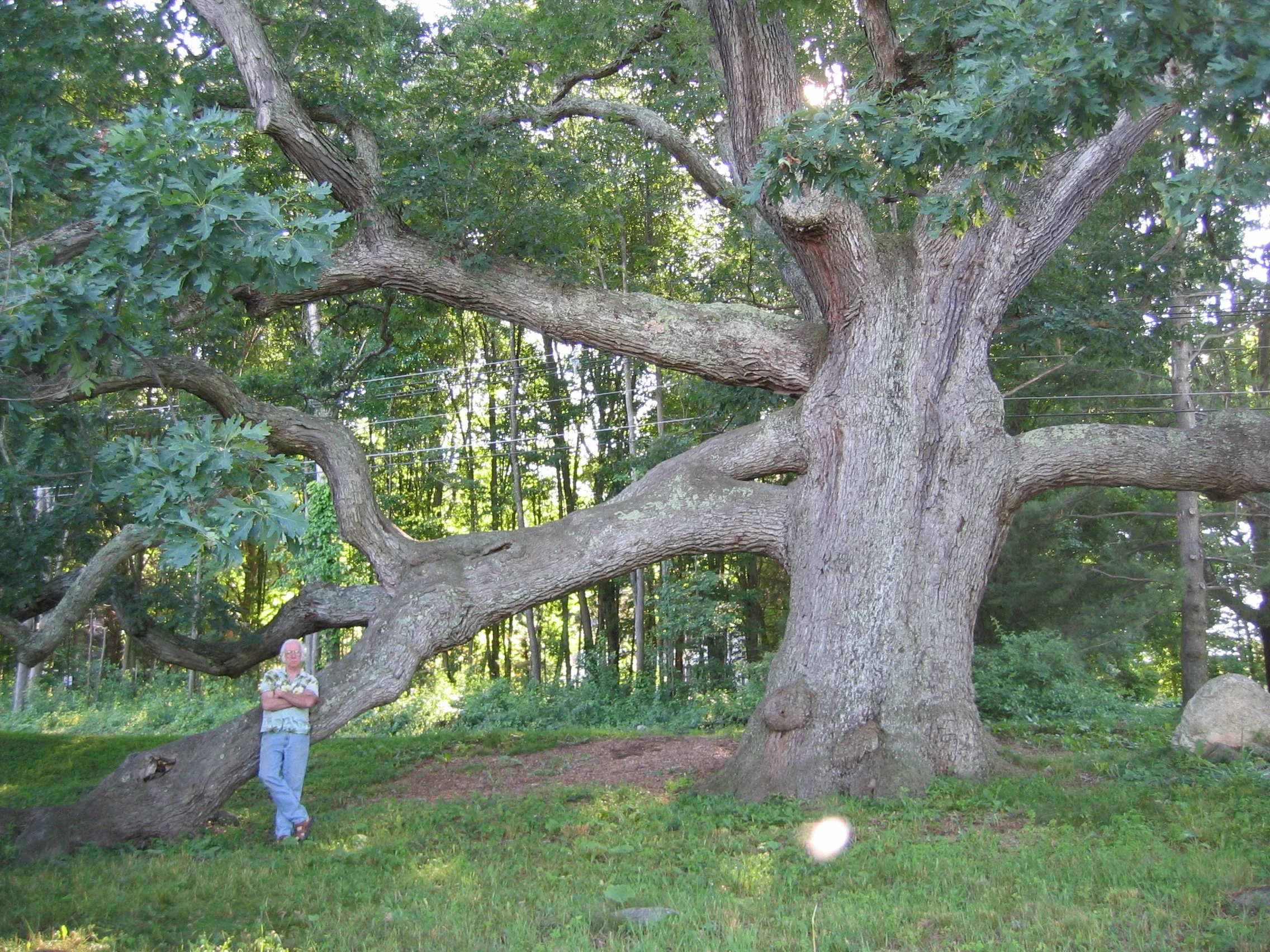
Name something built before iron and steel and it was probably made out of oak. In both Europe and America, it was the main structural timber in buildings both large and small. (I have bunch of oak beams in my shed, which were salvaged from the bottom of Boston Harbor, where they were thrown as landfill when steel displaced timber as a building material.) Most of the oak these craftspeople chose was straight and strong, from deep forest trees, while some came from field grown trees, which threw large, low, branches from crotches that could be used for structural elements that needed strength, say for ribs and a boat hull.

Most of the oaks you encounter today are second growth, many from previously harvested stumps. When you drive by a forest and see two or three stems coming out of the ground, that is a tree that was harvested in the spring. This grows very rapidly, and the more rapidly they grow the denser the wood is—the opposite of what you might think.

Fast growth oak is twice as hard as old eighteenth-century oak. It’s like working two completely different species. Old-growth oak can be almost like working walnut, not terribly hard or heavy. Second-growth oak is far tougher as a result of faster regeneration. You cut an oak tree in March and you say to the roots, “You’re screwed.” But then the roots say back to you, “watch this,” and they send up phenomenally fast-growing shoots, maybe two or three of them from one stump if it was cut close to the ground. These satisfy the need for oxygen and minerals to keep the system working. If these stumps are in a clear-cut area, where there is plenty of sun, these ambitious trees will shoot for the sky.

Oak has two main growth stages. One occurs in the spring, while the leaves are developing. It’s very porous and lower in density—even to the bare eye the end grain looks like a bunch of straws. Toward the end of June, the tree is working as it wants to work with the leaves fully out and the entire system functioning well. The tree is happy and it’s growing like wildfire and this summer wood is twice as dense. A regenerated white oak can put on 3/4” in one year, whereas a deep forest slow-growth oak can put on 1/32”—and for hardness and strength, faster is better. Most of the deep forest oak, because it’s in so much competition, has a higher ratio of easy-to-work spring growth. But in the fast-generating stuff the spring growth is modest and most of it is the summer growth, which is dense, dense, dense.

You’ve heard of the late 18th century American warship The USS Constitution, “Old Ironsides”? It was built of live oak (Quercus virginiana) which is a southern evergreen oak tree that thrives in warm, wet climates. The sheathing of the ship was made from 6-inch thick live oak planks. I’ve worked in live oak, and it is dense and heavy. I cannot imagine what it must have been like to build that ship without giant machines because even while still green and wet live oak is unbelievably difficult to work.

When I am making cabinet doors, I often choose the most exciting white oak (Quercus alba) for the panels; wild quarter-sawn or beautiful, highly figured, flat-sawn boards. But for the frame, I like rift-cut stock, which is quieter, less dramatic, letting the more exciting central panel pop. The resurgence of oak probably wouldn’t have occurred without the advent of the Industrial Revolution, and the intellectual reaction to it in the design community. Makers of the Arts and Crafts Movement wanted to express their philosophy and ‘return’ to a simpler time, using hand tools and historically significant native woods —woods that were in common use before tropical lumbers became available during European imperialist expansion. And, historically, what was the dominant wood for furniture in England? Oak. Now, a hundred years later, it may seem almost silly, this insistence on returning to hand tools while using native lumbers. But when makers such as Gustav Stickley, the Barnsleys or Ernest Gimson, for example, explored this way of thinking, it had purpose and meaning. Their craftsmanship resonates in the way we look at oak to this day—and I kind of love it.

Everybody puts their nose up when it comes to red oak (Quercus rubra). There are two reasons—first, there wasn’t much of it around, until the chestnuts trees died. Then the red oaks took over the forests. Also, it didn’t exist in Europe, and white settlers in America didn’t think of it as having value because they didn’t know the wood. (Also, McDonald’s built their stores out of it in the 1970s and 80s, so everybody hated it.) But it’s a great wood too, often curly, like maple.

In our shop, we liberate lesser woods from scrap heaps and pallet mills, and try to elevate them in stature, free them from silly contempts and old habits. What I’ve tried to do is to craft oak and other timbers in unexpected ways, to show people that they have more breadth than ever imagined. One of our shop mottos is this: There is no bad wood. Crotches, burls, checks, knots, it’s all interesting. I haven’t succeeded in entirely liberating people from their preconceptions. But it is up to the designer to get them to look past the idea of imperfection and species limitation, to help them see what’s there.


Hank Gilpin has been designing and building furniture for almost 30 years. He works entirely in solid wood, utilizing many domestic species. His love of trees has led to a parallel career in horticulture, and he now designs gardens and landscapes as well as furniture.

Brilliant Move

Brilliant Move is the Brooklyn-based creative studio of Marci Hunt LeBrun specializing in building websites on the Squarespace platform – among many other things.

I love working with small businesses, nonprofits, and other creatives to help them organize their ideas, hone their vision, and make their web presence the best it can be. And I'm committed to keeping the process as simple, transparent, and affordable as possible.

https://brilliantmove.nyc
Previous
Previous

Gallery

Next
Next

The Making of the Community Basket