The Making of the Community Basket
Stephen Burks
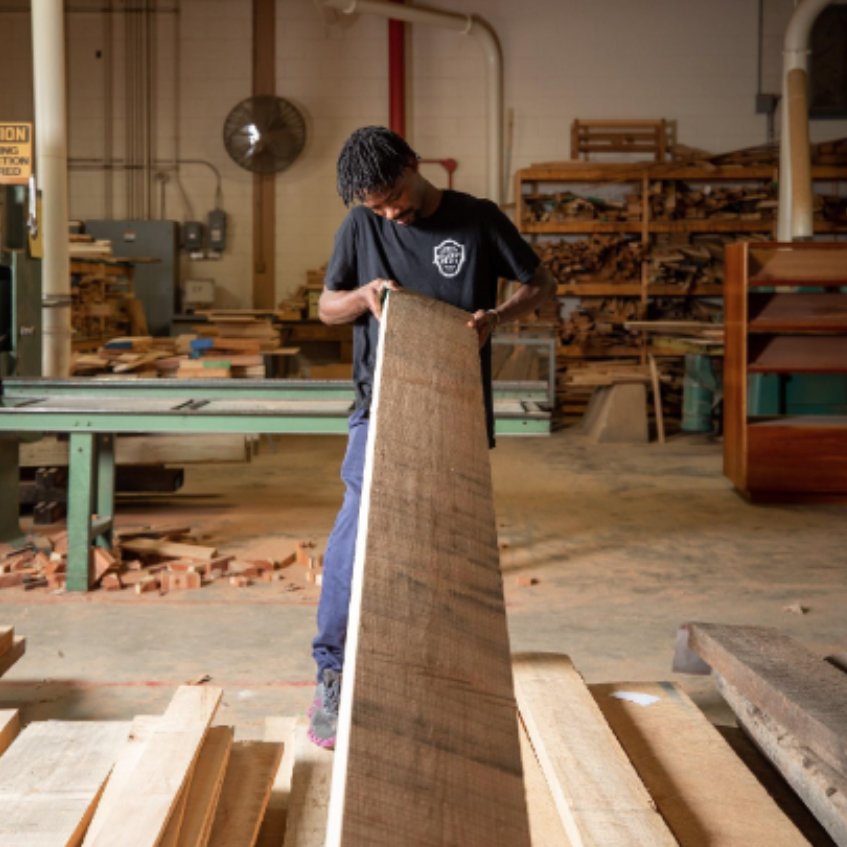
The young man lifts the heavy board to gaze down its length. Twisting it from left to right, he struggles under its weight to confirm its straightness and grain. This board, like all of the twelve-foot-long planks in the pile beneath him, has been sawn for yield and delivered from the nearby lumber yard. It thinks it will become part of a house somewhere, perhaps a beam or joist; but in this Berea College Student Craft student’s capable hands, it will become a basket. Yes, the mighty oak tree, the stuff of legends, is also the traditional basket maker’s wood of choice in Appalachia, as elsewhere in the eastern United States. Not because it stands tall, but because of the length and strength of its fibers which make it both strong and perfectly bendable for weaving.
Even though he has only worked in woodcraft at Berea for a year, Joseph knows that oak sawn this way is not ideal for basketry – it’s just that the lumber yard prices per board foot are what Berea College Student Craft can afford. He also knows that to make baskets from oak, you have to cut it fairly thin, parallel with the grain, running the grain as long as possible. The traditional way of splitting wood from a log would produce bands perfect for weaving; the quarter and rift sawn bands Joseph has to choose from are exactly the opposite and need to be “trued up” or corrected before they can be cut into bands suitable for basketry. He continues the process of unlocking the potential of these industrially produced boards, while thinking about the great oak trees these wide planks must have come from.
The oak isn’t the tallest tree, nor the widest, nor the strongest. What sets it apart is resilience. Without record breaking distinction, oak trees have managed to thrive in a broad range of conditions contributing to cultures all over the world in the production of long-lasting everyday objects. In America, the northern red oak is most prized for lumber, and is marketed as red oak regardless of species. Unlike white oak, it has open capillaries. A slim piece of it can actually be used as a straw, as its open cellular structure actually allows air to pass through it. Unfortunately, natural red oak rots easily outdoors because these openings give fungus easy access. When it is treated with a preservative compound, however, the capillaries absorb it deeply, and it resists rot better than cured white oak heartwood. At most lumber yards, it’s difficult to tell these two types of oak apart and they are often mixed up; confusingly, white oak can often appear darker than red.
Despite their differences in cellular structure, the overall properties of the two timbers are nearly the same. Oak is dense, nearly a half-ounce per cubic inch, hence its reputation for great strength and hardness. Because of its high tannin content, oak is also very resistant to insect damage. And, of course, it’s often chosen for traditional furniture because of its very appealing grain markings, especially when quartersawn. “The hours spent by the true craftsman in bringing out the grain, which has long been imprisoned in the trunk of the tree, are themselves an act of creation,” wrote celebrated wood craftsman George Nakashima in the book The Soul of a Tree.
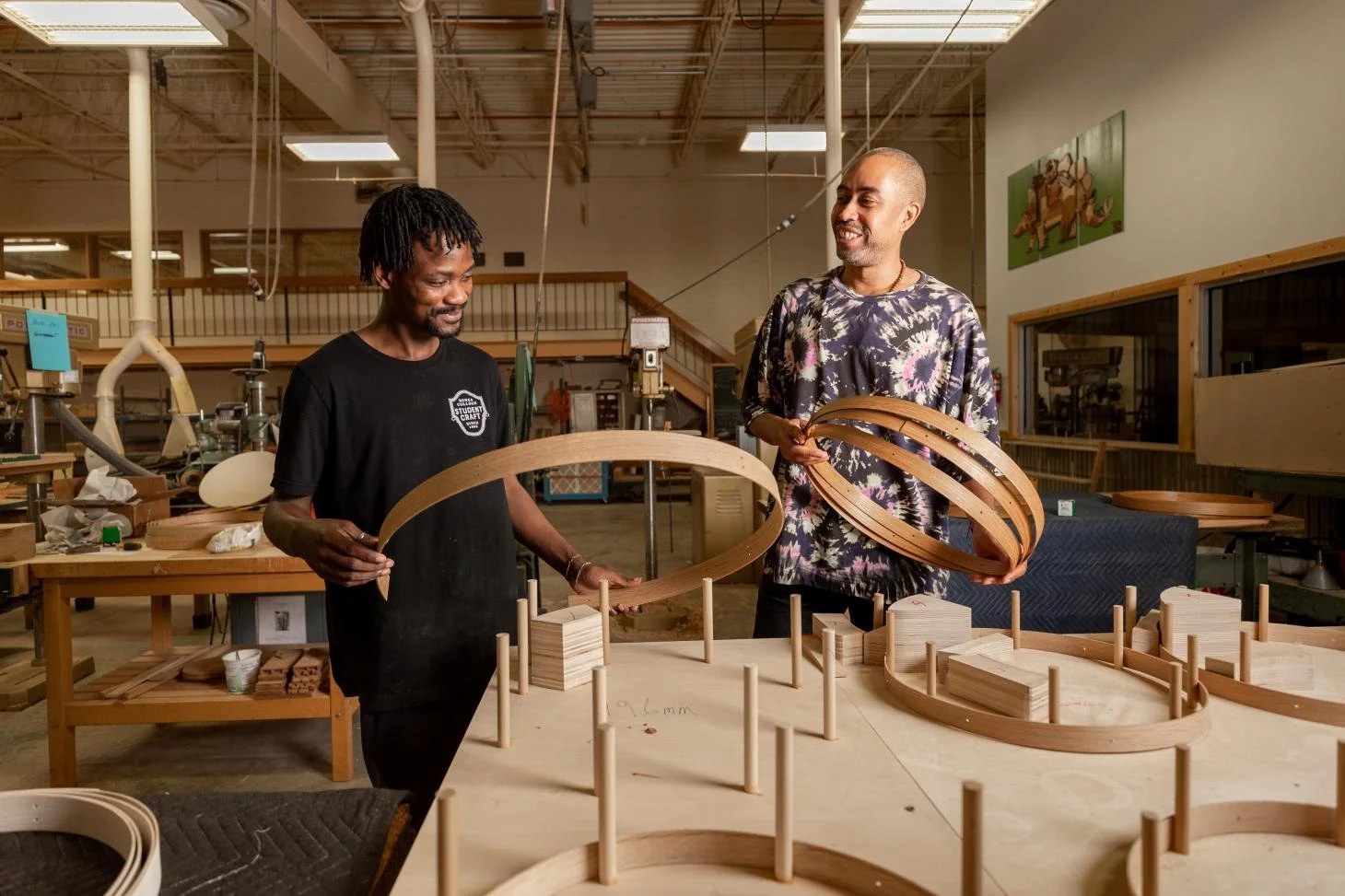
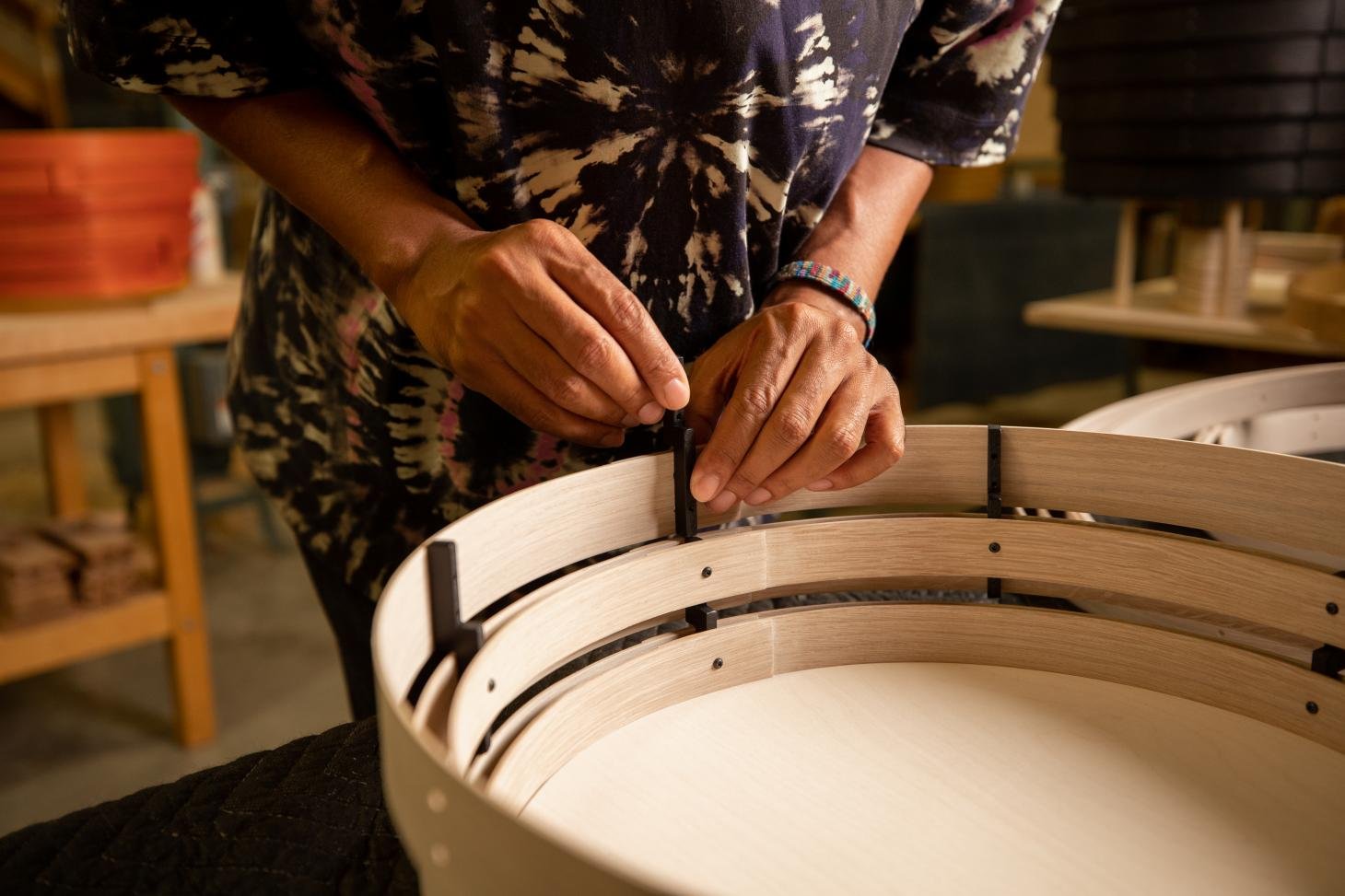
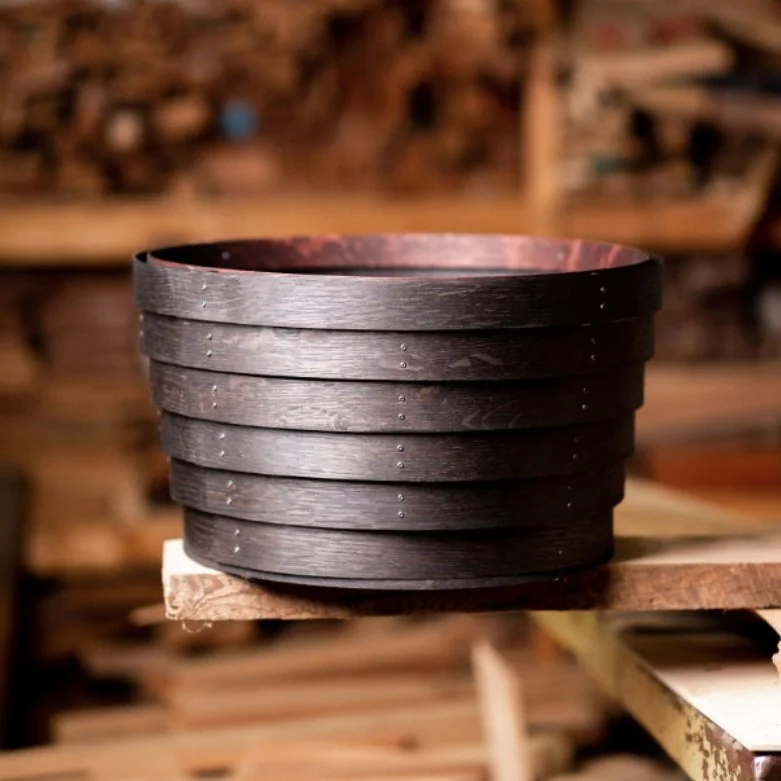
In fact, it was exactly these highly legible grain markings that led me to suggest white oak as a preferred material for the Berea College Student Craft Community basket. The design builds on the tradition of Shaker pantry boxes. It is constructed from a series of two-inch bands of oak, steambent into rings and bolted together in tension to aluminum links. Conceptually, the initial design was less about the wood and more about performance. I wondered, would the material maintain its integrity once it was cut so thin and steam bent? Could we make perfect rings from it? When overlapped and bolted, would it lay as flat as a Shaker box’s graceful swallowtail joint?
When designing for hand production, I’ve always considered the artisans I work with to be my collaborators. At Berea College, we had agreed to a participatory design process. The students and I relied on Aaron Beale, director of student craft, and his staff to work closely with me to solve production issues efficiently and elegantly.
After weeks of helping me reverse engineer the basket with the students, Aaron remarked to me, “Although the basket looks like a simple product to produce, it’s a great product for students to learn how the wood works. It’s not a complex product, but it teaches the student as many lessons as a fine piece of cabinetry or a fine chest of drawers. You really have to understand the wood to make it work.”
Woodcraft students like Joseph learn several key techniques making the Community Basket. Truing up the board is one of them. Secondarily, they learn to cut the average 12' board efficiently enough to yield 40 to 50 one-eighth inch by two inch wide bands, which produces three to four finished baskets per board. This is actually trickier than it sounds, as the student maker is also responsible for keeping the bands organized by grain orientation in the basket. The cut of the lumber changes from quarter sawn to rift sawn to plain or flat sawn, causing the grain of the basket to change as well. The six outer bands need to be cut from the same board, as do the six inner bands. This subtlety is not lost on the Berea students, as the stained color and grain patterning can vary widely. Understanding how to see and match up the grain is a big part of making a successful basket.
Admittedly, when designing the basket in wood, I wasn’t thinking about the material in itself. I was just thinking about the result that I wanted to achieve. Ultimately, oak was the right choice, for its educational potential in the production process, its flexibility and strength, and the beauty of the finished product. Ordinary, locally sourced Appalachian oak complemented the Community basket every step of the way.
Stephen Burks is a designer, educator, and traveler. One of the most recognized American industrial designers of his generation, he is known for his globally expansive and inclusive practice, often developing work in close collaboration with artisans. In 2019, he became the first Harvard Loeb Fellow from the discipline of product design.
Photography, Justin Skeens