Húsavík, Iceland
Egill Bjarnason
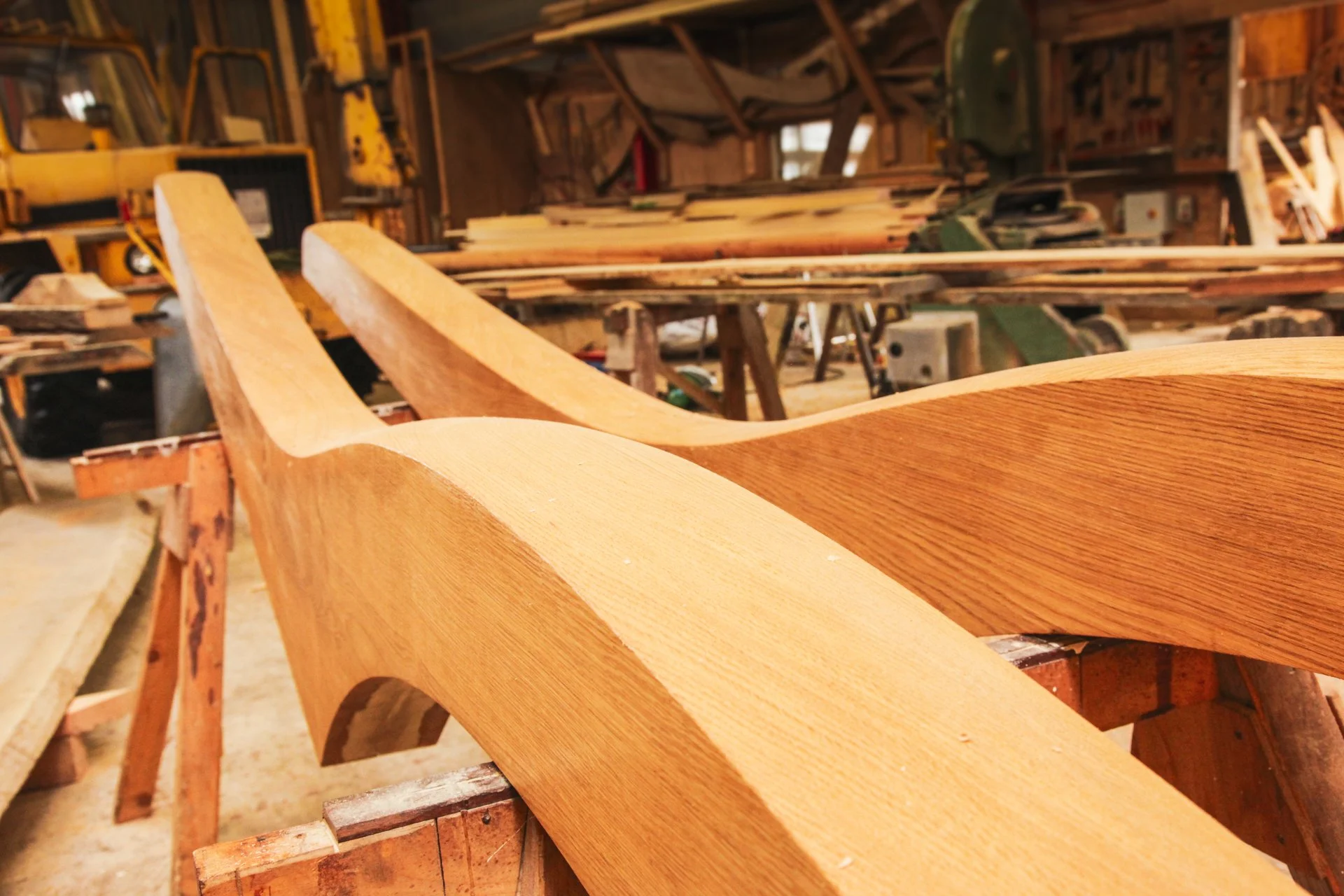
Davits for schooner Hildur. Photograph © Heimir Harðarson
In the early 90s, Iceland's fishing fleet grew smaller every New Year's Eve. Counting down to midnight, communities across the country gathered for the traditional year-end bonfire, usually made of scrap wood from various construction projects in the area. Unless there was an old wooden boat to burn. That was big.
Hundreds of beautiful oak vessels went to ashes as a side-effect to a government action against overfishing and financial deadlock. Fishermen operating small and "inefficient" boats were offered a way out with a golden handshake from a scheme known as the Outdated Fund. Complete destruction was required for compensation.
Courtesy of North Sailing
"It was such a sad time," says boatbuilder Arni Antonsson, who constructed and maintained oak vessels for twenty years, from age 17, at the shipyard in Akureyri, the largest town in northern Iceland. "Steel and plastic was 'the future' and oak boats were, one after another, disappearing. I feared the entire legacy would be lost and it probably would have, had the period not overlapped with the early days of tourism."
More precisely, had it not overlapped with the early days of North Sailing. Founded in 1995, the company began when brothers Arni and Hordur Sigurbjarnarson bought a 50-foot oak boat built in Akureyri some three decades earlier. After a year-long renovation effort -- funded by their primary jobs of teaching at a musical school and fixing machinery at a geothermal energy plant, respectively -- The Knörrinn made its maiden tour as a whale watching ship.
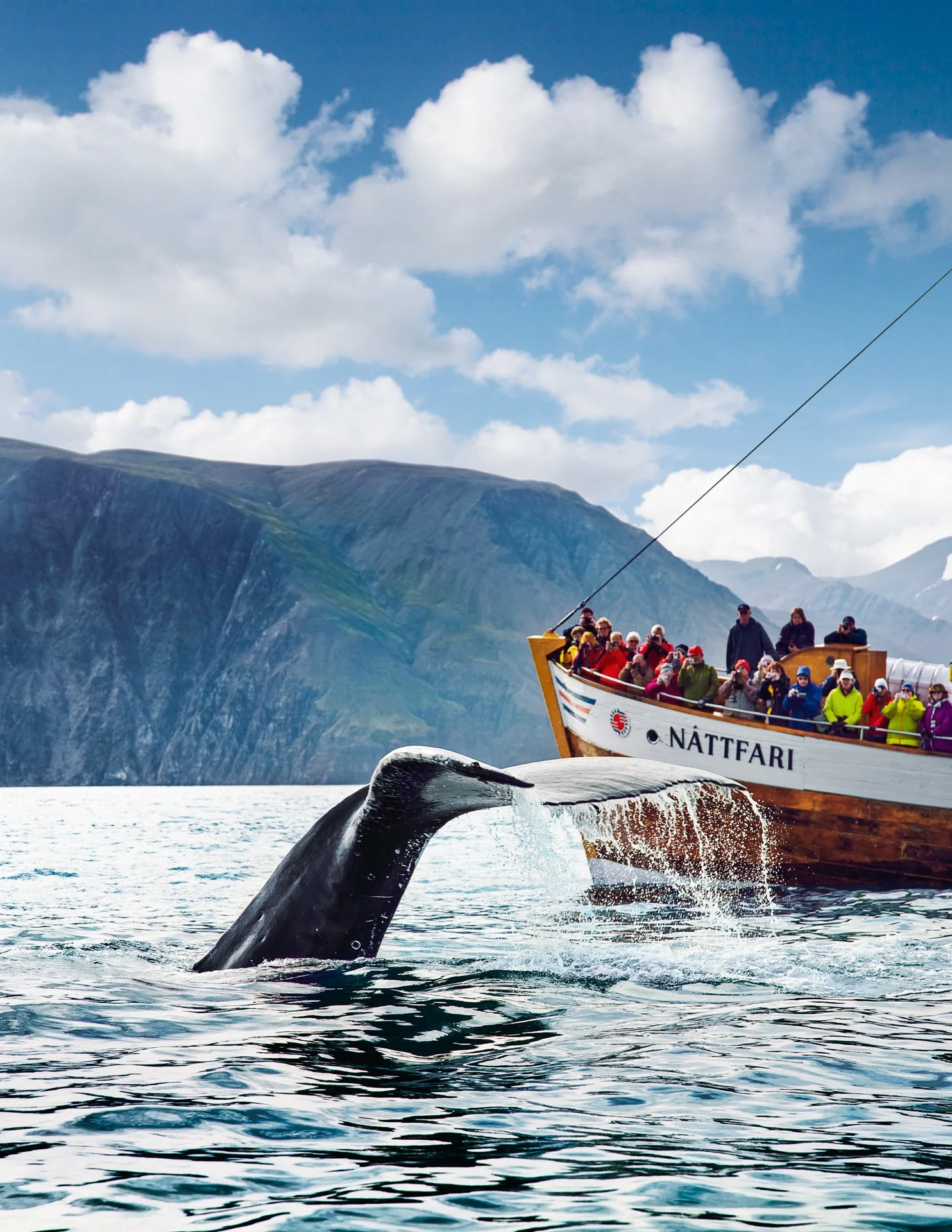
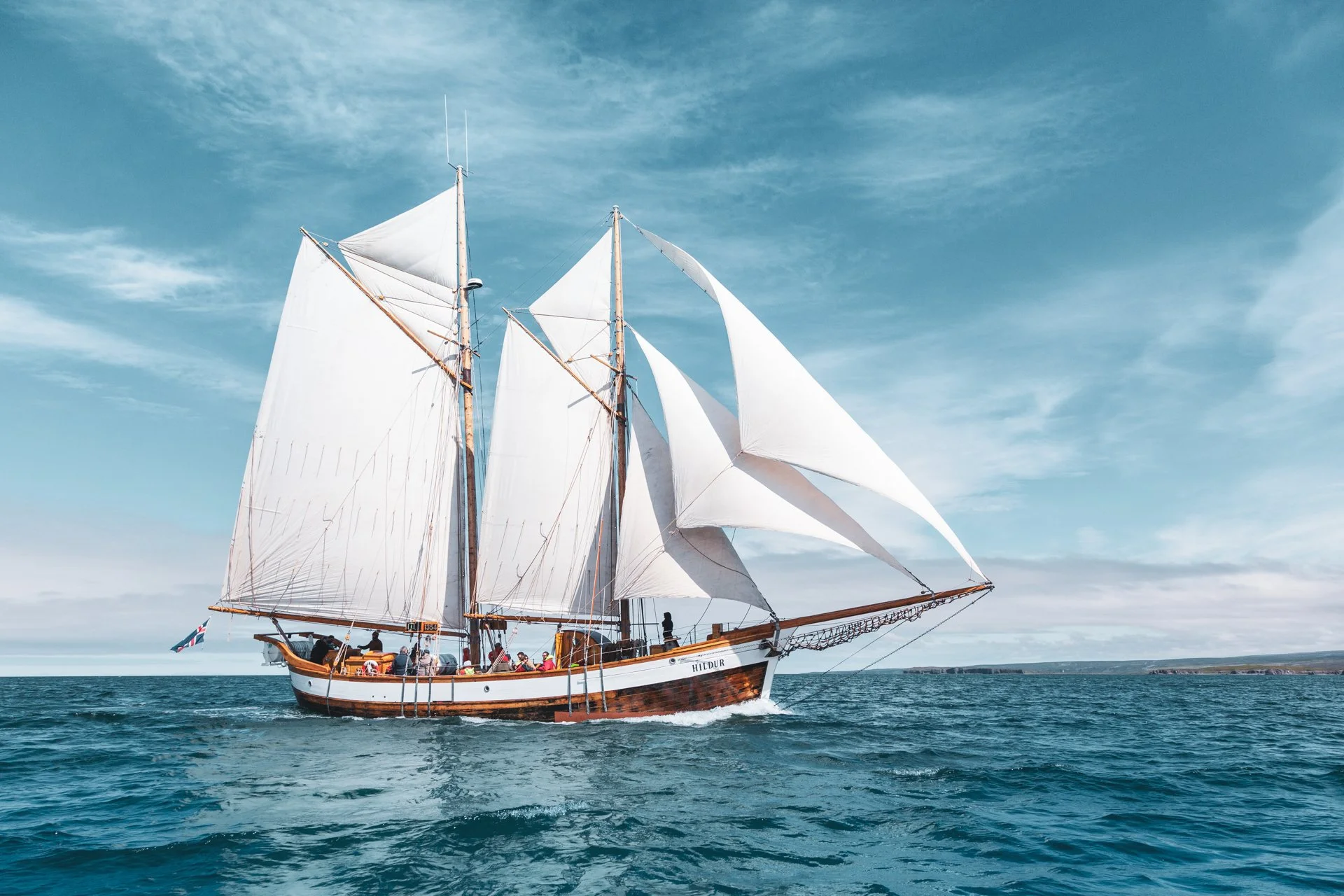
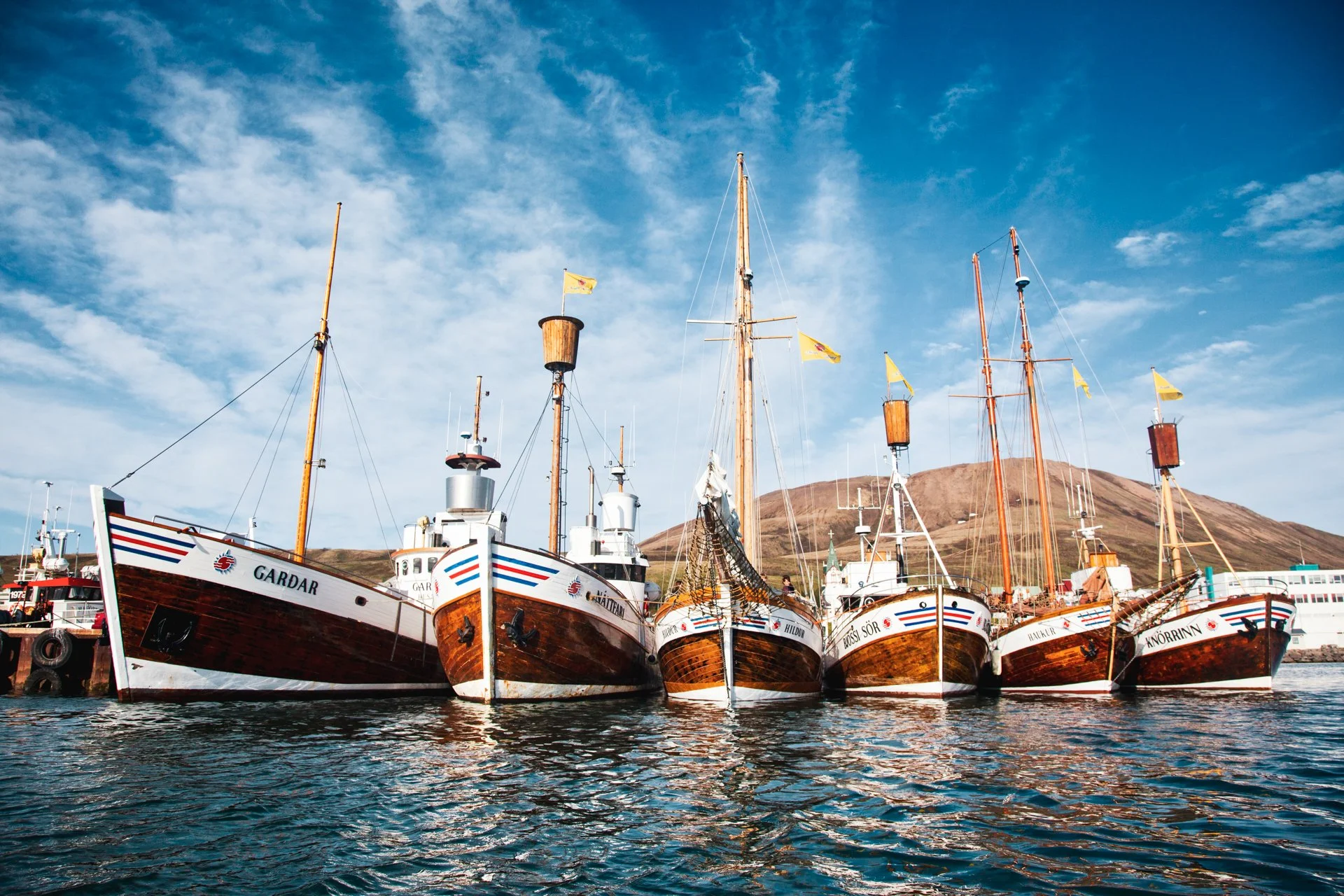
Hordur typically stood at the helm while Arni guided passengers and played the accordion. Their mother baked cinnamon buns, served towards the end of the three-hour tour. Other family members handled the ticket sales back in Húsavík, a town neighboring Akureyri. Today, Husavik is the whale watching capital of Iceland -- some say Europe -- and North Sailing has a fleet of 10 ships, including four schooners and two former whale-hunting boats. All are made of oak.
In an interview at his house overlooking the Skjalfandi Bay, Hordur says the mission to preserve the craft and cultural history of oak boats has guided his business for the past 25 years. "I would not be interested in owning and maintaining such a large fleet if it wasn't for the cultural importance."
Courtesy of North Sailing
Whale watching is a top activity for tourists in Iceland. Following North Sailing's lead many rival tour operators also sail renovated oak ships, most of which were built in the years following the Second World War. "Tourism has guaranteed a sustainable use for these boats and a bright future," Hordur says. "Passengers simply feel more immersed with nature on a wooden ship."
In a somewhat ironic twist, the oak has also materially outlived steel boats from the mid-20th century. Harsh climate conditions in Iceland turned the steel to rust within decades, until building methods and maintenance improved. The oak boats, on the other hand, stayed seaworthy.
Made from white oak (Quercus alba) imported from northern Europe (where mild temperature means modest annual growth and thus stronger trees), the Icelandic boats were launched at a time when sea ice and drifting icebergs were a persistent hazard, particularly during spring. Old sailors claim that the oak was surprisingly crash-proof.
Courtesy of North Sailing