Amazon’s rubber saga
Livia Rezende
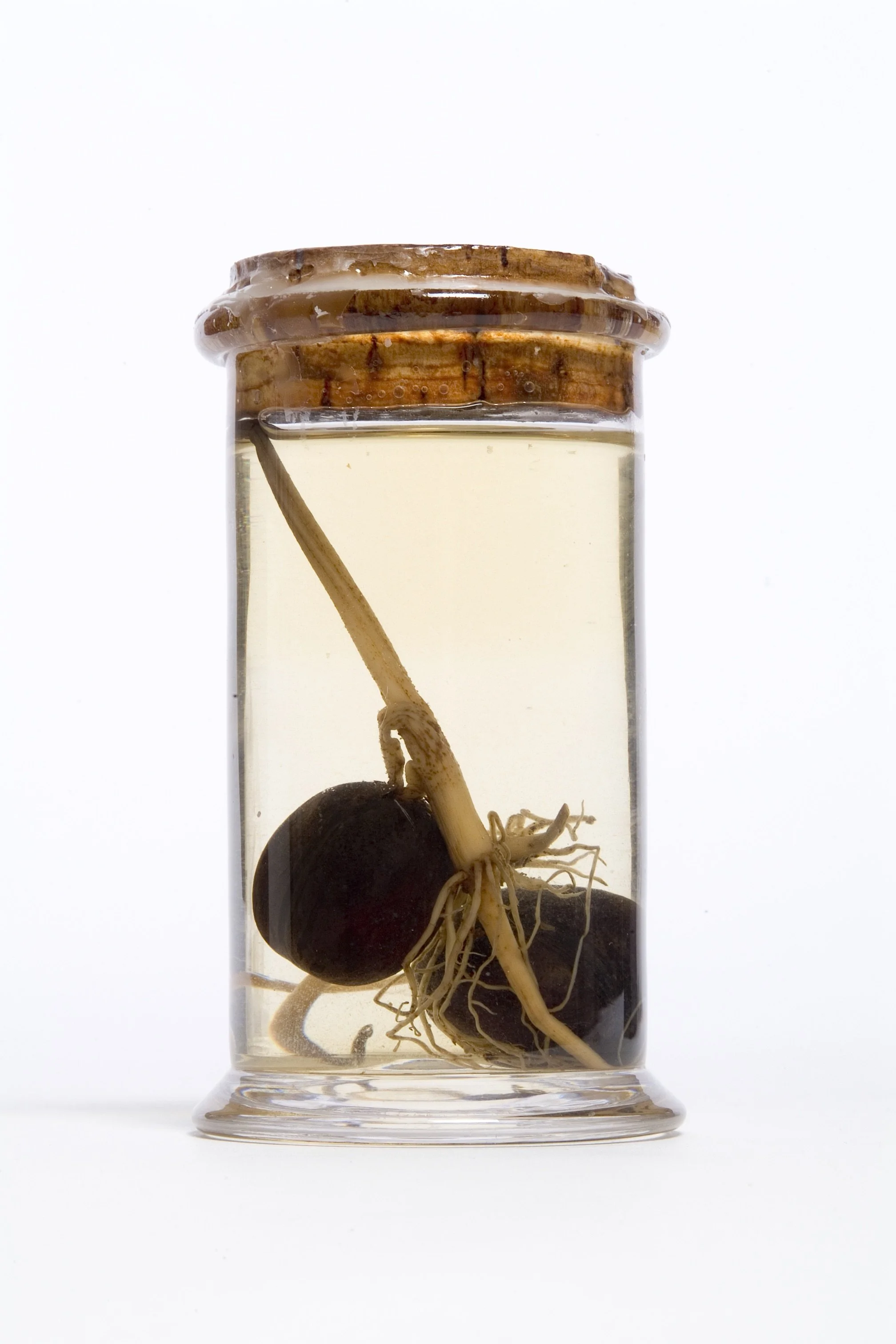
Hevea brasiliensis, germinating seeds, donated by Wickham HA in 1876. Royal Botanic Gardens, Kew.
What follows is a dramatic story about capitalist expansion and contraction, environmental transformation, culture war, the rise and fall of financial empires, dubious political diplomacy, labor insurrection, and faith in unbridled material progress – the great themes of modern history, in all its sound and fury. These forces were all at work during a short period in the life of one of the planet’s most mysterious, treacherous and generous places – the Amazon River basin – and the rubber ‘boom and bust’ cycle it experienced at the turn of the twentieth century.
Between the late 1880s and the 1910s, rubber accounted for a third of all Brazilian exports. For decades, the vast number of Hevea brasiliensis trees scattered along the Amazon basin were the world’s main supply of this ‘white gold’. The capital accumulated by foreign investors and local rubber barons, however, only partially and unequally benefited the region. Modern conveniences like railways, steam shipping and urban services flourished during the boom; so did mass migration of low skilled workers, labor exploitation, indigenous enslavement and social inequality.
Rarely addressed in this story are the experiences of rubber tappers, and the excruciating working conditions behind the material. Several photographs from the third International Rubber and Allied Trades Exhibition in New York (1912) are typical: neatly composed and contrived, the images register tappers slashing the trees for their sap, gathering and boiling the latex into balls of rubber, ready to ship down the Amazon and its tributaries to larger towns. What the photographs do not show is the cruelty of this extraction economy- the grossly unfair system whereby patrons traded a day’s sap-gathering for food and lodging, effectively enslaving tappers through debt, imprisoning them within a vicious cycle of poverty. Nor do they tell us much about the long commodity chain through which rubber subsequently moved, from tappers to boaters and dozens of middlemen, patrons and barons, before it reached the centers of export, marketization, industrial transformation and finally consumption – where the real profits lay.
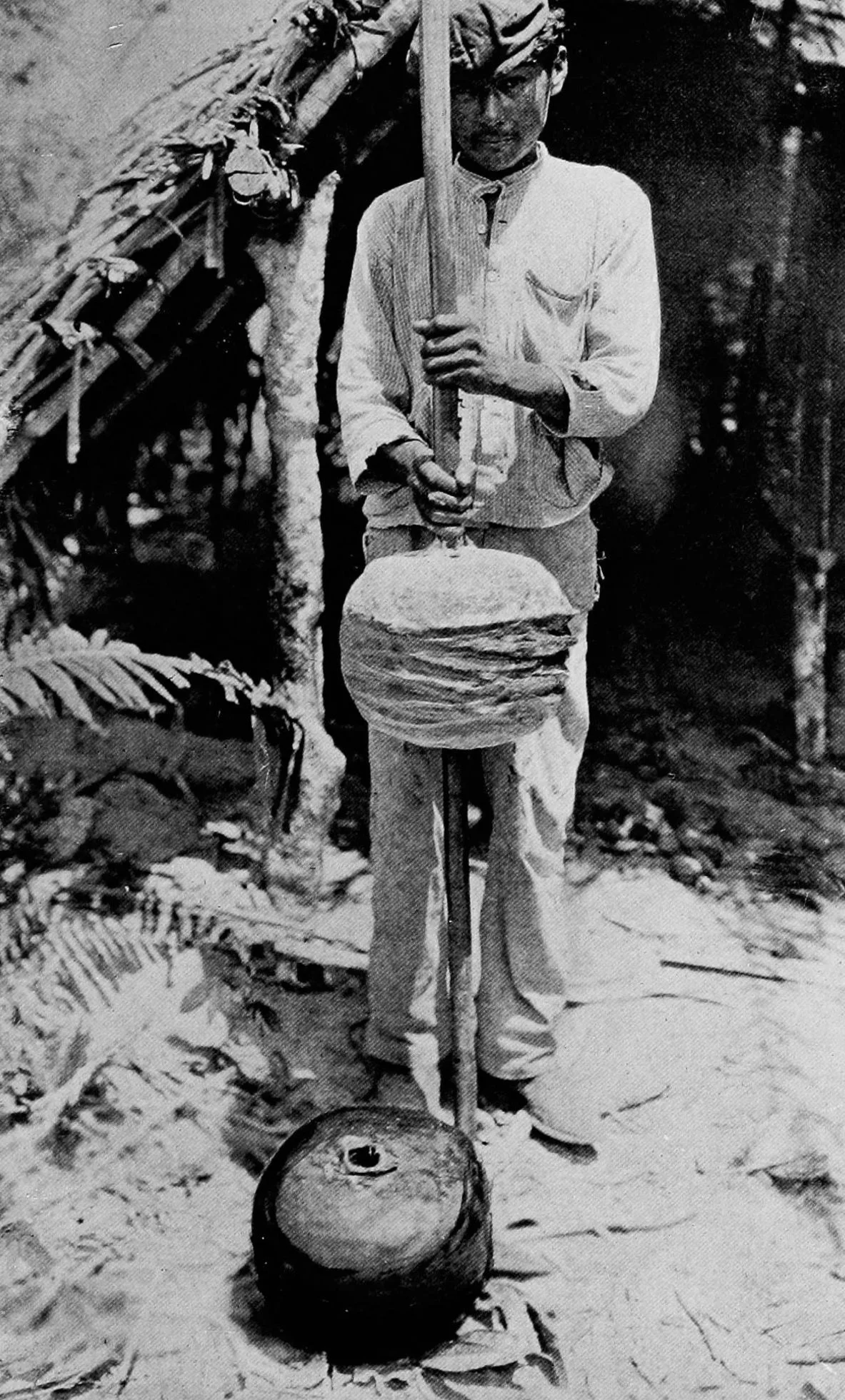
Removing the Ball of Rubber After it has been smoked from Brazil the Land of Rubber, 1912. Image copyright The Book Worm / Alamy Stock Photo.
The ‘boom’ narrative of Brazilian rubber invariably features the Teatro Amazonas – a 700-seat opera house built in Manaus between 1884 and 1896. The unlikelihood of this structure’s existence in the heart of a rainforest is frequently used as a cautionary tale, warning us against trespassing the alleged boundaries that separate civilization from barbarism, culture from nature. The theatre, which features in Werner Herzog’s film Fitzcarraldo, is testament to the unstoppable globalization processes bestowed by nineteenth-century capitalist expansion. Its dome was lavishly decorated with 36,000 Alsatian tiles, its structure cast in Glaswegian iron, its interiors furnished with Carrara marble, its ceilings festooned with hundreds of Italian chandeliers.
By 1900, the boom was at its peak, but seeds of change were already growing elsewhere. In 1876, British explorer Henry Wickham, in a dramatic act of global biopiracy, smuggled about 70,000 rubber tree seeds out of Brazil, falsely declaring them as ‘academic specimens’ to the Brazilian customs authorities. They were sent to Her Majesty’s Royal Botanic Gardens in Kew, London. Some 2,400 of the seeds germinated, and were transferred to tropical plantations in the British colonies. After initial unsuccessful attempts, the Hevea brasiliensis thrived in Southeast Asia, the densely planted commercial cultivations thousands of miles away from the rubber tree’s nearest natural predators. What had looked like an unstoppable upwards profit curve collapsed spectacularly in 1910 when the large-scale Asian yields flooded the market.
Yet the Amazon rubber saga still had one more chapter to come. Rubber baronage, now having moved to Europe, threatened to form a cartel-like world trade monopoly. To secure price controls and steady supplies to Detroit, in 1927 the Ford Motor Company bought land the size of Connecticut for a rubber plantation in the Amazon: Fordlândia. It was a veritable US Midwestern town, complete with church, powerhouse, telephone system, ice plant, golf course and company-organized square-dancing events. It was also a ‘colossal, expensive and tragic mistake.’ Ford’s operatic ambitions lasted only two decades. Production did survive the Great Depression and a workers’ uprising that nearly destroyed the town in 1930 - a protest against Ford’s assembly line-style work efficiency, productivity expectations, and invasive management style, determining even the workers’ daily meals. After the Second World War, when a spike of war-related demand drove the conscription of ‘rubber soldiers’, Fordlândia was sold back to the Brazilian government. Nowadays, it is home to expanding agrobusiness – principally soy and cattle – threatening another, and even more destructive, round of ecological devastation. To combine environmental protection and socioeconomic development is one of the greatest challenges for Brazilians – and the world –in the twenty first century. Remarkably, many from my generation owe their environmental awakening to a rubber tapper. Chico Mendes, the trade union leader and advocate for indigenous human rights and the preservation of the Amazon rainforest, was murdered by a rancher in his hometown of Xapuri in 1988. This fateful event made Mendes into a symbol of the global environmental movement and turned the world’s eyes, once again, to the Amazon.
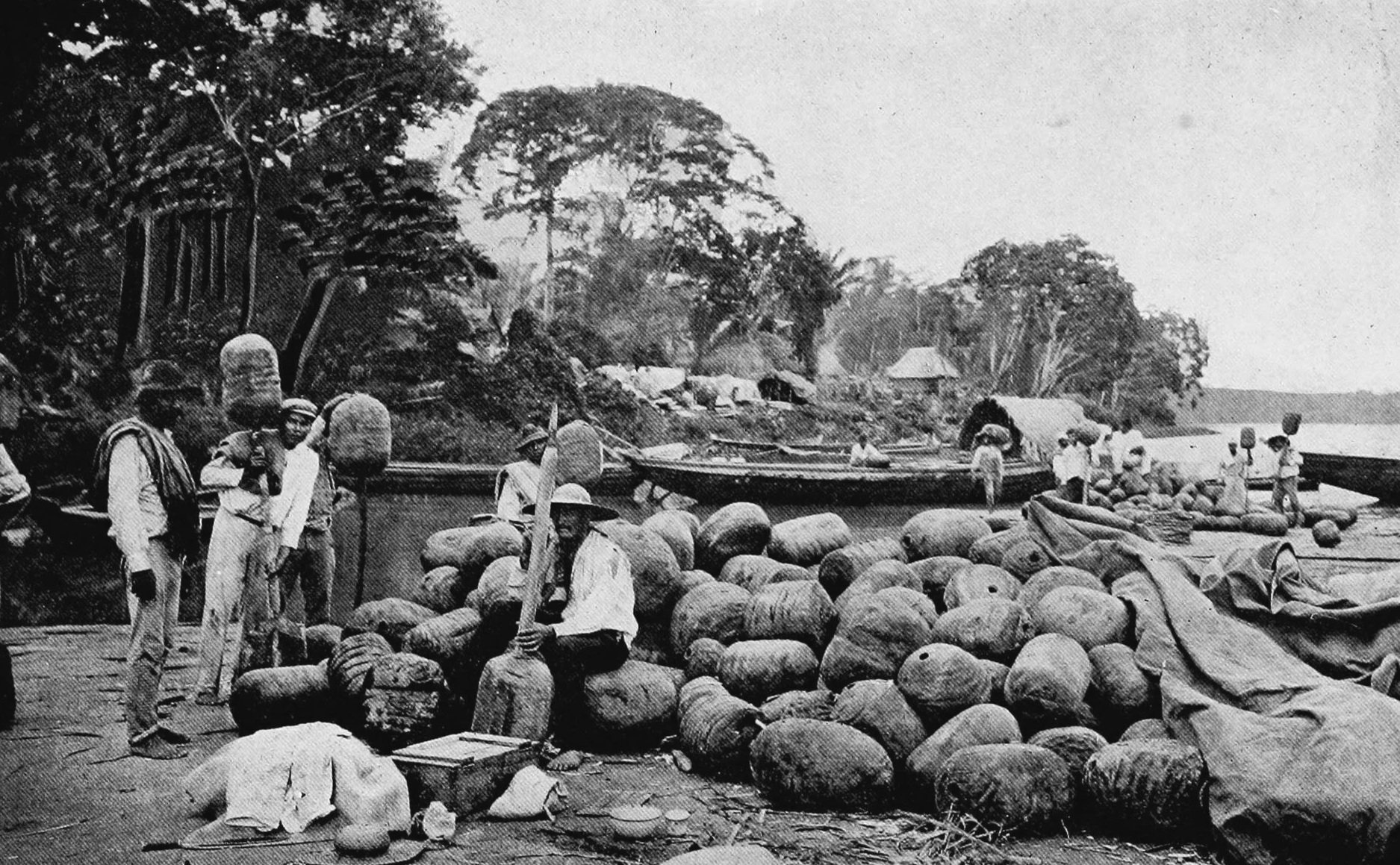
Rubber from Jacy Parana of Fidel Baca & Co. Ready to Be Put in Boats to Be Taken to a Station, Image copyright The Book Worm / Alamy Stock Photo.