A confederate’s finger ring
David R. Bush
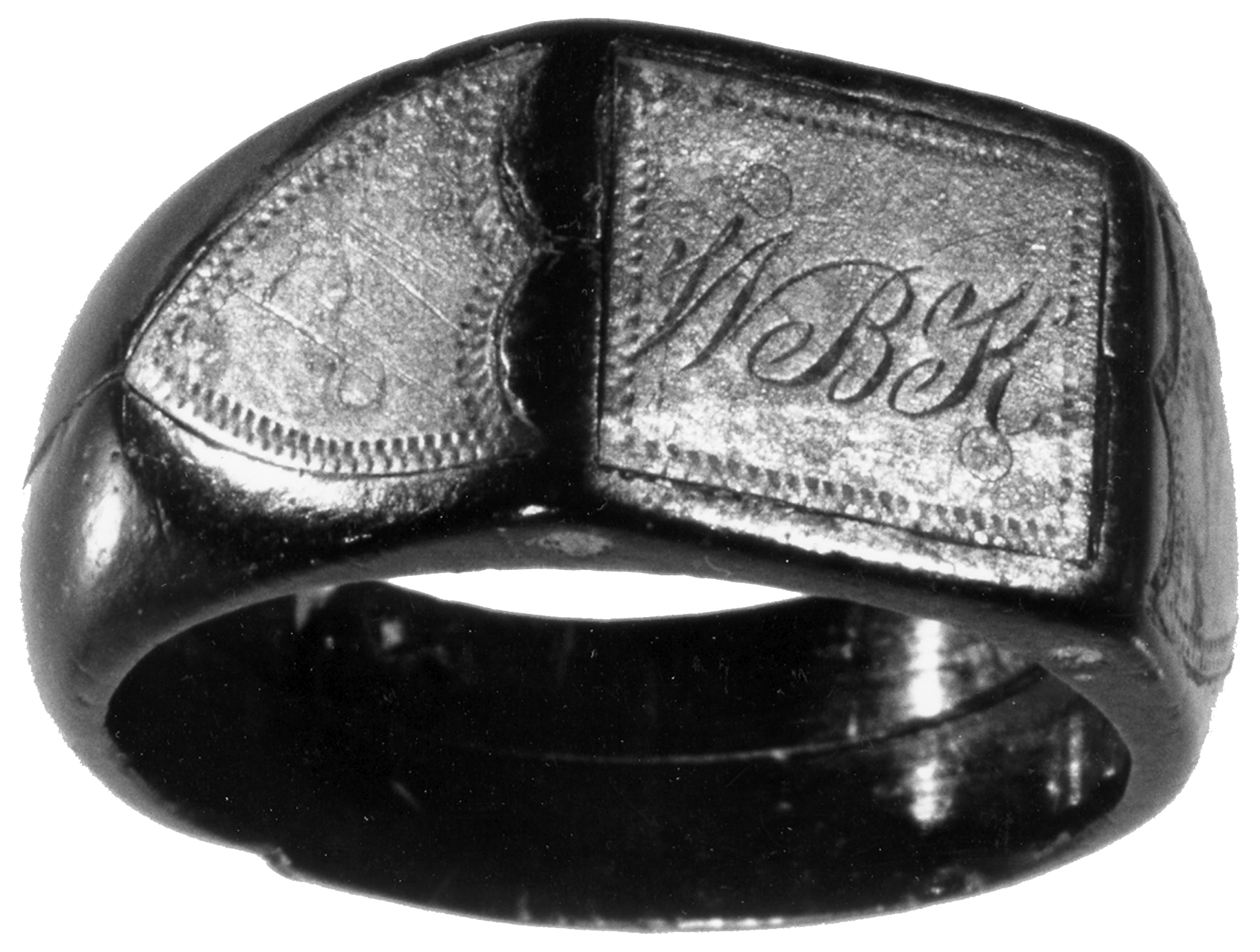
Hard Rubber Ring, specimen fs0034, Courtesy of Friends and Descendants of Johnson’s Island Civil War Prison.
In the summer of 1990, I led an archaeological investigation of the Johnson’s Island Civil War Prison, together with a team of Case Western Reserve University students and Earthwatch volunteers. As luck would have it, I discovered the first jewelry artifact recovered from the prison while working in this site. This began my fascination with the black base material of this ring, and the motivation behind its creation at this U.S. military prisoner-of-war camp, surrounded by the waters of Lake Erie off the coast of Sandusky, Ohio.
The artifact, a finger ring, consists of two hard black elements secured with copper pins and three silver inlays. The top rectangular inlay has the initials WBK engraved in it. When we found the ring, we had many questions. What is this hard, black material? Was “WBK” a prisoner? Was the ring lost, or intentionally thrown away? Part of the answers may lie in two of many first-hand accounts from prisoners.
There are men here making almost any and everything that can possibly be made of Girtipurture, (note presumable a type of wood common to the area)...
Major James T. Poe
11th Arkansas Infantry, July 31, 1862
Ring making rules the hour. Among over a thousand prisoners, more than half have employed most of their time making rings out of gutton percha buttons. Many of the rings made are plain, others have gold, silver or pieces of shell inlaid...
Captain John H. Guy
Virginia Artillery, July 28, 1862
These early Confederate prisoners’ diary entries misidentify gutta-percha as the base material for the ring we found at Johnson’s Island. Gutta-percha is not a local timber, but the latex of the Isonandra tree in the Malay Peninsula. At that time almost all black buttons were manufactured from hard rubber, a material harvested from the Hevea trees of South America. In 1851, Nelson Goodyear obtained the patent for hard rubber in the United States. Northern companies like the Novelty Rubber Company, the India Rubber Company, and the American Rubber Company utilized Goodyear’s Patent to fabricate thousands of rubber household items including buttons. Excavations at the Johnson’s Island site recovered hundreds of pieces of rubber chart rule (the precursor to the modern ruler) and button fragment waste materials. Prisoners also salvaged broken pieces of combs, smoking pipes and other manufactured hard rubber items and incorporated them into their jewelry-making enterprise. These source materials were bought at the prison sutler (a citizen sanctioned by the guard to sell approved items) or sent in by friends or family.
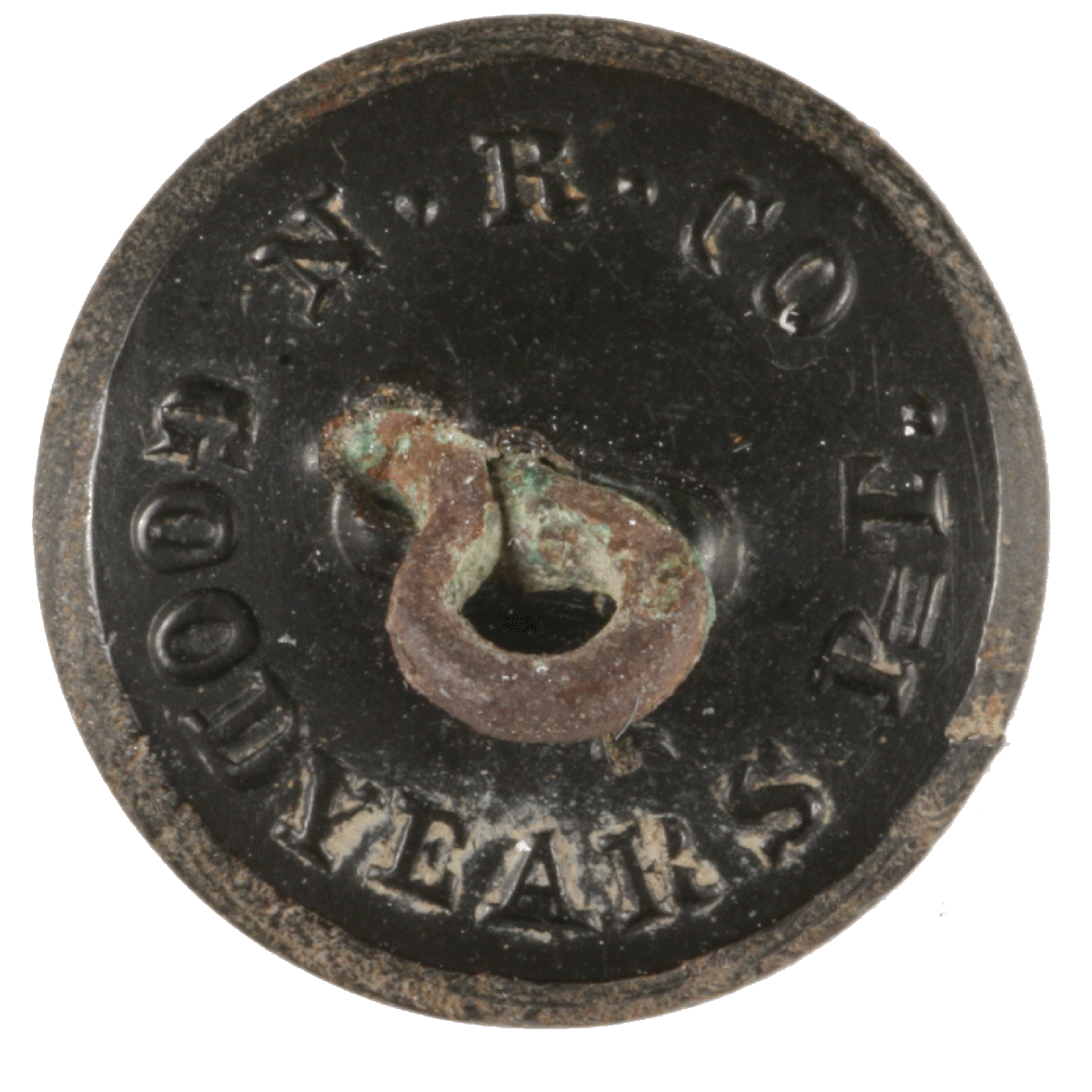
Hard Rubber Goodyear’s Patent Button, specimen fs1031, Courtesy of Friends and Descendants of Johnson’s Island Civil War Prison.
Archaeologists study not only material culture, but also archival evidence, and sometimes the two come together in revealing ways. So, it was with this hard rubber ring, lost for over 125 years in an undisturbed feature; a rectangular vault 8 feet by 12 feet and 5 feet deep long ago concealed. On October 26, 1861, Lieutenant Colonel William Hoffman, Commissary General of Prisoners in the Union army, ordered the construction of the prison depot on Johnson’s Island. The prison compound consisted of a stockade area with thirteen (numbered) large two-story wooden blocks to house approximately 250 prisoners each. The latrine from Block 8, used in 1864, contained the buried ring. Official rolls record only one prisoner at Johnson’s Island with the initials WBK present in that year. Lieutenant William B. Klutts of the 57th North Carolina Infantry was captured, along with 1,600 other Confederates, at the Battle of Rappahannock Station in Virginia, on November 7, 1863, and found himself a prisoner of war at Johnson’s Island until June 12, 1865. An unknown prisoner created a listing of prisoners, by block, at Johnson’s Island in 1864, and recorded Lieutenant Klutts as living in Block 8 - further evidence this was his ring.
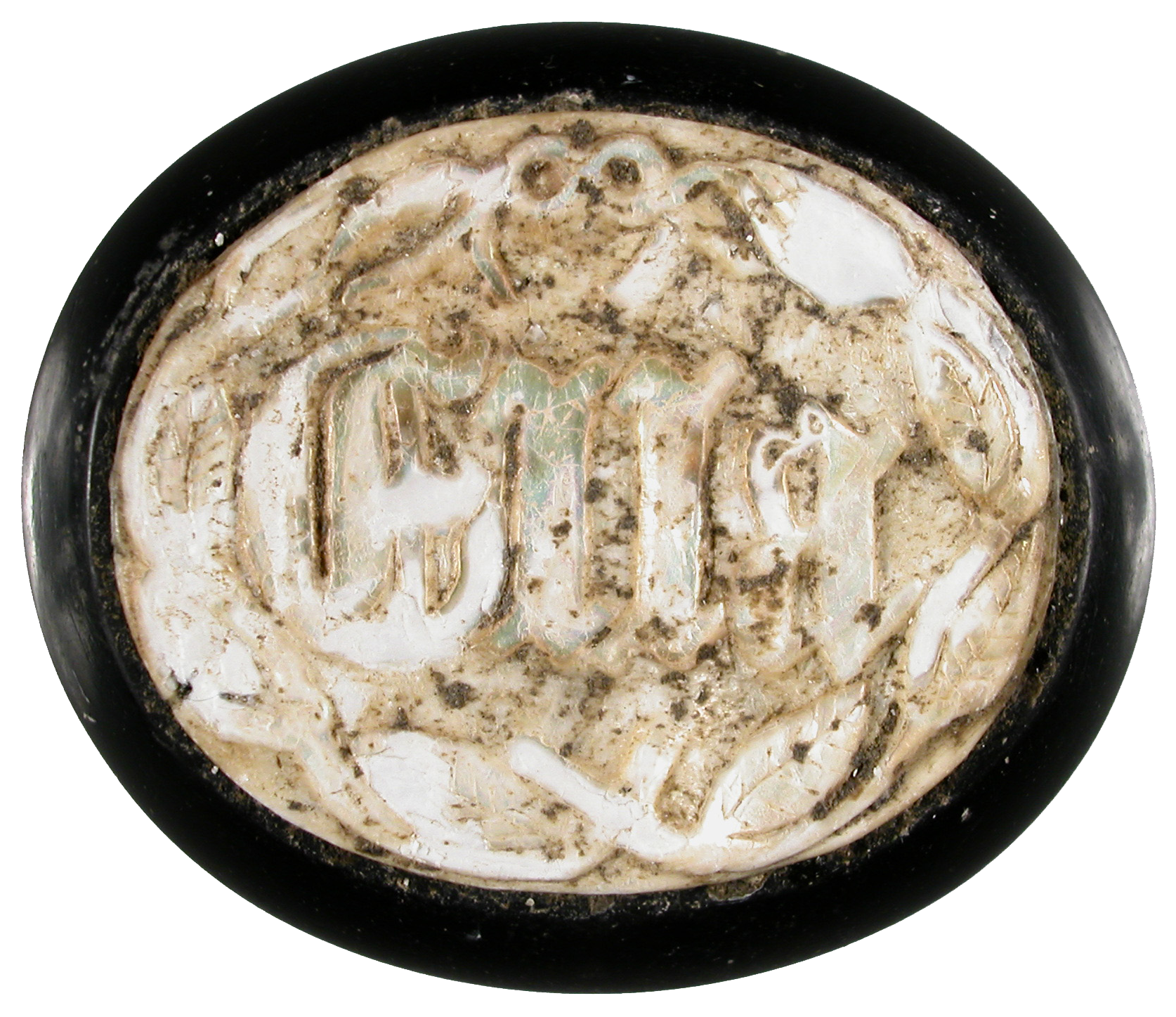
Hard Rubber Brooch, specimen fs2365. Courtesy of Friends and Descendants of Johnson’s Island Civil War Prison.
Included in the 1861 directive given to Lieutenant Colonel Hoffman to construct the prison were the following instructions: “As far as practicable [the prisoners] must be required to furnish their own clothing, and to provide themselves the means for this purpose they may be permitted to engage in any occupation which they can make profitable and which will not interfere with their safe-keeping.” Johnson’s Island was designated for captured Confederate officers. Many of these prisoners had resources back home, and funneled money through northern banks to improve their lot. Prisoners without such means of external financial support undertook undesirable chores or performed other tasks to earn money from fellow captives. Carving exquisite jewelry out of hard rubber was one way to earn money, and prestige as well. Skilled artisans like prisoner Robert Smith used specialized carving tools. As demand increased, the skilled artisans could not keep up. Being so successful, Robert Smith sent money home from Johnson’s Island.
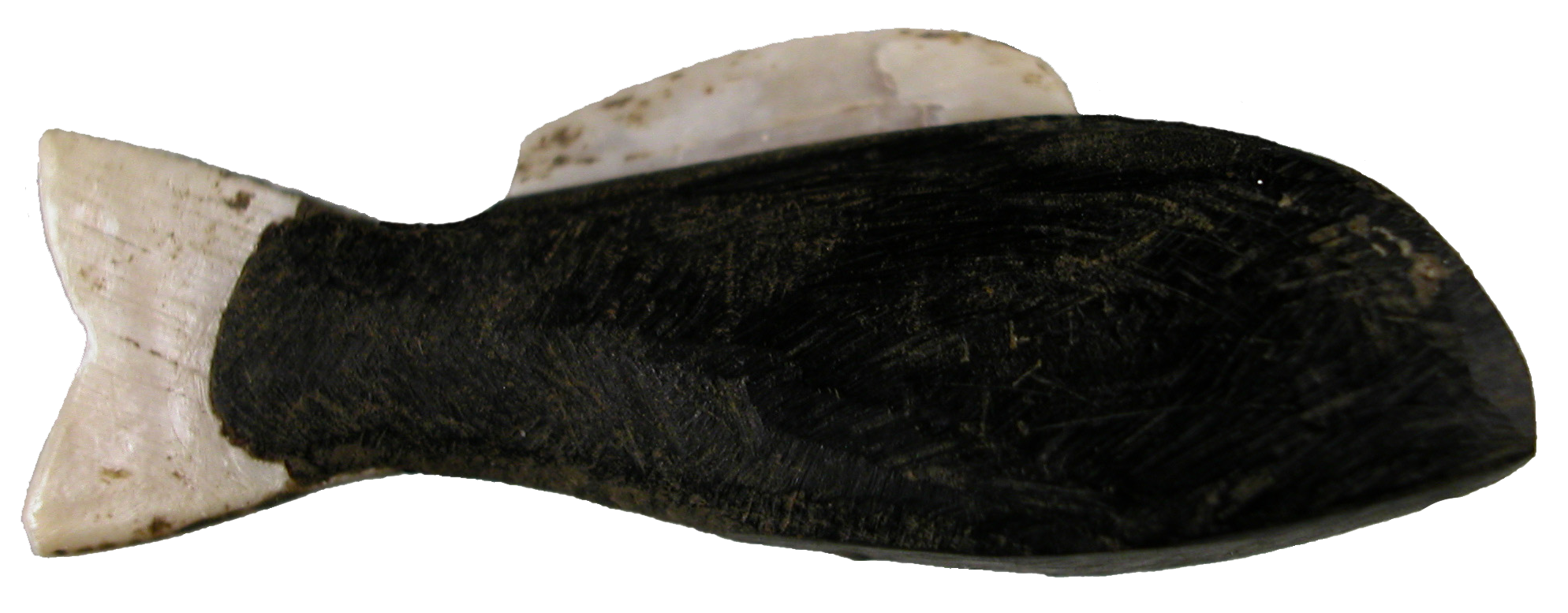
Hard Rubber Fish, specimen. Courtesy of Friends and Descendants of Johnson’s Island Civil War Prison.
Investigation of Blocks 4 and 8 revealed hundreds of hard rubber waste pieces that had fallen through the floorboards of the block. These were mostly button fragments and the tapering sides of chart rules, unusable for most jewelry making. Excavations also uncovered many discarded attempts as well as some very fine examples of the prisoners’ jewelry.
Why did hard rubber become the material of choice for the prisoners at Johnson’s Island? The answer lies in the symbolism of these intensely black objects. During her long period of grieving for her husband Prince Albert, who died in December 1861, Queen Victoria popularized the wearing of mourning jewelry; it subsequently became a way to express the great toll of human suffering during the American Civil War. Jet, a stone found in the bituminous shales of Whitby, England, was the original preferred material for the jewelry. Easy to carve and polish, and intensely black in color, jet was a natural choice; but when increased demand created shortages, manufacturers began using black glass, onyx and hard rubber.
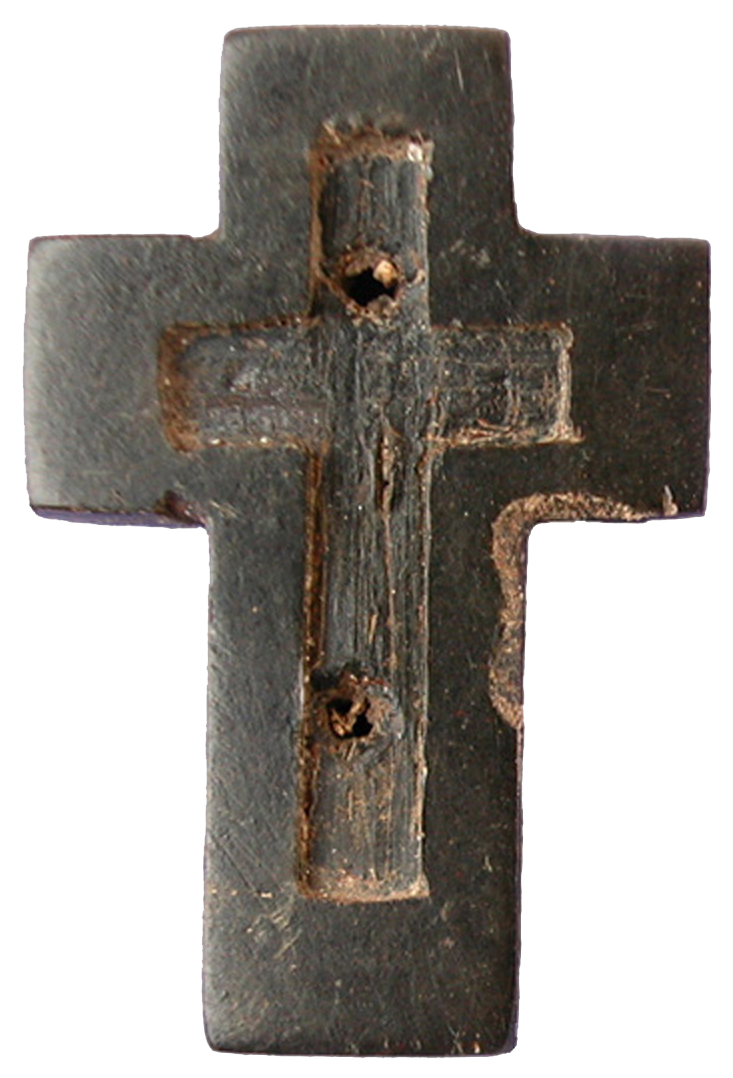
Hard Rubber Cross, specimen fs5580, Courtesy of Friends and Descendants of Johnson’s Island Civil War Prison.
Thus, Confederate prisoners like Lieutenant Klutts were participating in a widespread fashion, and the most talented of the incarcerated jewelry makers seem to have been in high demand. Finger rings, breast pins, crosses, necklaces, bracelets, pins, cuff buttons and many other trinkets were fashioned both to wear and to mail home for loved ones to honorably display. It symbolized their plight as prisoners of war. It seems appropriate to close with words from one of these imprisoned soldiers, far from home:
They will be objects of curiosity and precious relics some day in the distant future, when our sufferings are appreciated and our sacrifices acknowledged. It was all the token I had to send my loved ones, in value worthless but in sentiment and remembrance much…
Col. Virgil S. Murphey
17 Alabama Infantry, January 27, 1865

Depot Prisoners of War on Johnsons Island, 1864, Edward Gould, Strobridge & Co., Courtesy of Friends and Descendants of Johnson’s Island Civil War Prison.