Clay bodies
Ebitenyefa Baralaye
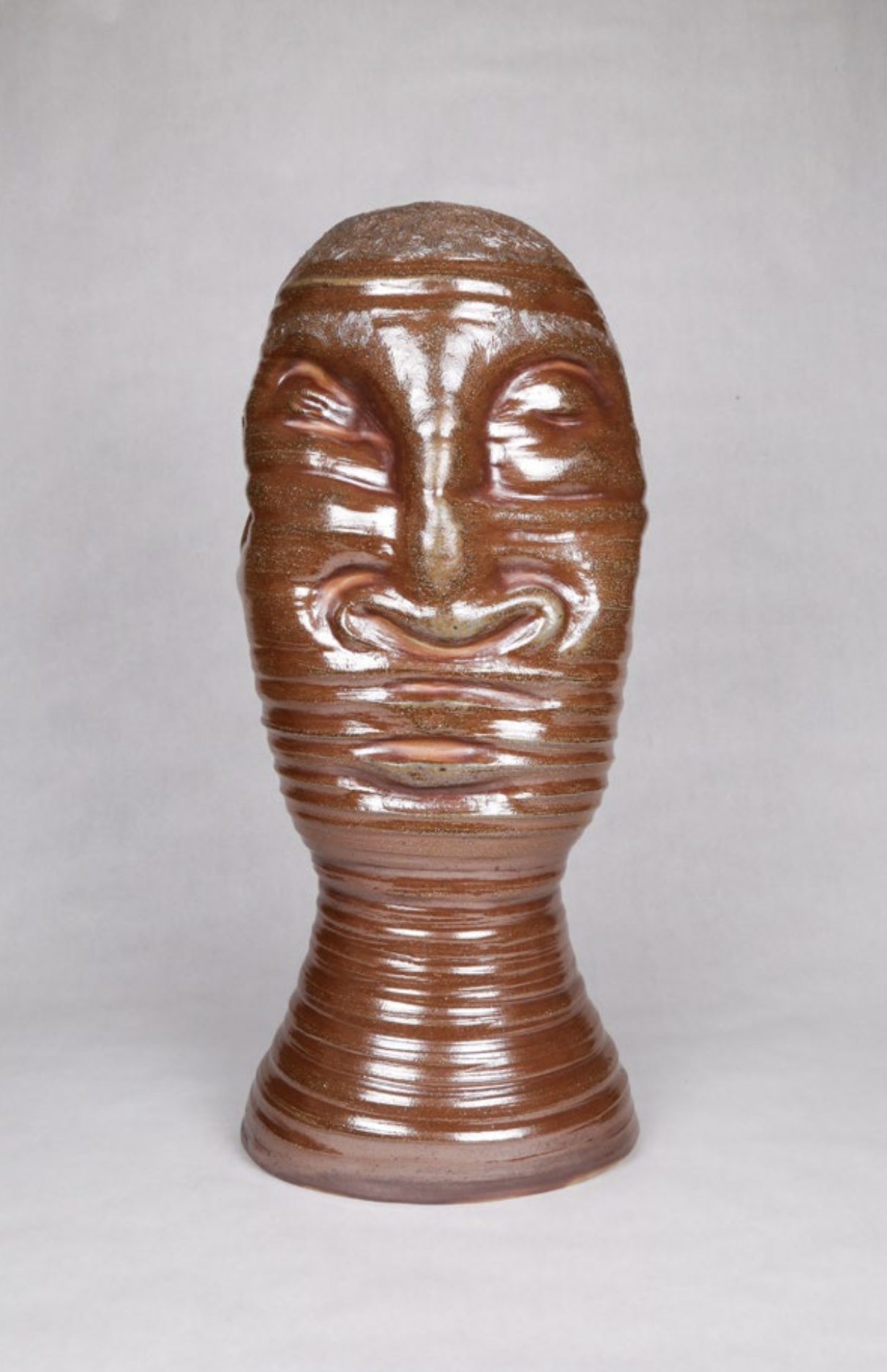
Ebitenyefa Baralaye, Portrait I, 2020, Terra cotta, soda-glaze.
As a ceramicist, my relationship with clay is deeply bound to both land and fire. Granted, in a modern studio, this sense of connection is abstracted by the conveniences of commercially processed and boxed clays, as well electric kilns, which can be as easy to program as a microwave. Still, every ceramic artist struggles with the earth. We have a foundational dependence on it which is complex and nuanced. This relationship is particularly palpable in one of the most vibrant of clay types, terra cotta.
In its raw state, terra cotta has a distinctive orange-brown hue. This color is sometimes retained when it is fired, and sometimes transitions into brown and black tones, depending on the specific variety of the clay and the atmosphere in the kiln. Terra cotta also retains its absorptive properties even when fired – it is never fully vitrified – so that it might seem to be in a constant state of becoming.
Each working stage, from raw to finished, marks a distinct configuration of earth, water, and fire. The interplay of these core elements is immediately evident, across diverse applications: bodily and domestic rituals around sustenance (pottery), philosophy and spirituality (sculpture), shelter and dwelling (architecture). This one material reflects the arrayed scaffold of culture and humanity in a way that no other clay does.
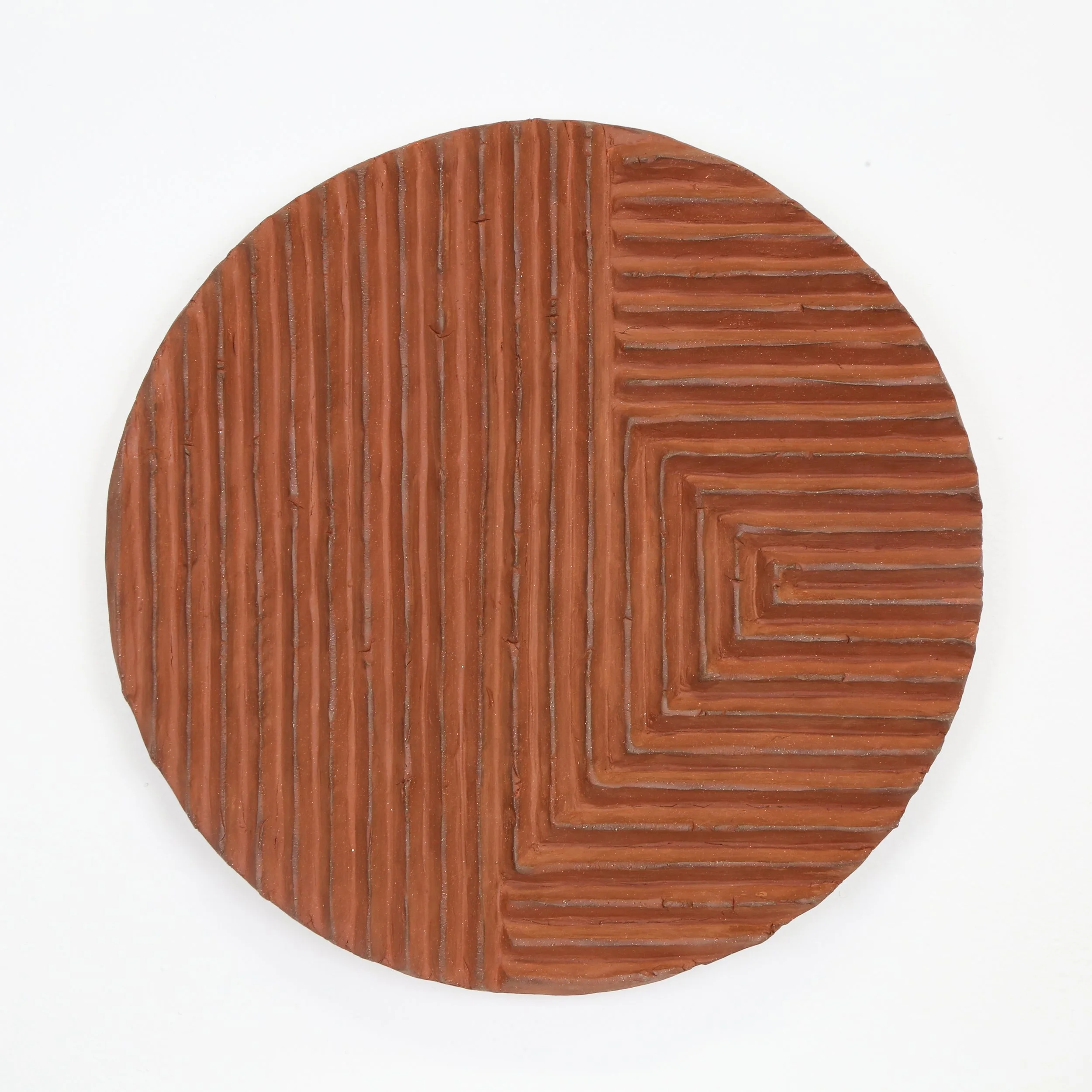
Ebitenyefa Baralaye, Labyrinth I, 2019, Terra cotta.
Yet there can be a certain bias in the ceramics universe. Clays that are iron-rich, and therefore dark in color, could generally be considered less technologically and artistically developed than those that are lighter in tone. Historically, the apex of ceramic production was defined by Europe porcelains, which were themselves copies of porcelains from China. In comparison, terra cotta was considered utilitarian, even “dirty” within studio and production contexts and allotted its own set of tools and surfaces to prevent “contamination” with other clays. Older terra cotta works, often produced by black and brown communities, are often valued for their anthropological and cultural significance rather than for their art historical contribution in parallel with other media and movements.
Yet the very fact that terra cotta matures at a lower temperature implies a democratic quality. In many cultures, it is fired in simple kilns, or even in pits embedded in the earth. The directness of these technologies is one reason that terra cotta has a reputation as something archaic, or lowbrow. On the other hand, it retains a powerful relationship to the land that we work, the earth we walk on.
I also relate clay to our bodies, because of its density – which is similar to that of human flesh – and its quality of absorption. Skin, our largest organ, is not entirely watertight. It is a membrane through which we absorb moisture and other trace elements. The earth seems solid, but it takes in all kinds of things. Terra cotta, likewise, is not a neutral or inert substance. It is a kind of membrane, which has specific intrinsic characteristics and also carries the imprint of the forces that have acted upon it.
Everything that is done to clay has a consequence, either in the moment or later on—it keeps shrinking, cracking, moving. This aspect of the material brings to mind the bookThe Body Keeps the Score by Bessel van der Kolk: clay’s physical memory is like the experiences and trauma that we carry, not always visible, but present nonetheless. In my own work, I often like to leave terra cotta in its raw form, unglazed. It might seem unfinished, almost as if there were an absence. From this point of view, terra cotta seems to be quite literally half-baked. But that is a perception I want to challenge.
I do find myself constantly inspired by and invested in sharing terra cotta’s dualities. Think of the excavated terra cotta warriors from China: they are symbols of military might, but in their decay, also express material and dynastic fragility. Rather than these qualities of power and porosity contrasting each other, they are mutually implicated. Terra cotta is both humbling and empowering, a means of reflecting human vulnerability, even as it tracks the spiritual, ancestral, and social realities around us.
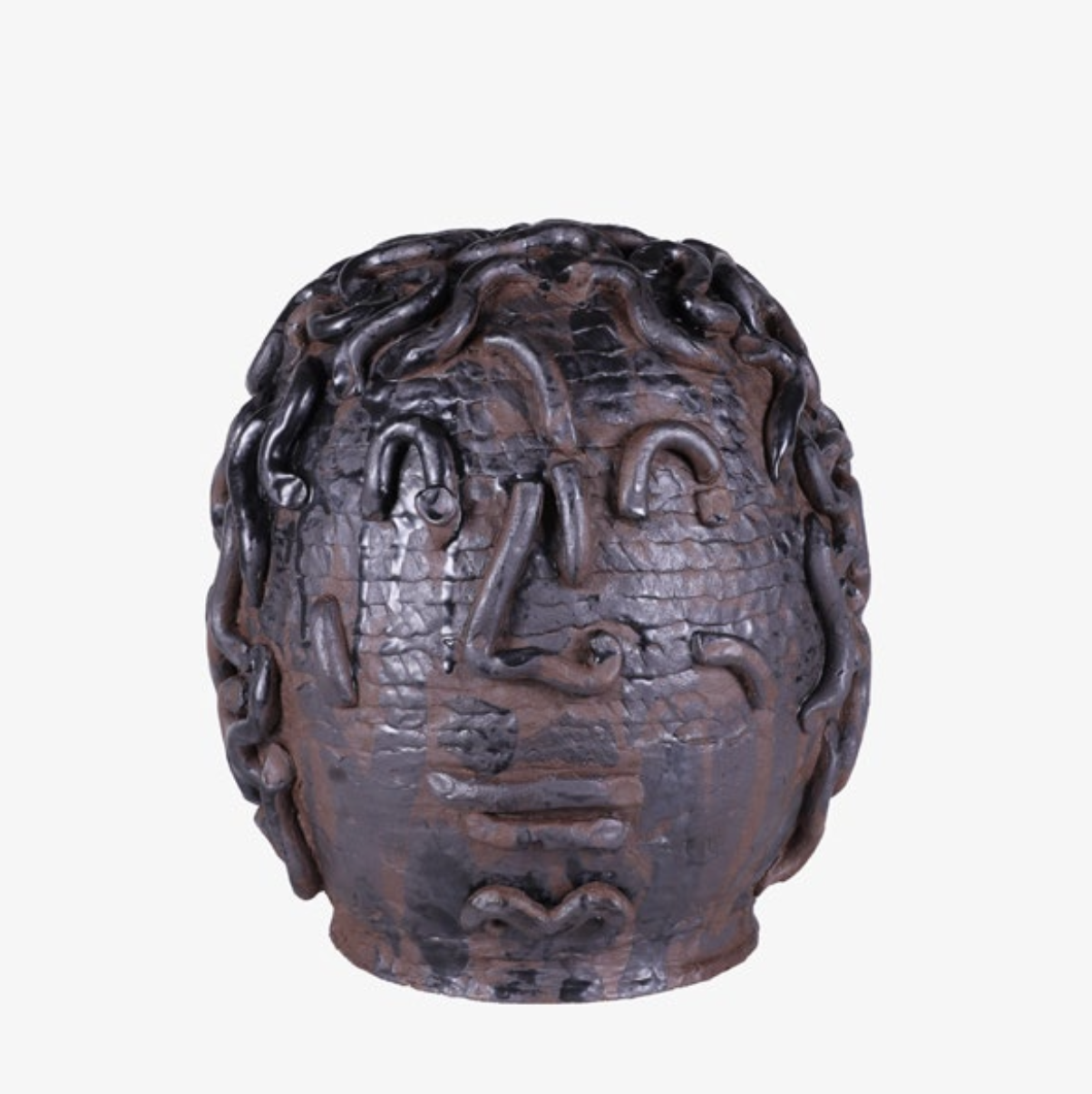
Ebitenyefa Baralaye, Anna, 2022, Terra cotta, glaze.
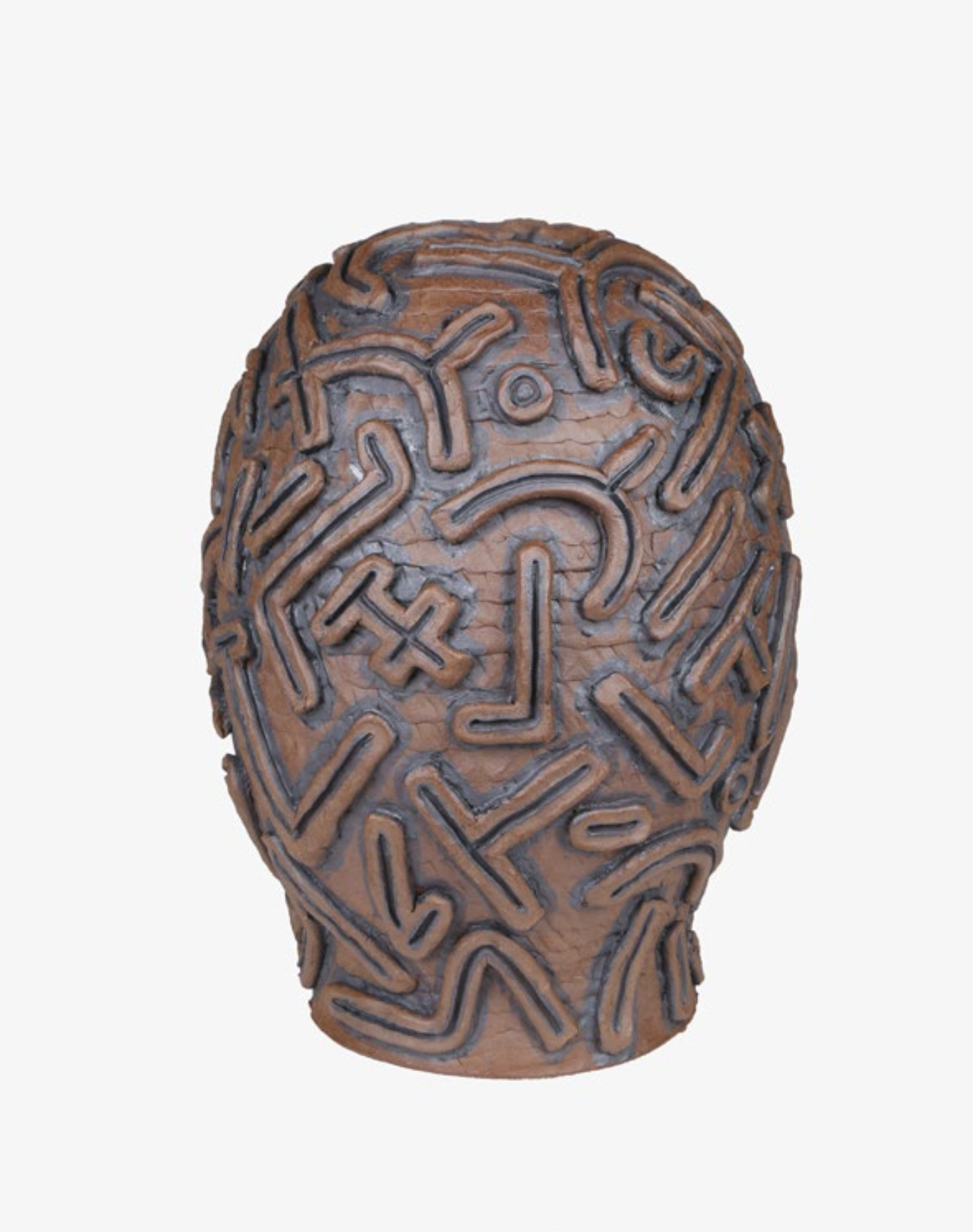
Ebitenyefa Baralaye, Invisible Man I, 2022, Terra cotta, glaze.