
The wood that turned the stones to water
Anaïs Walsdorf
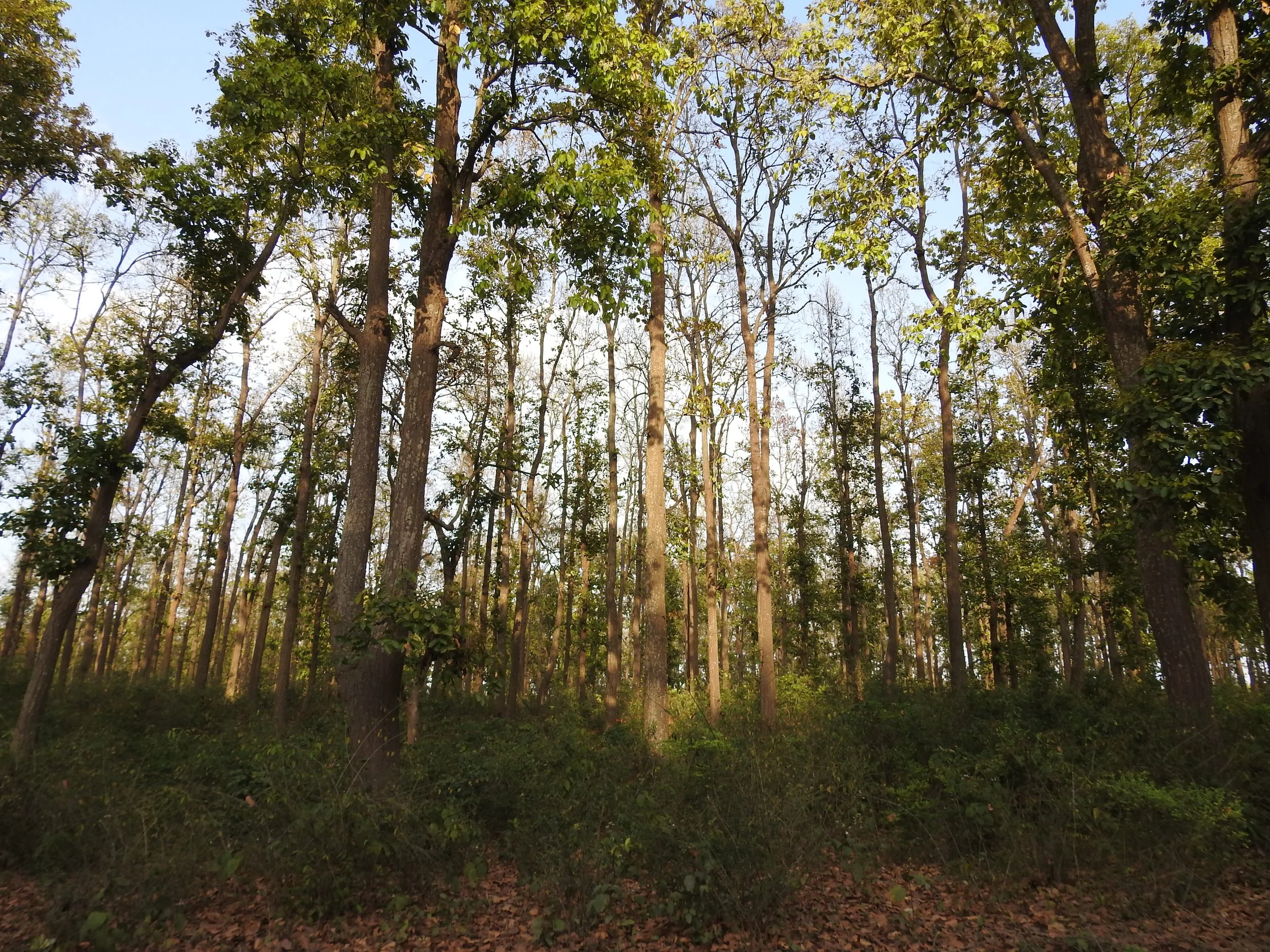
Anand.osuri. Sal forest near Dehradun, India, 2018. Anand.osuri. Attribution-ShareAlike 4.0 International CC BY-SA 4.0. https://creativecommons.org/licenses/by-sa/4.0/deed.en
Hai re hai! What earth is used to make the kiln?
What earth is used to strengthen the iron?
What wood is used for the charcoal
Which turns the stones to water?
Hai re hai! The kiln is made with murminjni earth.
The iron is strengthened with chapra earth.
The charcoal is made with sarai wood
And turns the stones to water. Hai re hai
–Agaria dance song, Mawai, Uttar Pradesh
Shorea robusta, also known as Sarai or the Sal tree, is a tall hardwood tree native to India and the Himalayan foothills, including Bangladesh, Nepal, and Tibet. The Sal tree is a much-respected material and spiritual provider for the region’s inhabitants. Its timber is used in building structures, its leaves to make objects such as plates and pipes, and its resin is used in Ayurvedic medicine. Sal trees hold significance in Hinduism, Jainism, Buddhism, as well as animist traditions in the region, such as in the form of the Woman of the Grove, or Sarna Burhi – a goddess of Sal tree groves that acts as a protector of spirits, rain and plants.
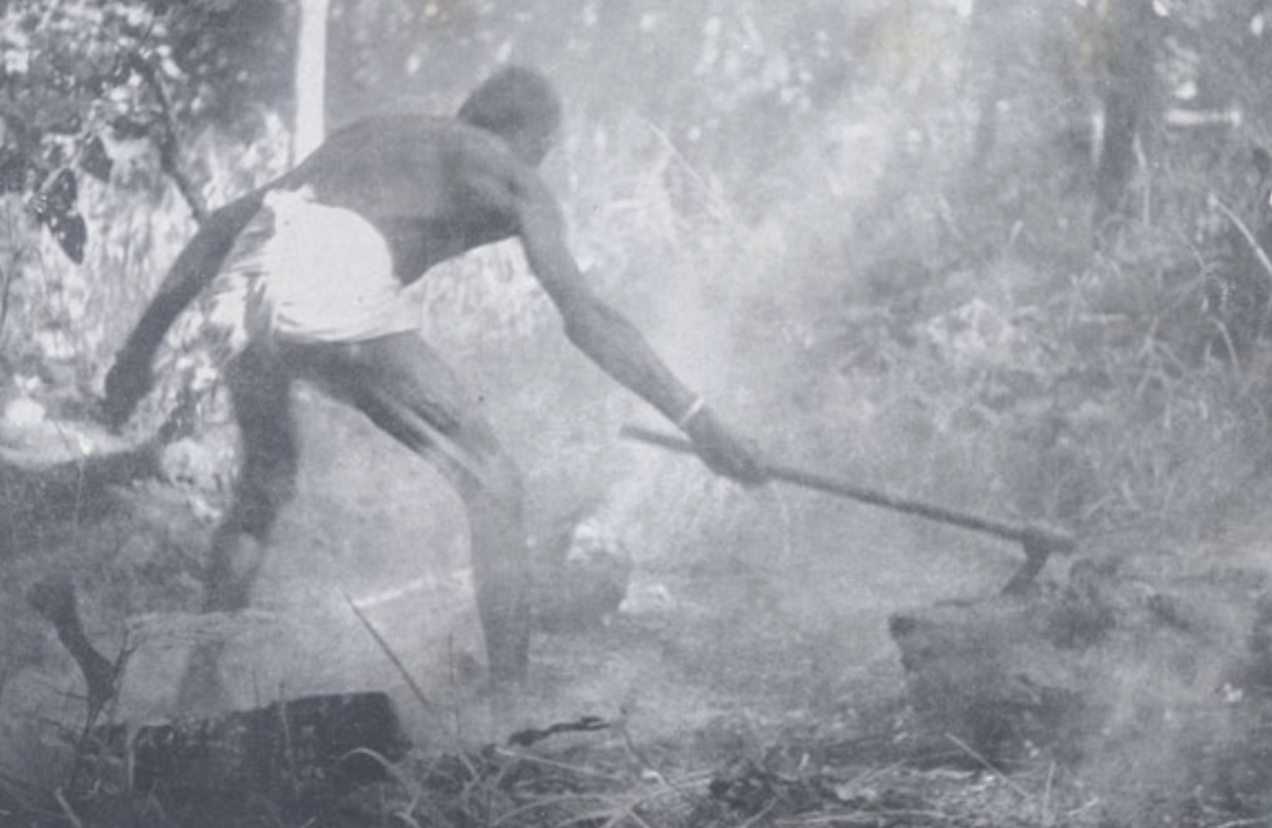
Elwin, Verrier. 1942. The Agaria. [London]: H. Milford, Oxford University Press, "Agaria burning charcoal," Plate 22.
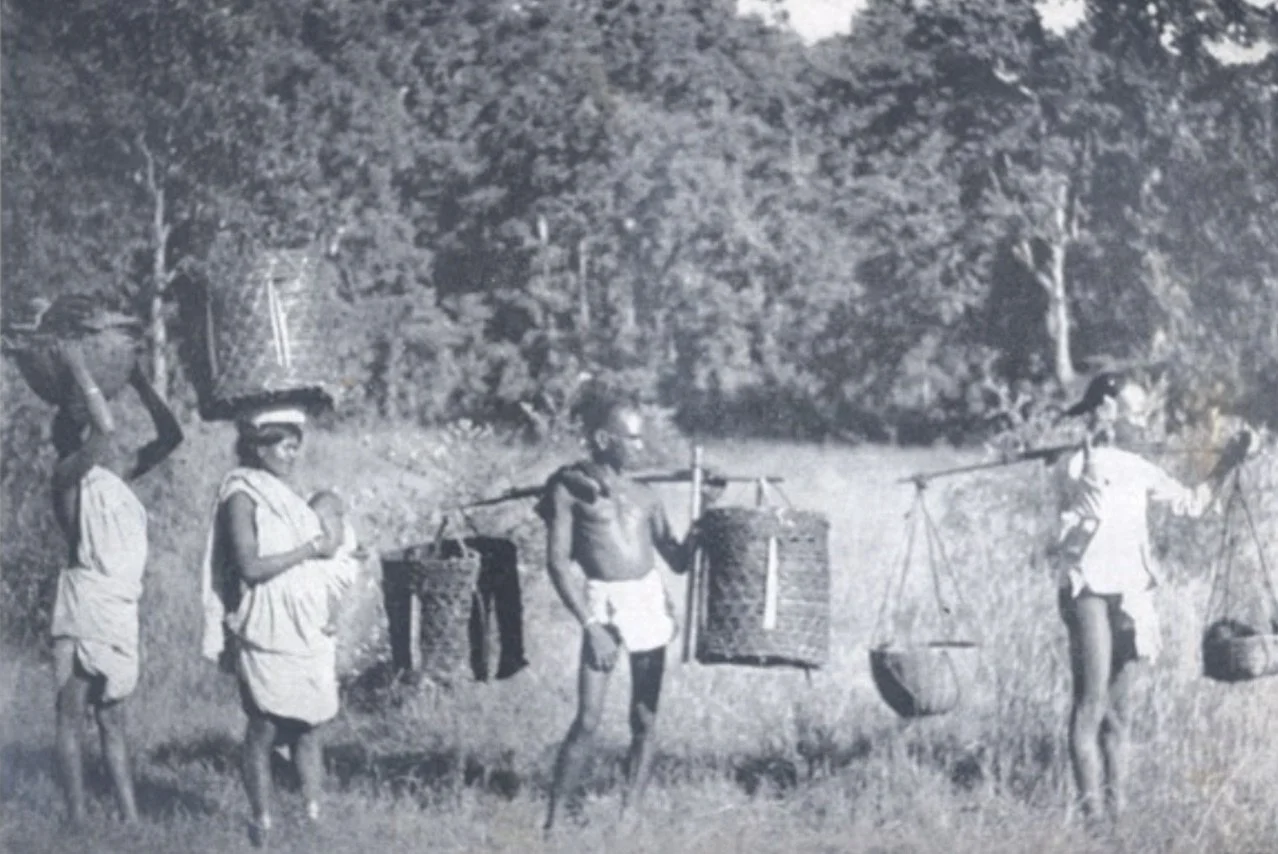
Elwin, Verrier. 1942. The Agaria. [London]: H. Milford, Oxford University Press, "Party of Agaria from Bhoira, Mandla District, returning from the jungle with ore and charcoal," Plate 21.
One community in particular has a deep history with the Sal tree, extending back to antiquity: descendants of the Asura, India’s first metallurgists, who are believed to have worked iron since the Vedic era (between 1500-600 BC). Their craft was deeply rooted in their spirituality, including belief in deities such as Lohasur, who represented the smelting furnace, Agyasur, representing fire, and Koelasur, a deity of charcoal. The iron produced by the tribes was well known in the ancient and premodern world, in demand from the high courts of India to Ancient Rome. Traditional Asura ironworking techniques are believed to have produced the iron pillar of Delhi, a seven-meter-high column known for its high resistance to corrosion.
The use of charcoal from the Sal tree is a crucial part of the Asura ironworking process and the materiality of the iron produced. It is believed that Sal charcoal is the ingredient that lends the iron anti-corrosive properties. In the iron-making process, a thin protective layer is formed due to high levels of phosphorous in the charcoal, increasing its hardness and resistance to oxidization. Asura iron contains about 1% phosphorus, compared to 0.05% in today’s industrially-produced steel.
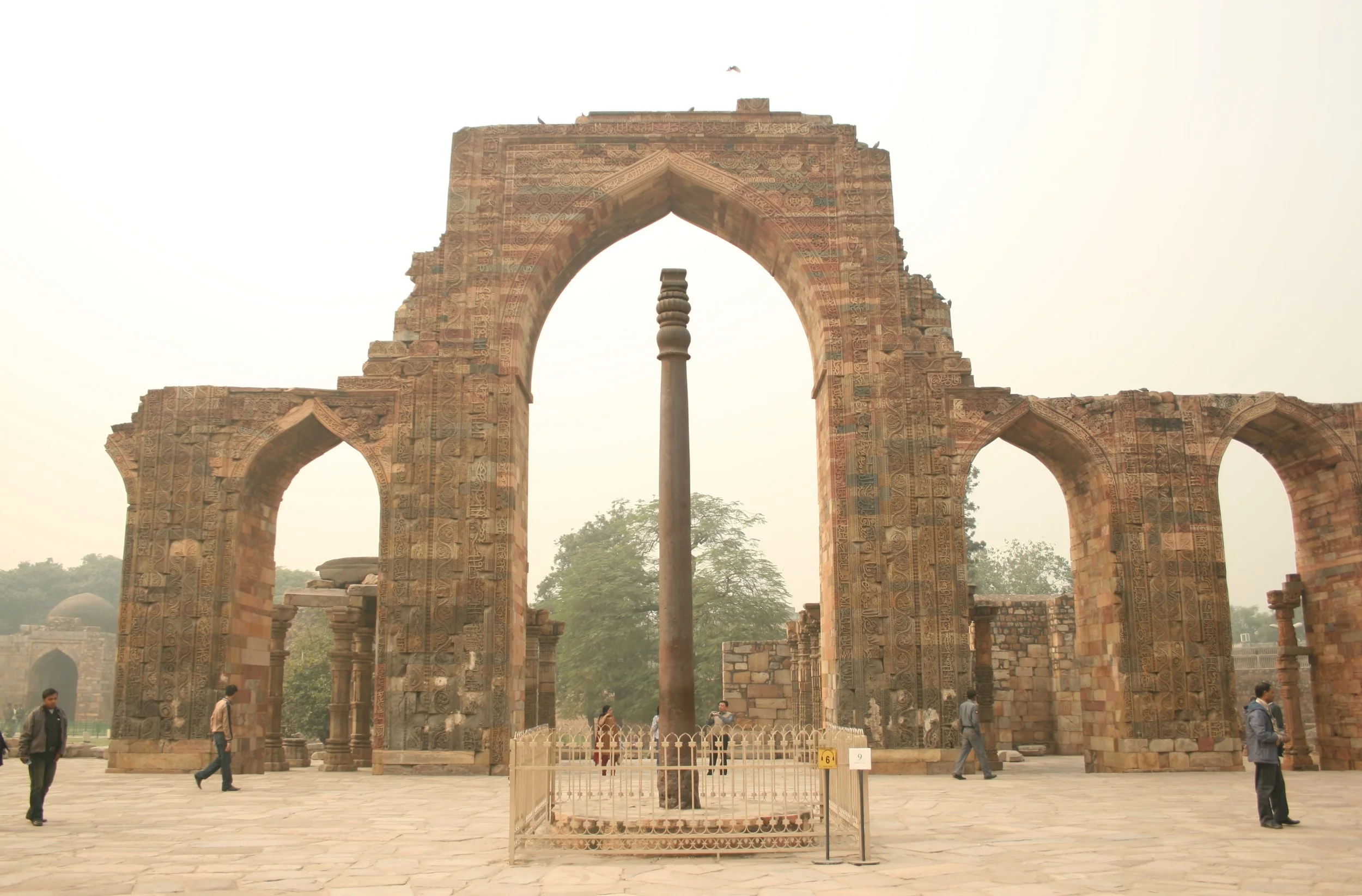
Diego Delso. Iron Column at Delhi, 2009. Diego Delso, delso.photo, License CC BY-SA. https://creativecommons.org/licenses/by-sa/4.0/legalcode
Access to Sal trees was crucial to modern descendants of the Asura, such as the Agaria. In 1942, British anthropologist Verrier Elwin wrote that ‘where there are Sarai trees, there will you find Agaria.’ Traditional ironworking communities were itinerant– they lived in forests and moved according to access to iron ore and timber. The iron-making process would begin with all members of the family collecting Sal in the forest. The wood would then be set on fire in a pit, covered by leaves and sand. Once ready, the charcoal was used to fuel open-air furnaces, producing raw iron that the Agaria traded with agrarian communities.
By the nineteenth century, the Agaria and other ironworking communities descended from the Asura had depended on Sal forests for their livelihoods for hundreds of years. However, with India under the control of the British East India Company, colonial officials began planning how to best exploit India’s rich iron resources. They aimed to stamp out traditional Indian ironworking, monopolizing charcoal sources and taking control of Indian iron and steel production. The East India Company enacted the first Forest Act in 1865, which prohibited unauthorized timber-cutting and limited charcoal burning by hill tribes to certain areas. The law weaponised narratives of conservation and preservation against the production processes of Indigenous ironworkers, arguing that traditional Indian charcoal-making and ironworking methods were wasteful, ‘unorganised,’ and caused rampant deforestation.
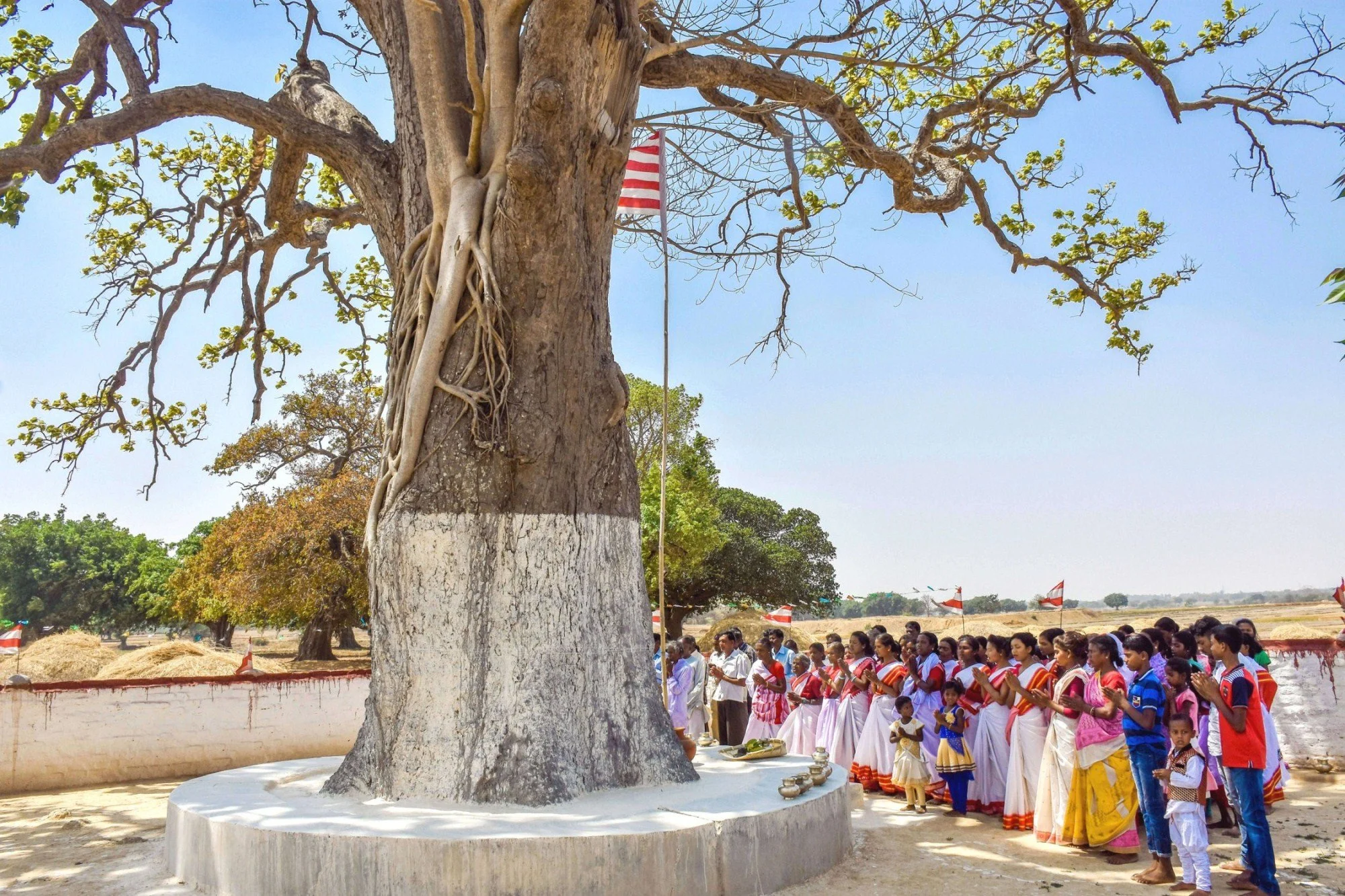
Gurpreet Singh Ranchi. People worshiping under the Sal tree during the celebration of Sarhul in Jharkhand by Gurpreet Singh Ranchi, 2017. Attribution-ShareAlike 4.0 International CC BY-SA 4.0. https://creativecommons.org/licenses/by-sa/4.0/deed.en