
On the right track
Róisín Inglesby
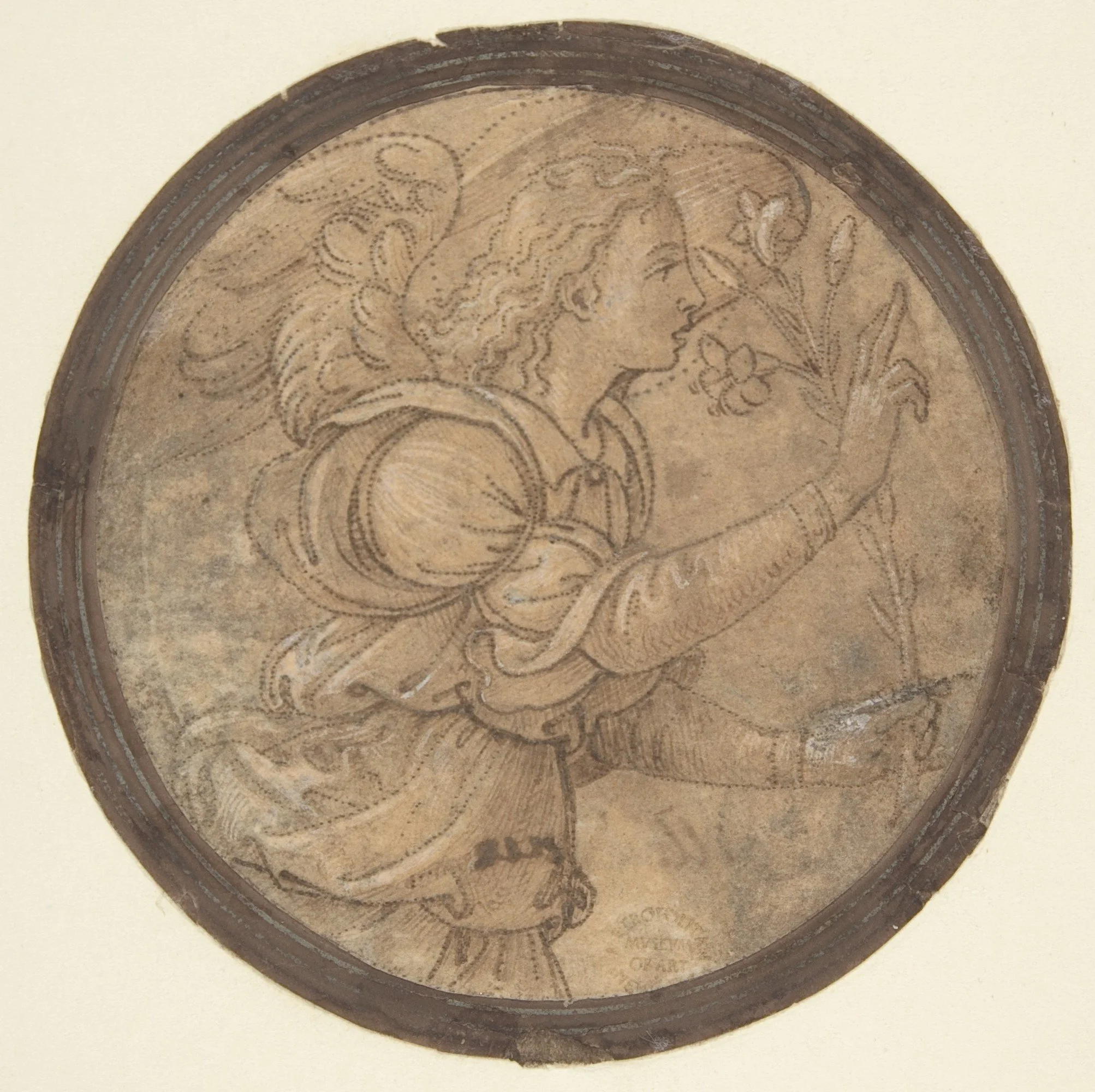
Raffaellino del Garbo (also known as Raffaelle de Capponi and Raffaelle de Carli) (Italian, San Lorenzo a Vigliano, ca. 1470-after 1527). The Angel of the Annunciation (Cartoon for an Embroidery), 1466-1524. Pen and brown ink, brush and brown wash, highlighted with white gouache, over black chalk on paper washed brown; outlines of design and framing outlines pricked and with traces of rubbed black pouncing dust. 3 13/16 in. (diam.). The Metropolitan Museum of Art, Rogers Fund, 1912, 12.56.5a.
If you spend enough time with historic design drawings, you will probably run into one that is punctured with dozens of small holes and smeared with a fine layer of black powder. What might at first appear to be pest damage or disrepair actually indicates a crucial step in the making process: the stage when the design is transferred from paper to the final material. Known as “pricking and pouncing,” the technique involves scoring a track of tiny perforations along the outline of the drawing, then rubbing fine powder – or pounce – through the holes to create a silhouette on the destination material below.
While pounce can be made from various substances, charcoal has been used for the purpose for centuries. ‘How-to’ manuals encouraging the development and appreciation of artisanal skills outlined the process for the curious amateur. Mary Thomas’s Embroidery Book (1936) lists the necessary materials, including a special ‘pricker’ which resembles a thick pin mounted into a handle, a pad of soft cloth or felt, and powdered charcoal (or alternatively, powdered chalk, for pouncing on to a dark surface). “Mix charcoal with a little chalk, otherwise it is difficult to blow off cleanly,” Thomas advises. “Dip the little pad into charcoal… and dab, then rub it firmly all over the surface of the paper so that the powder is forced through the little holes.” Once the transfer is complete and the superfluous pounce discarded, “The design must be fixed on the material with a fine paint brush and a watercolour paint, as the powder dots would rub away at a touch.”
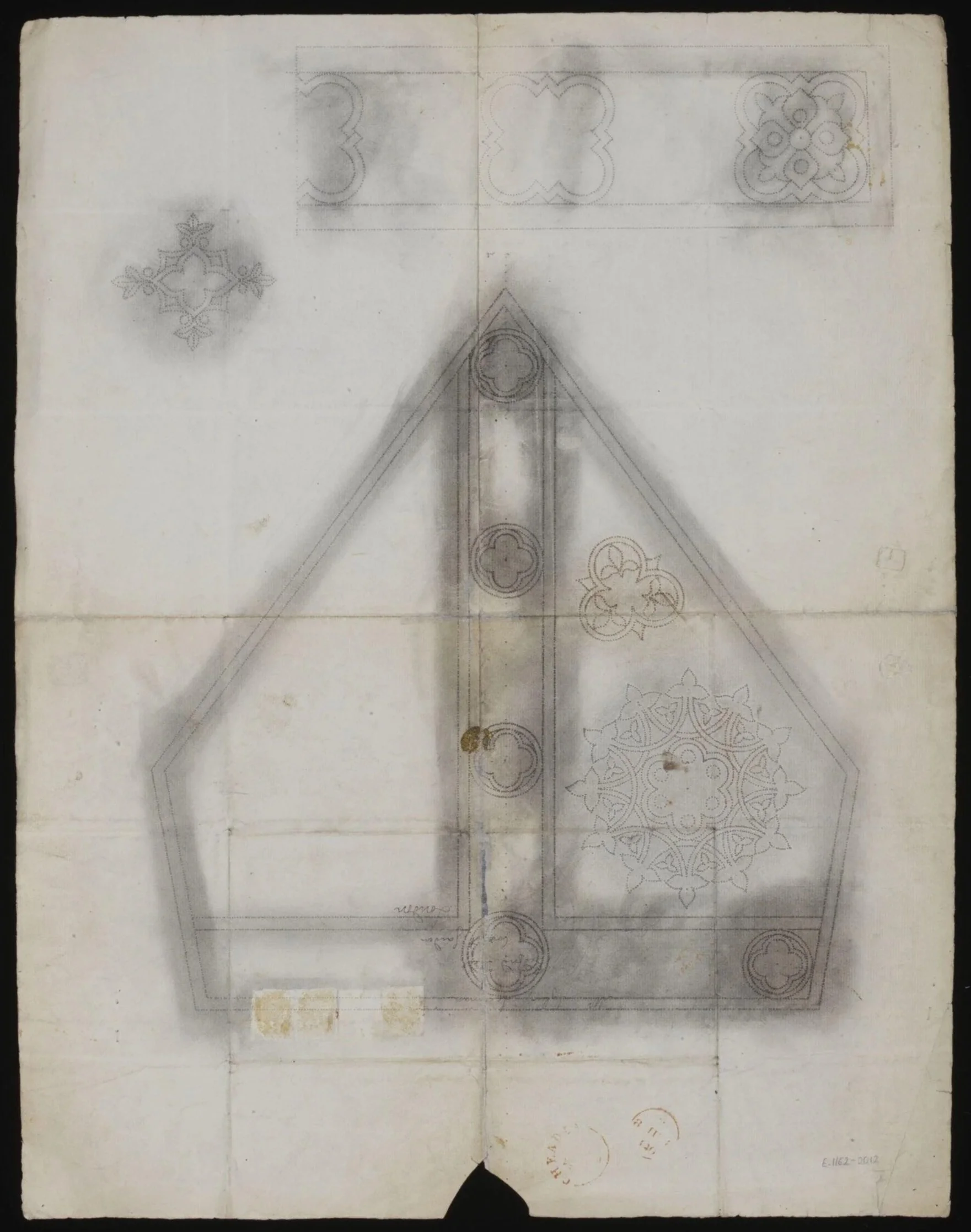
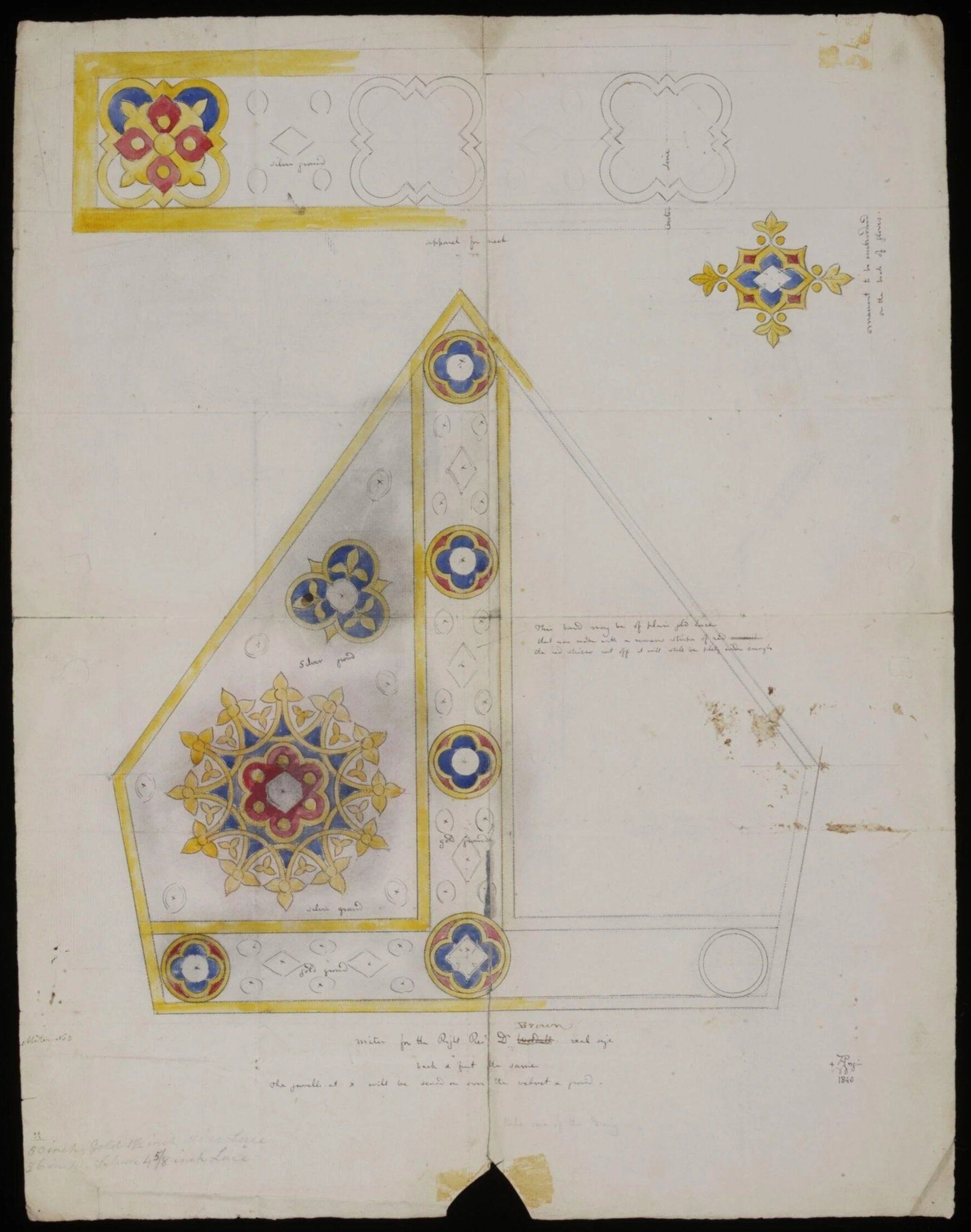
A.W.N. Pugin (designer). Eclesiastical design, 19th century-20th century. Pen and ink and watercolor on laid paper. 22 1/4 x 17 1/4 in. Given by the Community of St. John Baptist, E.1162-2012. © Victoria and Albert Museum, London. [back and front]
While other transfer methods were available by the early 20th century, including iron-on transfers and carbon paper, pricking and pouncing still had several advantages, especially for the amateur artist. All the tools were inexpensive and readily available, their air of everyday domesticity reinforced by the fact that a sewing needle could be used as a pricker, and the recommendation from one author, in 1912, that “a piece of old silk hose tightly rolled up makes an excellent pad for the purpose.” Unlike an iron-on transfer, a pricked drawing could be reused multiple times, and so was ideal for homemade designs (as opposed to patterns purchased from professional designers).
Charcoal pouncing was also used by professional embroiderers, whose work experienced a boom in nineteenth-century Britain, stimulated by increasing demand for ecclesiastical vestments and furnishings. A partially colored design for a bishop’s miter by the Gothic Revival architect-designer A.W.N. Pugin, from 1840, is a good example of a drawing acting as a hard-working, communicative object, a paper emissary between designer and maker. The sheet bears notes in various hands, including the command 'take care of this dra[w]ing,' a clear indication of its importance in the design process. Prominent prick marks and the dark shadow of charcoal pounce show that Pugin’s design was transferred to fabric on a 1:1 scale – already precisely measured to fit a bishop’s head.
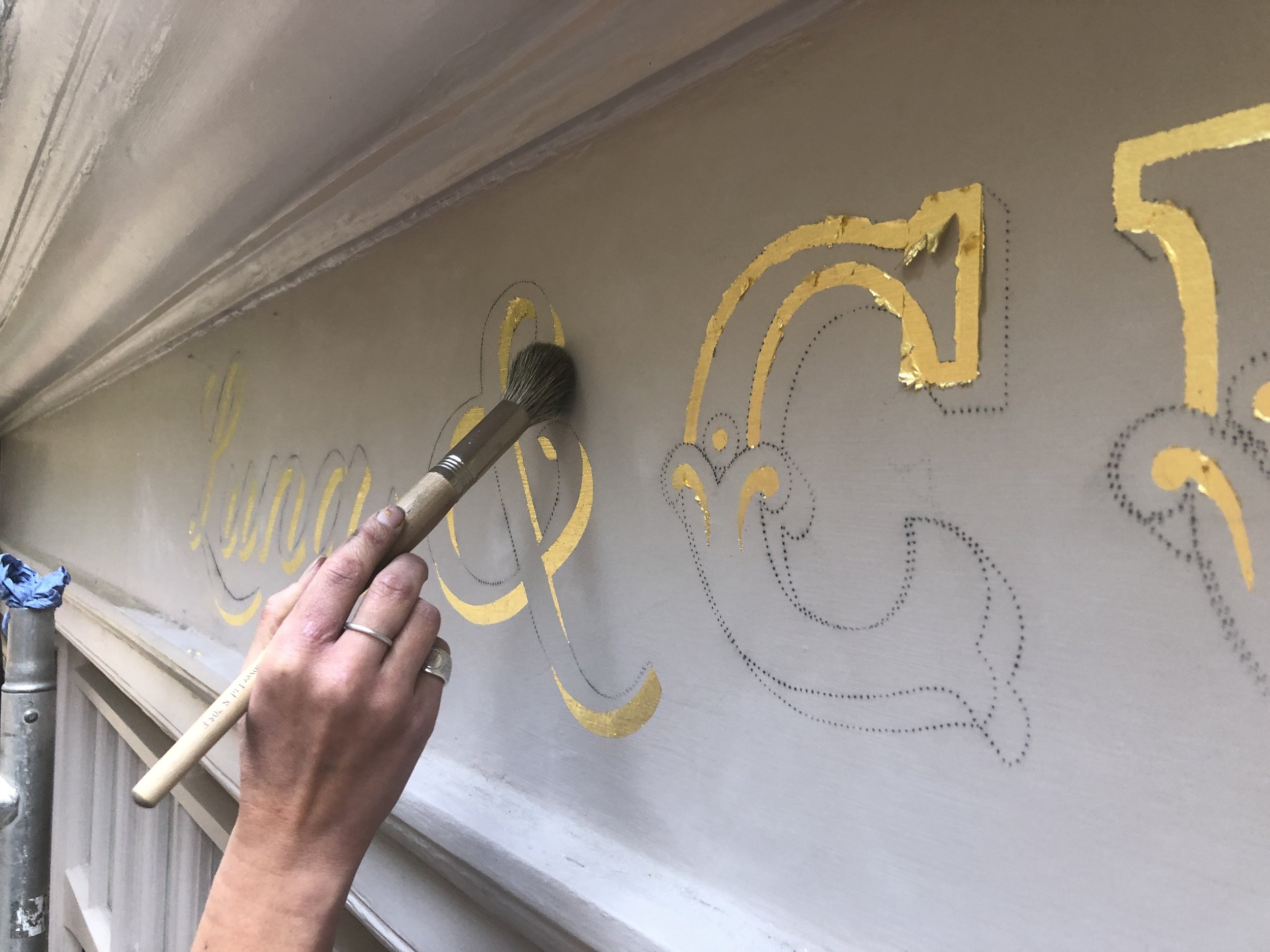
An artisan at work for the Sunny Sign Co, founded by Jake Tyler and Hana Sunny Whaler.