A spiral path
Cécile Fromont
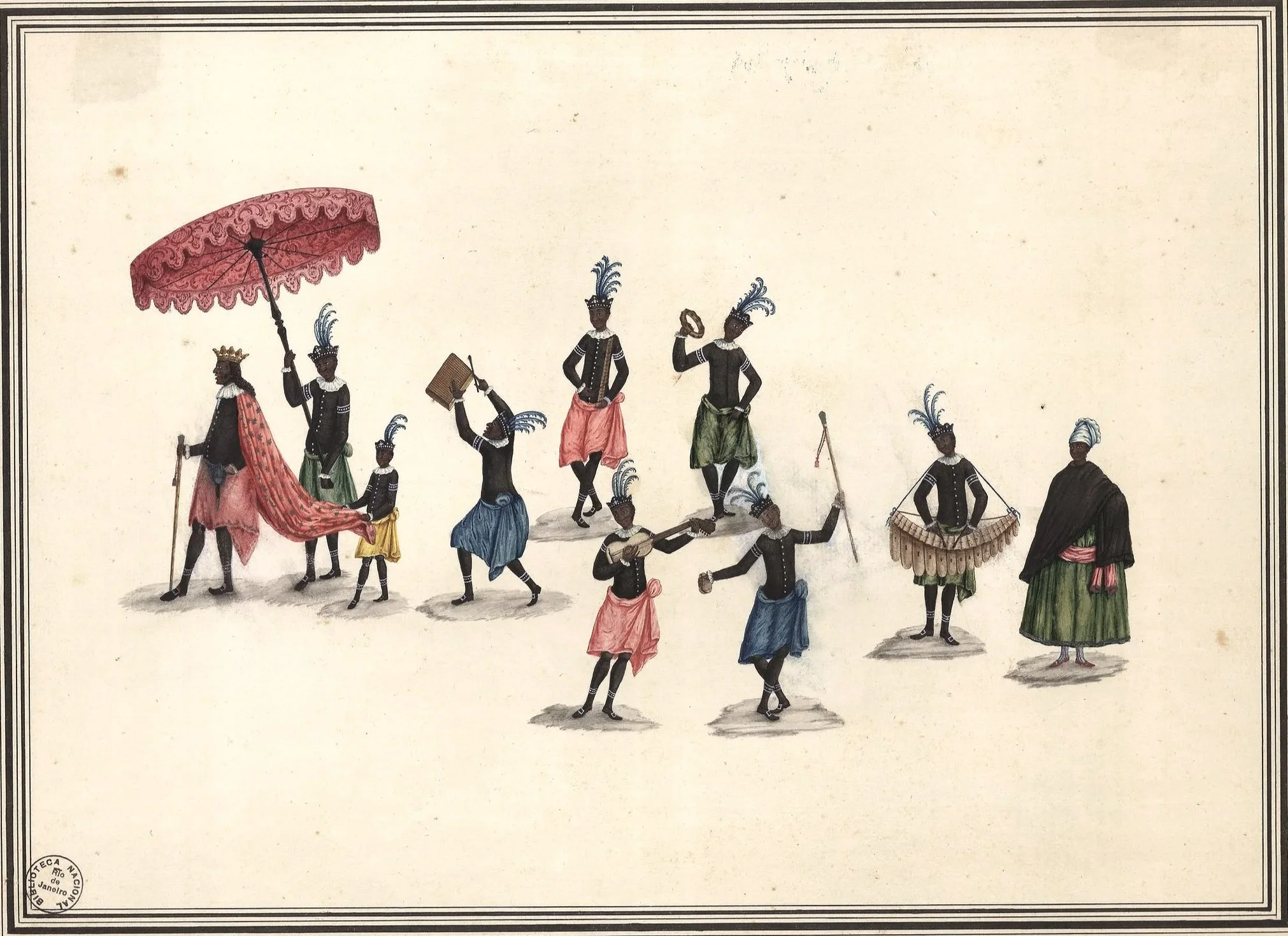
Carlos Julião, “Black King Festival,” last quarter of the 18th century (Brazil), watercolor on paper, in Riscos illuminados de figurinhos de brancos e negros dos uzos do Rio de Janeiro e Serro do Frio (Fundação Biblioteca Nacional, Rio de Janeiro, c.i.2.8).
The spiraling path of a falling feather: an apt metaphor for the history of the Afro-diasporic festival tradition. There are no predetermined trajectories in the emergence of these spectacles, no direct lines. Yet through them, members of the African diaspora have affirmed and celebrated their “sovereign joy” – a phrase coined by the scholar Miguel Valerio in his study of Afro-Mexican festivals of the sixteenth and seventeenth century, which applies equally well to related events staged across North and South America, from the early years of the colonial period to the present day.
In these festivals – among them Congado and Congada (in Brazil), Pinkster (in New-Amsterdam), and San Juan Congo (in Venezuela) – Afro-diasporic communities have celebrated the election of their kings and queens. Choreographed dances, bright and colorful outfits, and spectacular feather headdresses accompany Black royalty in forceful displays of political self-determination. These occasions developed as a form of autonomous cultural expression, social organization, and political empowerment, staging a generative confrontation between ancestral knowledge and the new life in the Americas. They stand, fleetingly but powerfully, against the violence of life at the bottom of slave societies.
The festivals have their ultimate roots in the Kingdom of Kongo, a realm in central Africa which independently converted to Catholicism and maintained sustained relations with Europe since about 1500. In the historical Kongo, a festival called sangamento gathered the elite of the realm in danced martial demonstrations of political rank and hierarchical allegiance. It showcased spectacular regalia mixing European and local insignia, weapons, and adornment. One element in the outfit that bridged the two sides was the feathers adorning the highest-ranking participants. They functioned both as early modern European “panaches” and emblems of local status. In the 1750s watercolor shown here, a single red feather in the cap of the leader – likely from a gray parrot’s tail – sets him apart from the crowd.
This restrained but striking display of distinction is in stark contrast to later depictions of feathered headdresses in the region, such as that seen in an ivory tusk carved in the nineteenth century on the Loango coast, north of the Congo River. Wearing a spotted animal skin and a large, flamboyant cap with two rows of feathers attached around the head, sword in hand, he exercises his power with a fierceness that matched the pervasive violence of the region, then in the grip of European colonial assault.
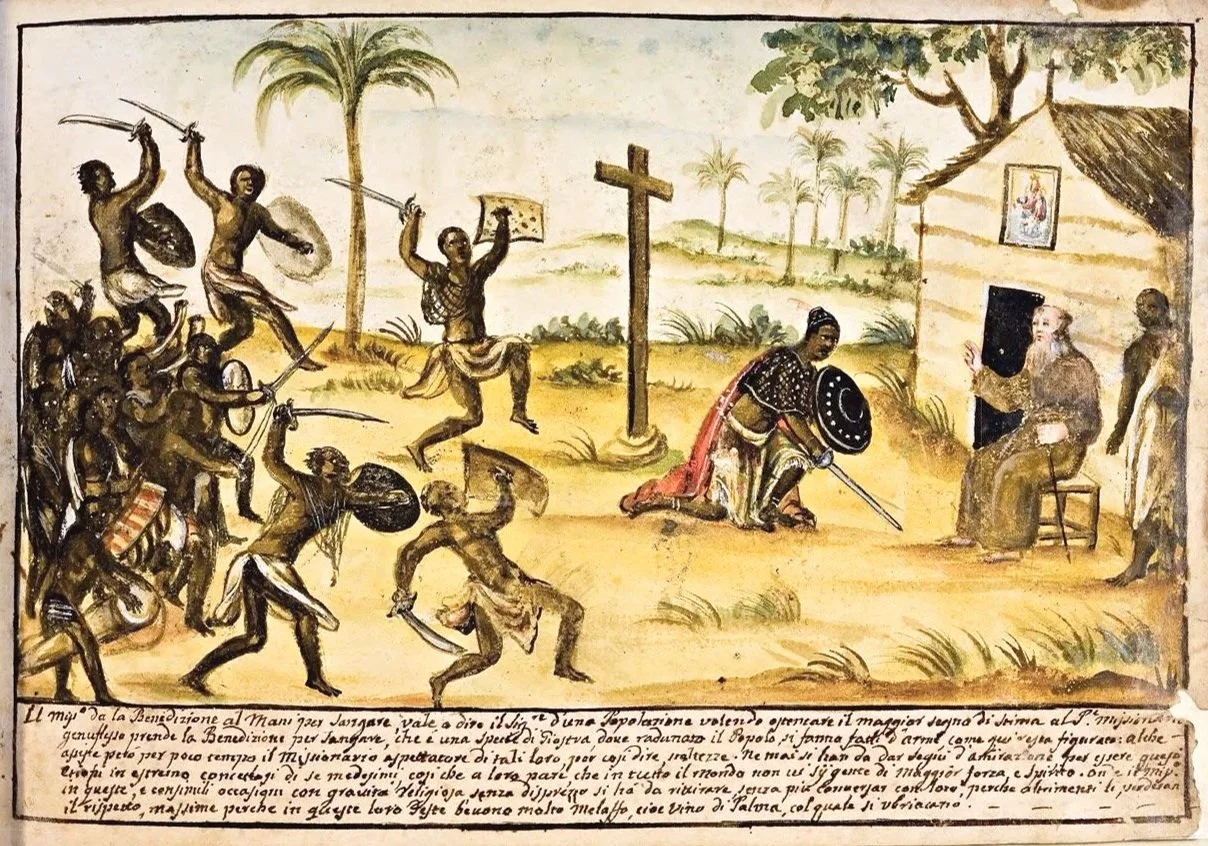
Bernardino d’Asti, The Missionary Gives his Blessing to the Local Ruler during Sangamento, ca. 1750, watercolor on paper, 7 5/8" x 11". (Biblioteca Civica Centrale, Turin, ms 457, folio 12 recto).
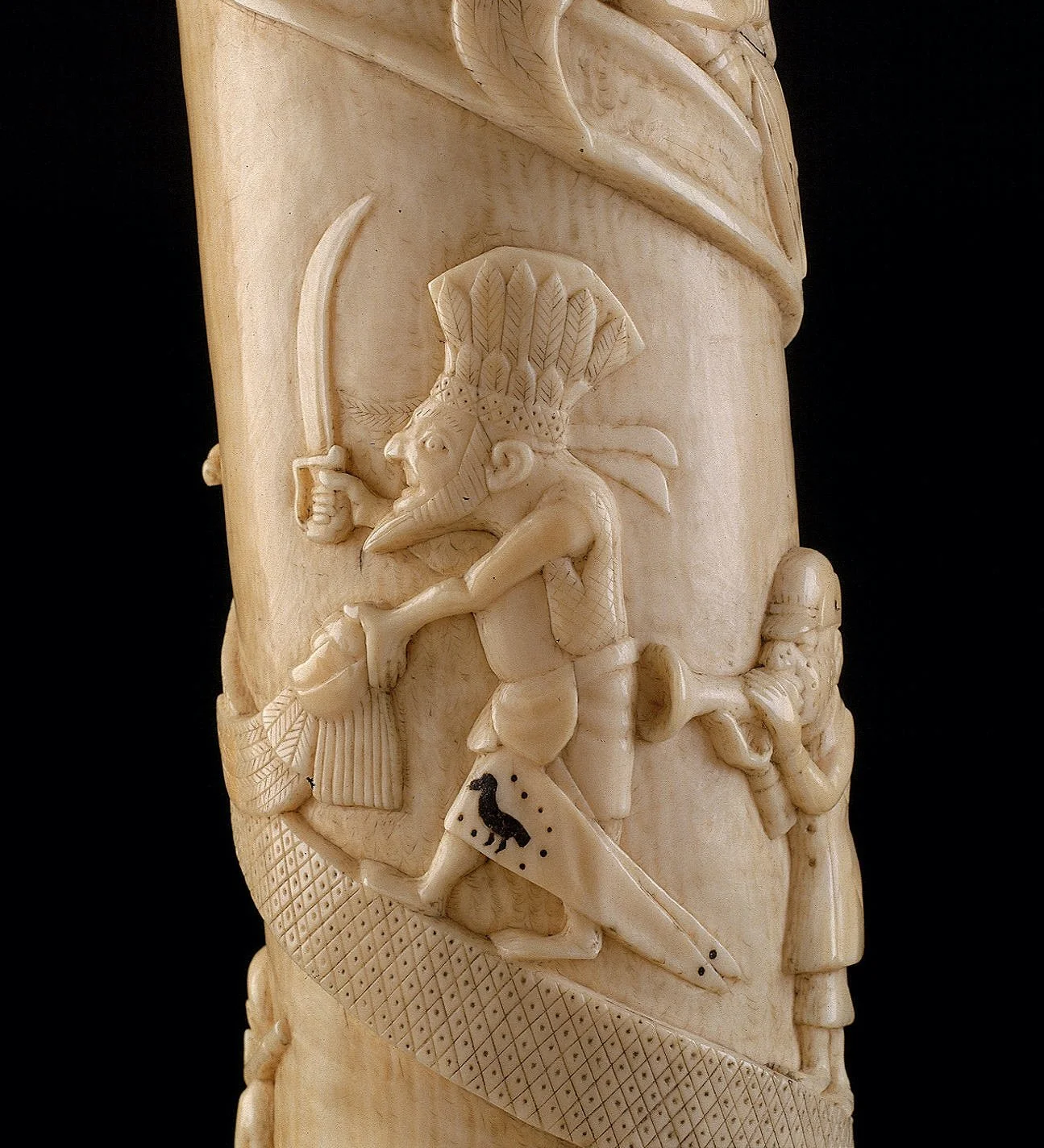
Detail, Kongo artist (Loango Coast, Kongo Central Province, Democratic Republic of the Congo, Cabinda Province, Angola). Ivory tusk, ca. 1860. Ivory. 28 1/2" x 5 3/4" x 2 3/8" (diam.). Smithsonian National Museum of African Art Collection, Museum purchase, 96-28-1.
The leaders of the Kingdom of Kongo, living as they did in an era of intense cross-cultural reckoning, embraced European fashion and insignia as a means of expressing and projecting political power and legitimacy at home and abroad. Boots, cloaks of imported textiles, checkered cottons, all featured in their ceremonial wardrobe. So did feathers. One plume appeared, for instance, in the European-style hat that completed the outfit of Dom Miguel de Castro, ambassador from the Kongo to Dutch Brazil and the Low Countries.
Dom Miguel’s red feather exemplifies the way that the Kongo elite adopted and made their own markers of European prestige. It also heralds his participation in networks of trade and diplomacy, through which he gained the beaver felt hat as a princely gift. Yet the feather also evinces central African notions of communication with the invisible forces that rule over the visible world. This complementary meaning is more explicit a late seventeenth-century image from Angola, depicting a ritual practitioner attempting to influence the weather; he has a handful of feathers in his right hand and a feathered wand in his left.
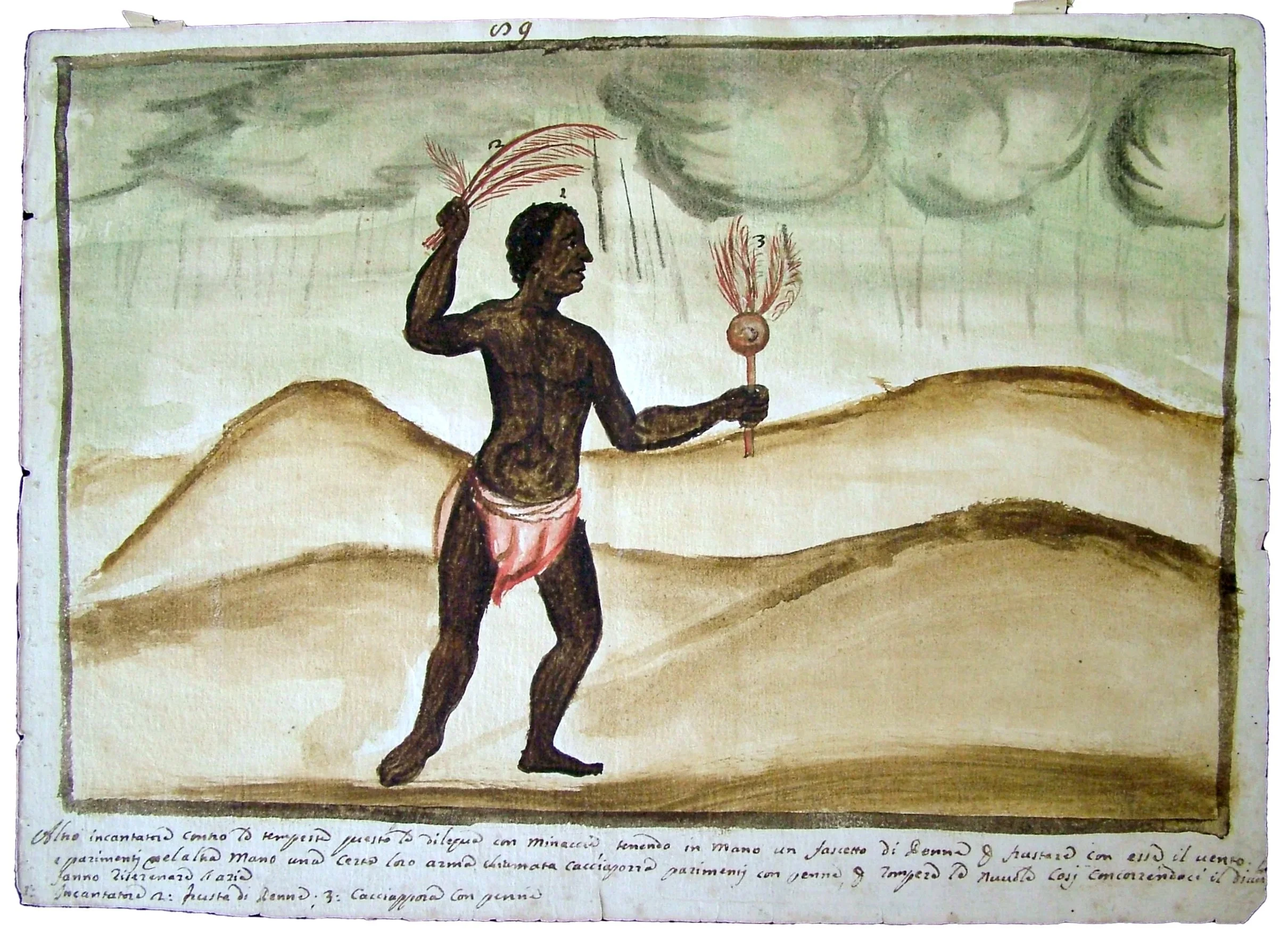
Unknown Capuchin artist. Republic of Congo. The Parma Watercolors (pw089), late seventeenth century. Watercolor paint on watercolor paper. 9 1/2" x 13 1/3". Virgili Collection (Bilioteca Estense Universitaria). Center for the Study of Material & Visual Cultures of Religion, Yale University. Photographs by Cécile Fromont.
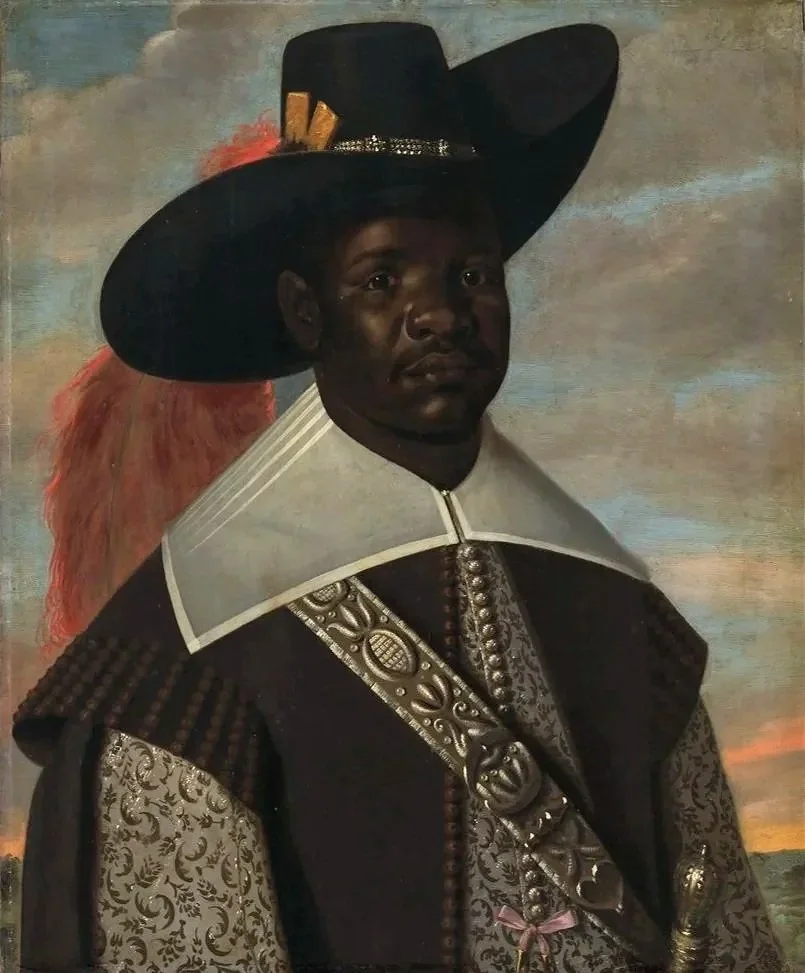
Unknown; Jaspar Beckx (earlier ascribed to); Albert Eckhout (earlier ascribed to), Dom Miguel de Castro, Ambassador of the Lord of Sonho, Emissary of Congo, 1641–1645. Painting on wood. Statens Museum for Kunst, kms7.