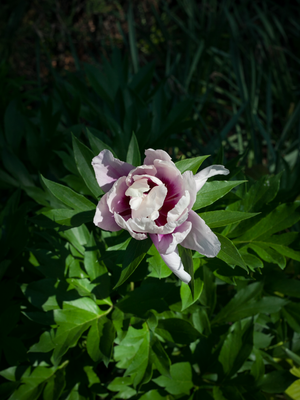
Pen and ink, and . . .
Elizabeth Yale
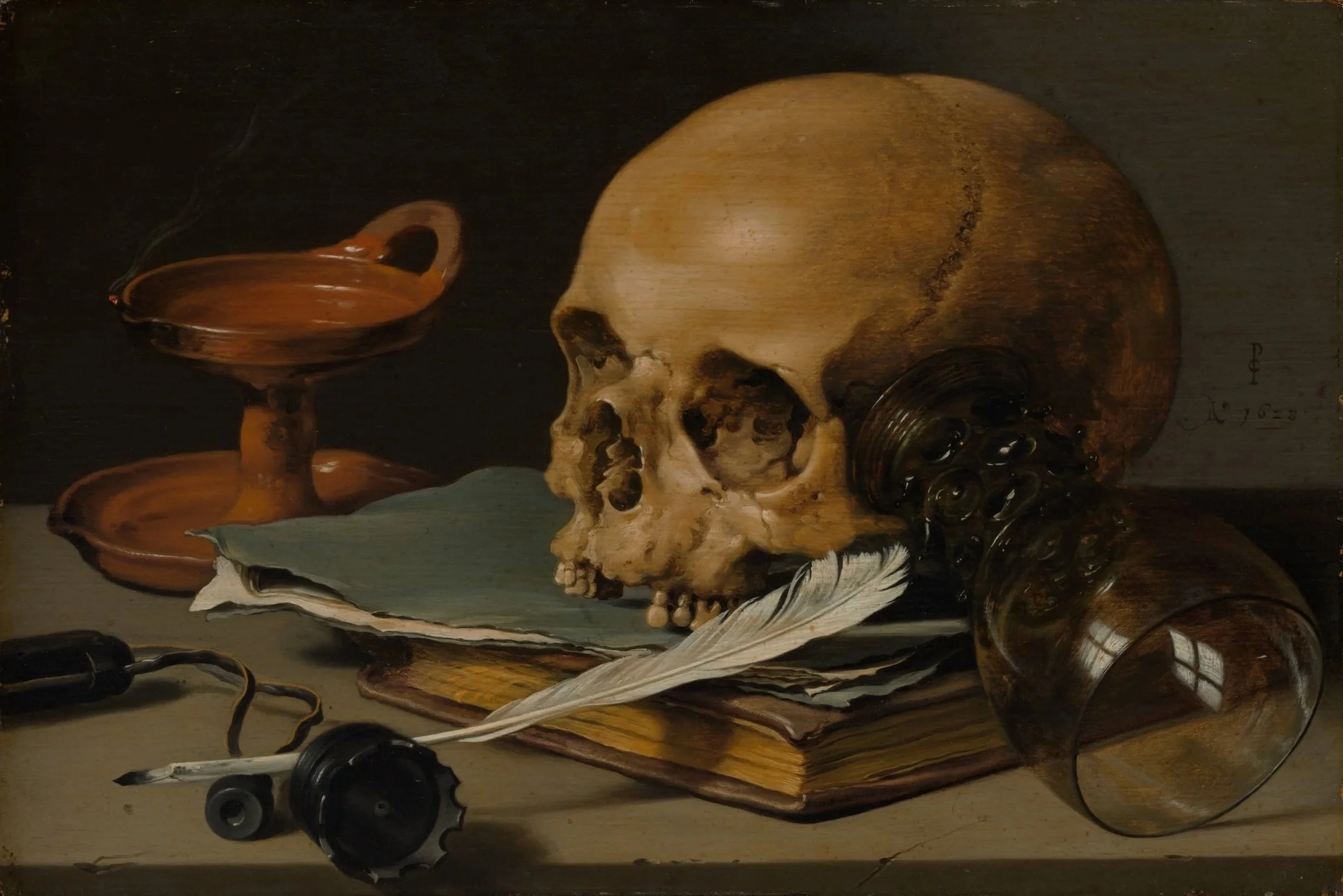
Pieter Claesz (Dutch, 1596/97–1660), Still Life with a Skull and a Writing Quill, 1628. Oil on wood. 9 1/2" x 14 1/8". The Metropolitan Museum of Art, New York, Rogers Fund, 1949, 49.107.
In early modern Europe, quills – the slender, hollow, rigid tubes cut from the rachises, or central shafts, of feathers – could be found everywhere. Packed with gunpowder, they served as the fuses in fireworks. Poked through a piece of cork, they held fishing line in an angler’s floats. In a skilled caregiver’s hand, they funneled medicines into the body’s nooks and crannies. A householder raising goldfinches might use a quill to pipe food into his chicks' beaks.
Most importantly, quills were the commonest of writing instruments. Though they could be purchased ready-made, they were not difficult to fashion: take a primary wing feather from a medium-size bird (usually a goose), trim and boil it in water, then harden it in the oven or in hot sand. Lastly, cut the nib (the open end) with a few flicks of a pen-knife (a trick school children learned at an early age). The slit – the channel through which ink flowed – was made longer or shorter depending on the hardness of the quill. It was a matter of debate whether to square off the “cheeks,” or instead cut the inner edge at a slight slant. Which was preferable came down to both personal proclivity and the requirements of one’s particular “hand.”
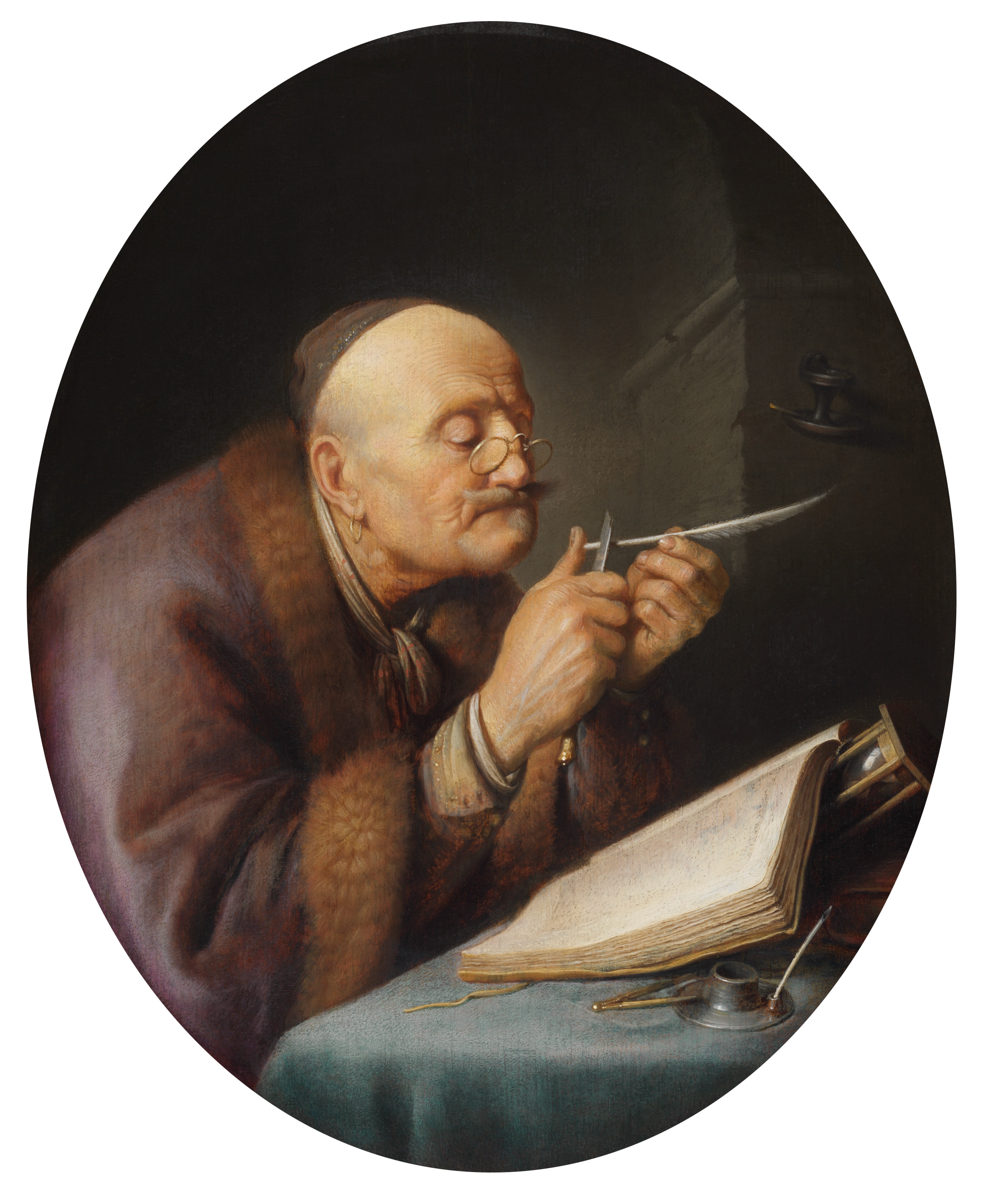
Gerrit Dou, Scholar Sharpening His Quill, ca. 1632-35, oil on oval panel, 10 5/16" x 8 5/16". Image courtesy of The Leiden Collection, New York. Gerrit Dou (Leiden, Netherlands, 1613–1675), Scholar Sharpening His Quill, ca. 1632–35. Oil on oval panel, 10 3/8" x 8 3/8". Image courtesy of The Leiden Collection, New York.
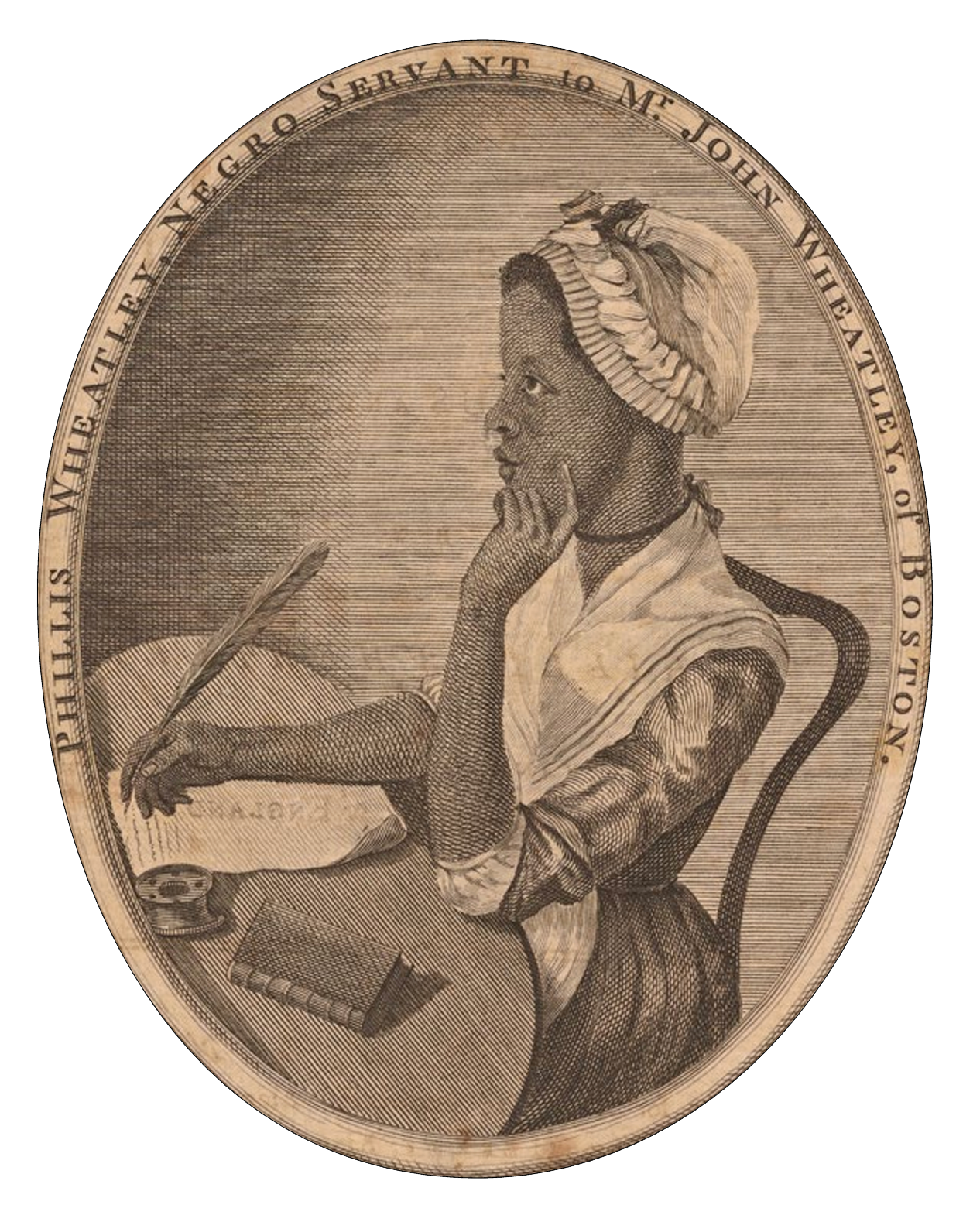
Phillis Wheatley (American, ca. 1753–1784), Poems on Various Subjects, Religious and Moral, illustrated by Scipio Moorhead, published by Archibald Bell, 1773. First edition, brown leather cover. Collection of the Smithsonian National Museum of African American History and Culture, 2012.46.46. CC0.
So ubiquitous was the writing quill that it became a symbol of thought itself. In portraits, philosophers and poets raise their eyes, paused mid-sentence, their goose quill pens poised over rumpled manuscripts. Interestingly, these pensive faces were themselves limned with carefully-selected quills: a "swans-quill Pointed-Pencil" to outline the faintest parts of the face, a goose or duck’s quill to shadow the eyes, nose, mouth, and ears, and a “goose quill bristle” to feather in the hair about the face.
As in art, so in science: Quills played an important role in experimental natural philosophy. In early blood transfusion experiments in 1666, physician Richard Lower telescoped quills together to carry blood from the carotid artery of one dog to the jugular vein of another. His contemporary, chemist Robert Boyle, described using quills as tools to lift and position delicate materials; he also instructed would-be experimentalists on the thickness of glass pipes used in air pump experiments by comparing them to swan, crow, and goose quills. Ordinary householders also made use of quills in their experimental practices: a quill could be dipped in a batch of homemade hair removal cream to test its strength before applying it to the skin. The caustic mixture of arsenic, lye, and unslaked lime was deemed to be just right when it stripped the barbs from the shaft.
Writers, artists, and natural philosophers, who typically worked at home, could source their quills from the bedroom: "bed-ticks" (mattresses) were plumped with the feathery bits of feathers, after being sheared from the poky rachises. Likely housewives and servants also took part in preparing quills for writing. Household books of secrets offered tips for curing the quills “in a slack oven, after the Bread,” so that they would be "hard as steel."
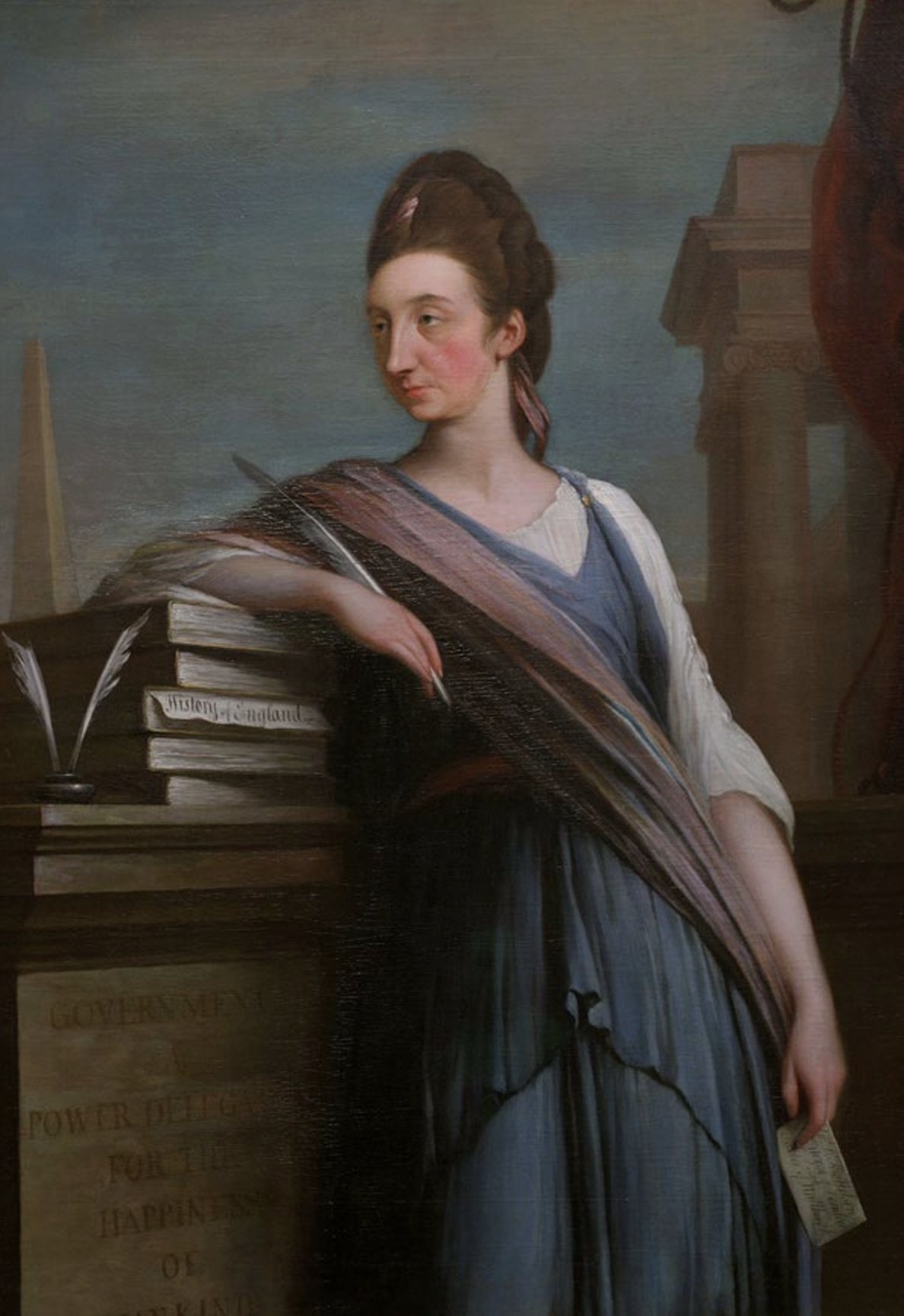
Catharine Macaulay (1731–1791), later Catharine Graham. British political writer and historian. Portrait by Robert Edge Pine (c. 1730–1788). Macaulay is shown dressed as a Roman matron to indicate her republican sentiments and belief in democracy, wearing the distinctive purple sash of an elected Roman Senator. Oil on canvas. 54" x 41 1/4". ca. 1774. National Portrait Gallery. London, England, United Kingdom. Photo: prisma archivo / Alamy.
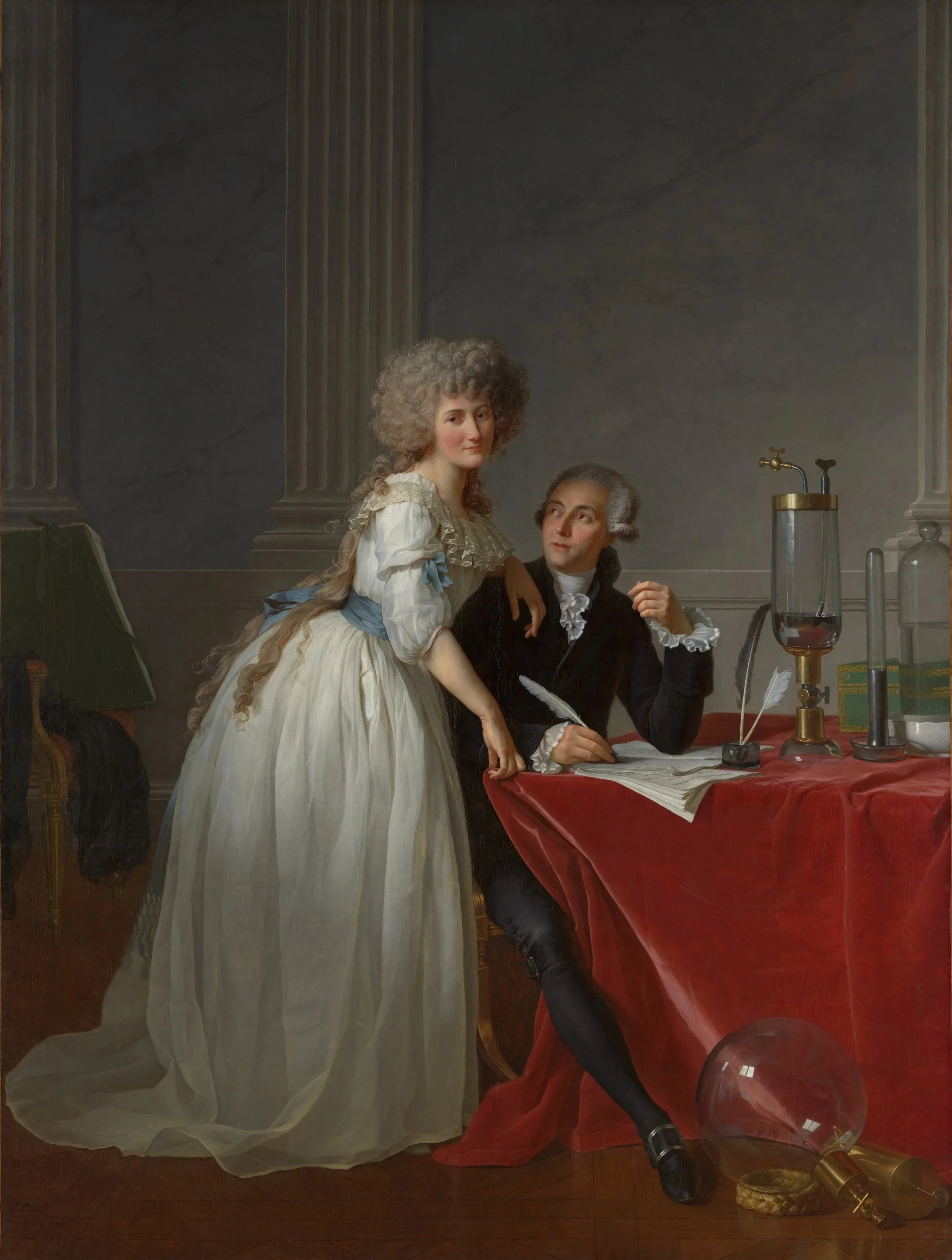
Jacques Louis David (French, Paris 1748–1825 Brussels), Antoine Laurent Lavoisier (1743–1794) and Marie Anne Lavoisier (Marie Anne 89Pierrette Paulze, 1758–1836), 1788. Oil on canvas, 102 1/4" x 76 5/8". The Metropolitan Museum of Art, New York, Purchase, Mr. and Mrs. Charles Wrightsman Gift, in honor of Everett Fahy, 1977, 1977.10.