In flux
Kelsey Malone
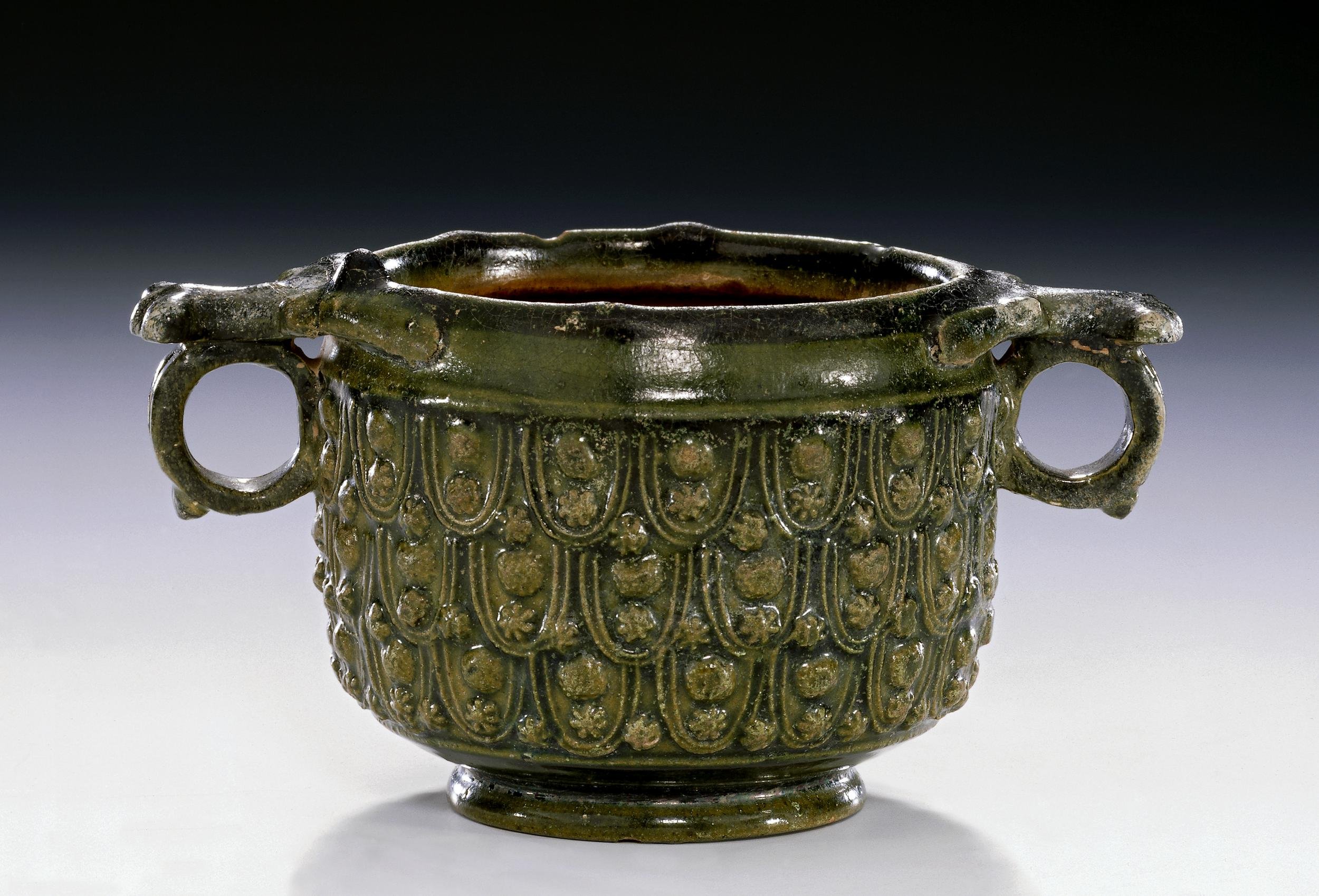
Roman, Skyphos, Turkey, 50 BC-AD 50. Lead-glazed earthenware. Purhased from Luzac & Co., The British Museum, 1931,0514.1. © The Trustees of the British Museum. Shared under a Creative Commons Attribution-NonCommercial-ShareAlike 4.0 International (CC BY-NC-SA 4.0) licence.
I was seventeen when I started selling my ceramics, and was taken aback when one of my first customers asked if the pieces contained lead. The question seemed a little dramatic, directed at a teenager at a Seattle community fair, but it was not unwarranted. Lead has left a deep stain on ceramics, with fear of exposure to its toxicity gradually developing since it was first used in ancient times.
Lead is a key ingredient in traditional low-fire earthenware glaze, which is formulated by balancing three components: a glass former, a stabilizer, and a flux. Silica is the most common glass former, less prevalent in low-fire formulas than higher-temperature stoneware and porcelain glazes. The stabilizer is often composed of powdered clay itself, and adjusts the glaze’s flow to prevent it from running off the piece when fired. The flux's primary role is to lower the glaze’s melting temperature and thus accelerate the rate at which it matures in the kiln. Lead is an ideal material for this purpose, because of its low melting point (Cone 022 or 1,000ºF), transparency, and high refractive index, resulting in a high-gloss, brilliant finish.
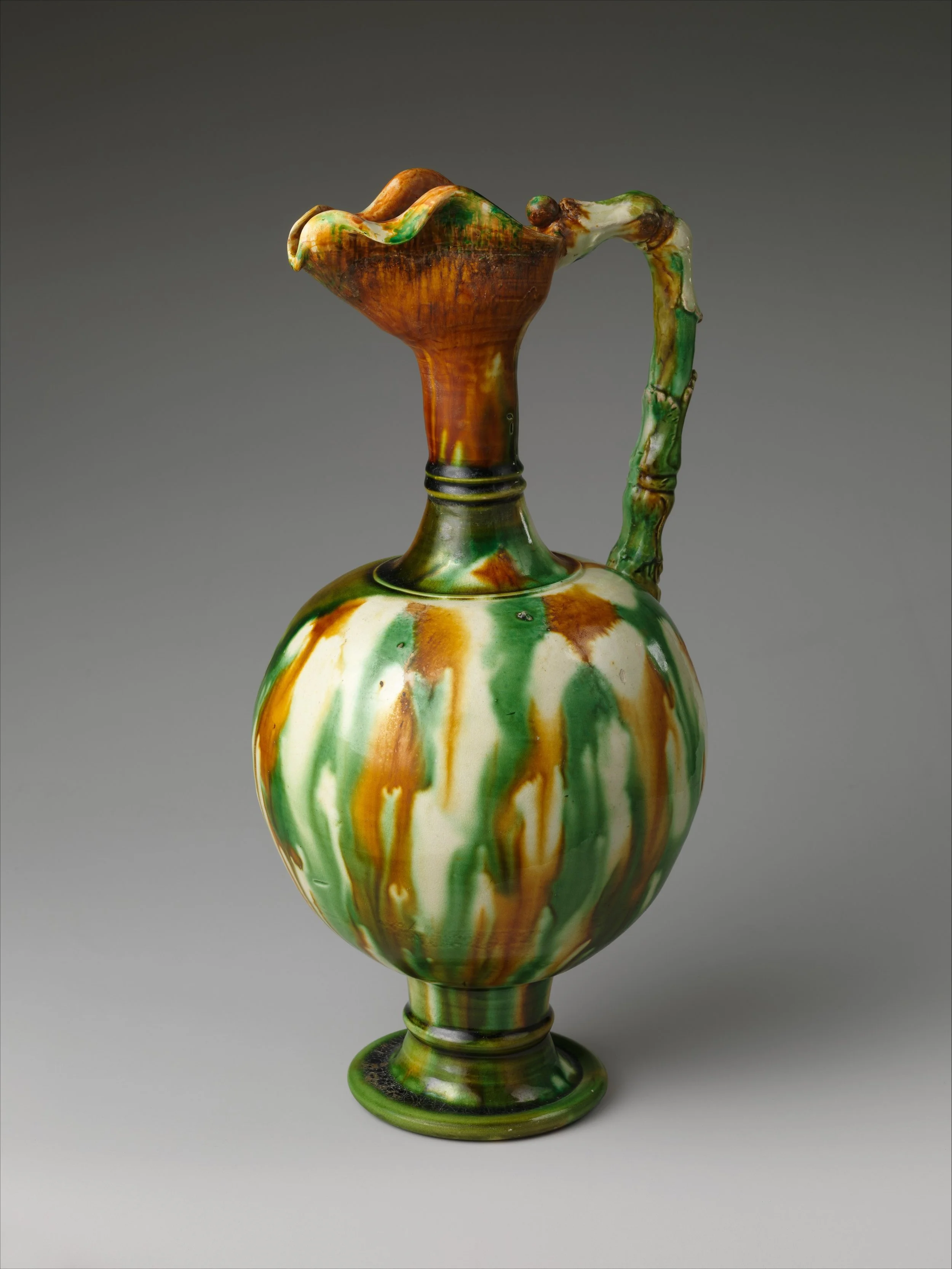
Chinese, Amphora, late 7th century, Tang ddynasty (618–907). Earthenware with three-color (sancai glaze). 11 1/8 in. The Metropolitan Museum of Art, New York. Gift of Stanley Herzman, in memory of Gladys Herzman, 1997, 1997.1.2. www.metmuseum.org
Early glazes were flux-dominant and prioritized melting at achievable temperatures. Alternative fluxes did exist, principally organic ash and alkaline salts, but lead's consistency and vibrancy were unparalleled. In the ancient Mediterranean – initially in Turkey, and then across the Roman Empire – and in China, lead glazes seem to have been developed independently. Initially, the goal was probably to waterproof utilitarian vessels, rather than for decorative purposes, but potters soon realized that in combination with the right colorants, lead could be used to create a spectacular palette, unlike anything seen before.
Examples of Roman lead-glazed wares include skyphoi (drinking cups) fired in provincial kilns, decorated using copper to make green and iron to create yellowish-brown. This same palette was also used, together with cobalt blue, on T’ang Dynasty sancai (three-color) earthenware – a profitable export along the Silk Road. In what it is today Iraq, potters of the Abbasid Dynasty developed the first examples of metallic luster glaze. Copper and silver oxides were adhered onto pre-glazed ceramics, then fused in a lead glaze without melting the precious metals.
The last significant innovations in lead glaze were initiated by Josiah Wedgwood in England’s pottery capital, Stoke-on-Trent. A meticulous formulator, Wedgwood developed a low-fire imitation of Chinese porcelain for a fraction of the production cost. His lead-glazed “creamware,” perfected over the course of 5,000 trials, was marketed as England’s finest tableware, eventually under the name “Queen’s ware” after he was granted royal patronage. High demand for the product, however, exposed thousands of factory workers to lead-based glazes.
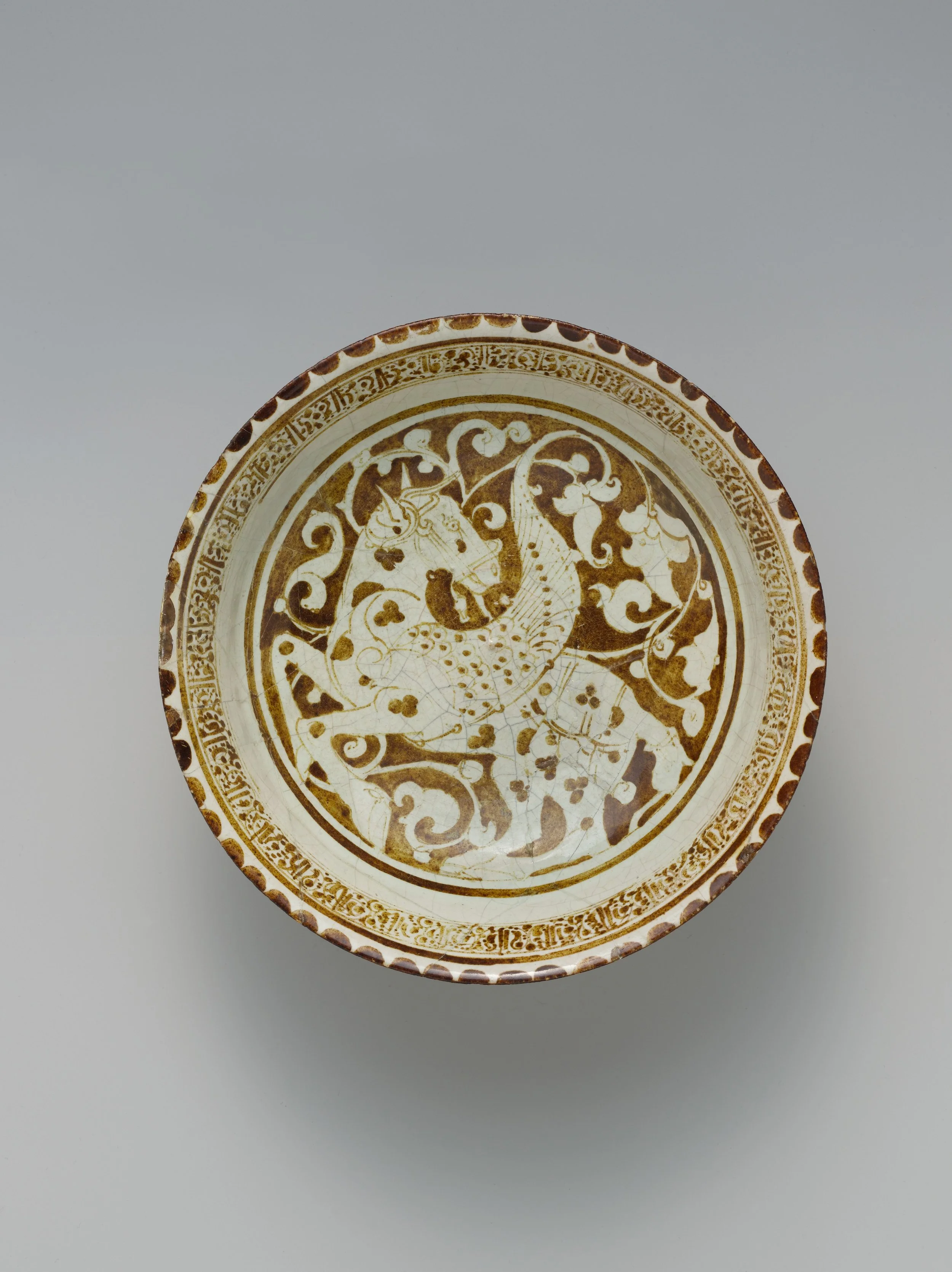
Iranian, Luster bowl with winged horse, late 12th century. Stonepaste; luster-painted on opaque monochrome glaze. 3 1/4 x 8 in. The Metropolitan Museum of Art, New York. Rogers Fund, 1916, 16.87. www.metmuseum.org