In front of the hide
Melissa Shaginoff

Melissa Shaginoff shaving moose hide, 2022, Courtesy of the author.
Blood splashes on my face and hair as I punch my bone flesher into a moose hide. It’s the early stages of traditional hide tanning and I am working on the inside, removing the layer of fascia between the muscle and dermis. Each strike must be firm and measured. I pause to inspect my work. A beige-toned skin is revealed beneath my strikes. It’s clean and smooth, and I smile to myself. I like the feeling of knowing what I am doing.
My journey in hide tanning has been a cycle: observe, attempt, fail, observe, attempt, fail. Every success is cause for a small celebration. While I find myself enjoying the feeling of assuredness, I also realize this isn't the traditional way of learning to tan moose hides. In a past time, at this point in my life I would already be confident in my knowledge of hide tanning. I would have completed several hides every year, and I would have taught the young women in my family to tan hides as well.
In the traditional way of tanning, I would be living my life in front of the hide. Every season of harvest, work, and joy would happen while I was working on a hide. The material would be the backdrop to my experiences, changes I would go through - a diary of who I would become. Today, I am reaching for this reality, adjusting my life to accommodate this work. It is difficult, exhausting, and healing. My personal methods include attending hide camps, creating artwork addressing the lessons of hide tanning, and teaching as I learn.
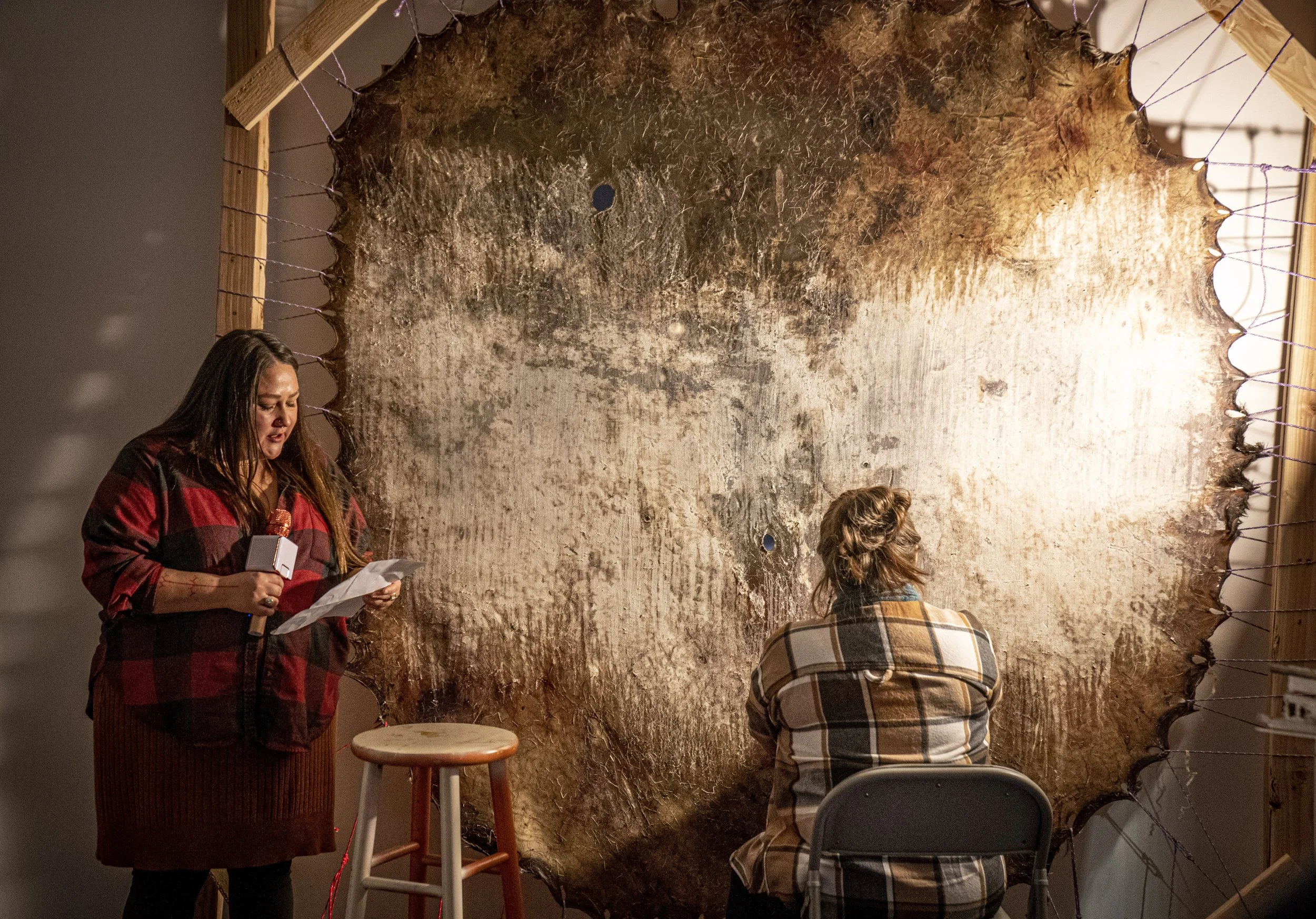
Melissa Shaginoff and Aunt Kari Shaginoff performing Moose Love Poems, 2022, Courtesy of the author.
In the last decade hide camps have been the catalyst for individuals and communities to reclaim and restore cultural knowledge. They follow the seasonality of harvesting by Northern Indigenous cultures, with time set aside to focus on the hide-tanning work, as well as being together. Hide tanning is an intense process physically, matched only by the emotional release felt when the hide tells you what healing you must do. For some it is letting go of the shame of not knowing the process. For others it is the training of cooperation, of learning to work together, and the risk of being vulnerable. And in some instances, it is the freeing of a trapped energy, the subsequent flooding of ancestral knowledge always carried within us.
I had the incredible opportunity to attend a hide camp in Cheesh’na (Chistochina, Alaska). The camp was led by Jessica Denny, an amazing artist, skin-sewer, culture bearer, and language warrior. During her hide camps Jessica brought us together around the matriarch of her family, Elder Lena Charley, her grandmother. Lena is an expert hide tanner as well as a dog musher, skin-sewer, hunter, cultural knowledge-keeper, and first-language speaker. Throughout, I was in awe of her family. Jessica’s bravery and fearlessness reminded me of the old photos of my Great-Grandmother Mary Shaginoff, standing in front of a huge bull moose, holding her gun with her youngest son standing at the hip height of her barely five-foot frame.
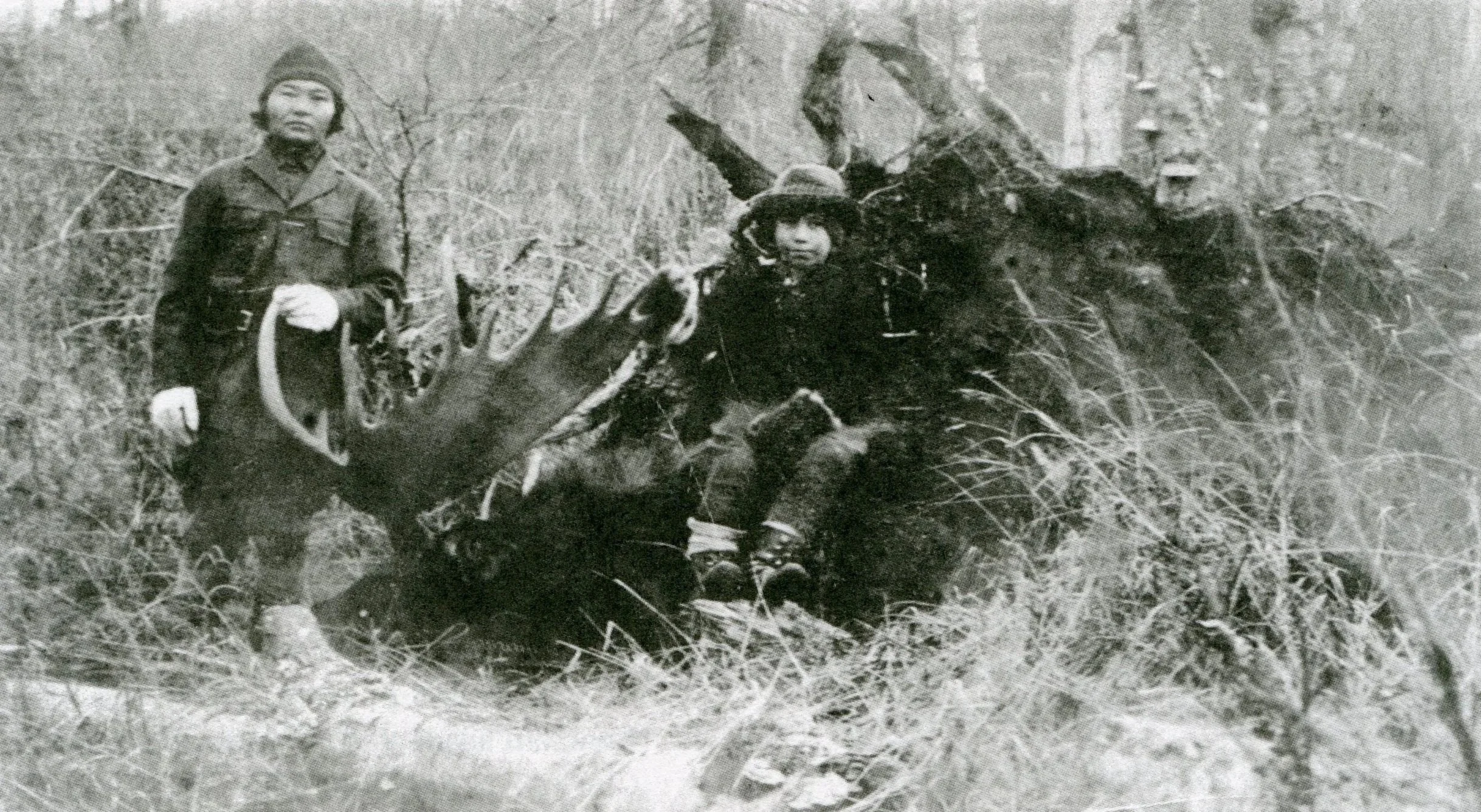
Mary Shaginoff and son Paul Goodlataw, 1934, Courtesy of the author.