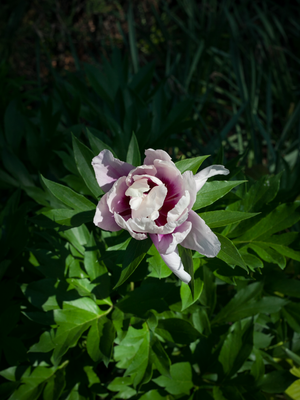
On milkweed
Andrew Hamilton
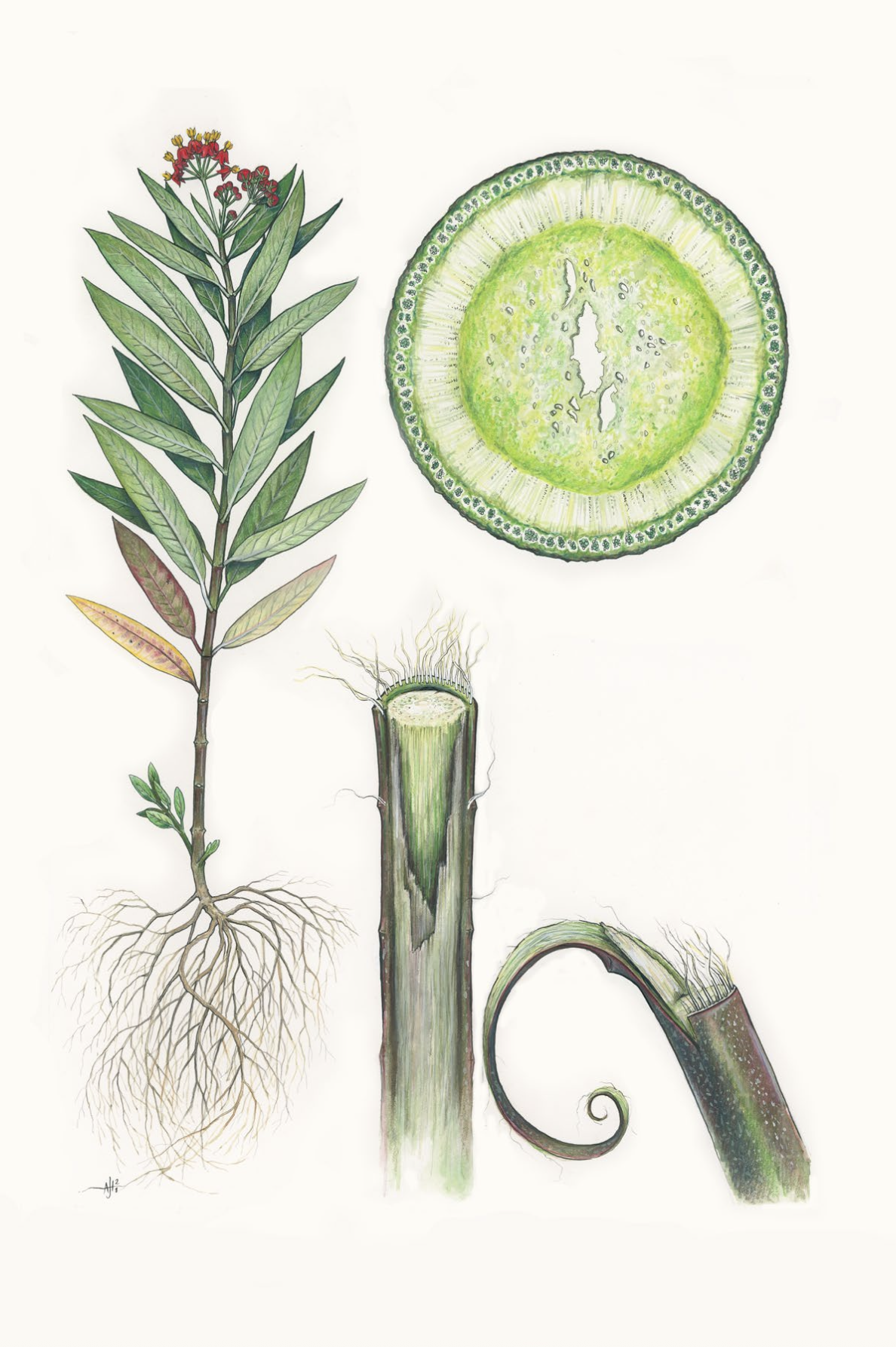
Milkweed, 2021. Andrew Hamilton.
Flax (Linum usitatissismum) is not native to the Americas. The plant was introduced by colonists who sought to import European ways of making cloth to this “new” world. But this hemisphere had its own extraordinary fibers, especially in the Andes region of South America. Here, societies cultivated a superior species of cotton (Gossypium barbadense) in multiple colors, domesticated llamas (Lama glama) and alpacas (Vicugna pacos), and sheared wild vicuñas (Vicugna vicugna) for their fleeces. The co-existence of these world-class fibers—cotton and camelid fleece—was an engine of artistic innovation, giving rise to one of the most prolific and structurally complex textile traditions in the world. These fibers are well-known to scholars of the Andes, and they comprise most textiles in museums, including all the famous masterpieces.
A subset of Andean textiles—commonly fragments of rather plain cloth, nets, and cordage—were made from what scholars term “vegetal fiber” (fig. 1). The white or tannish threads tend to look stiff and scraggly, which makes them easy to recognize. if I’m being honest, they have not usually held my attention for very long. Often, their most remarkable quality is their age, with many examples dating to well before the domestication of cotton. In fact, the oldest known textiles from South America—found in Guitarrero Cave, and thought to be from around 8,000 BC—were made from vegetal fibers, which specialists have identified as agaves, bromeliads, and tillandsias. Other coastal archaeological sites have yielded textiles made from milkweeds and bulrushes. Nonetheless, for most scholars in the field, “vegetal fiber” is a largely undifferentiated category. The stories behind these fibers, how they were grown or processed, even the parts of the plants from which they derive, all remain underexplored.
A number of years ago, the topic propelled me to interrupt a dinner at the house of Marco Curatola Petrocchi, the director of the Program of Andean Studies at the Pontificia Universidad Católica del Perú in Lima. From my vantage point at his table, I could see an Andean milkweed (Asclepias curassavica) growing in his garden. The small, cheery, red and yellow flowers shone brightly in the light from the window. My unsuspecting host followed me out into the night so that we could examine it, all before dessert! He told me there was a copse of them flowering in a nearby park, and you can imagine the route I took home.
I had not previously considered growing them myself. My own experiments raising them on my roof in Chicago have allowed me to explore them first-hand (fig. 2). You might know milkweed for its canoe-shaped pods that burst open with clouds of white fluff, like dandelions, carrying seeds through the air. This “floss” gives the seeding plant an uncanny resemblance to cotton – but it is not the same fiber that ancient Andean makers used to make textiles. Rather, they obtained fibers from a far less obvious source - inside the stems. If you snap one in half, you can see them around the broken edge like little white eyelashes (fig. 3). Looking at a cross-section of the stem under a microscope, the fibers are not so apparent (fig. 4), but as the sample desiccates they become visible as white-outlined bundles (fig. 5). While the floss might superficially resemble cotton, these bast fibers are more similar to flax.
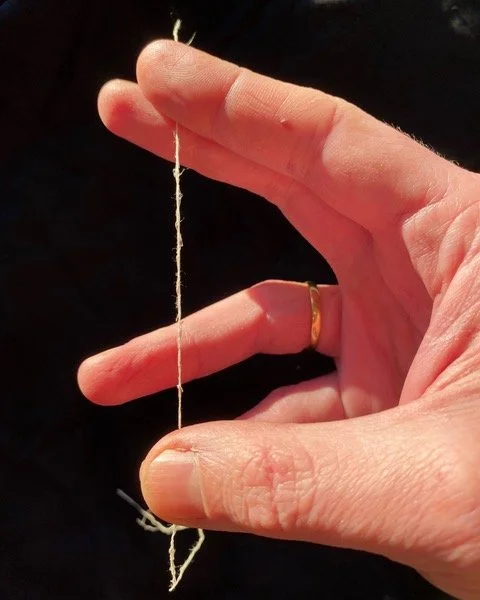
Homegrown, hand-processed, handspun milkweed thread. Photo, Andrew Hamilton.