Nylon for the nonconformist
Alison Kowalski
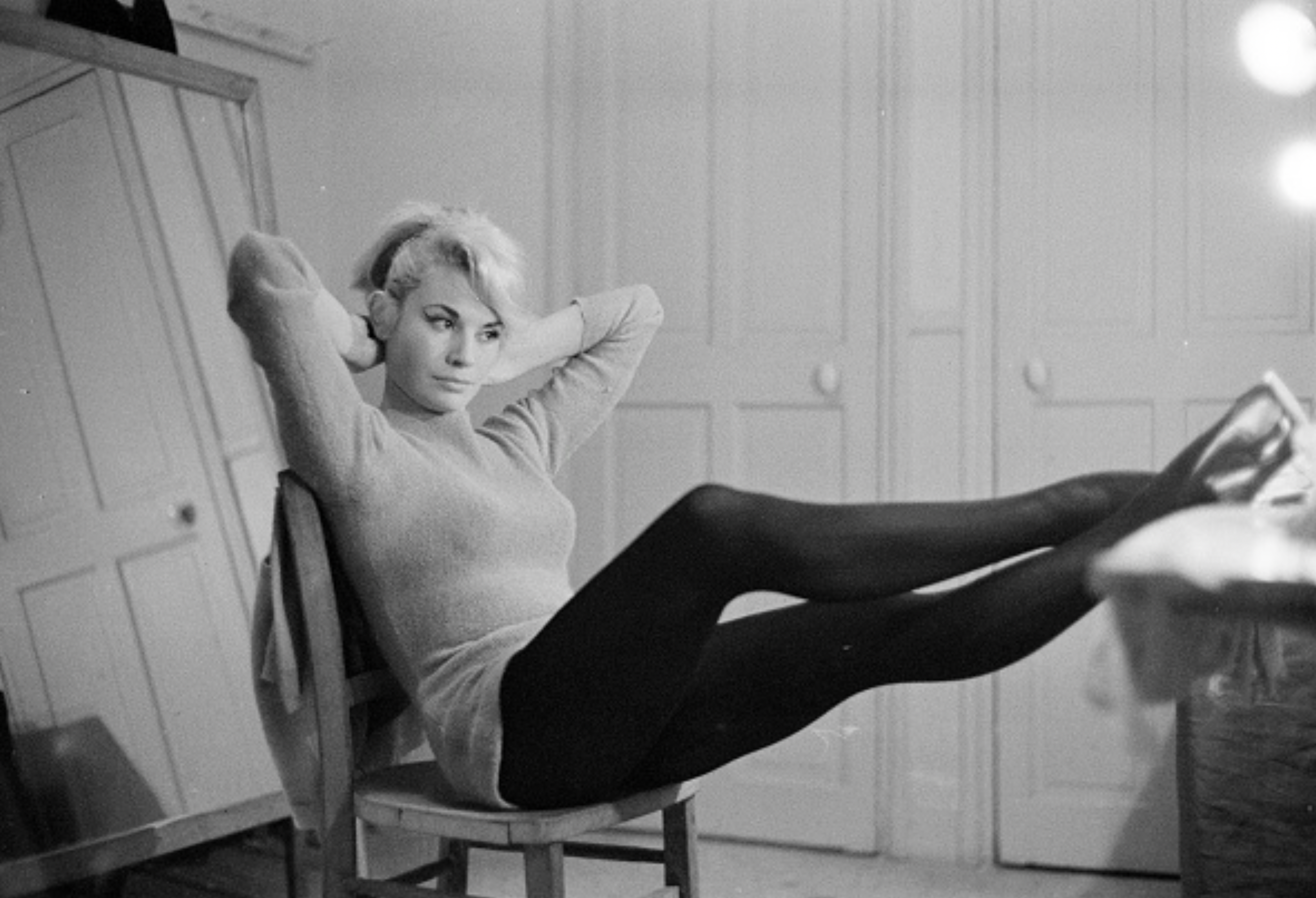
Rendezvous with Noelle Adam. 21 January 1958, photo by Jack Garofalo/Paris Match via Getty Images; Editorial # 166459032; Collection: Paris Match Archive.
After their debut in 1939, nylon stockings were celebrated as a scientific miracle that made women’s lives easier. They provided a similar sheer, skin-tone sheen as ladylike silk stockings but were more durable and simpler to wash. In the years after World War II, as nylons were selling out across the nation, chemists quietly marched on, experimenting and rolling out updates, including the first commercial stretch nylon. This new yarn was knit into hosiery that was opaque instead of sheer, which eventually found a customer base among young women, more and more of whom were questioning the norms their mothers had been eager to uphold. Although nylon initially helped some women embrace mainstream femininity, by the mid-1950s, it was helping others to subvert it.
In 1947, the Heberlein Patent Corporation announced Helanca, a yarn made of microscopic nylon filaments that had been twisted from straight into coils and set with heat. Since nylon is thermoplastic, the curl was permanent. After you stretched a Helanca yarn it sprung right back, so a garment knit from it retained its shape after repeated wearing and washing. Those microscopic curls also made the textile relatively thick, opaque, matte, and absorbent, making it look and feel more like cotton or wool than silk. Because Helanca lacked the translucence, luster, and delicacy then desired in ladies’ stockings, fashion forecasters predicted that women would not warm to the new material.
The forecasters, however, had overlooked one niche market: dancers. They had long worn tights, different from stockings in that they are a one-piece garment that covers the legs as well as thighs and lower torso. When Helanca tights hit stores in 1954, they were a sensation among dancers. They welcomed the stretchy material that soaked up sweat and washed back into shape time and again. And they had no problem with the matte finish, since their tights were usually opaque, in light pink or black.
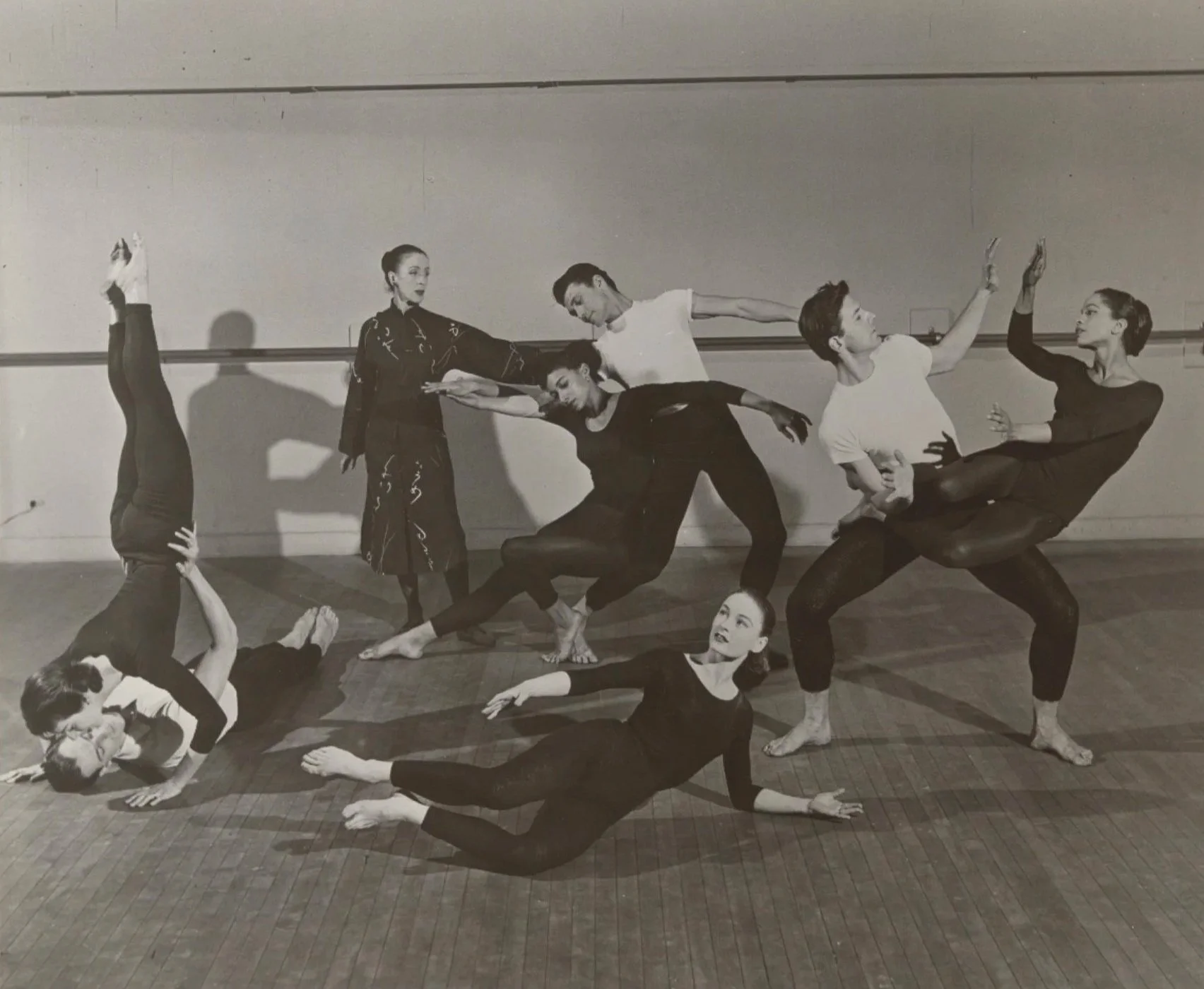
"Martha Graham and members of her company in her studio." Black and white photograph. Jerome Robbins Dance Division, 1952 - 1962. The New York Public Library Digital Collections, b12146482.
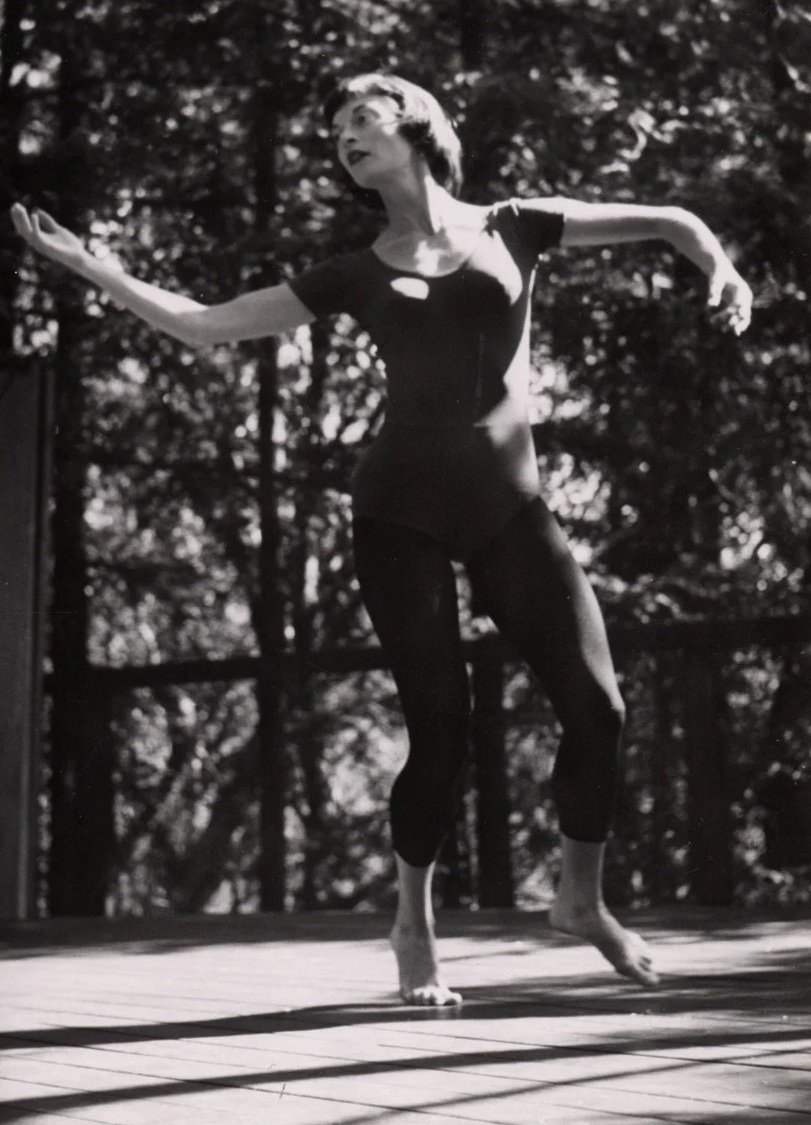
Photographer Unknown, “Shirley Ririe in "Early Adult Class," ca. 1950s-1960s,” Anna Halprin Digital Archive and Tamalpa Instiute Center.
Black tights in particular were associated with modern dancers, who since the 1930s had commonly worn footless ones for practice and performance. Unlike classical ballet, which typically featured storylines of the-princess-saved-by-the-prince variety, those of modern dance often featured strong, independent women like the reclusive poet Emily Dickinson or Clytemnestra, the husband-killing queen from Greek mythology. The choreography too was unconventional, meant to exalt individuality and unleash raw emotion. It was not meant to be pretty.
Modern dance was also relatively easy to take up, so that it was incorporated into many U.S. high schools and colleges as a standard part of girls’ curriculum. Professional companies brought the art form to even more audiences by touring the country and performing—sometimes for free—in public venues like auditoriums and community centers.
The home of modern dance was Greenwich Village, where the most renowned companies rehearsed, lived, and socialized. Soon non-dancers in the neighborhood were sporting black tights as everyday dress. The trend spread to college campuses, adopted by students who abhorred the sea of sweater sets in which they found themselves. Compared to nylon stockings, Helanca tights were warmer, less likely to run, and less fussy since they allowed you to forego a girdle and its cold metal clips. The boldest young women tossed out their skirts along with their girdles, simply wearing oversized sweaters or tunics on top of their tights.
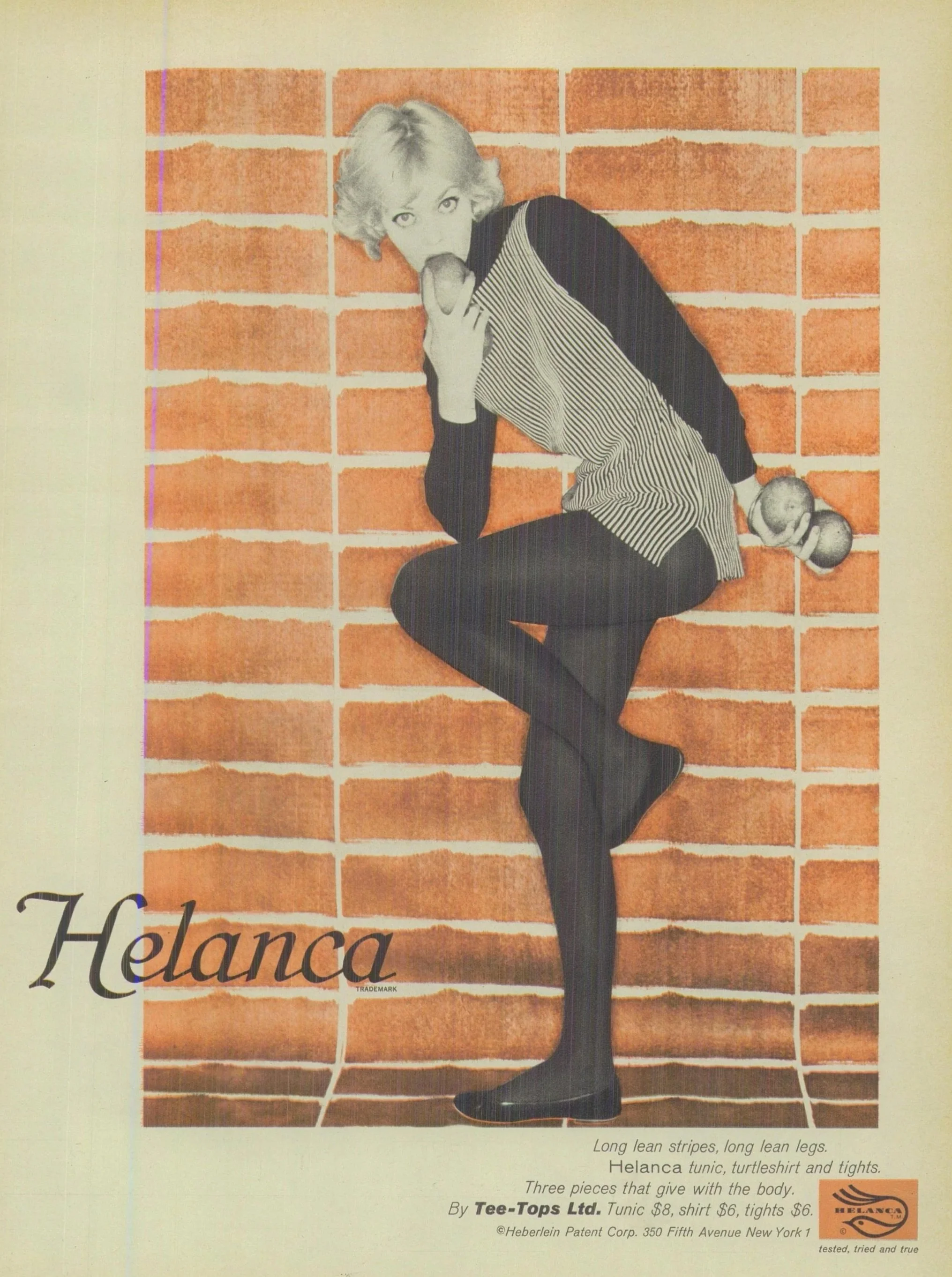
Helanca advertisement in Seventeen, vol. 17, no. 10, (Oct 1958): 55.
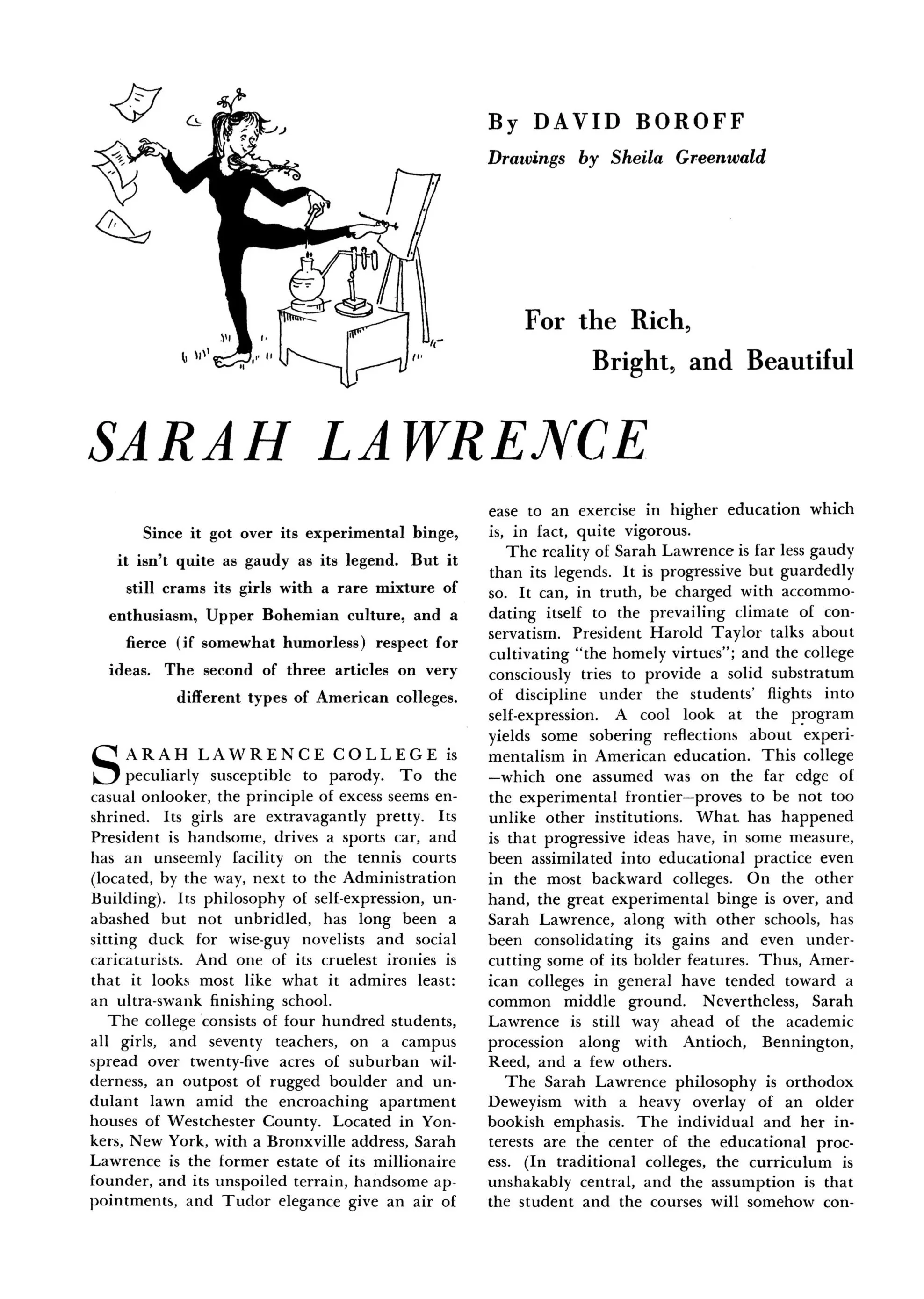
Cartoon depicting a Sarah Lawrence student in Harper’s Magazine, Nov 1, 1958; 37.