Paper dresses
Helen Jean
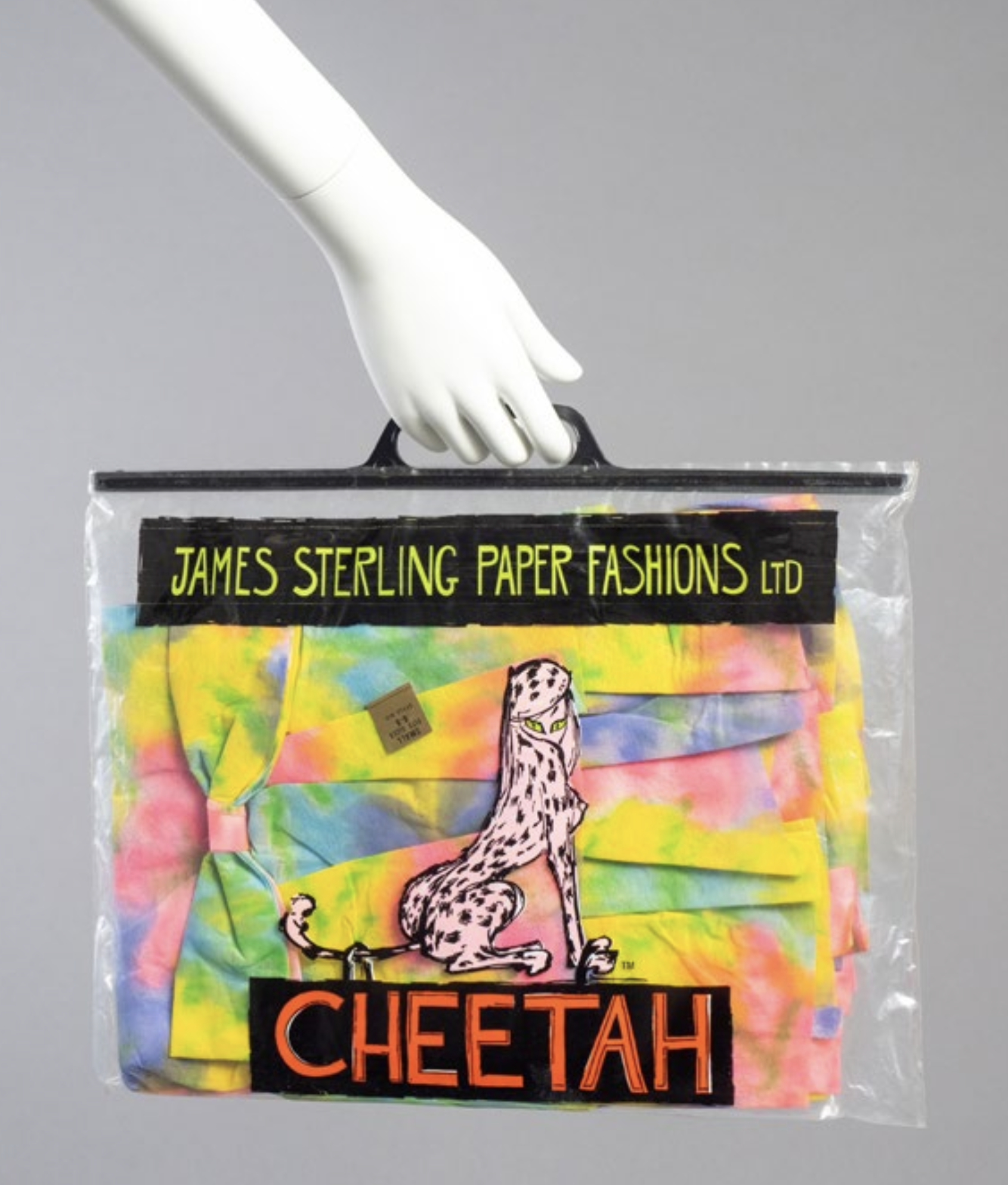
James Sterling Paper Fashions, Dress, c. 1966, Collection of Phoenix Art Museum, Image © Phoenix Art Museum, Photo by Airi Katsuta.
In 2021 two bankers boxes arrived on my desk at the Phoenix Art Museum, delivered by a collector of rare fashion named Kelly Ellman. The contents, over 80 wearable paper garments from the late 1960s, were folded up – many still tucked neatly into their original packaging. Collected over three decades, they had been stored in a closet safely away from light exposure and moisture.
Over that summer and into the fall, I carefully cut open each package and removed the contents. Most of the garments had their original packaging and advertisements still intact, and their bright printed colors too. Polka dots and stripes, cartoon characters, floral prints and ever-popular paisley all featured prominently; the material itself varied from soft packing paper textures to a dryer sheet-like material. Some were manufactured with all-over perforations, giving them a slight roughness, while others had embossed decorative patterns. Still others were laminated with a metallic finish, somewhat like the corrugated plastic that sits inside a candy box.
I carefully opened each brightly printed, folded bundle to reveal wearable paper dresses, jackets, belts, rompers, jumpsuits, bikinis, tote bags and hats, all in near perfect condition despite being over 50 years old. I noticed they were all sewn with thread, using machines - not glued or heat set, but put together just like any traditional garments, complete with buttons, zippers, elastic, and belts.
Research soon filled in the story. Paper clothing exploded onto the fashion scene in 1968, first marketed by Scott’s Paper Co., a Philadelphia-based paper company (also credited with developing the first commercial toilet paper roll). They quickly became the “it” item for hip youth, a trend fueled by paper and chemical manufacturers who wanted to promote new non-woven textiles, which felt like fabric but offered disposability, a new concept in clothing. Dupont, one of the most prolific producers of paper garments, promoted their trademarked Reemaymaterial as “closest in hand to chiffon,” and went so far as to host a paper dress ball in 1968, prompting American fashion designers to create custom looks for VIP guests such as Wendy Vanderbilt.
To better understand the garments and to prepare them for exhibition, a selection was sent to conservator Martha Winslow Grimm. She spent months slowly removing hard creases, adjusting her methods for each unique material. We photographed the garments up-close with backlighting, allowing us to better understand their structure and manufacture, and why some of them were more durable than others.
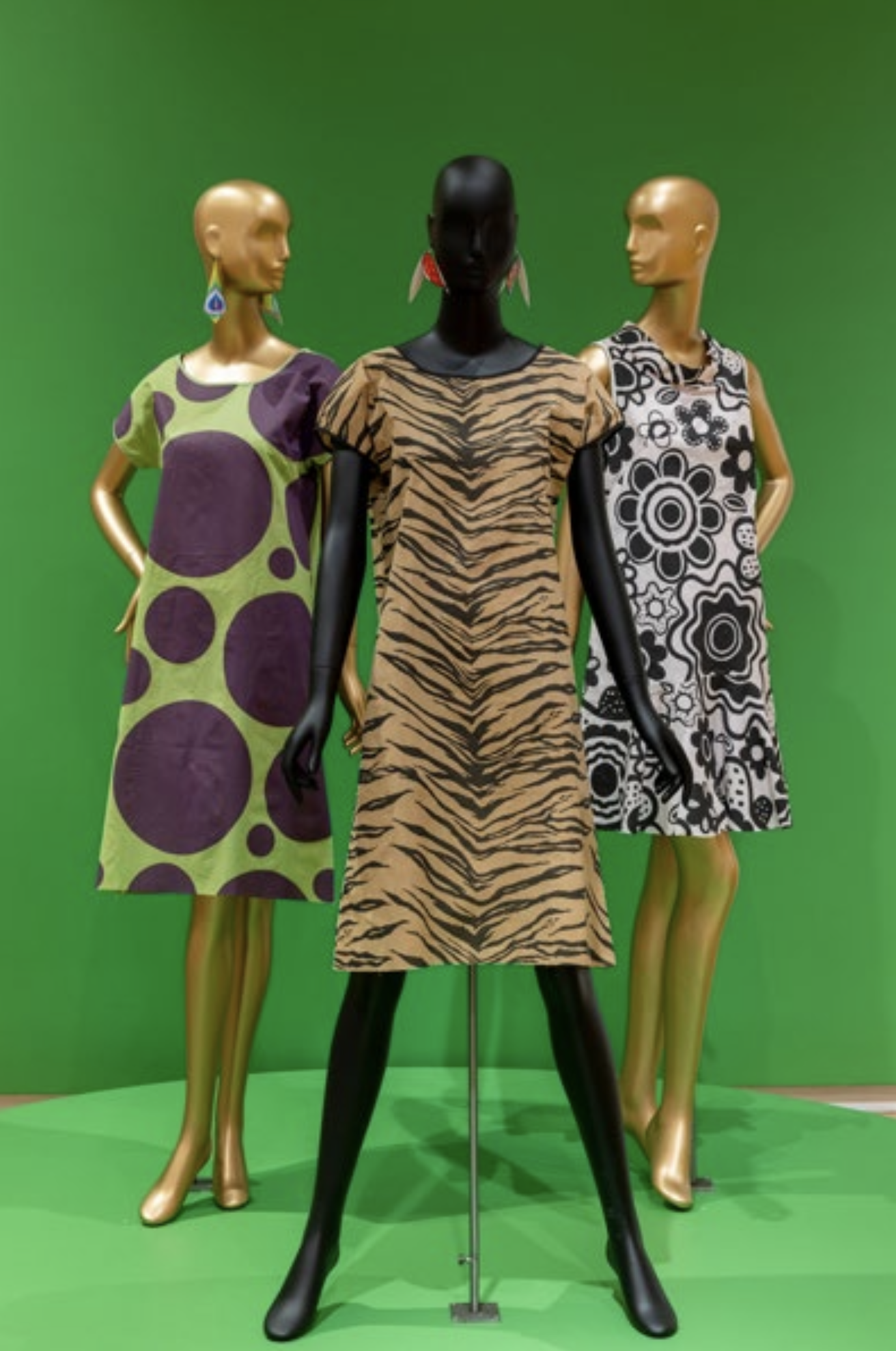
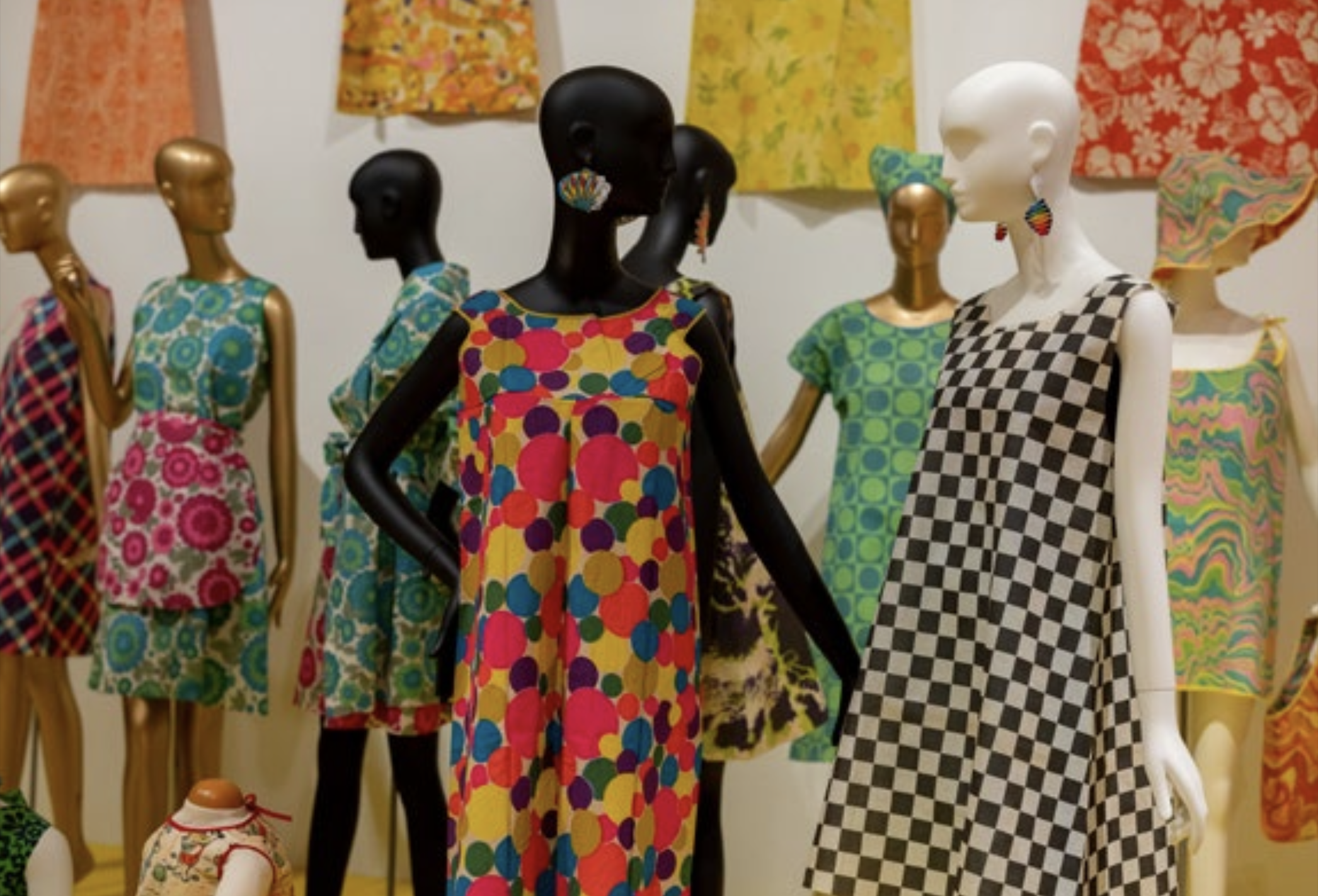
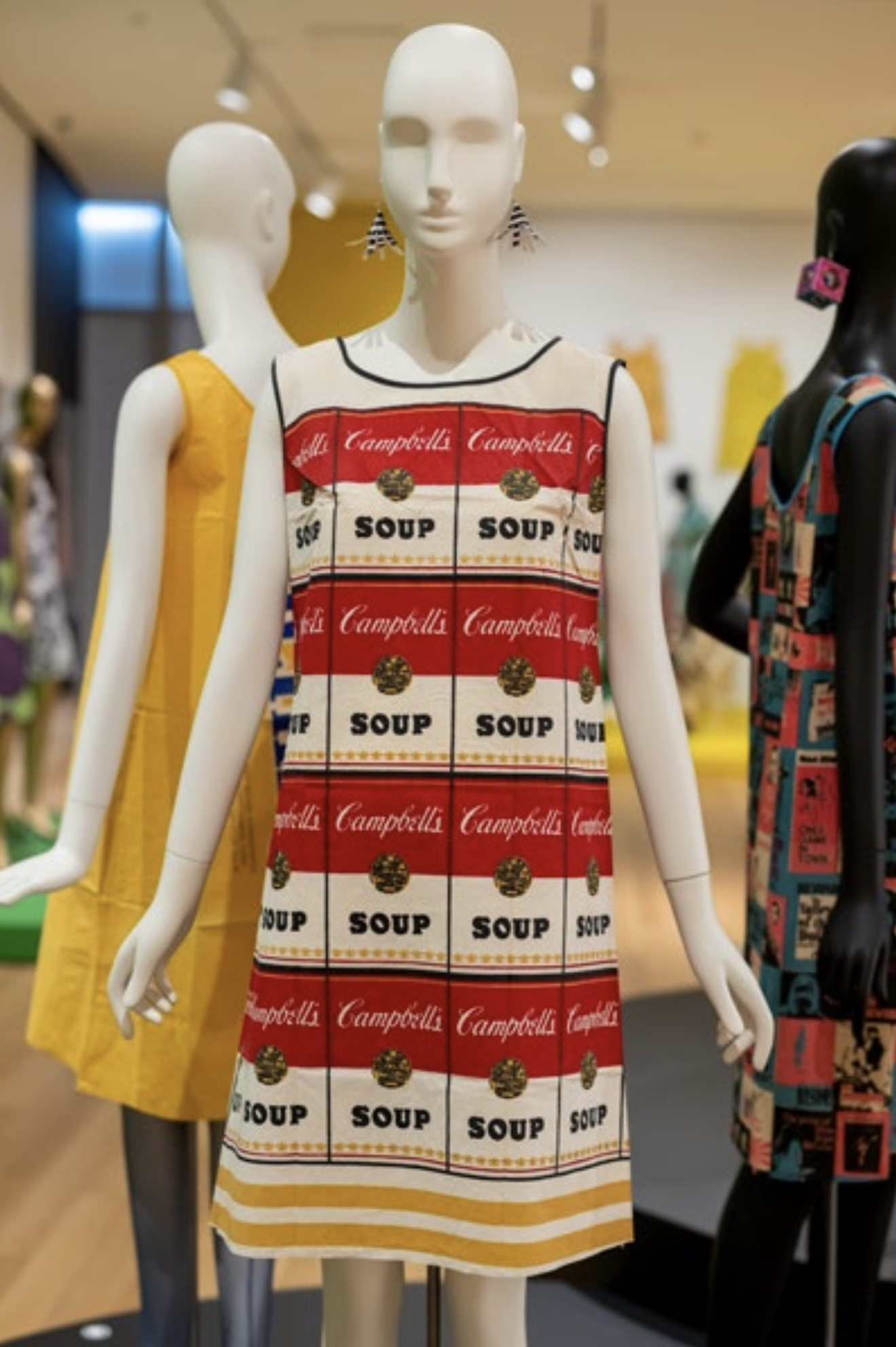
Installation view of Generation Paper: A Fashion Phenom of the 1960s at the Museum of Arts and Design, New York (March 18, 2023 to August 27, 2023), Photo by Jenna Bascom; courtesy the Museum of Arts and Design. / Unknown, Campbell’s Soup’s “Souper Dress”, 1966, silkscreen printed paper, cellulose and cotton, Collection of Phoenix Art Museum
The images revealed that some of the materials had an internal scrim of loosely woven yarns, which prevented them from being torn easily like a piece of writing paper. In other cases, the internal yarns were short lengths a few inches long, laid all in one direction like wood grain. Again, these yarns provided some rip-stop qualities to the material. Still others had no reinforcement at all, relying instead on embossed patterns to create structure and give the material a pleasing texture.
With names like Dura-weve, Kaycel, Fibron and Tyvek, these materials were excitingly futuristic. Unfortunately, they also felt awful against the skin - itchy and uncomfortable, rubbing painfully under your arms. They never stretched when you moved, could only be worn a few times, and were easily ruined. A watery spill or greasy stain would turn the paper transparent.
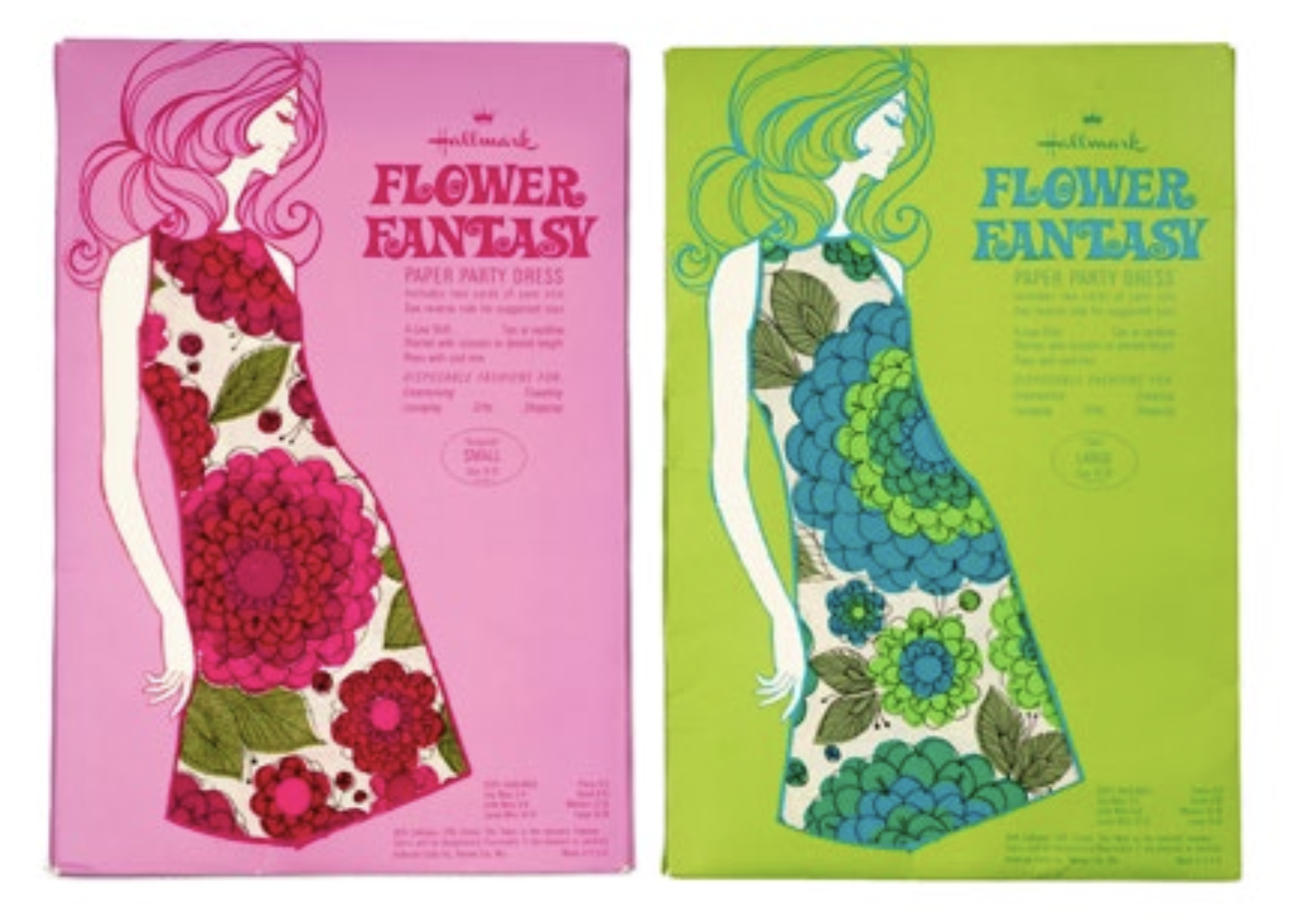
Hallmark, “Flower Fantasy” Dresses, ca. 1967, Collection of Phoenix Art Museum, Image © Phoenix Art Museum, Photo by Airi Katsuta
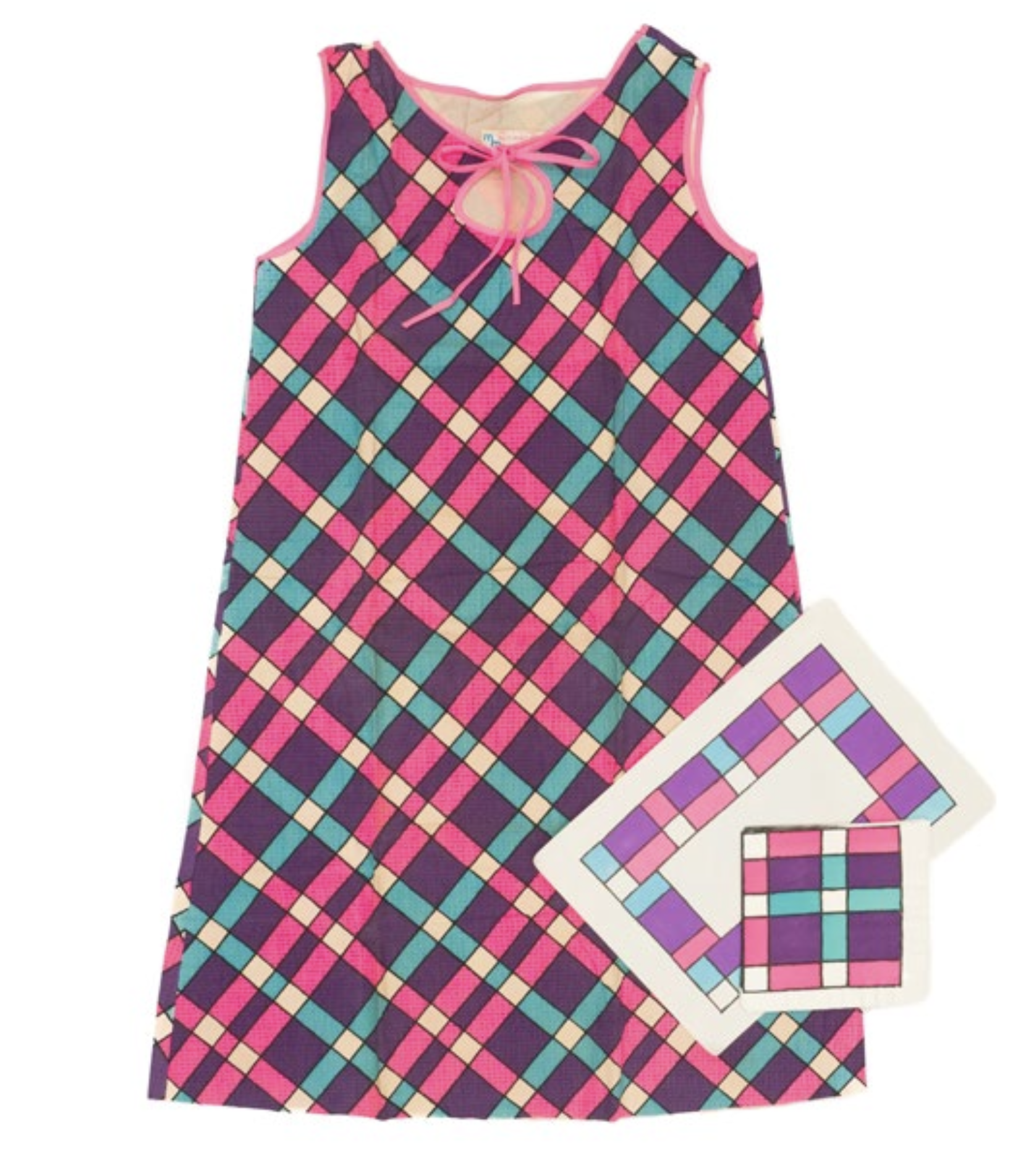
Mars of Asheville, “Waste Basket Boutique” Keyhole Neck Paper Dress, 1966, N.C. Printed paper, Collection of Phoenix Art Museum, Image © Phoenix Art Museum, Photo by Airi Katsuta.