Papier mâché, the chameleon material
Claire Allen-Johnstone
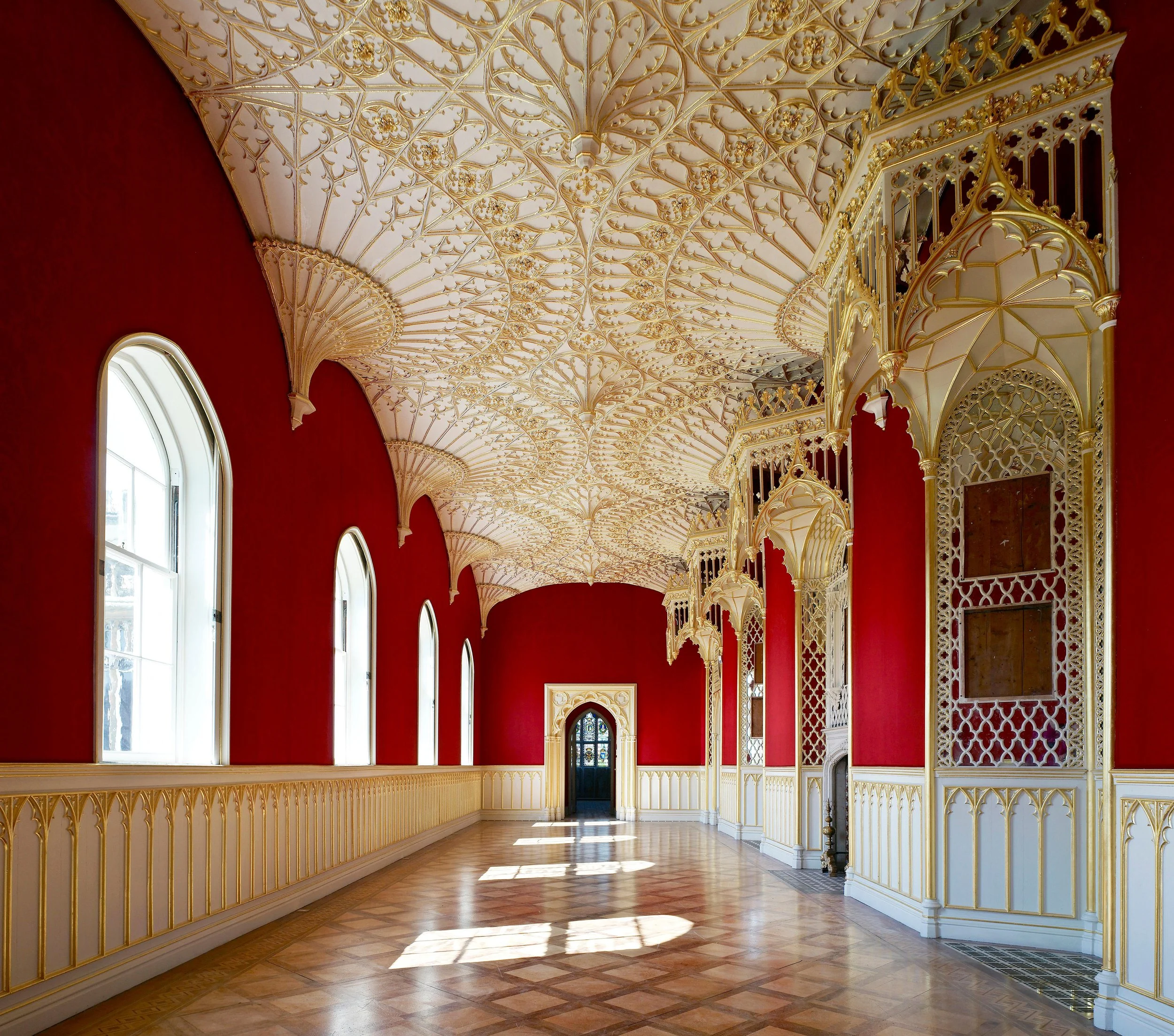
Papier mâché and gold leaf fan-vaulted ceiling, Gallery, Strawberry Hill House, ca. 1760, Twickenham, Britain, Kilian O’Sullivan-view / Alamy.
It may seem improbable that ceiling roses, carriages, display stands, chairs, hats, vases, knitting needles, and buttons could all be made from the same material, or that this substance could look like anything from painted plaster to lacquered wood to malachite. But so it was in mid-nineteenth-century Britain. This chameleon-like medium was papier mâché, made not by pasting scraps of newspaper together at home, but using one of two industrialized processes. The cheaper method was to press mashed, gummy paper into molds. More refined results were obtained by successively layering glued sheets either over a shaped former or flat, to make boards which could be carved or molded. A range of finishing techniques could then be applied. By 1850, papier mâché was so popular that one book claimed, “few houses can now be found in which some useful and elegant trifle may not be seen, made of this exquisite material.”
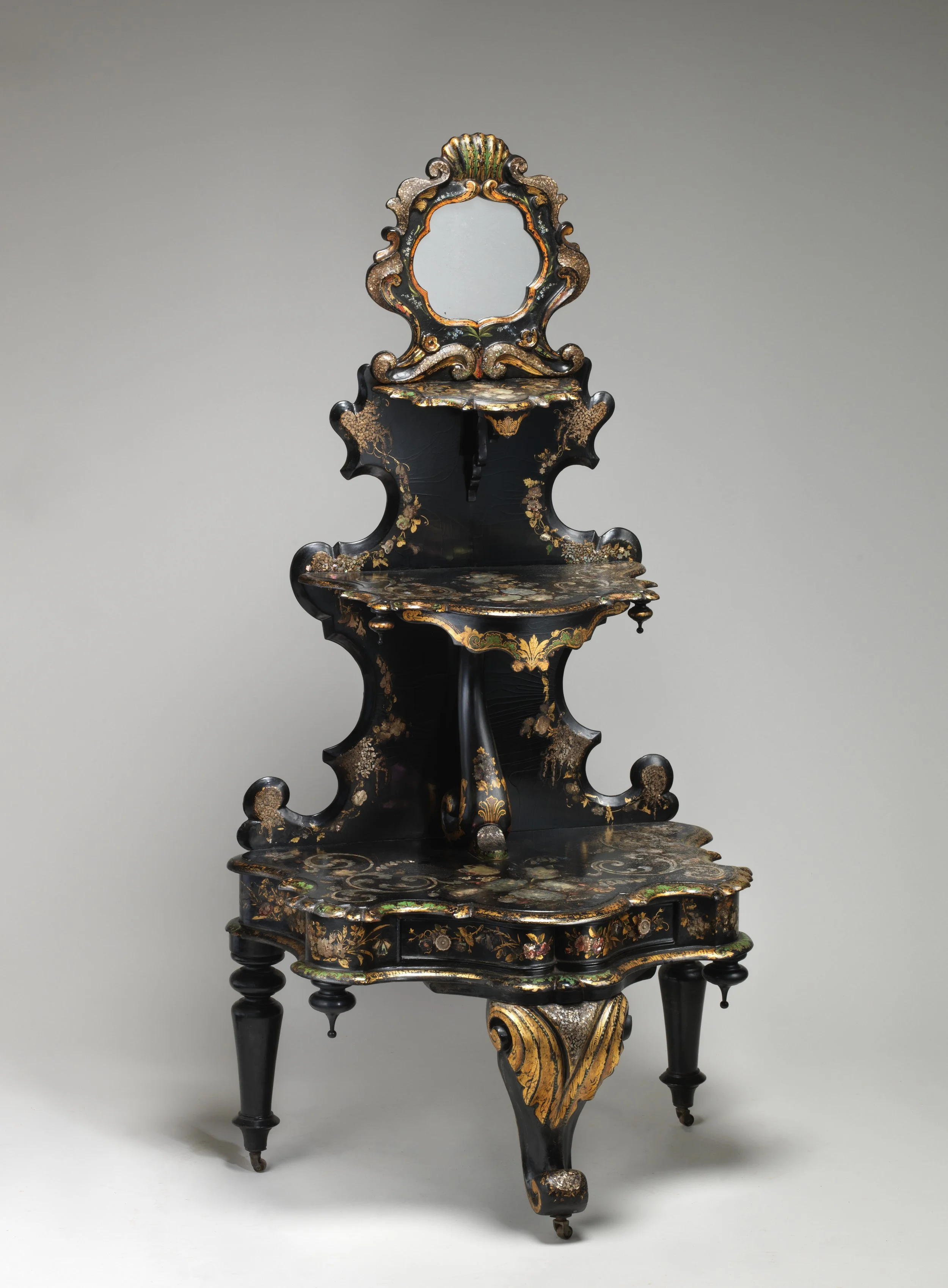
Étagère or display stand, Britain, Mid-19th century, Black lacquered, painted, and gilded wood and papier mâché, and mother-of-pearl, 53.5 × 25 × 16 in. (135.9 × 63.5 × 40.6 cm) Metropolitan Museum of Art, 1999.50.2.
The story of the papier mâché industry in Britain is, appropriately enough, a multilayered one, with subplots of invention and imitation, opportunity and oppression, enjoyment and elitism. Those leading the trade in the eighteenth and nineteenth centuries, mostly based in industrial centers of the Midlands, were obsessed with the idea of newness. They constantly registered patents. The major firm Jennens and Bettridge boasted of having “adapted the material to many new purposes.” Such was their preoccupation with novelty that papier mâché was used even when it wasn’t an easy or practical option. A good tray might consist of forty layers. Tables required weighting solutions, lest they be too light and unstable.
Though these British firms were indeed innovative, papier mâché actually went back over a thousand years in China, and had been used in other countries too, including India and France. There were precedents for both core production methods of press molding and layering. Ironically given that papier mâché was so often used to imitate other materials, British producers wanted to emphasize originality and superiority, not mimicry. This was a culture looking to assert dominance (there was even an attempt to replace the French-sounding term with “paper ware”).
When architectural ornament molded from pulp became an established British craft in the mid-eighteenth century, aided by the rise of local paper mills, the trade was much indebted to forerunners abroad. In this context papier mâché was practical. Lighter than plaster and stone, it was particularly suited to elaborate Gothic Revival ceilings. Plaster had to be hand-modeled. Stone and wood had to be carved. Papier mâché elements, though, could be made quickly in reusable molds before being tacked into position and painted or gilded. Budget-conscious customers were delighted, though others had a different experience – including the many girls and women paid poorly to make the moldings, their work considered unskilled.
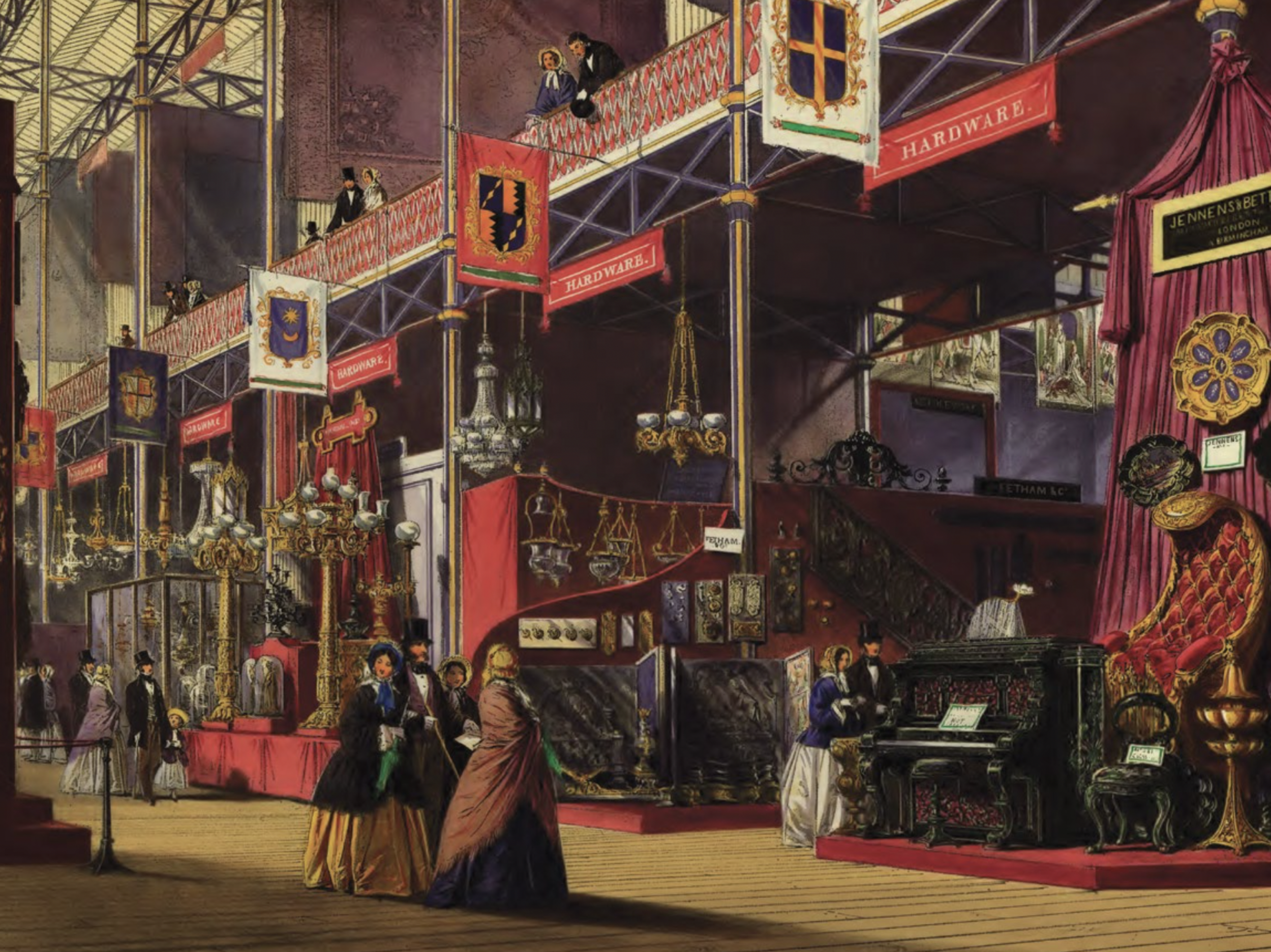
Joseph Nash (English, 1809–1878), “Hardware,” Hand-colored lithograph, 18.1 × 25.7 in. (46 × 65.2 cm) in Dickinsons’ Comprehensive Pictures of the Great Exhibition of 1851 (London: Dickinson Brothers, 1852).
By contrast, in 1776 Mary Smart was described as a “flower and fruit painter in the japanning trade,” a role usually occupied by men, which was respected and better paid. Smart would have been decorating papier mâché or tinware items such as trays being finished to resemble Japanese lacquerware, hence “japanning.” Interestingly, manufacturers did not disguise this source of inspiration. It was appetite for shiny Japanese lacquerware, in greater demand than there was supply, that prompted this form of British papier mâché in the last quarter of the eighteenth century; this medium, like tin, could endure the heat required for the best finish. Manufacturers, who used both layered and pulped techniques, had no qualms about copying and undercutting Japanese imports, sometimes borrowing motifs as well as the glossy, often black background with gold decoration. The look was also taken in new (if often imitative) directions - paired, for example, with paintings by the likes of the British artist Sir Edwin Landseer. The results were classic Victoriana.
By the mid-nineteenth century the industry was peaking. Business was also good for those making architectural moldings and similar ornaments, now using layered methods too. Jennens and Bettridge presented a display at the Great Exhibition in 1851, centered on an imposing throne. This success was linked to the fact that the expanding product range had become more affordable and therefore accessible, due to factors including catalogues and cost-cutting industrial processes. There was a strong export market too, including to the USA.
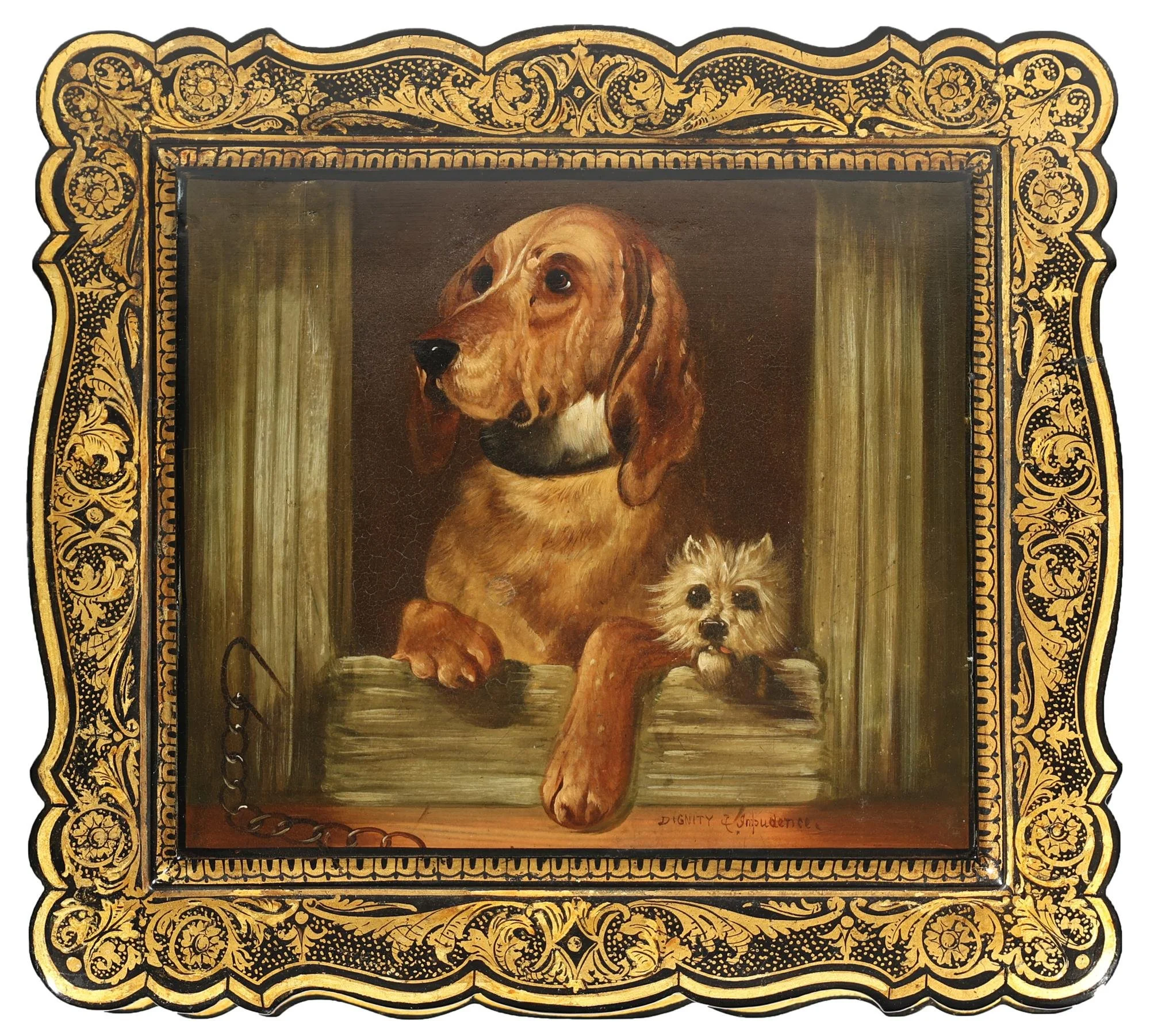
“Dignity and Impudence” Game Box, After Sir Edwin Henry Landseer (English, 1802–1873), Probably Britain, ca. 1840, Wood, papier mâché, lacquer, gilding, and oil paints with silvered brass hinges and lock, 2.9 x 12 x 11.25 in. (7.3 x 30.5 x 28.6 cm).