Land marks
Justin Beal
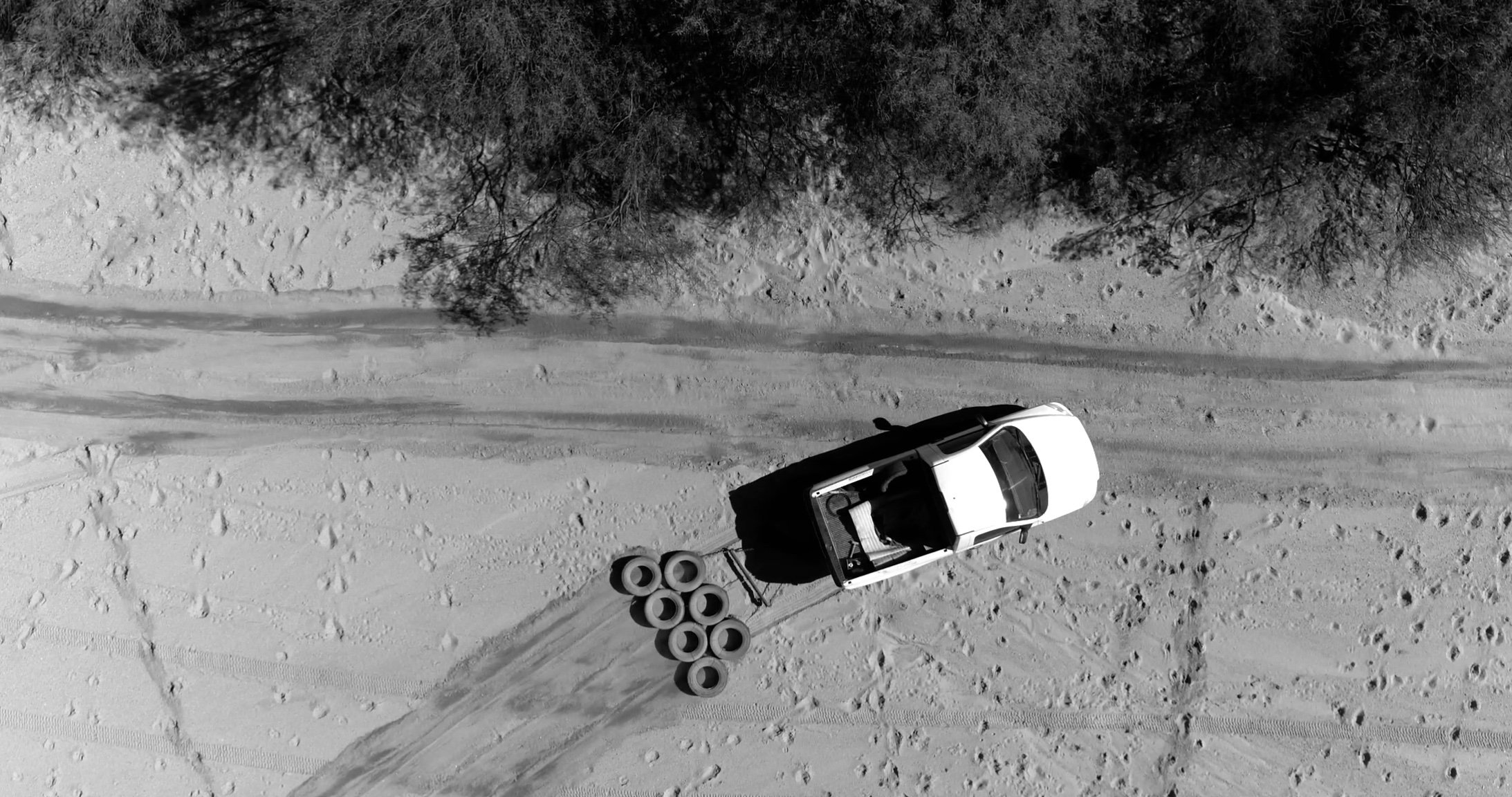
Miguel Fernández de Castro (b. Sonora, 1986– ), Curro: Los Murmullos, 2023. Film stills. Courtesy of the artist.
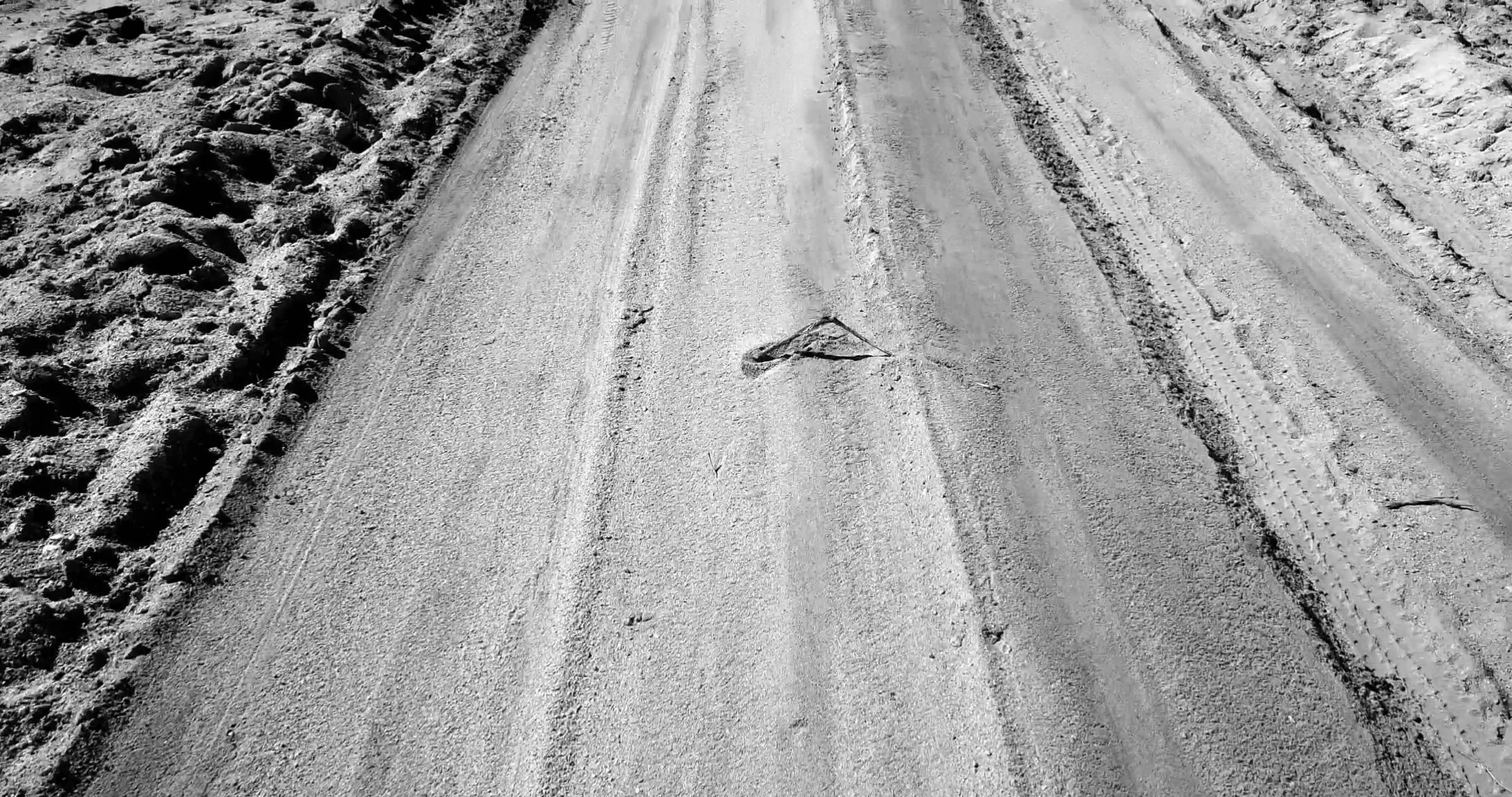
Miguel Fernández de Castro (b. Sonora, 1986– ), Curro: Los Murmullos, 2023. Film stills. Courtesy of the artist.
“The roadrunner was revered as a sacred animal because of the footprint it leaves when walking. Its zygodactyl foot imprints an X with four equal points on the sand that makes it impossible to know in which direction it is moving.” So begins La Sombra de La Tierra, written by the anthropologist Natalia Mendoza for an exhibition of the same name by her partner and frequent collaborator Miguel Fernández de Castro, presented at the Fundación Marso, Mexico City, in February 2023.
Mendoza and Fernández de Castro live and work in the rural town of Altar, in Sonora, a common way station for migrants crossing from Mexico into Arizona. These borderlands are among the least populated places on earth, and among the most heavily surveilled. In recent years, a cottage industry of “slipper” manufacture has established itself in Altar, catering to those hoping to pass through the desert undetected. The slippers – overshoes really – are made of fragments of carpet and camouflage nylon. They are designed to be worn over a migrant’s boots to render their footprints, like the tracks of the roadrunner, illegible in the desert sand.
The clandestine movement of bodies – human, animal, vehicular – is the central concern of La Sombra de la Tierra. The exhibition’s focal point is a seven-minute film titled Coro: Los Murmullos, which combines footage of workers at sewing machines with scenes from the surrounding desert: unassembled sections of border fence, piled in rusty stacks; a Peregrine falcon with leather anklets and jesses; a truck dragging five old tires chained together into an improvised harrow to clear tracks from a sandy road. Sweeping landscapes filmed by drone, the falcon’s mechanical surrogate, are cut together with intimate shots taken in the workshop. At moments, closely cropped details of worn carpet resemble the texture and contour of the desert floor itself.
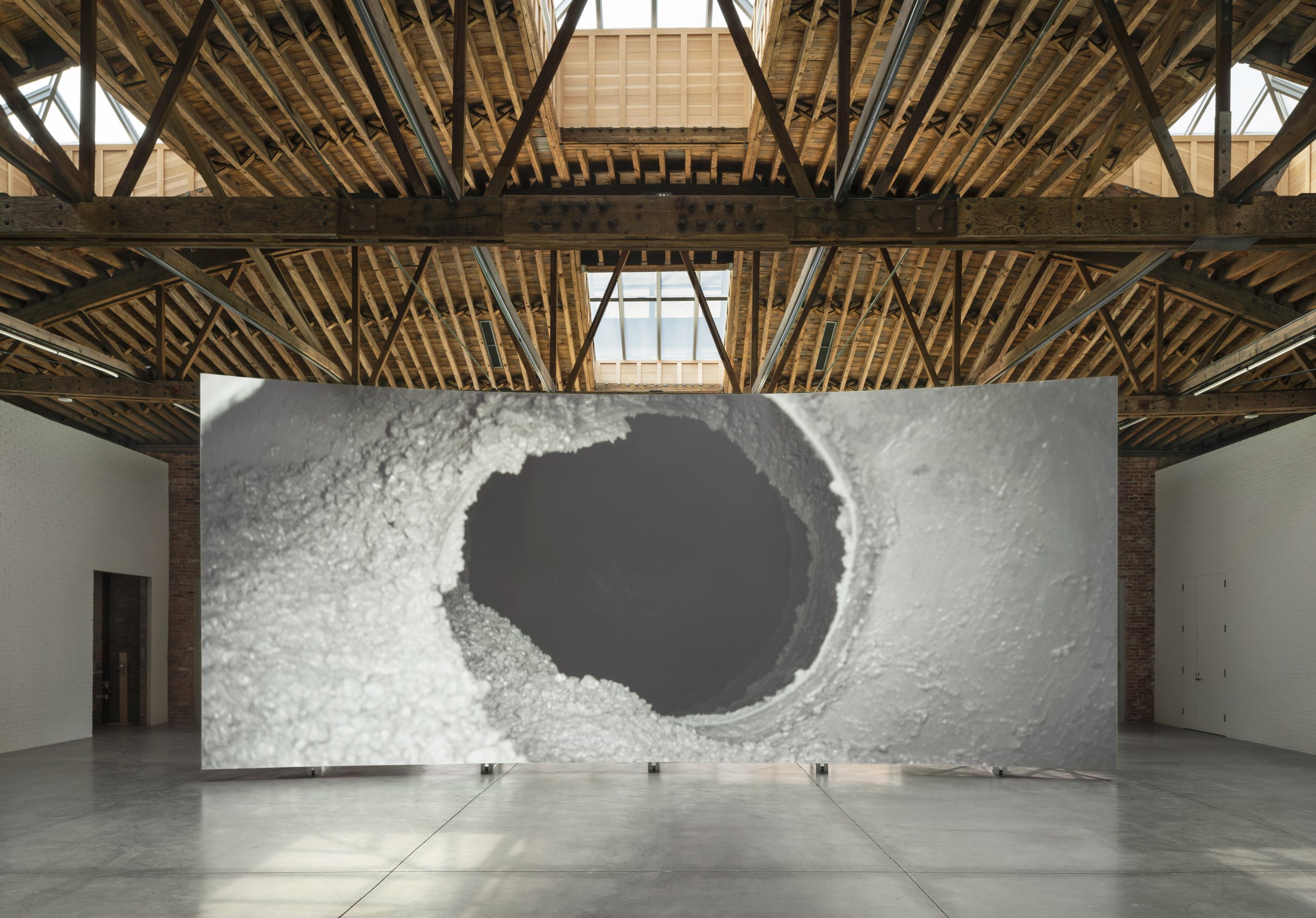
Lucy Raven (American, 1977– ), Ready Mix, 2021. Installation view. Dia Chelsea, New York, © Lucy Raven. Photo: Bill Jacobson Studio, New York.

Lucy Raven (American, 1977– ), Ready Mix, 2021. Installation view. Dia Chelsea, New York, © Lucy Raven. Photo: Bill Jacobson Studio, New York.
Sand is not a material in the way copper or obsidian are materials. It is not one thing, but a granular assortment of different parts—crystalline bits of quartz, metamorphic fragments of feldspar and basalt, metals like magnesium, or calcium carbonate from corral or shells or bone.
In his 1941 study The Physics of Blown Sand and Desert Dunes, the British officer and amateur scientist Ralph Bagnold offered an intriguing definition. He speculated that sand might be defined as a rock particle small enough to be moved by the wind, but heavy enough not to remain in aloft in indefinite, dusty suspension – a material defined by its relationship to gravity.
These subtle distinctions between gravel, dust, silt and sand are a central concern of another film, Lucy Raven’s Ready Mix, which premiered at the Dia Foundation in New York in 2021. The readymade in Ready-mix is an open-air concrete processing plant on the alluvial plains of southern Idaho whose central conveyor belt draws raw material through a series of operations. We see washers spraying, screens sifting, classifiers sorting. Wet pebbles bounce like water on a hot skillet as the material lurches and rattles into various aggregates and binders. Raven, too, shoots from above with a drone, mimicking the precise movements of the loaders below. This aerial footage is cut together with glimpses inside a churning mixer. As the film draws to a close, excess concrete is poured into a form and added to a retaining wall, integrating itself back into the landscape.
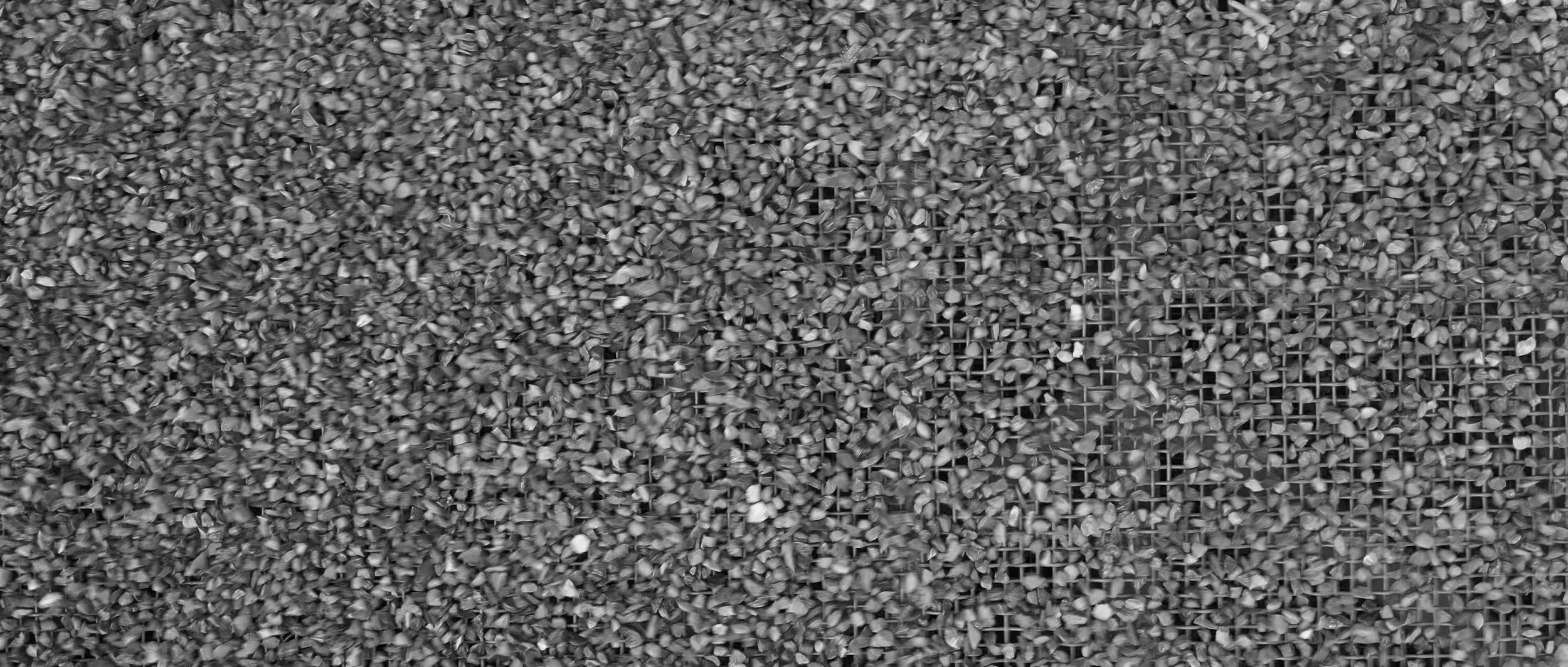
Lucy Raven (American, 1977– ), Ready Mix, 2021. Film still. Courtesy of the artist.
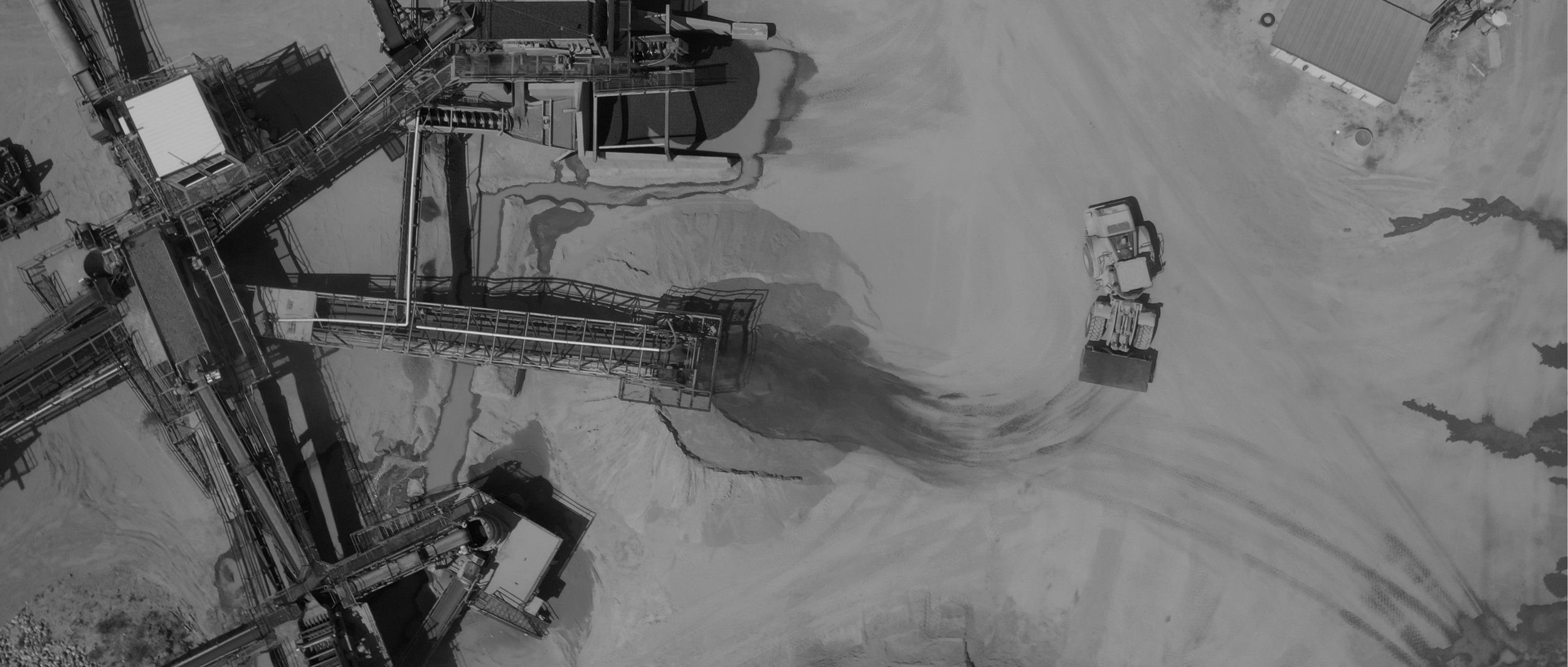
Lucy Raven (American, 1977– ), Ready Mix, 2021. Film still. Courtesy of the artist.