A strange attraction
Dan Finamore
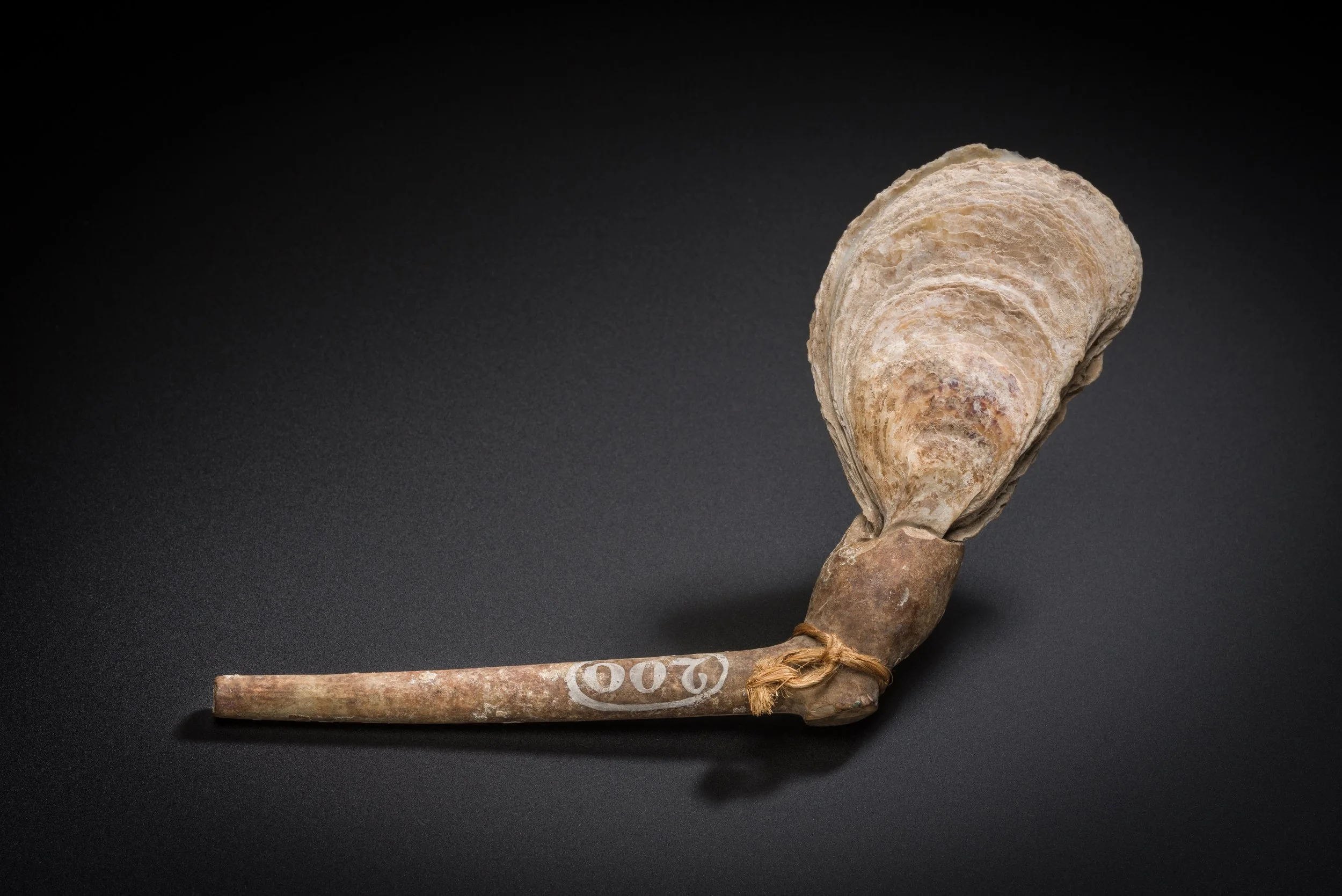
Netherlands, Unknown Artist, “A common tobacco pipe with an oyster growing out of it” found in Salem Harbor, ca. 1650s. Clay and shell. Gift of Captain Joseph Homer, 1799, M21. Courtesy of Peabody Essex Museum. Photo by Walter Silver/PEM.
A stroll down the beach. Off in the distance a wave recedes, revealing a dark lump protruding from the otherwise smooth and reflective wet sand. Is it a clump of seaweed? A decaying fish? Or, hopefully, a beautifully spiral-form shell, tumbled by the sea. Perhaps its outermost fibrous layer will be worn away, exposing a variegated pattern of colors and whorls on its calcareous body. Maybe an interior layer of iridescent mother-of-pearl will come into view.
When encountering a shell in the sand, one might wonder what species of animal formed it, and what this relict exoskeleton can tell us about the undersea environment. But is that really what motivates the casual shell collector – or even the professional malacologist? Aren’t we really talking about the inchoate, a deep dive into the mysterious and imaginary world, which we terrestrial creatures can only imagine?
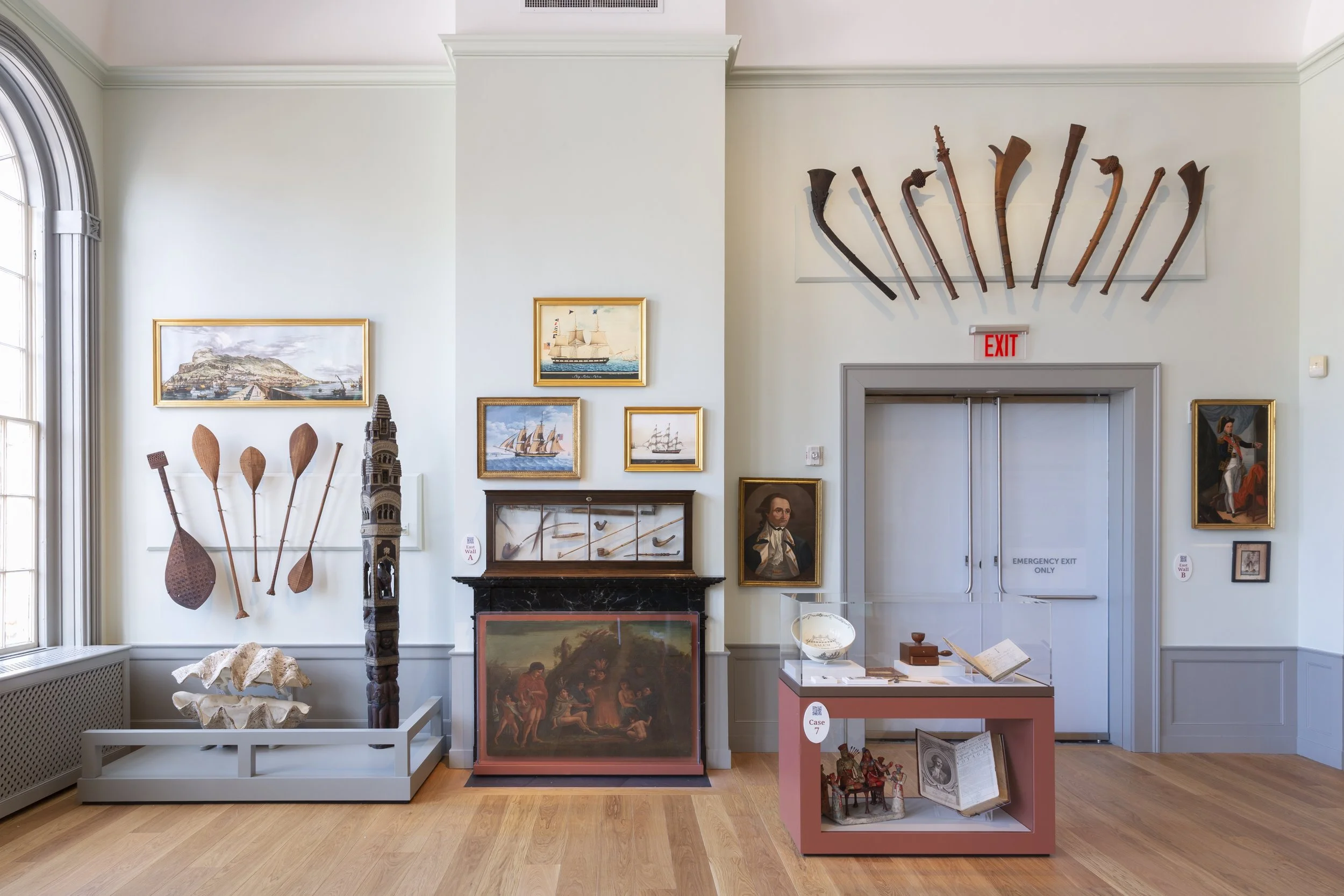
East India Marine Hall reinstallation exhibition documentation, 2026. Courtesy of the Peabody Essex Museum. Photo by Kathy Tarantola/PEM.
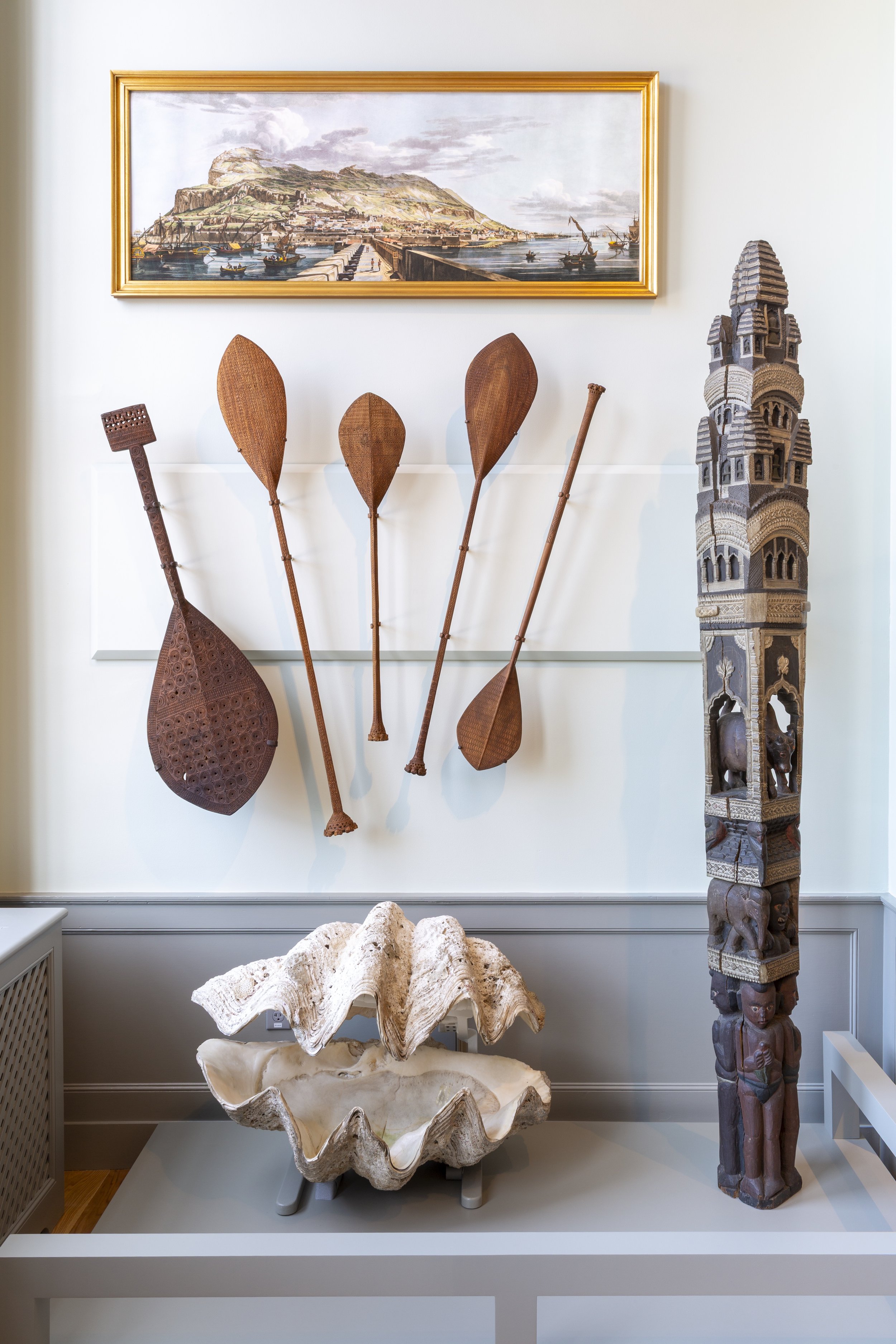
East India Marine Hall reinstallation exhibition documentation, 2026. Courtesy of the Peabody Essex Museum. Photo by Kathy Tarantola/PEM.
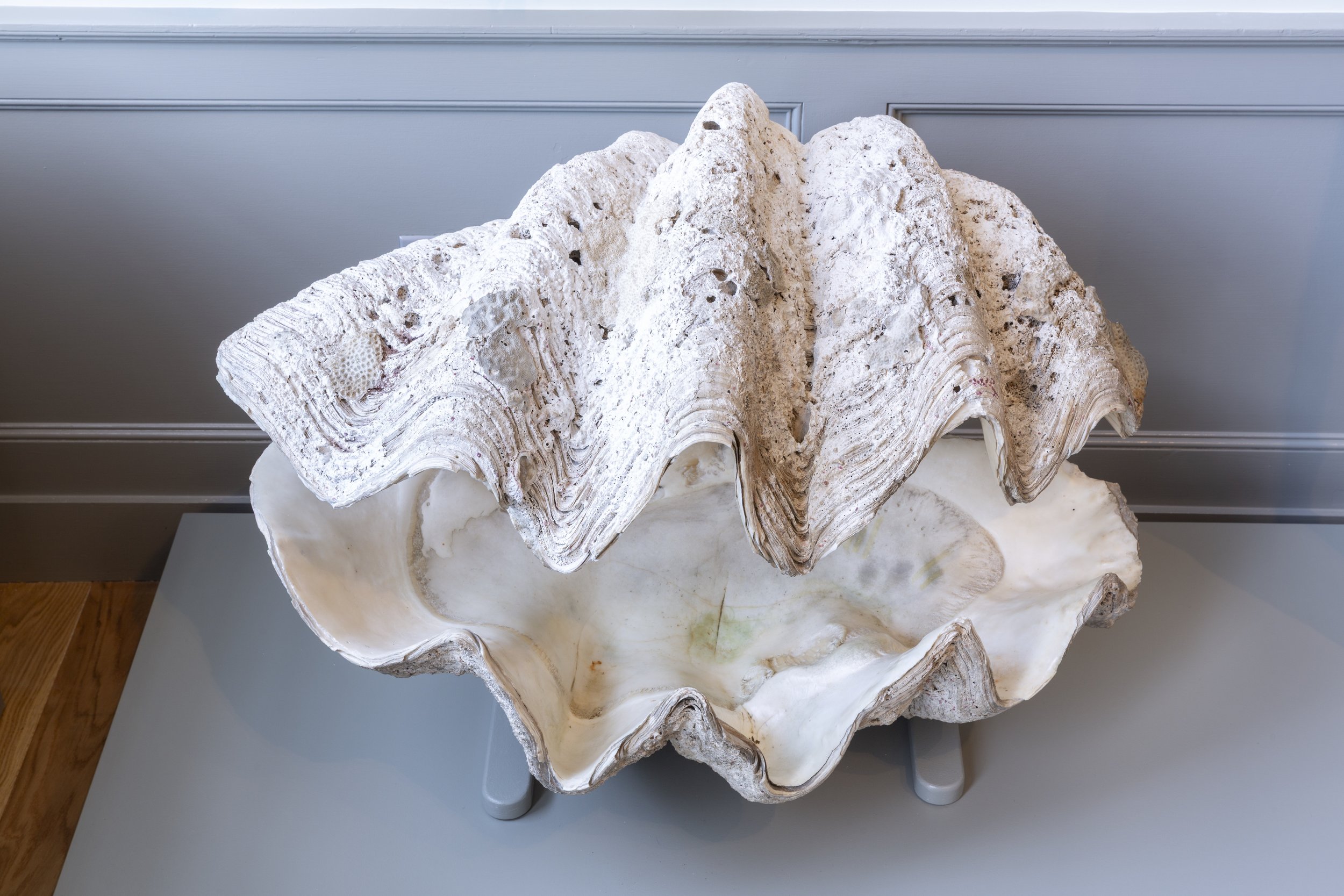
Giant clam (Tridacna gigas) shell, collected in Sumatra about 1799. Gift of Captain Jonathan Carnes, 1799, EIMS712 and EIMS713. Courtesy of the Peabody Essex Museum. Photo by Kathy Tarantola/PEM.
None other than Edgar Allan Poe, 19th-century America’s premier purveyor of the supernatural, authored a primer for shell collectors. Entitled The Conchologist’s First Book, it was presented as a scientific treatise, contesting the idea that this was just a rich person’s hobby, or folly. “The study of conchology, when legitimately directed,” Poe claimed, “will lead the mind of the investigator through paths hitherto but imperfectly trodden, to many novel contemplations of Almighty Beneficence and Design.”
A big claim, but it is undeniable that since the very origin of our species, shells have conveyed some symbolic meanings. Although these are mostly lost to time, the intrinsic allure of shells has remained. Early European collectors prized specimens that had been transported from distant lands, linking them to the riches derived from imperial and colonial exploitation. They passed through many hands: slaves who hunted them, mariners who transported them, artists who polished, engraved, and sometimes mounted them with silver and ormolu stands, dramatically dissociating them from their biology.
Since the eighteenth century, descendants of the Jamaican plantation owner Samuel Vaughan have lovingly preserved a collection of several hundred shells in a mahogany tabletop chest. Originally transported from Jamaica to coastal Maine in the 1790s, the collection has passed through many generations who have admired, handled, argued over possession, and perhaps added to or pilfered from it. The lift-top and two drawers include dividers, which probably once separated specimens into like groupings – a manifestation of the enlightenment instinct to divide up knowledge, and so to conquer it. As the chest was passed down, no longer serving as a tool for categorizing the natural world, instead an activation of wonder, a toy, and ultimately a family heirloom, its contents were shuffled and reshuffled, reflecting each new generation’s sense of order.
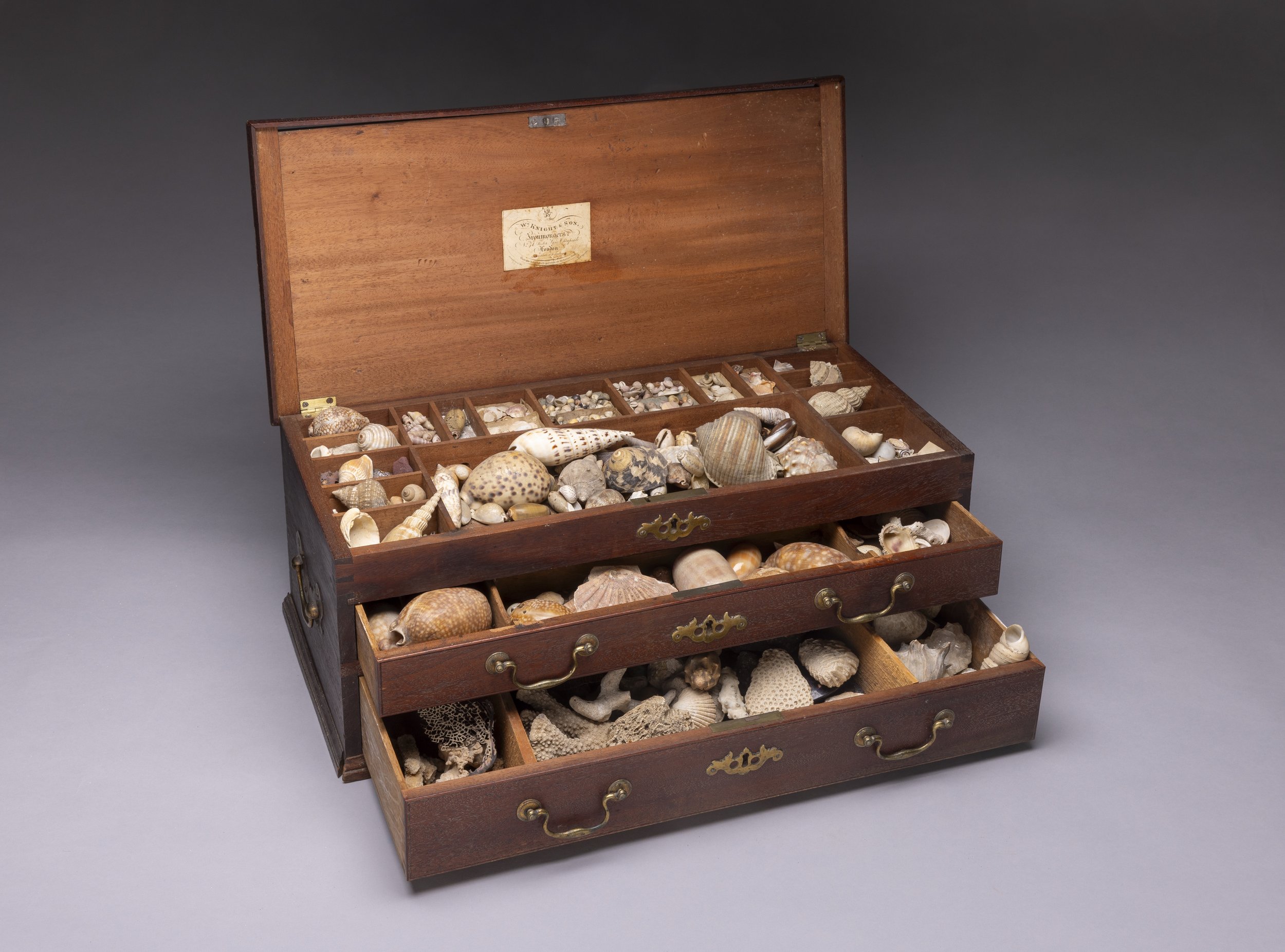
Samuel Vaughan’s shell collection, mid-18th century. Private collection. Image courtesy of the Peabody Essex Museum.
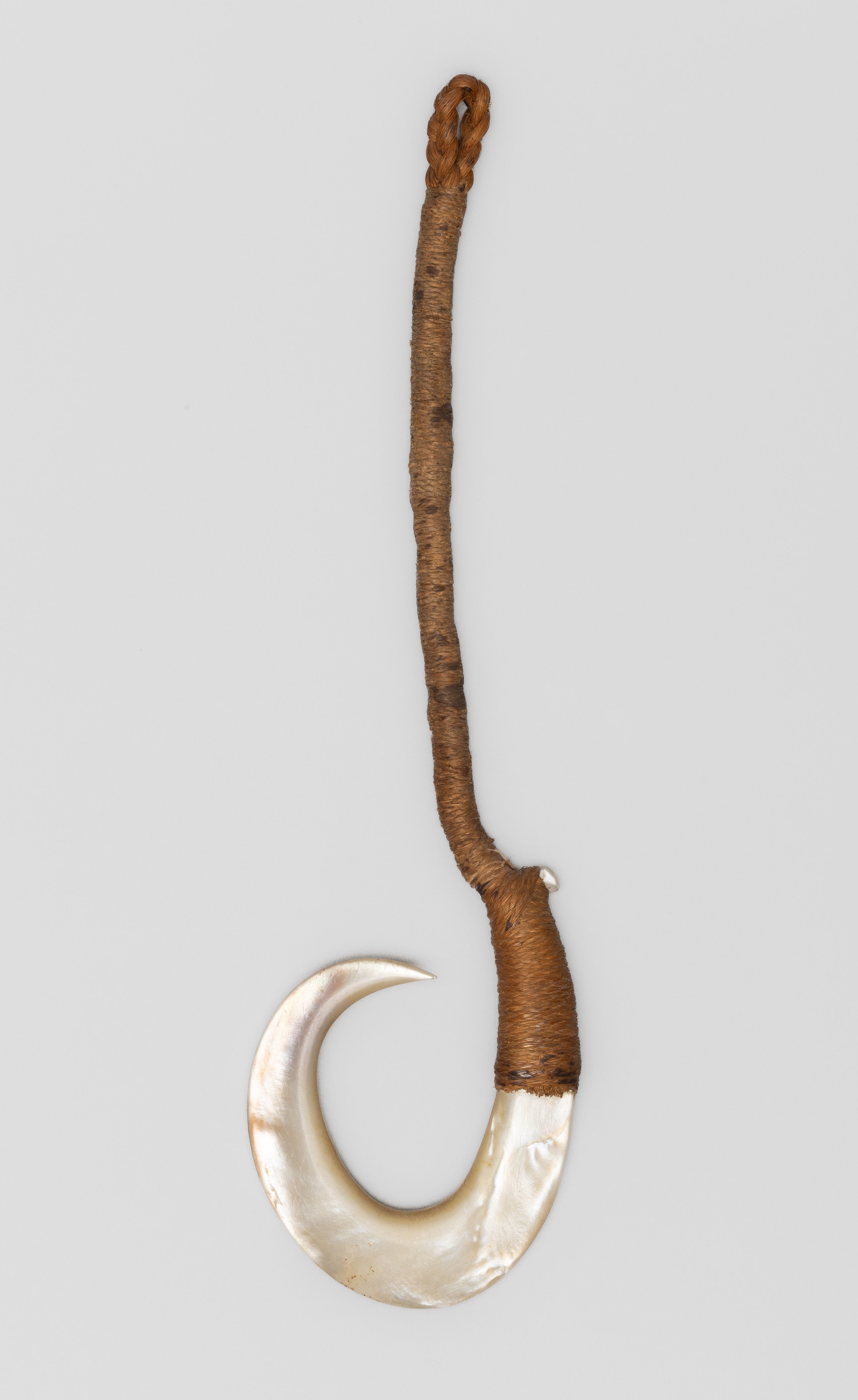
Artist in Sāmoa, Tōtaiete mā (Society Islands) or ‘O Tahiti (Tahiti), “Fish-hooks, used in taking Sharks, from Navigator's Islands", early 1800s. Mother of pearl and sennit. Gift of Captain Benjamin Vanderford, 1823, E5382. Courtesy of the Peabody Essex Museum. Photo by Ani Geragosian/PEM.
A persistent intrigue with shells is evident in many locations within the small city of Salem, Massachusetts. The “cabinet of natural and artificial curiosities” of the East India Marine Society (now the Peabody Essex Museum) was partly inspired by wondrous objects, including shells of a giant clam (tridacna gigas), which arrived from Sumatra in 1797 along with a valuable cargo of pepper. The enormous shells must have occupied a significant amount of the ship’s hold, but the captain decided the space was worth it. At the museum’s founding two years later, these shells became part of the very first donation. They were quickly joined by an oyster found growing out of the bowl of a clay pipe, retrieved locally from Salem harbor.
Other mariners donated items associated with their voyages to the Pacific Islands. Among these were large, flat, iridescent pearl oysters, which could be turned into furniture inlay, sewing reels, puzzle boxes calling card cases, fan sticks and game counters. Many of them donated fishhooks – obtained through trade in Hiva Oa, Nuku Hiva, Tonga, Tahiti, Hawai’i, the Tuamotus and Aotearoa – are composed of similar shells, carefully carved and polished to enhance the nacre’s rainbow-like iridescence, a good way to attract fish.
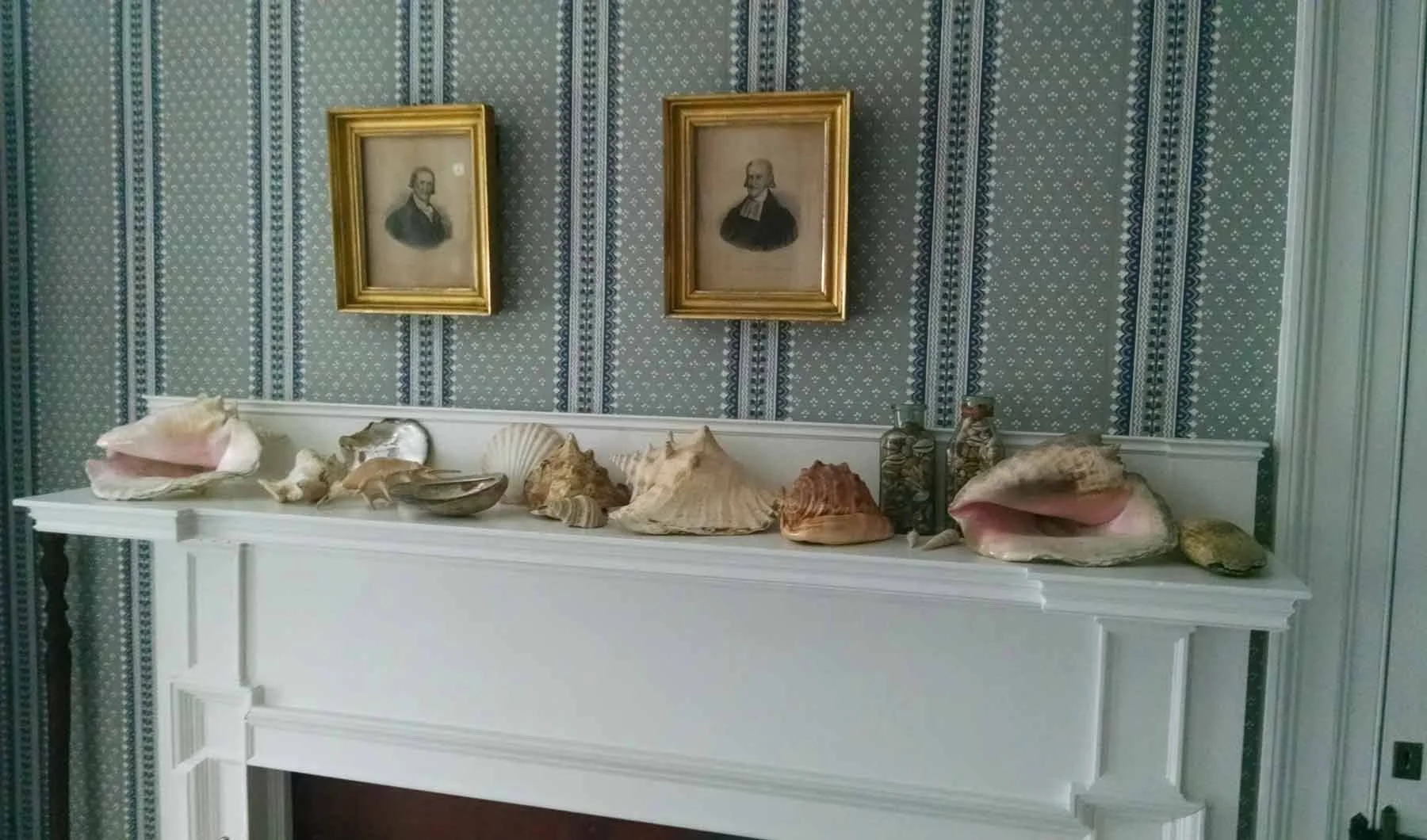
Mantle with shells in the Ropes mansion. 2016. Courtesy of the Peabody Essex Museum. Photo by Angela Segalla/PEM.