Introduction
Glenn Adamson
“Canst tell how an oyster makes his shell?” So asks the Fool of King Lear (Act 1, Scene 5), to which the old man replies simply, “no.” Little wonder. For, in the vast realm of nature, few phenomena are quite so confoundingly astounding as a seashell. Even in the case of the relatively amorphous oyster, it’s a puzzle how such a slimy little creature could create such a hard carapace, much less one with a gorgeously iridescent interior and – given a piece of grit to work with – a pearl inside. As to the dazzlingly diverse shapes produced by other shellfish, these do occur elsewhere in nature, but hardly ever in such durable sculptural form. Shells are like solid mathematics, equations you can hold in your hand.
In fact, it’s only thanks to relatively recent digital modeling that scientists have come to a detailed understanding of how mollusks fashion their homes. The basic principles, though, have long been understood by biologists. Other creatures with protective exoskeletons, like crabs, lobsters, grasshoppers, and scorpions, grow them as increasingly hardening skins, occasionally molting and generating a new one. An eggshell is created quickly – inside a chicken, it takes less than a day – with the egg itself depositing hard crystals out of a calcite solution. A mollusk, by contrast, whether soft-bodied shellfish or snail, builds its carapace through slow and steady accumulation. The material, typically calcium carbonate, is extracted from the environment and then secreted as a solid with a protein binder – the naturally occurring equivalent of a 3D printer.
As the animal grows bigger, so does the shell, and this explains all the beautiful shapes. New material is continually added to the edge of the shell opening, which itself is gradually expanding in cross-section. Genetic predisposition guides the creature to build along a certain vector – which may be twisting, rotating, and/or radially expanding – and this produces a whole family of spirals (as in a nautilus) and fan shapes (like a scallop, which is a bivalve, with a two-part hinged shell). Some species of shellfish give themselves camouflage by regularly pigmenting their shells with stripes or spots. Others sport defensive bumps, spikes, or spines, formed where the mantle exceeds the shell and deposits a self-propagating irregularity.
With the possible exception of marine biologists, the greatest admirers of sea shells have been poets – Anne Porter, for example, beautifully described them as “the armor and art / of dark blind jellies” – and artists, who have always loved their compellingly complex shapes. The so-called “Rembrandt shell” is named for a print by the artist from about 1650 that shows a specimen in vivid closeup, shrouded in chiaroscuro. It would have had to come a long way to get to his studio. The species, Conus marmoreus (i.e., conical and marbled), is endemic in the Indian Ocean and Western Pacific; for period observers, it would have seemed every bit as exotic as Chinese porcelain. Another figure of the Dutch Golden Age, Maria Sibylla Merian, was both a marine biologist and an artist, and traveled all the way to Suriname in her quest as a naturalist. A watercolor of hers now in the Courtauld shows a spectacular staghorn murex (Chicoreus cornucervi), a sea snail found in Papua New Guinea.
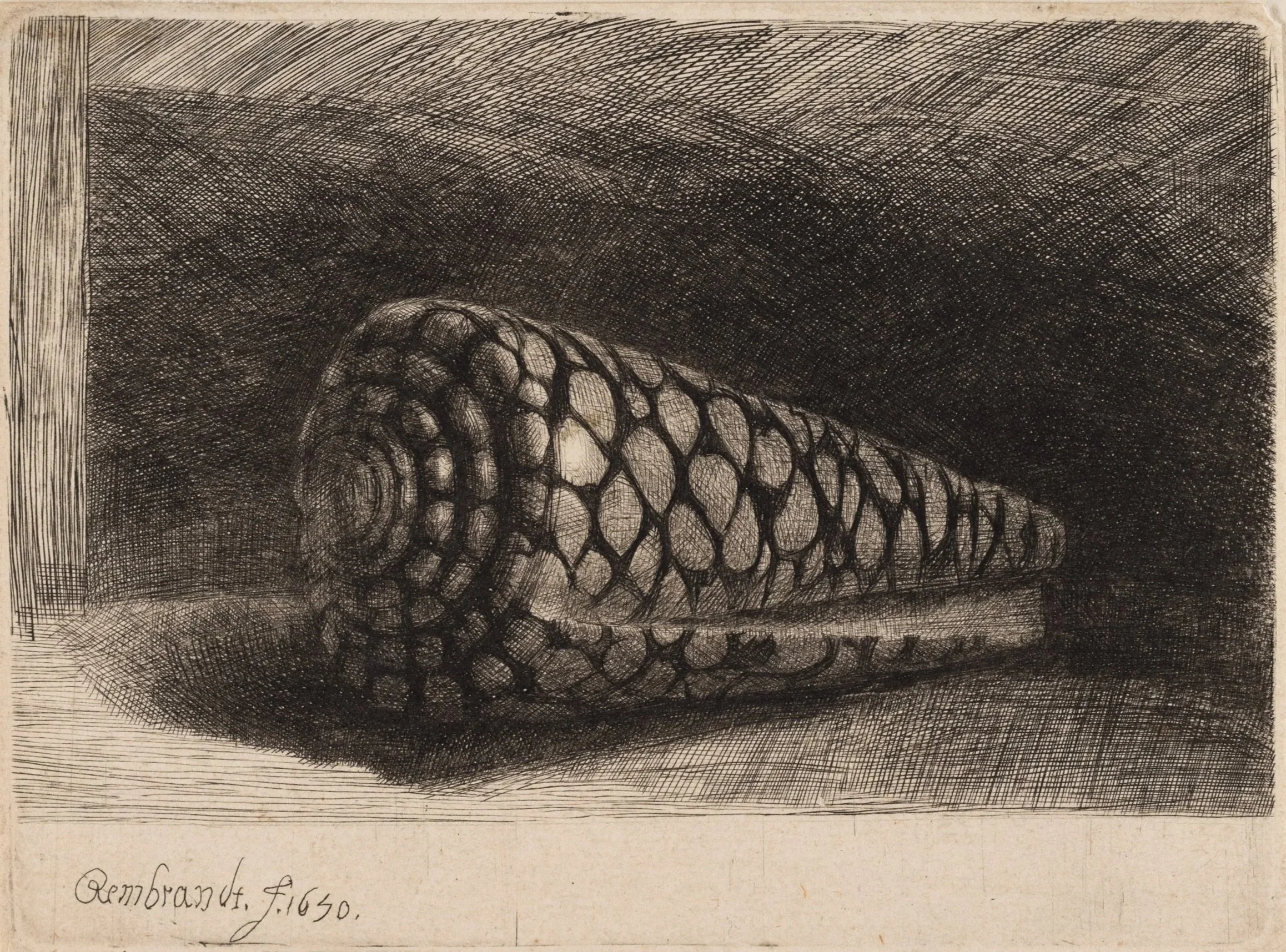
Rembrandt van Rijn (Dutch, 1606-1669). The Shell, 1650. Etching on ivory laid paper. (plate): 3 7/8 × 5 1/4 in.; (sheet): 3 15/16 × 5 5/16 in. The Art Institute of Chicao, Clarence Buckingham Collection, 1938.1805.
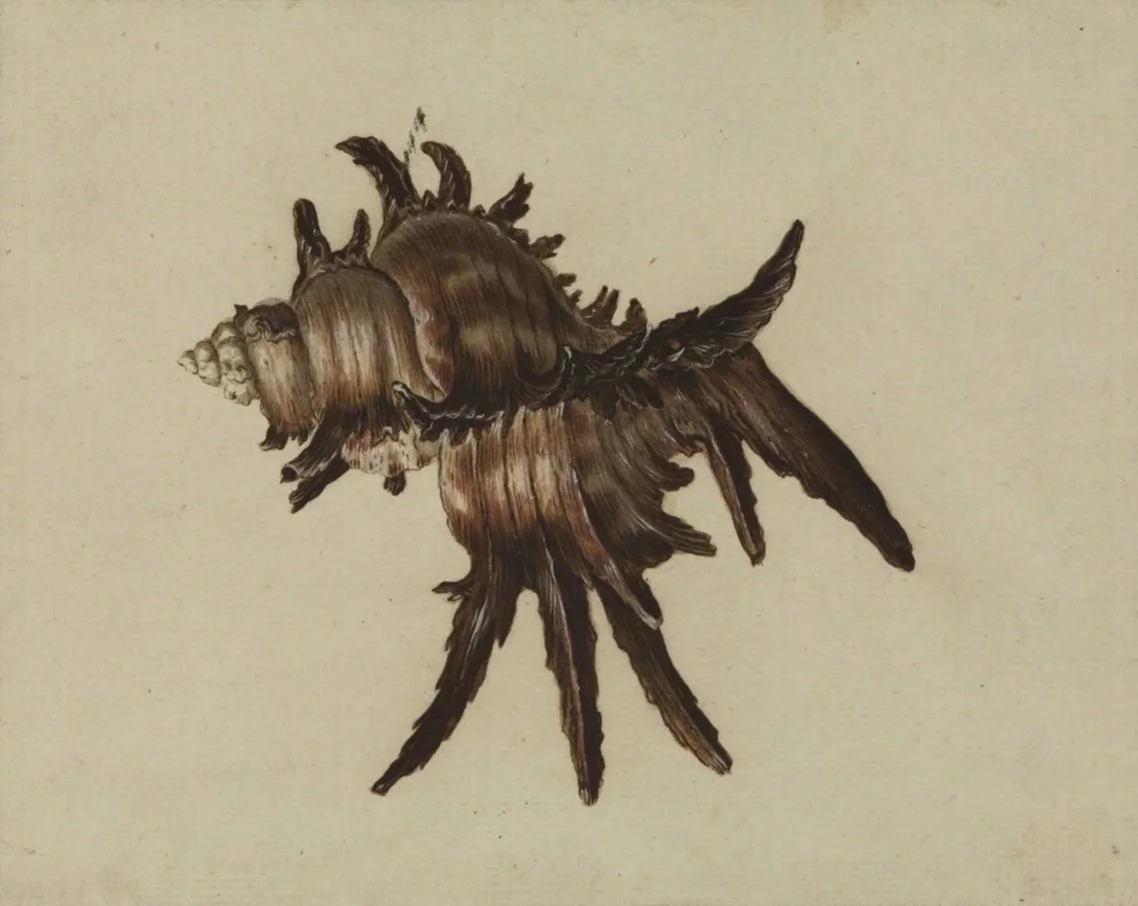
Other types of murex yield the vivid color known in antiquity as “Tyrian purple,” named for the city of Tyre, in modern-day Lebanon, where they were harvested. The process was extremely labor-intensive, involving the processing of thousands of shellfish to make just an ounce of dye. This obviously made it very expensive, worth more than its weight in gold, and it was eventually reserved exclusively for imperial use. The ancient historian Pliny the Elder thought this was ridiculous – “what is the cause of the prices paid for purple shells,” he asked, “which have an unhealthy odour when used for dye, and a gloomy tinge in their radiance resembling an angry sea?” – and was similarly critical of his fellow Romans’ desire for pearls.
In later centuries, moral concern has focused less on conspicuous consumption and more on the labor conditions of shoreline industries, which have often involved enslavement, and are invariably extremely dangerous. For millennia, countless pearl fishers in Arabia, India, Africa and the Americas have simply held their breath, tied themselves to a rock, and plunged down to the sea floor, hoping for the best. Were pearls valuable “because they are brought from another world,” wondered the 16th century Spanish chronicler Francisco López de Gómara, “or perhaps it is because they cost the lives of men?”
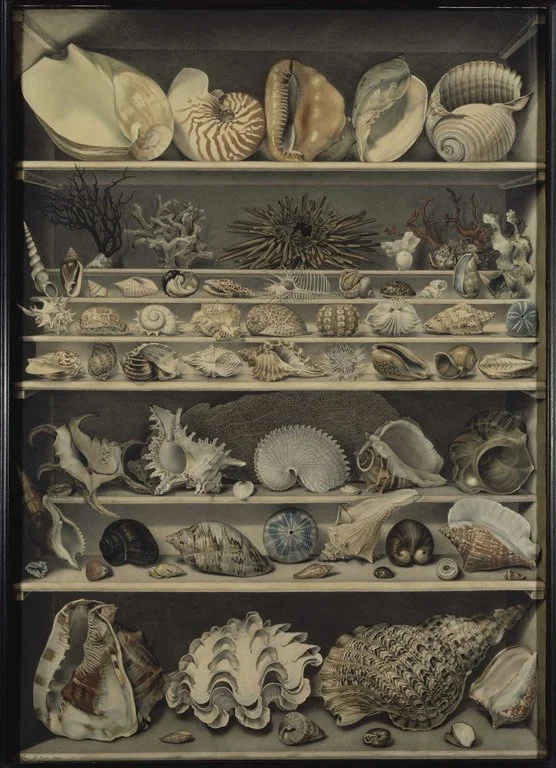
Alexandre-Isidore Leroy De Barde, Choix de Coquillages, 1803/10. Watercolor and gouache on paper laid down on canvas. Musee du Louvre, Département des Arts graphiques, INV 23689. © GrandPalaisRmn / Gérard Blot.
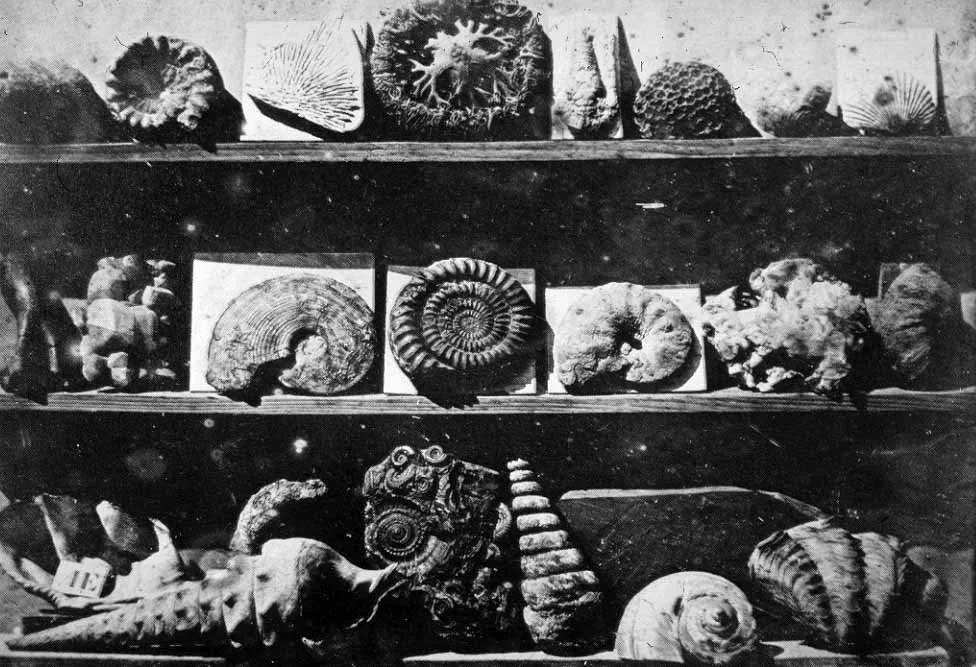
Lous Jacques Mande Daguerre, Shells and Fossils, 1839. Public domain, via Wikimedia Commons.
A more charitable view of the fascination for shells and their products would emphasize their fundamental alienness. After all, these natural wonders hail from a realm normally unseen by humankind. To collect and classify them is a paradigmatic act of discovery, something like the Apollo mission retrieving rocks from the moon. It is unsurprising that early cabinets of curiosities invariably included shells, sometimes with elaborate metalwork mounts; as Lorraine Daston and Katherine Park have observed, the nautilus was understood as “a personification of nature as an elevated kind of artisan.” When Louis-Jacques-Mandé Daguerre invented his groundbreaking photographic process, one of the very first pictures he took was of shelves full of shells and related fossils. To mechanically capture these objects, Daguerre implied, was tantamount to a shift in the nature of knowledge itself.
Every shell, then, is an emissary from the deep – and every child knows it, as soon as they put one to their ear and hear the distant roar (actually the amplification of ambient noise, thanks to reverberation within the cavity; the similarity to crashing waves is purely coincidental). We might hypothesize that it is this liminal quality of shells, just as much as their scarcity and exoticism, that accounts for their symbolic significance in so many cultural contexts.
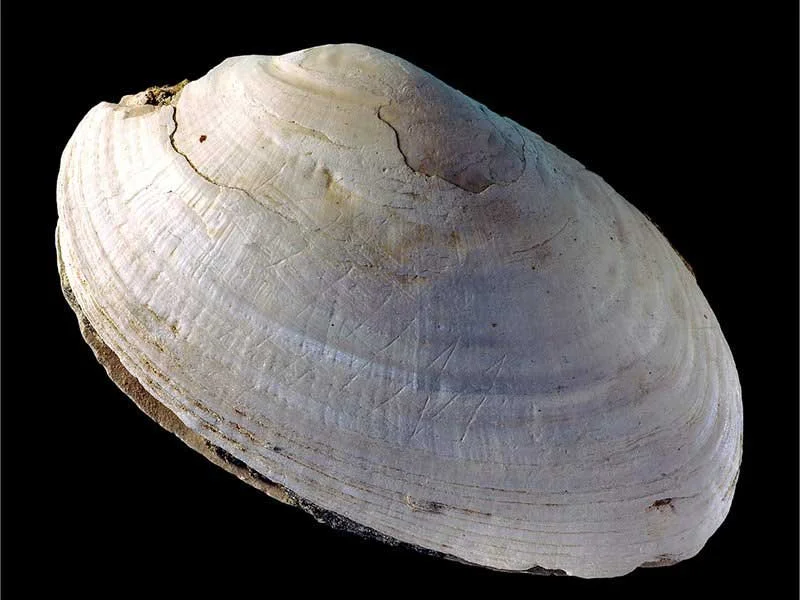
500,000 year old shell with zig zag carvings, likely an engraving made by Homo erectus at Trinil in Indonesia. (Wim Lustenhouwer, VU University Amsterdam).
The reverence accorded to shells is very ancient indeed, which is unsurprising, given that shellfish were also one of humanity’s first foodstuffs. The very oldest engravings known to have been made by human hands (Homo erectus, the precursor to Home sapiens) are zigzag marks on a freshwater mussel shell found in Java, which may be over half a million years old. Many ancient Indigenous societies left behind an extraordinary number of discarded shells, evidence of their long habitation of coastal sites; the Whaleback midden in what is today southern Maine, a great moraine of oyster shells more than 1500 feet long and 30 feet deep, was accumulated over the course of a millennium. Tragically, a local company destroyed most of the site in the nineteenth century, pulverizing the shells into filler for chicken feed. Spiritual investment in shells ranges from the Maya, who associate shells with rain and fertility, to the Yoruba, who have long used cowries both as currency and in divinatory practices, understanding their involuted, lipped shapes as mouths of the orisha. William Golding knew what he was doing when he chose the conch shell as the contested emblem of authority in The Lord of the Flies. Trumpets of this kind are known throughout Asia and Oceania, as well as from the ancient Mediterranean and the Americas; this most natural of instruments has been associated with the gods Krishna, Triton, and Quetzalcoatl. In each case, sounding it implies the summoning of oceanic power.
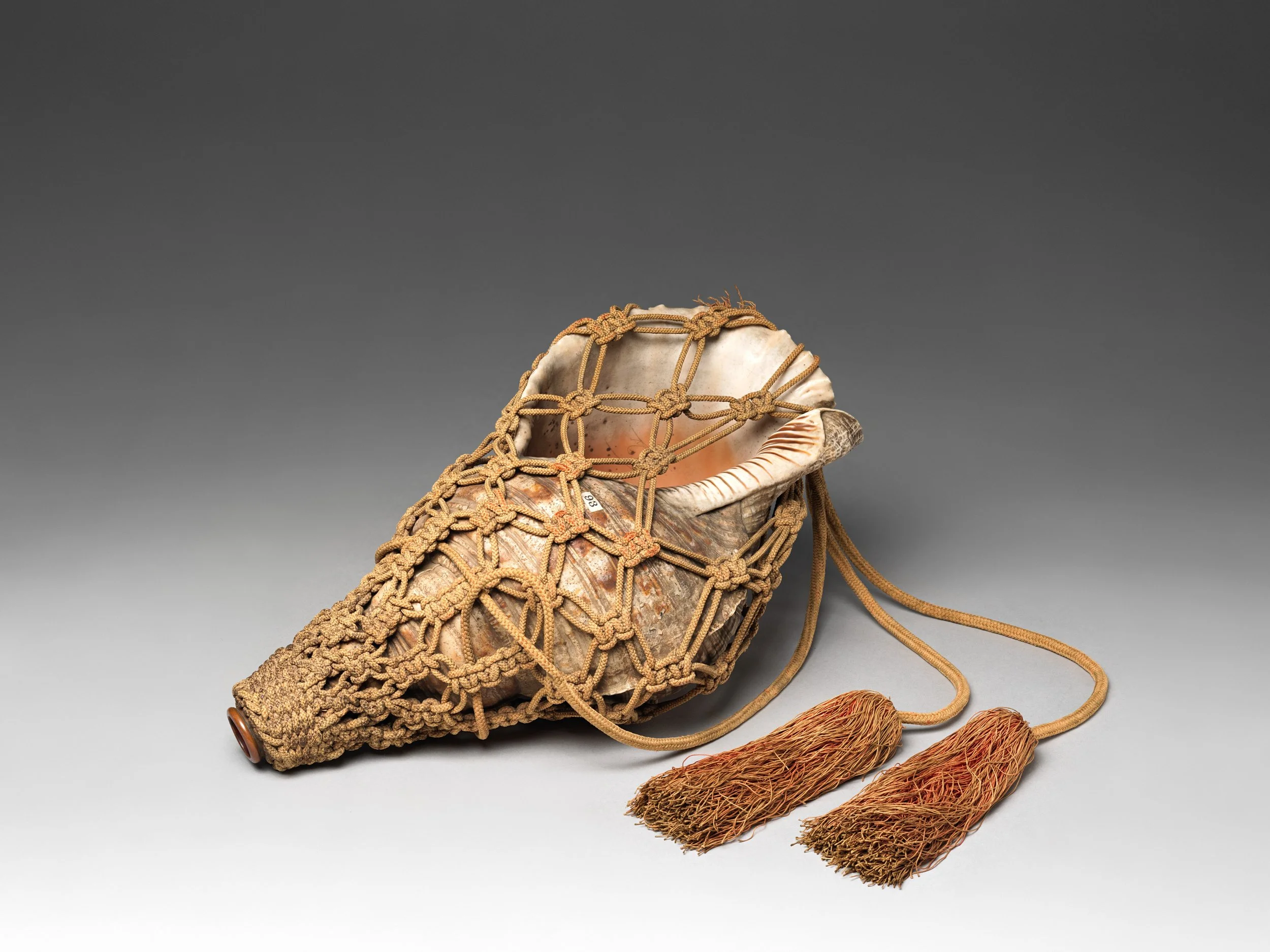
Japanese, Horagai or Rappakai, 19th century. Shell; triton, tritonis. 15 x 6 in. The Metropolitan Museum of Art, New York. The Crosby Brown Collection of Musical Instruments, 1889, 89.4.93.
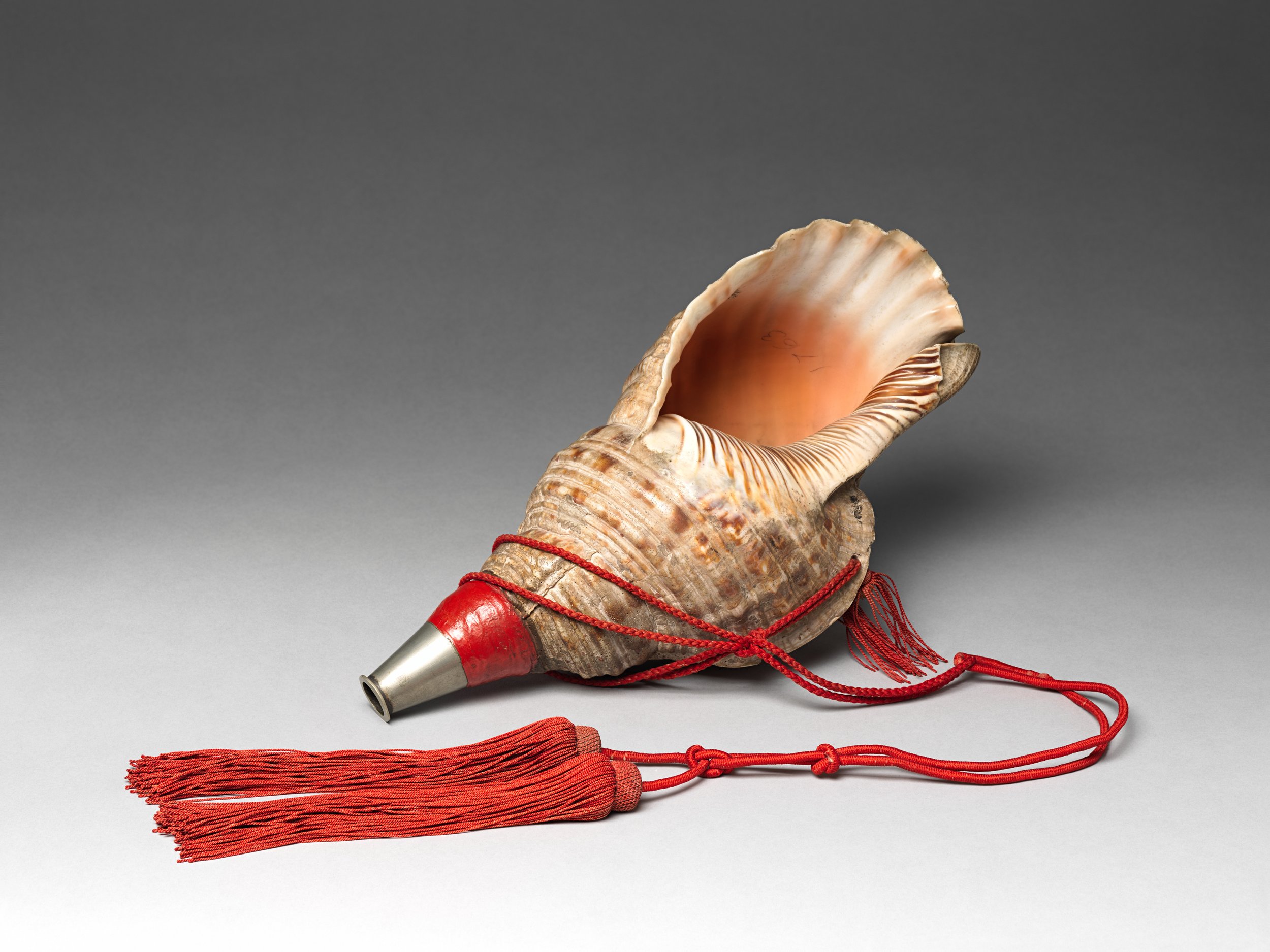
Indian, Sankh, late 19th century. Conch shell. 15 x 8 in. The Metropolitan Museum of Art, New York. The Crosby Brown Collection of Musical Instruments, 1889, 89.4.1763.
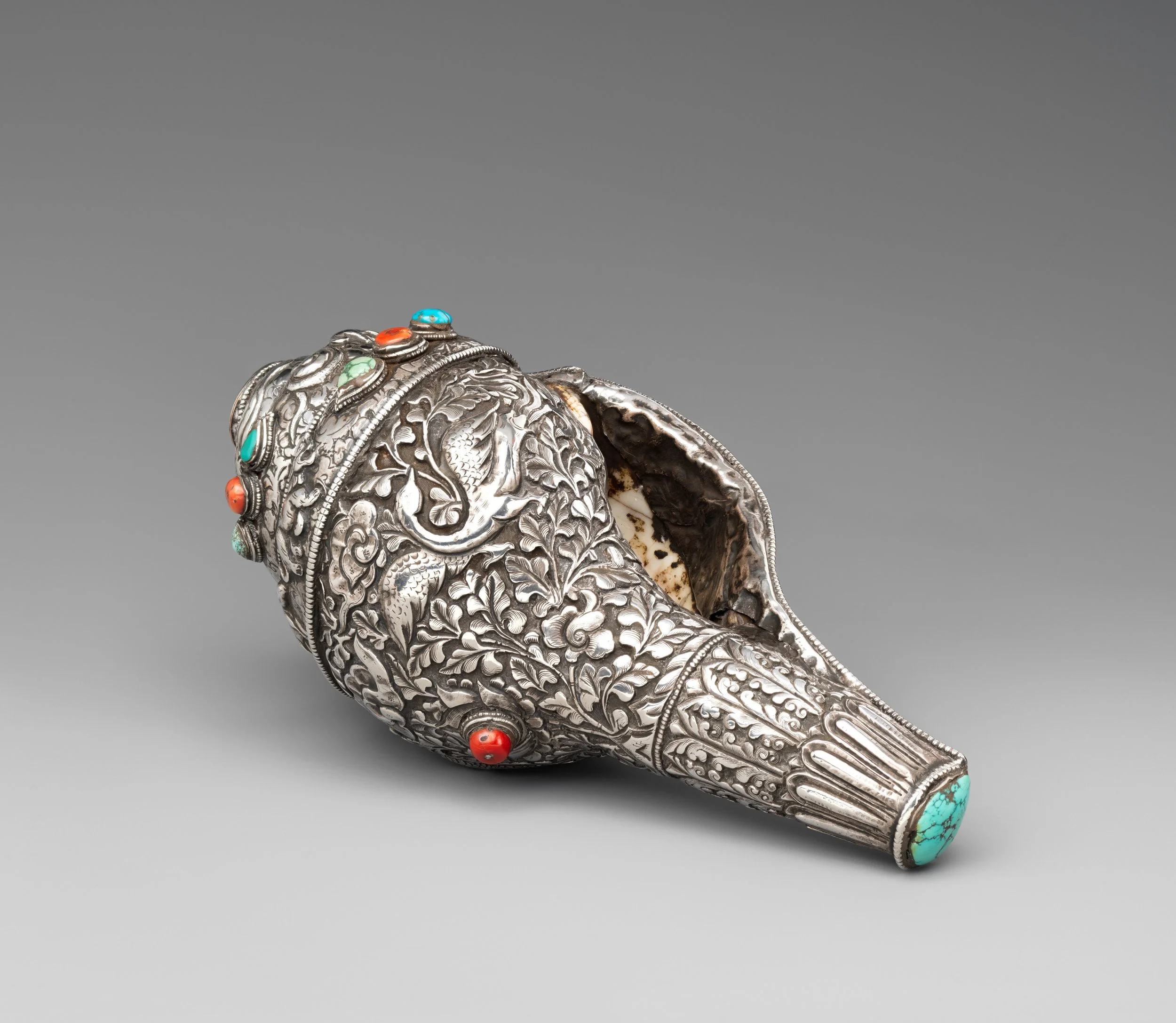
Tibet, Ritual Conch Shell Trumpet (Dung-Dkar), 19th Century. Conch shell, silver, turquoise, and coral. The Metropolitan Museum of Art, New York. Purchase, Josephine L. Berger-Nadler Endowment Fund and funds from various donors, 2022, 2022.302.
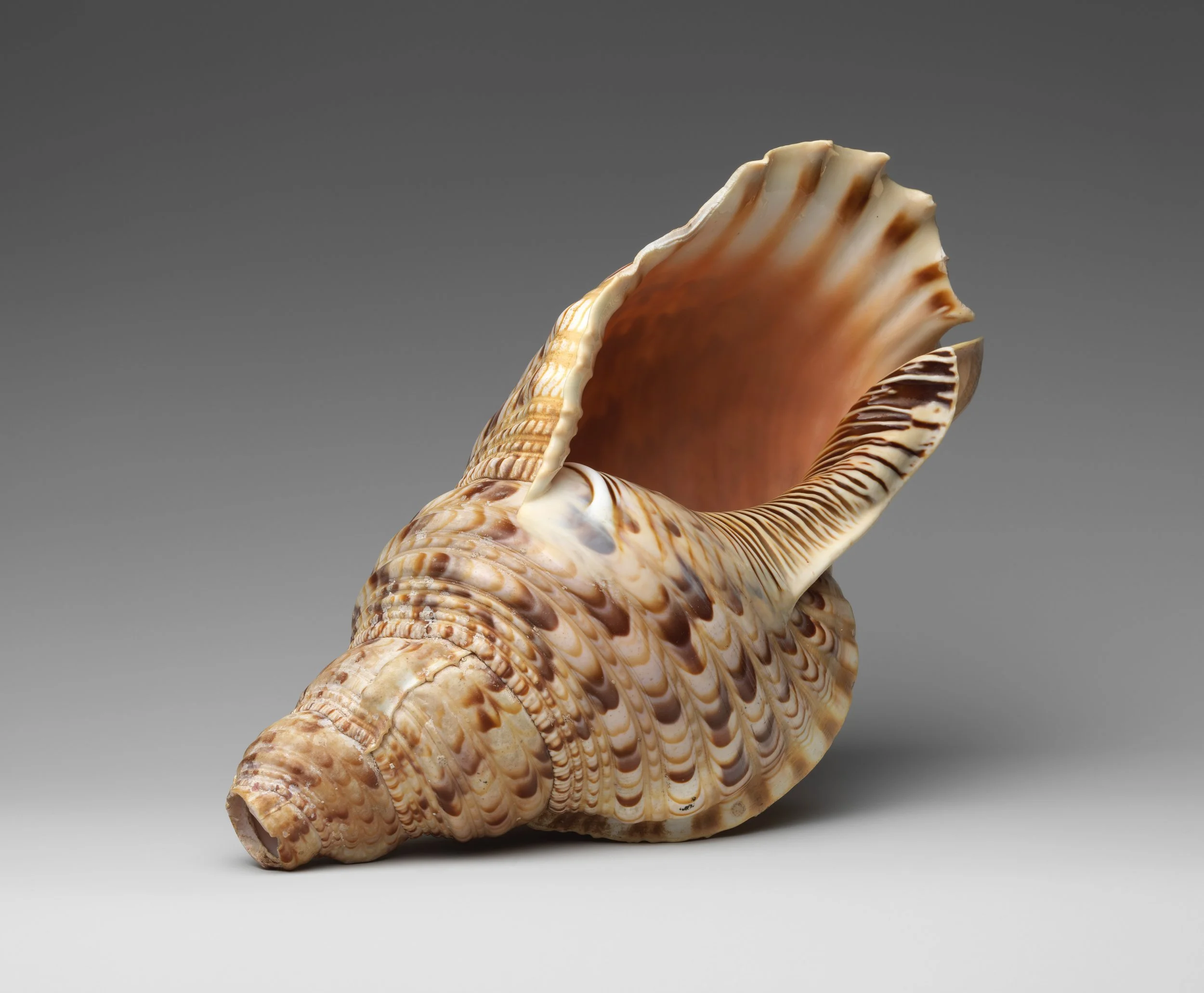
Melanesian (Vanatuan), Conch Shell Trumpet, late 19th century. Conch shell. 12 × 6 in. The Metropolitan Museum of Art, New York. The Crosby Brown Collection of Musical Instruments, 1889, 89.4.772.
In Golding’s novel, the shell represents a definitely (and dysfunctionally) masculine sort of potency. Conchological symbolism, however, crosses the gender divide. The most famous of all shell paintings, Sandro Botticelli’s Birth of Venus, depicts the goddess of love cresting the waves on a scallop (Pecten jacobaeus, here imagined giant-size), her attribute since ancient times. It requires little imagination to see why certain shells might be associated with female sexuality; a fun fact is that the term “porcelain” comes from the Italian word for cowrie shells, porcellana (“little pigs”), which in turn got their name because they reminded people of a sow’s genitalia. But there is also a deeper story here. As Jonathan Prown has explained, a whole family of related concepts – the grotesque, the rococo, coquillage (shell-work), and rocaille (asymmetrical ornament) – can ultimately be sourced to the ancient grotto, “a sacred or secret place sensually equated with darkness and dampness.” Such spaces – natural caves, to begin with, and later, purpose-built underground chambers – were mythologically and erotically charged, as they were conceptually connected to the mysterious origins of life. Often thickly populated with shells, they were also themselves shell-like; to enter such an unlit, wet interior was like crawling into a conch, or a womb. The grotto has descended through art history in an appropriately subterranean way. When the Emperor Nero’s Domus Aurea, a series of decorated chambers, was excavated in the late 15th century, it was widely understood as a grotto simply because it was dark and richly decorated; torchlit visits to the space (including by Raphael and other artists) initiated an enthusiasm for the “grotesque” that persisted for centuries. Artificial grottoes, sometimes entirely encrusted in shells, made for a diverting addition to a princely palace or aristocratic estate. Catherine De’ Medici is known to have commissioned one for the Tuileries from the potter and engineer Bernard Palissy; though that grotto is now lost, ceramics festooned with a tidepool’s worth of shells, snakes, and seaweed have been traditionally associated with his name.
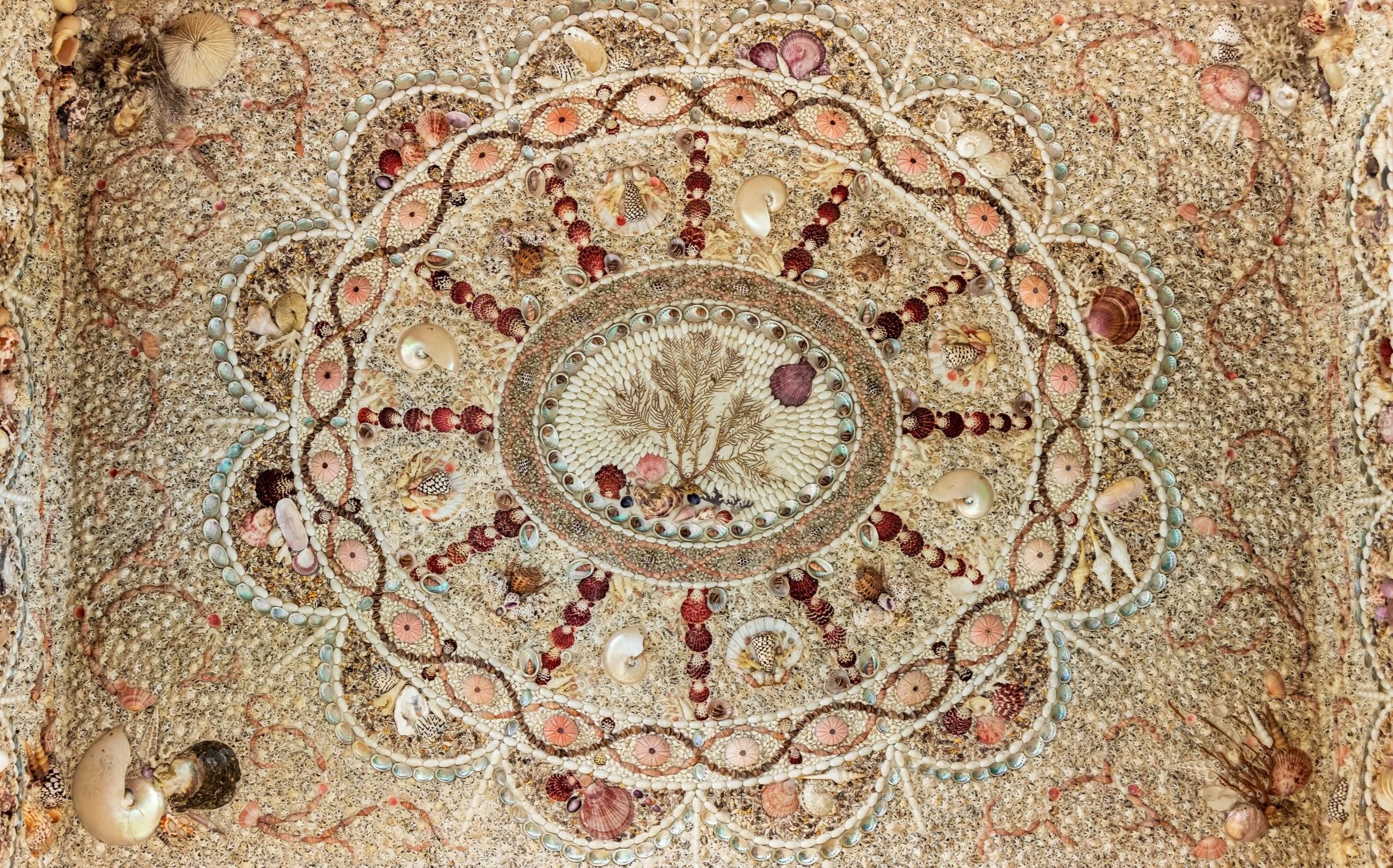
Shell grotto, Newby Hall in North Yorkshire, 2021. Debu55y / Alamy.
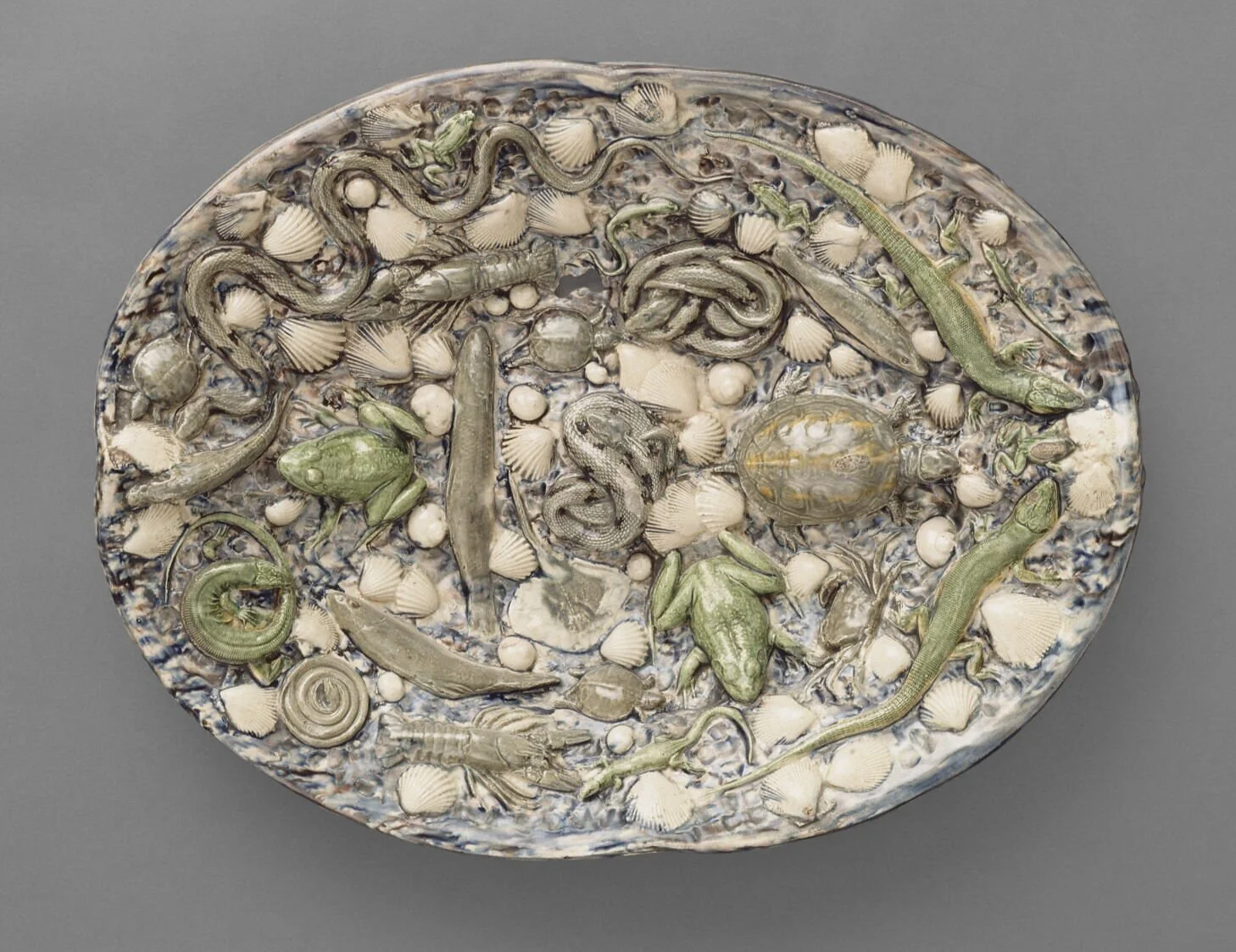
Bernard Palissy, Oval platter, 1550/1560. Rustic earthenware. Musee du Louvre, Département des Objets d'art du Moyen Age, de la Renaissance et des temps modernes, MR 2295. © 2002 GrandPalaisRmn (musée du Louvre) / Jean-Gilles Berizzi.