Secret beauty
Paula Conroy

Neke Moa, Rū Moana, 2017. Pāua, aluminum, wax cord, and paint. From the collection of Wendy Evans. Image courtesy the artist and Wendy Evans.

Neke Moa, ingaringa hāpai, 2017. Pāua, wax cord, brass, and paint. From the collection of Wendy Evans. Image courtesy the artist and Wendy Evans.
According to Māori oral tradition, the origin of Pāua (New Zealand abalone) is connected to Tangaroa, the powerful atua (god) of the sea. In the story, Tangaroa sets out to create a unique coat for the mollusc. Seeking unmatched beauty, he gathers the deep blues of the ocean and blends them with the fresh greens of the forest canopy belonging to his brother Tāne. He adds a gentle violet taken from the first light of dawn, a soft pink from the setting sun, and covers the whole creation with a shimmering veil of mother-of-pearl. The result is a shell of extraordinary elegance, alive with colour and light. Yet such beauty does not go unnoticed. The other creatures of the ocean become envious of Pāua’s radiant coat and, in their jealousy, attack the defenceless creature, damaging its delicate outer skin.
Seeing the suffering of his creation, Tangaroa intervenes. He understands that beauty cannot survive without protection. To safeguard Pāua, he strengthens the shell, transforming its exterior into a tough, rugged shield of muted greys, browns, and earthy tones that mirror the jagged coastal rocks. Disguised, the large black-footed pāua carries its secret beauty throughout its life, revealing its artistry only at the end, when the empty shell washes ashore on the beach.
In the wild, the survival rate of pāua from fertilised egg to adulthood is astonishingly low: one in 20 million. Most do not survive the early larval and post-settlement stages, due to environmental pressures, dependence on suitable seaweed, and intense predation. The very existence of a fully grown pāua is therefore a true feat of nature. Pāua meat is considered a delicacy in Aotearoa (New Zealand); customary and commercial gathering are carefully regulated. It is illegal to take a Pāua with a foot shorter than 125 mm, and shell for export can only be gathered by licensed commercial divers.
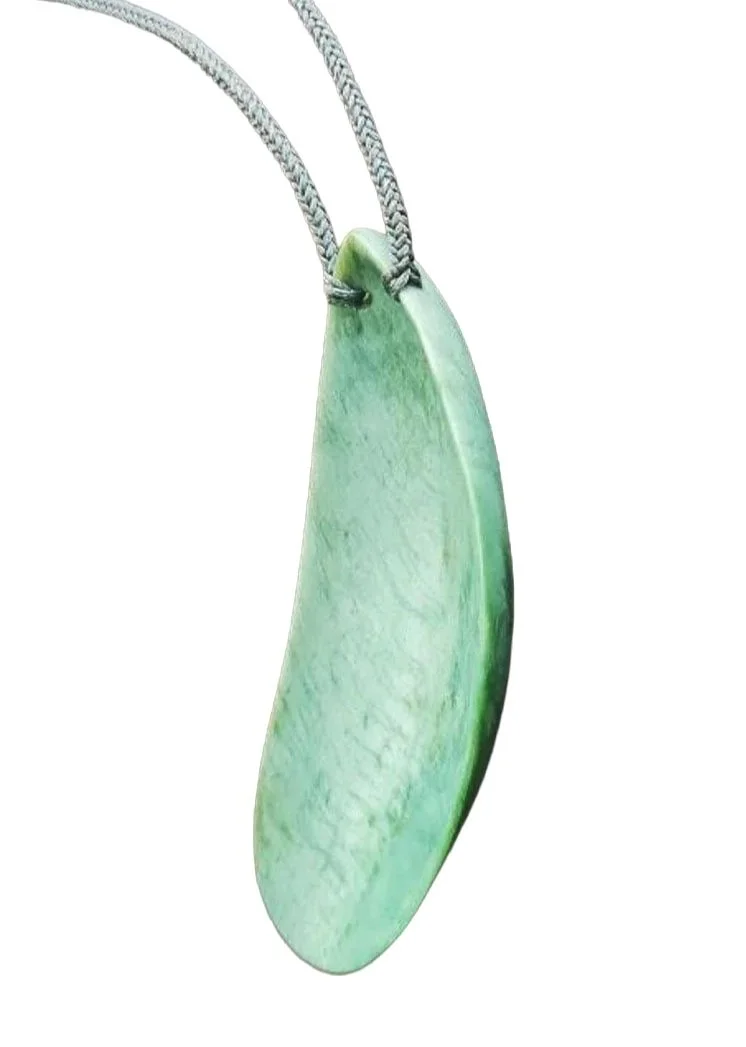
Neke Moa, Kuku Pounamu, 2015. Kokopū pounamu, and cord. Image courtesy the artist and the author.

Neke Moa, Nesian, 2019. Ufi shell seeds. Image courtesy the artist and the author.
The shell’s beauty is a further reminder that each pāua is precious. Pāua help keep kelp beds clean, feed the ocean, and sustain people. Shell size also indicates age: although pāua can live and breed for up to 30 years, they reach maturity at around five years old, which aligns closely with the legal collection size. Many New Zealanders remember when the shells were larger, and worry that pāua beds are under pressure from overfishing.
In awe of these lives once lived, adornment artist Neke Moa collects shells from her home beach and from the places she visits. Sometimes she finds a single shell that is a glorious example of itself; it needs nothing, and is bold enough to be hung alone and worn around the neck. These pieces often prompt people to ask where they are from; others recognise the shells and are delighted to see them displayed. The patterns of the shells are also echoed in the craft traditions of other Pacific islands, echoed in tapa cloth, carving, and tā moko (cultural skin marking) across the region.

Neke Moa, Piataata mai, 2025. Pakohe argillite, Kuhakuha shell, Pūpūrore shell, and paint. Image courtesy the artist and the author.

Neke Moa, Waireremo, 2022. Pāua Oyster Bone and Pūpū shells. Image courtesy the artist. Image by Sam Hartnett.