On native clays

Manon Gaudet

Matthew Andrew Daly, Rookwood Pottery; sc# 148 Rookwood Pottery Collection (Box1-Folder5-6p); Provided Courtesy of Cincinnati Museum Center.

William Watts Taylor, the President of Cincinnati’s Rookwood Pottery Company, had a taxonomic problem. In an 1891 letter to the ceramic historian Edwin Atlee Barber, he explained that none of the standard ceramic body types—earthenware, stoneware, or porcelain—accurately described Rookwood’s products. He offered a playful simile instead. “I should say it was a semi-porcelain rather aristocratic young woman married into a solid high class, bourgeois stoneware family with Rookwood as the offspring.” Taylor accordingly divided his ceramic progeny into glaze lines, rather than type, based on the color of the clay body and the type of vitreous skin applied to it.

Taylor may have struggled to describe the artful ceramic vessels that came out of Rookwood’s kilns, but the company was unambiguous in characterizing the raw materials that went in. Their promotional language, widely repeated in the contemporary press, proclaimed that the company’s vessels were formed almost exclusively from local Ohio Valley clays, which were naturally colored red, brown, and yellow. This regional emphasis was central to how Rookwood’s founder, Maria Longworth Nichols, conceived of the pottery. One contemporary ceramicist, Susan Stuart Frackleton, explained that “the fundamental idea of Rookwood was to promote the national growth of an Art Pottery out of local conditions, both material and artistic, and this idea has been followed out as literally as possible—native clay, native decorative subjects, and native artists.”
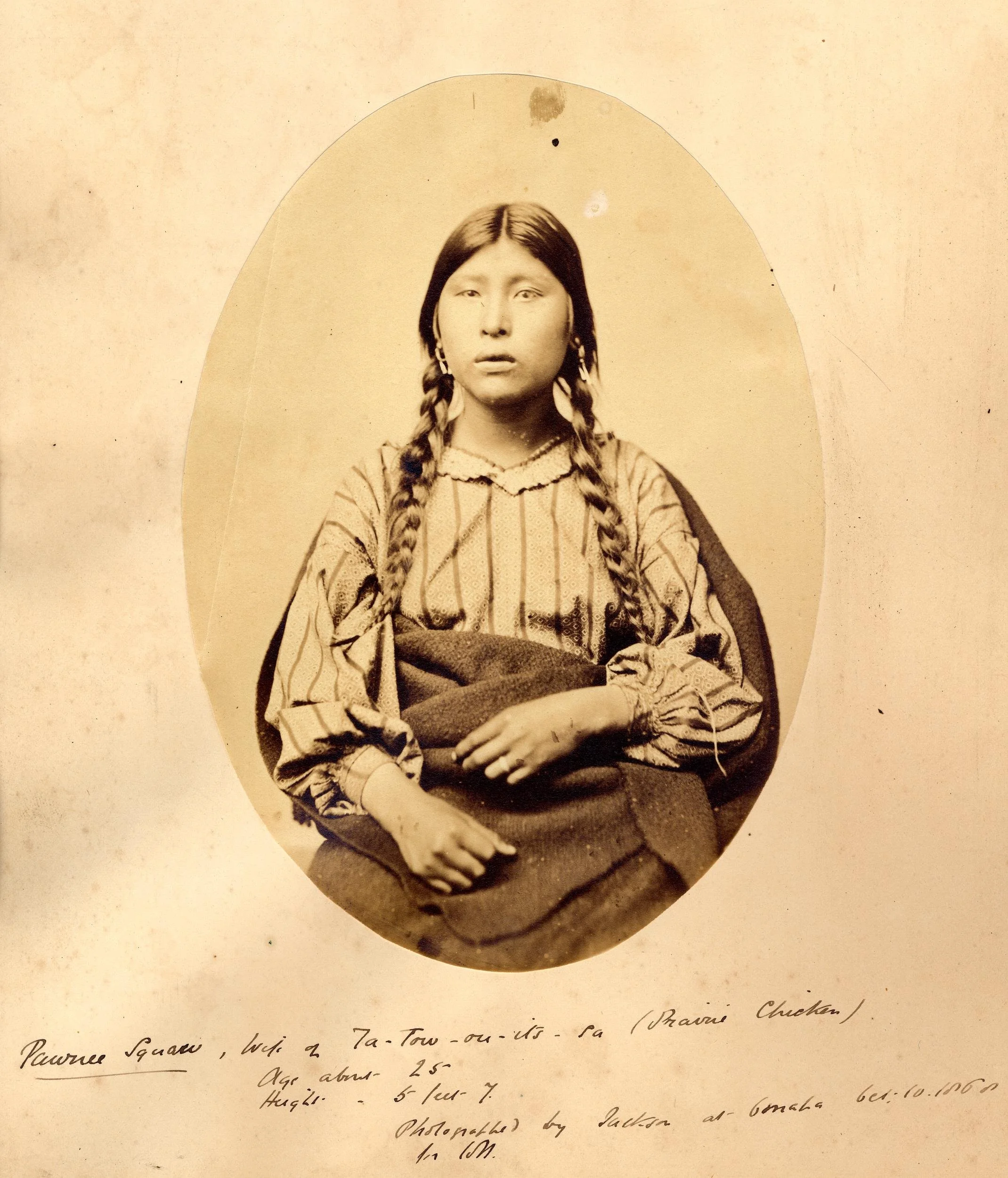
William Henry Jackson (American, 1843–1942), Photographic print, 1868, Albumen print on paper, British Museum, Am,a37.5 © The Trustees of the British Museum.
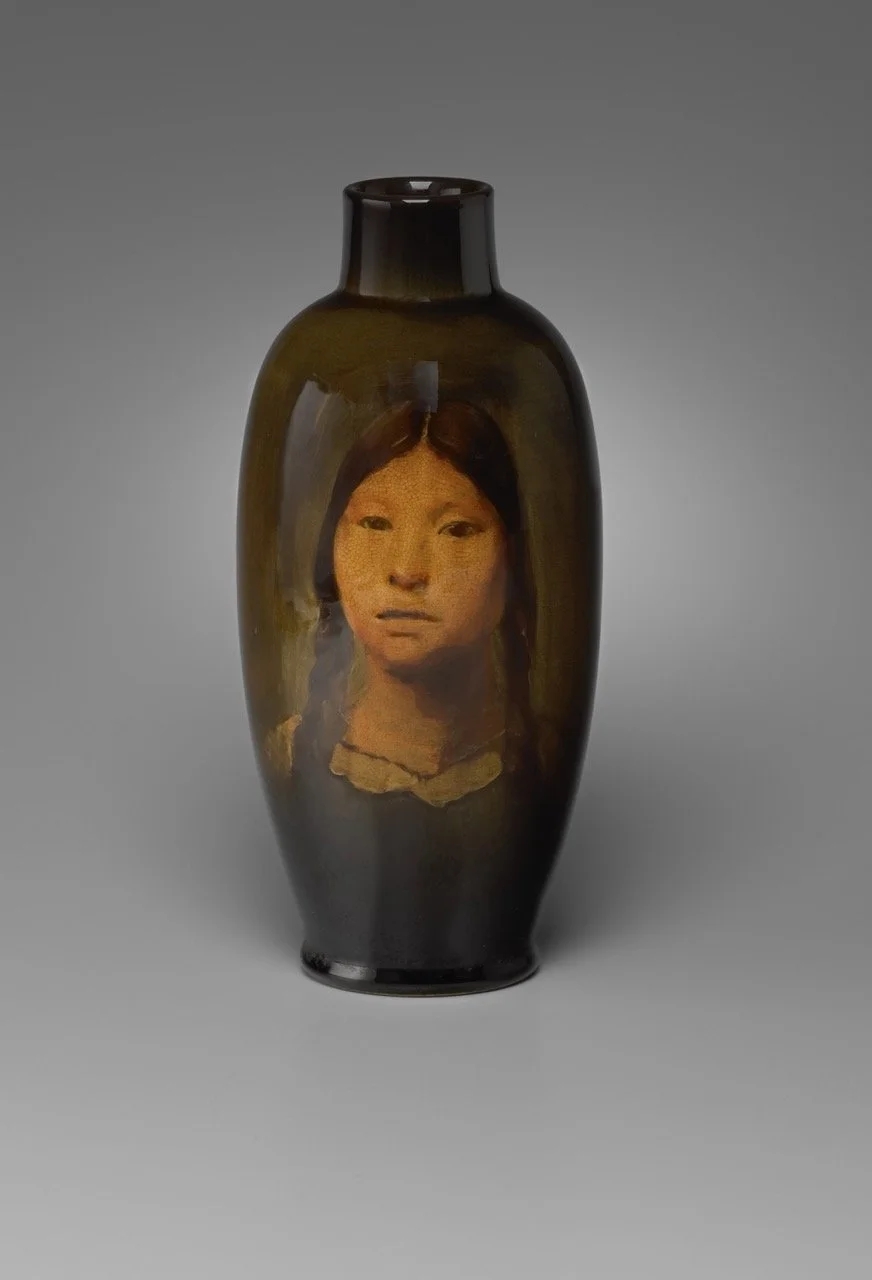
Rookwood Pottery (American, 1880–1960), Decorator: Artus Van Briggle (American, 1869–1904), After: William Henry Jackson (American, 1843–1942), Vase, 1900, Buff-colored earthenware with standard glaze; shape 786d, Yale University Art Gallery, 2005.67.1.

Rookwood was at the vanguard, but certainly not alone, in stressing the relationship between the nation’s soil and a distinctive American ware. The seeds for this ceramic nationalism were planted at the 1876 Centennial Exhibition in Philadelphia, where critics maligned the inferiority of the American display relative to its foreign counterparts. The writer Charles Wyllys Elliott saw these failures as especially egregious because America was so rich in “cheap clays” and “cheap fuels.” Nichols, the granddaughter of one of the richest men in the country, real estate speculator Nicholas Longworth, was uniquely positioned to heed the call to establish an art pottery tradition out of the nation’s native clays.

Today, the term “native” cannot help but call to mind the history of settler colonial occupation that empowered Nichols—and her family before her—to claim ownership over land (clay) in the Ohio Valley. By 1842, almost four decades before the Rookwood Pottery Company drew its first kilns on Thanksgiving Day in 1880, Indigenous communities including the Wyandot, Shawnee, Miami, Seneca, Delaware, Odawa, and Ojibwe had been dispossessed of land and removed to territory west of the Mississippi River.

Neither the Rookwood Pottery Company nor its admirers failed to notice the relationship between the Ohio Valley’s “native” clays and its previous Indigenous inhabitants. In 1900, as William Watts Taylor set sail for Paris’s Exposition Universelle with a thousand vessels, Cincinnati’s The Catholic Telegraphreported that “the pieces with the picturesque heads of the American Indian ‘just ready to speak,’ are the best types of all for our American clay.” Almost a hundred of these Native American portrait vessels were presented in the company’s black walnut cases and examples were prominently featured in promotional photographs. In one picture of the making process, the artist Matthew Andrew Daly demonstrates underglaze slip decoration, painting a portrait based on an ethnographic photograph like those made by the Bureau of American Ethnology. The exploitation of Indigenous imagery doubtless helped the company win the Grand Prix in Paris, with numerous outlets illustrating these unique vessels in their reviews.

Amateurs and professionals alike copied Rookwood’s Native American portrait vases, which were in keeping with the turn of the century’s so-called “Indian Craze.” But what might it mean to take seriously the semiotic slippage between photographed Native American people and the “native” clays onto which Rookwood’s artists painted them? To do so is to see the American Art Pottery movement as more than a campaign against the country’s perceived artistic shortfalls.

More than competition with Europe, Rookwood’s “native” clays expressed a national identity indivisible from the dispossession of Indigenous peoples. Rookwood’s transformation of what (they insisted) were hitherto unknown, or unused, clays into valuable national treasures tracked a familiar narrative of the discovery and cultivation of land, long used to justify settler colonial occupation at the expense of Indigenous communities, like those forcibly removed from Ohio. To take Rookwood’s own rhetoric seriously is to rethink the relationship between ceramic bodies and human ones. For “native” clays were once, and will always be, part of Native American land. 


Manon Gaudet is a doctoral candidate in the History of Art at Yale University where she studies nineteenth and twentieth-century North American art. Her dissertation examines the role that visual and material culture play in upholding settler colonial logics of possession in the early twentieth-century. She has worked at numerous museums in Canada and the United States, and her writing has appeared in Third Text, Panorama, and Border Crossings magazine. She was a 2022-2023 Terra Foundation for American Art Predoctoral Fellow at SAAM.

Brilliant Move

Brilliant Move is the Brooklyn-based creative studio of Marci Hunt LeBrun specializing in building websites on the Squarespace platform – among many other things.

I love working with small businesses, nonprofits, and other creatives to help them organize their ideas, hone their vision, and make their web presence the best it can be. And I'm committed to keeping the process as simple, transparent, and affordable as possible.

https://brilliantmove.nyc
Previous
Previous

Peripheral gods and magical horses

Next
Next

Of earth and sky