Grip and glide
Kurt Blaum
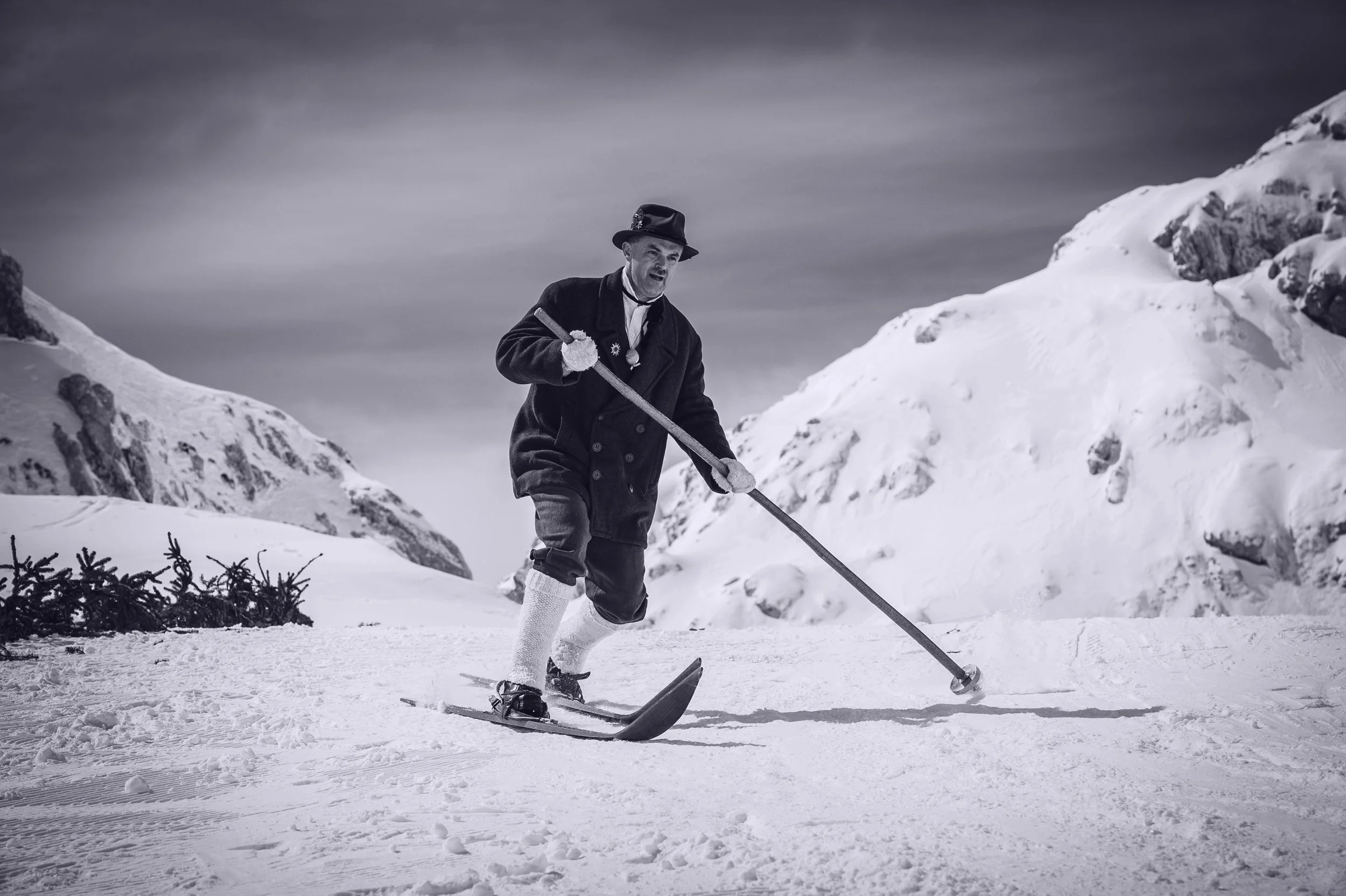
Portrait of adult skier using equipment from 1950’s or earlier. Location: Julian Alps, Slovenia, Europe. Platinum toned.
No one knows when people first started skiing. 10-foot-long wooden boards have been found dating back to 6,000 BCE in Russia, Finland and China. They were likely coated with tallow or some other kind of animal fat, to prevent snow from sticking and to aid in glide. They could also have added traction for traversing frozen tundra. Subsequently animal furs were lashed to the underside, to assist with uphill ascents.
Over time, as modern skis developed, many other substances were used to seal them, including coal tar, pine pitch and rosin, and paraffin, melted down from candles, which worked well in cold conditions. The widespread introduction of hydrocarbon-based waxes came only in the 1920s and 1930s, as European companies began developing products specifically marketed for skis. These can be broadly divided into two types: glide and grip. Glide wax is primarily used on downhill (Alpine) skis, and the tips and tails of cross-country (Nordic) skis. Grip (or kick) wax is used only under foot (mid ski) on Nordic skis for propulsion and ascension.
Modern ski bases are manufactured from high-density sintered Polyethylene, or PE. This material is not as smooth as it appears; under magnification, it resembles the surface of a sugar cube. Wax impregnates this structure when it is applied. When the treated skis glide over a crystalline snow surface, friction is created, thermally heating the PE and causing the wax to squeeze out from the ski’s pores, thus creating a hydrophobic surface with macroscopic water beads, aiding in the glide. As the wax is released, it is simply sheared off. Waxed skis are thus essentially self-lubricating, allowing for increased speed, turning ability, and durability.
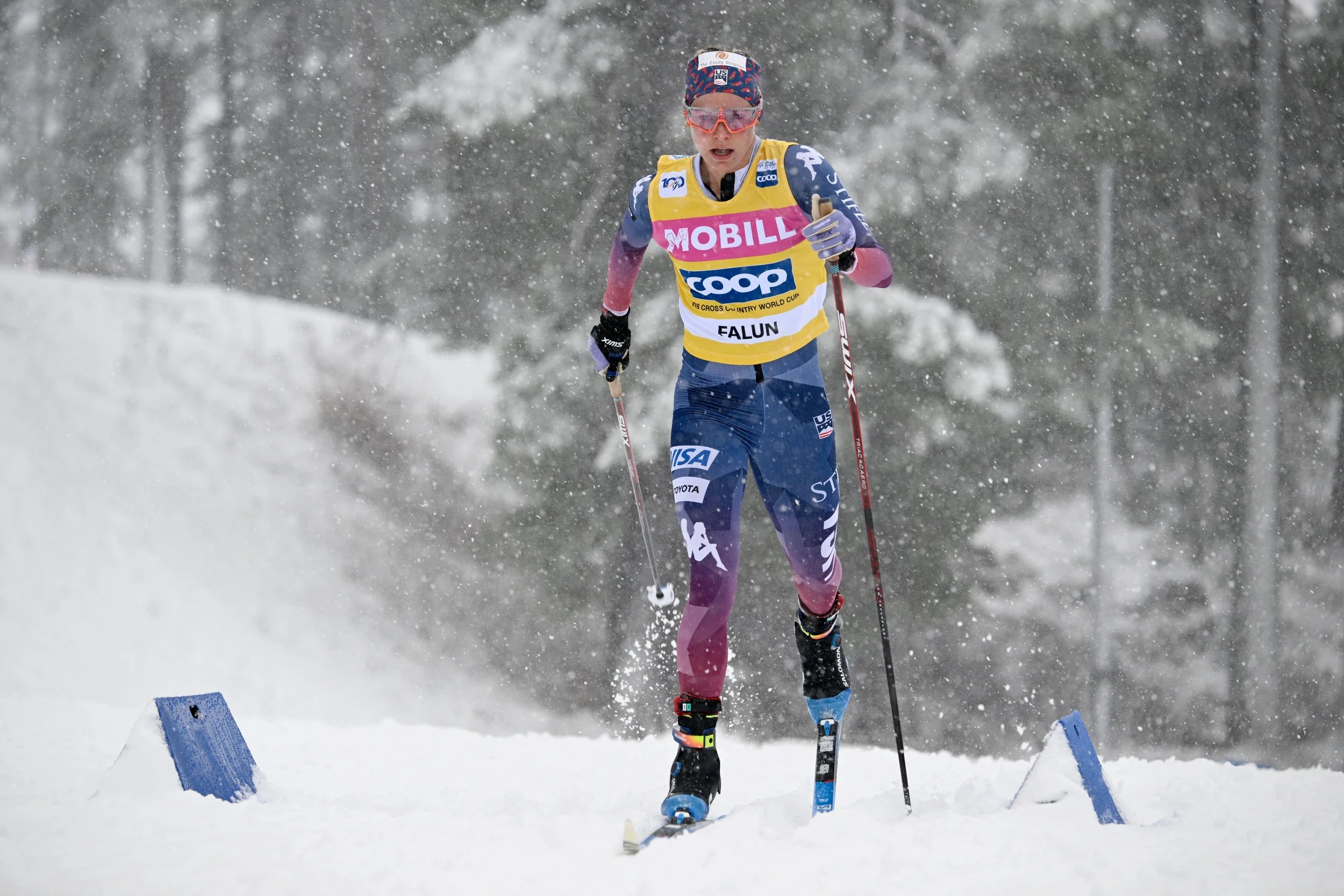
Jessie Diggins, USA, in action during the Women’s 10 km classic fis World Cup skiing competition in Falun, Sweden March 16, 2024, 2024. Photo: Anders Wiklund / tt News Agency / Alamy.

Franz Klammer, Mens Downhill World Cup Tour Competition, St Anton, Austria, February 1983, 2015. Image courtesy: Hans Bézard. Creative Commons Attribution
There are many specially formulated waxes for particular conditions, each with their own claims to performance and durability. Generally speaking, warmer conditions require softer waxes, and colder conditions require harder products, but there are many other considerations including snow type (wet, powder, remelted or “corn,” dirty) prevailing winds and humidity. All this means that ski wax is a highly geographic variable. The coastal Sierras have extremely wet snow, the Rockies tend to experience low water content, while in the Northeast winter temperatures can drop to -20° Fahrenheit, resulting in very dense, hard snow conditions.
Ski waxes are sold in many forms – the traditional block, loose crystals, paste, liquid, spray – but the best way to apply it is hot, with an iron quite similar to that used for clothing at home. The ski is put into a vise, with the level base facing upward. Hot wax is then dripped along down length of the ski and the technician quickly smooths it out in order not to damage the PE ski base. The heat opens the porous sintered PE, allowing the liquid wax to penetrate. After the ski cools, a straight polycarbonate plastic scraper is used to remove about 95% of the surface wax, leaving only what has been infused into the ski base. Finishing techniques vary, but commonly require buffing the surface either by hand or rotary mechanical brushes.
Often waxes are applied in layers or a mixture of 3 or more, depending on conditions. In competitive events, a skilled technician may layer multiple wax products for winning results. Various locations along a racecourse are sampled, yielding closely-guarded information including snow temperature and type, sunlight intensity, wind speed and direction, and several other factors. In some cases racecourses have been chemically treated with salt, resulting in a much harder surface than natural snow.

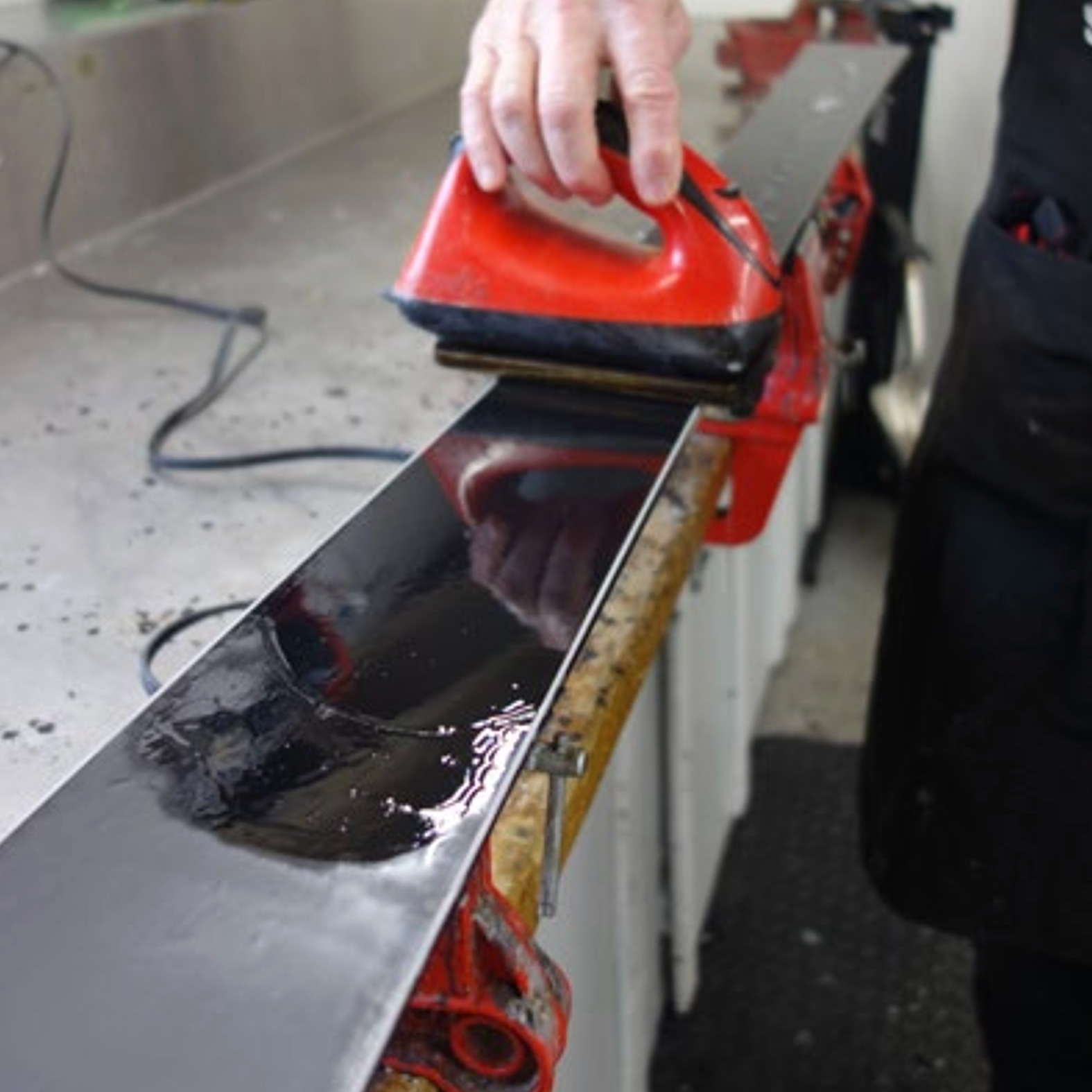
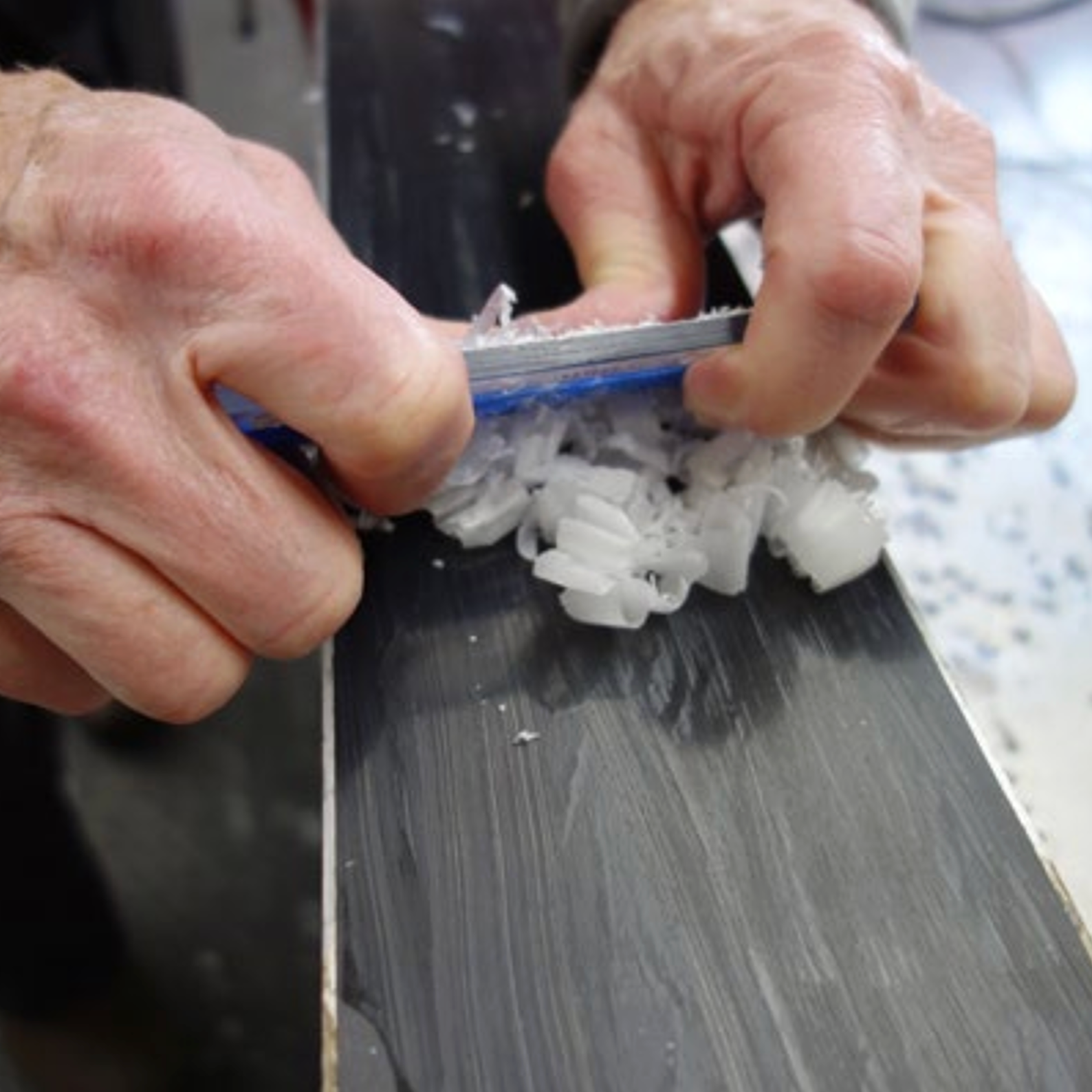
Technician Waxing a Ski at Northern Ski Works, Killington, VT, 2025. Images courtesy: Rick Gaspar and Wynne Patterson.